
AI-generated
Florentines — thin almond cookies with caramel and chocolate
Log in or create a free account to save recipes.
Source: https://recipheon.com/en/recipes/desserts/florentines-thin-almond-cookies-with-caramel-and-chocolate
About this recipe
Florentines are thin cookies in which sliced almonds are held together by golden caramel made with butter, cream, sugar and honey. Once cool, they become brittle, while a thin layer of dark chocolate underneath balances their sweetness. This home version adds no flour, candied fruit or decorations. Small even portions and plenty of space on the baking sheet matter because the mixture spreads as it bakes. Make twenty-four cookies in three batches using two ordinary baking sheets and three parchment sheets. Do not remove the baked cookies immediately: hot caramel is soft and becomes crisp only once completely cool. Then gently coat the smooth undersides with melted chocolate and wait for it to set. All almond cookies and their edible crumbs belong to the portions; unused chocolate stays separately in the bowl. Serve two florentines per portion without extra sauce.
Ingredients
All the mixture for 24 florentines
150 g blanched almonds in thin slices, without skins, unsalted and not roasted
80 g white sugar
40 g runny honey, without added syrups or sugar
50 g unsalted butter, 82% fat, whole and not clarified
60 g liquid heavy cream, 36% fat, weighed, not sour cream
1 g salt
Chocolate for undersides, partly left over
120 g dark chocolate, 70% cocoa, for thinly coating undersides; some will remain in the bowl, without added oil or butter
Steps
Preheat the oven to 180°C, conventional heat, with the rack in the middle. Prepare two flat metal baking sheets about 30 × 40 cm and three sheets of parchment cut to fit. Line the baking sheets with two of them and keep the third for the last batch. Do not grease the paper. Have a small heavy-bottomed saucepan, a spatula and two teaspoons ready; the warm mixture should be portioned promptly.
Put all 50 g butter, 80 g sugar, 40 g honey, 60 g liquid cream and 1 g salt into the saucepan. Heat on low, stirring until the butter melts and sugar dissolves. Once gently boiling, cook about 3–4 minutes, stirring frequently across the bottom. It should thicken slightly but not yet turn into dark caramel. Do not taste the hot mixture and do not add water.
Add all 150 g sliced almonds and carefully stir to coat thoroughly. Heat for about another 1–2 minutes on low, stirring without breaking the slices. Remove the saucepan from the heat. The mixture should be thick, sticky and easy to spoon, without dark scorched patches. Do not add flour, ground almonds, fruit or extra fat.
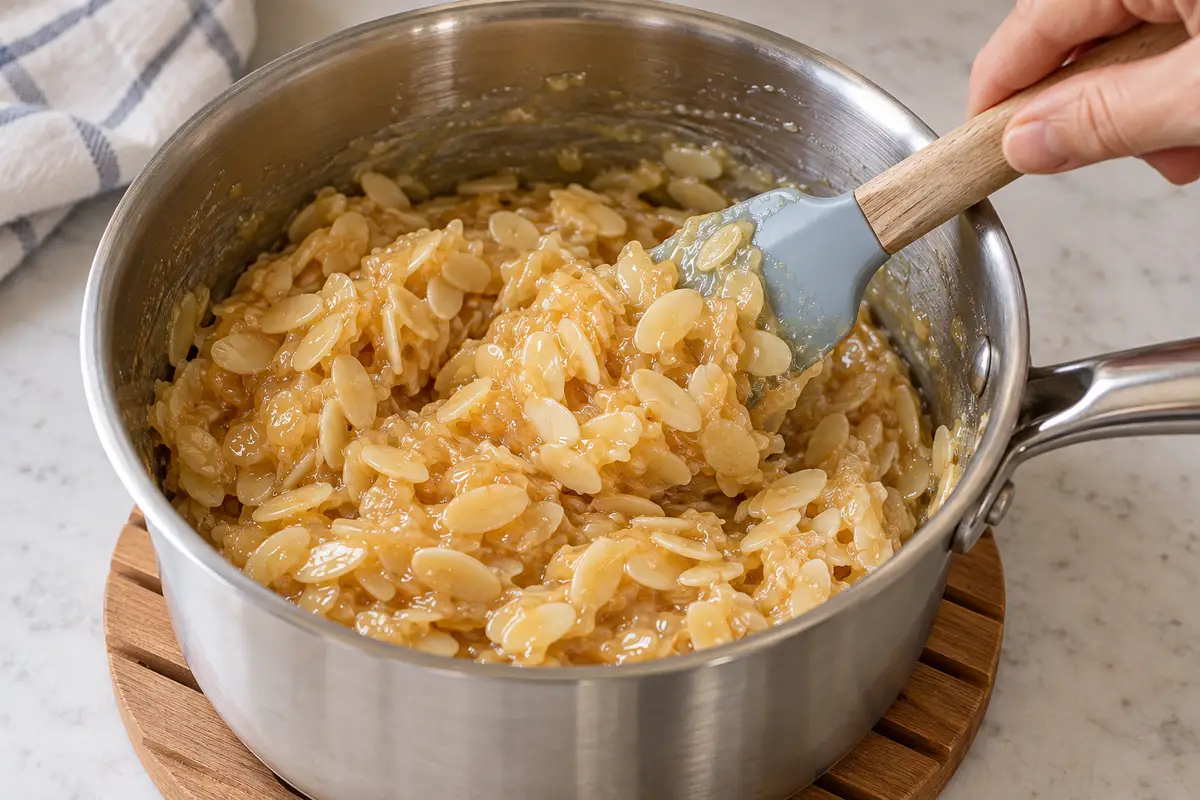
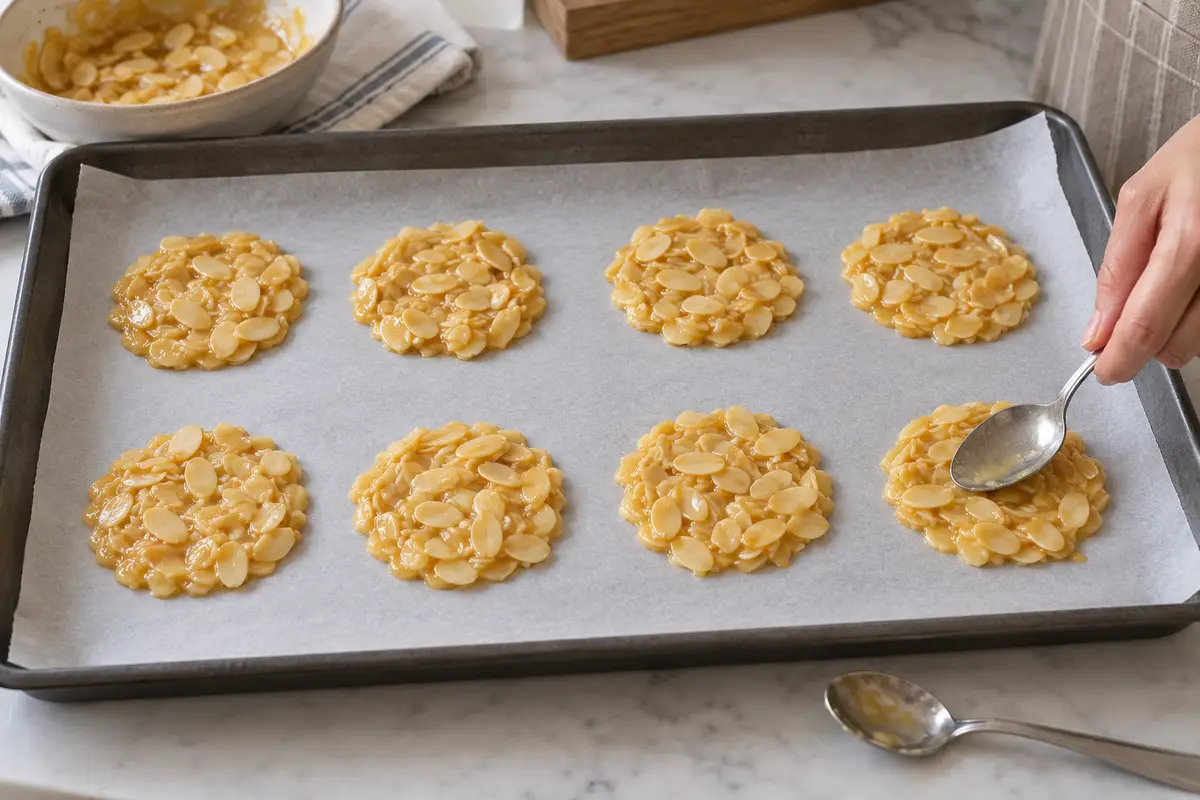
AI-generated Visually divide the mixture in the saucepan into three parts. Use two teaspoons to place eight similar portions from the first part onto the first baking sheet. Flatten each into a round about 6–7 cm across and 3–4 mm thick, distributing the almonds evenly. Leave at least 3 cm between rounds and several centimeters from the paper edges. They will spread further; do not put the entire batch on one sheet.
AI-generated Bake the first sheet about 8–11 minutes until the rounds spread and become evenly golden, with slightly darker rims and tiny caramel bubbles. Watch the final minutes, as thin edges darken quickly. Do not remove while the center is still pale and looks like liquid mixture. Leave baked cookies on the sheet about 5 minutes; do not touch hot caramel with your fingers.
Similarly spread the second part into eight rounds and bake on the second sheet. After about 5 minutes, slide the first parchment with its cookies onto a rack, then cool the empty sheet completely before adding the third parchment and final eight portions. If the mixture in the saucepan hardens, briefly warm on low without adding liquid. Use all of it; the three batches bake for about 25–35 minutes in total.
Leave each baked batch on its sheet about 5 minutes first, then transfer with the parchment to a rack. Allow another 20–30 minutes until completely cool and brittle. Only then gently peel from the paper, supporting the thin undersides with a spatula. Keep all edible almond crumbs for the portions. Do not trim edges with a knife and do not cut off parts of the cookies.
Chop all 120 g dark chocolate and put in a dry bowl over a saucepan of gently steaming water. The bowl base must not touch the water. Stir until just melted, then remove the bowl and dry its underside. Do not bring the water to a vigorous boil and do not add water, cream or oil to the chocolate. It should stay fluid but not be very hot when spread on the cold cookies.
Turn the cold florentines smooth-side up and spread a thin chocolate layer with a teaspoon, supporting each cookie on your palm or a wide spatula. Coat the undersides of all twenty-four cookies. Set chocolate-side up on dry parchment, without pouring over the almond tops. Keep chocolate left in the bowl separately for another use; do not pour it over finished portions.
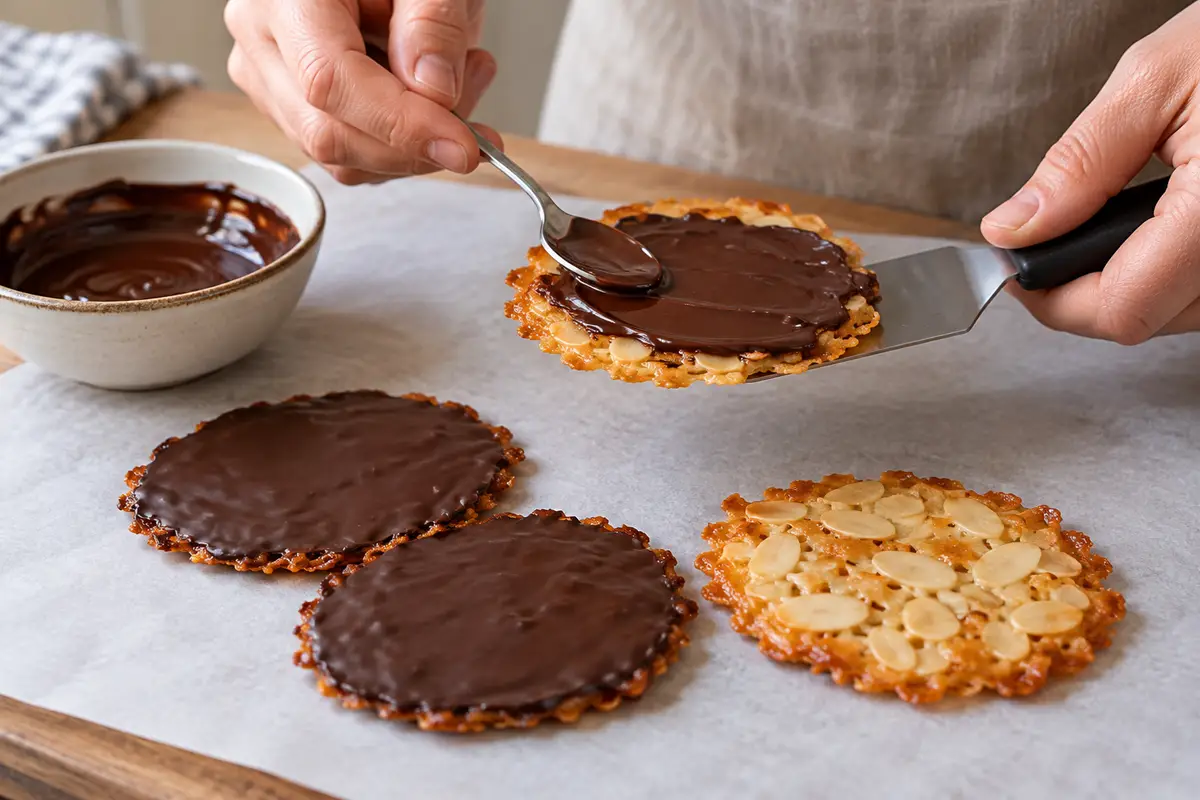
AI-generated Leave florentines chocolate-side up about 45–60 minutes in a cool place until the coating is no longer sticky and the cookies can be moved without breaking. Only once set, turn almond-side up. Timing depends on the chocolate and kitchen warmth; do not stack cookies while the coating is soft. Do not add sprinkles, fruit, powdered sugar or extra chocolate.
Divide all cookies into twelve portions of two florentines and share the saved almond crumbs among them. Serve without extra sauce or decorations. Store in an airtight container in a cool dry place for up to 5 days, with paper between layers. Moisture softens caramel, so do not pack cookies while warm and do not store beside moist baked goods. Unused chocolate from the bowl stays outside these portions.
Estimated nutrition

Rate this recipe
0 ratings
Comments