
AI-generated
Mađarica – Croatian chocolate layer cake
Log in or create a free account to save recipes.
Source: https://recipheon.com/en/recipes/desserts/madjarica-croatian-chocolate-layer-cake
About this recipe
Mađarica is a Croatian cake made from thin, separately baked pastry sheets layered with cooked chocolate cream. In this home version, six buttery sour cream sheets enclose five even layers of filling beneath a smooth glaze. Rolling the dough thinly and moving the baked sheets carefully take the most attention, so prepare the baking paper and a flat board before you begin. An overnight rest in the fridge under a light weight softens the pastry and brings the layers together. Slice the cake the next day, once the cream is firm and the glaze has set; one rectangle makes 24 small servings.
Ingredients
For 24 servings, 20 × 30 cm sheets
580 g plain wheat flour, type 550: 500 g for the dough and 80 g for the cream
320 g unsalted butter: 100 g for the dough, 180 g for the cream and 40 g for the glaze
350 g fine white sugar: 150 g for the dough and 200 g for the cream
150 g sour cream, 18% fat
100 g eggs weighed without shells, about 2 medium eggs, both whites and yolks
1000 g whole milk, 3.5% fat, weighed
300 g dark chocolate with about 55% cocoa: 150 g for the cream and 150 g for the glaze
30 g unsweetened cocoa powder
5 g baking powder
1 g salt
Steps
Mix 500 g flour with the baking powder, salt and 150 g sugar. Add 100 g cool butter, cut into cubes, and rub it in with your fingertips to make fine crumbs. Add the sour cream and the weighed, beaten eggs, using both the whites and yolks. Knead briefly to form a smooth, soft dough, just until the ingredients come together.
Flatten the dough, wrap it and refrigerate for 30 minutes. Prepare six sheets of baking paper, each with a 20 × 30 cm rectangle marked on the underside, plus another sheet to cover the dough as you roll it. Divide the chilled dough into six equal portions. Take them out one at a time for rolling, keeping the others covered in the fridge.
Roll each portion between two sheets of paper into a 20 × 30 cm rectangle about 2 mm thick. Peel off and reposition the top sheet whenever it starts to crease. Trim any overhanging dough and patch it into thinner areas or along the edges so that all the dough is used. Remove the top paper, smooth the surface with the rolling pin and prick the pastry with a fork. No extra flour is needed for dusting.
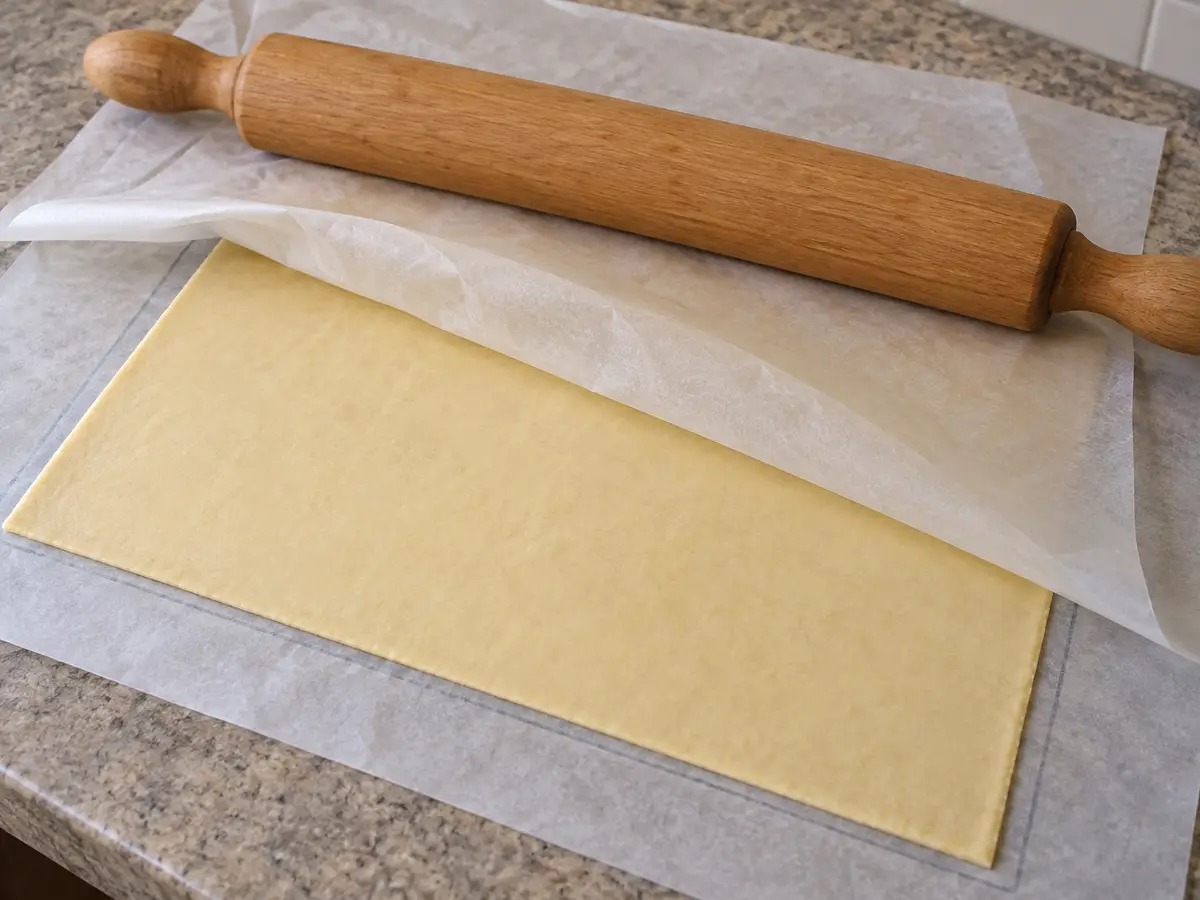
AI-generated Preheat the oven to 180°C, conventional top and bottom heat. Slide the first pastry sheet, still on its paper, onto the flat underside of an upturned baking tray and bake on the middle shelf for about 7–9 minutes. It should set, with only a little color around the edges. Bake the remaining sheets one after another, rolling the next while one is in the oven. Slide them, with their paper, onto a flat surface and leave to cool. They are fragile, so support them with a board or flat tray when moving them.
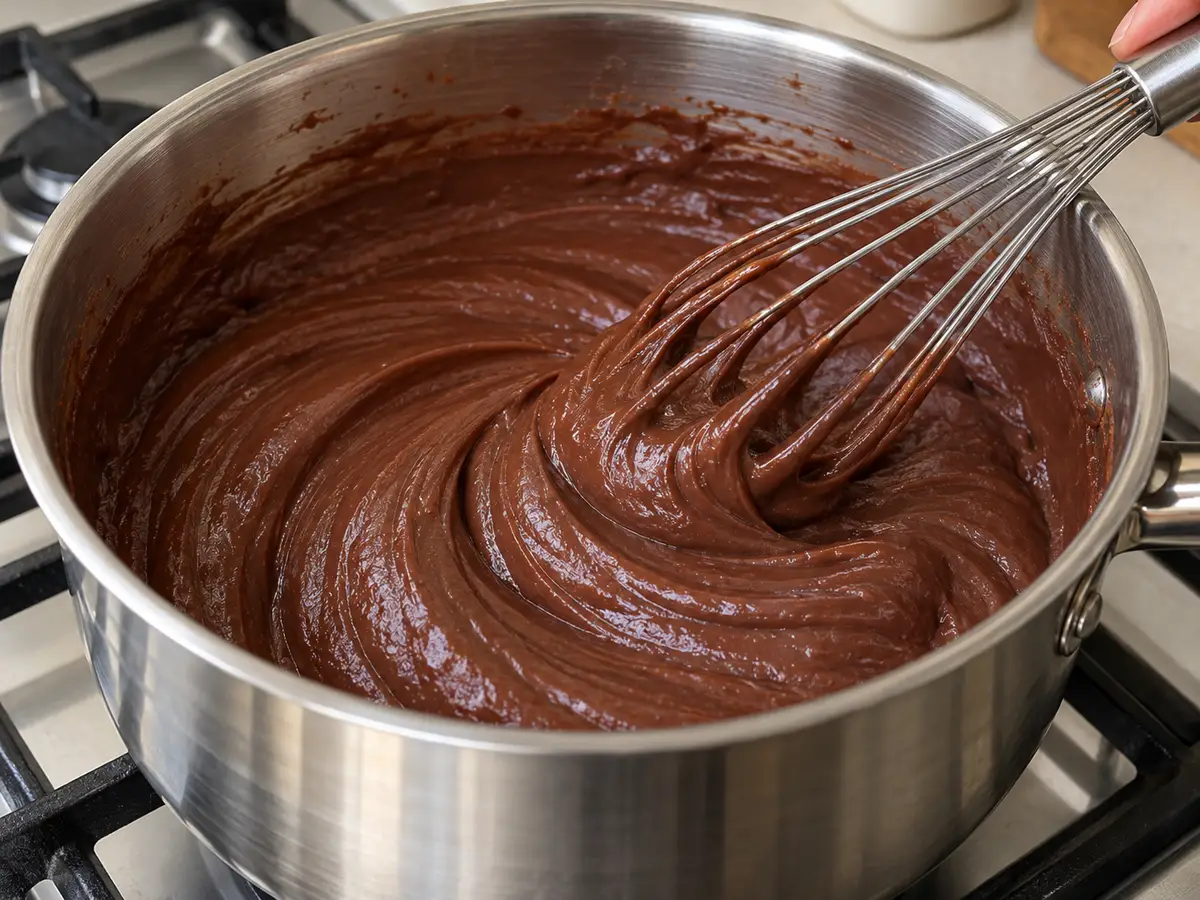
Mix 250 g milk with the remaining 80 g flour and the cocoa to make a smooth slurry. Heat the remaining 750 g milk with 200 g sugar in a heavy-bottomed saucepan. Pour in the slurry, whisking vigorously all the time. Bring to the first bubbles, lower the heat and cook for about 3–5 minutes more, stirring right down to the bottom, until the cream is thick and smooth. Remove from the heat and add 150 g chopped chocolate and 180 g butter in pieces. Stir until melted and fully combined.
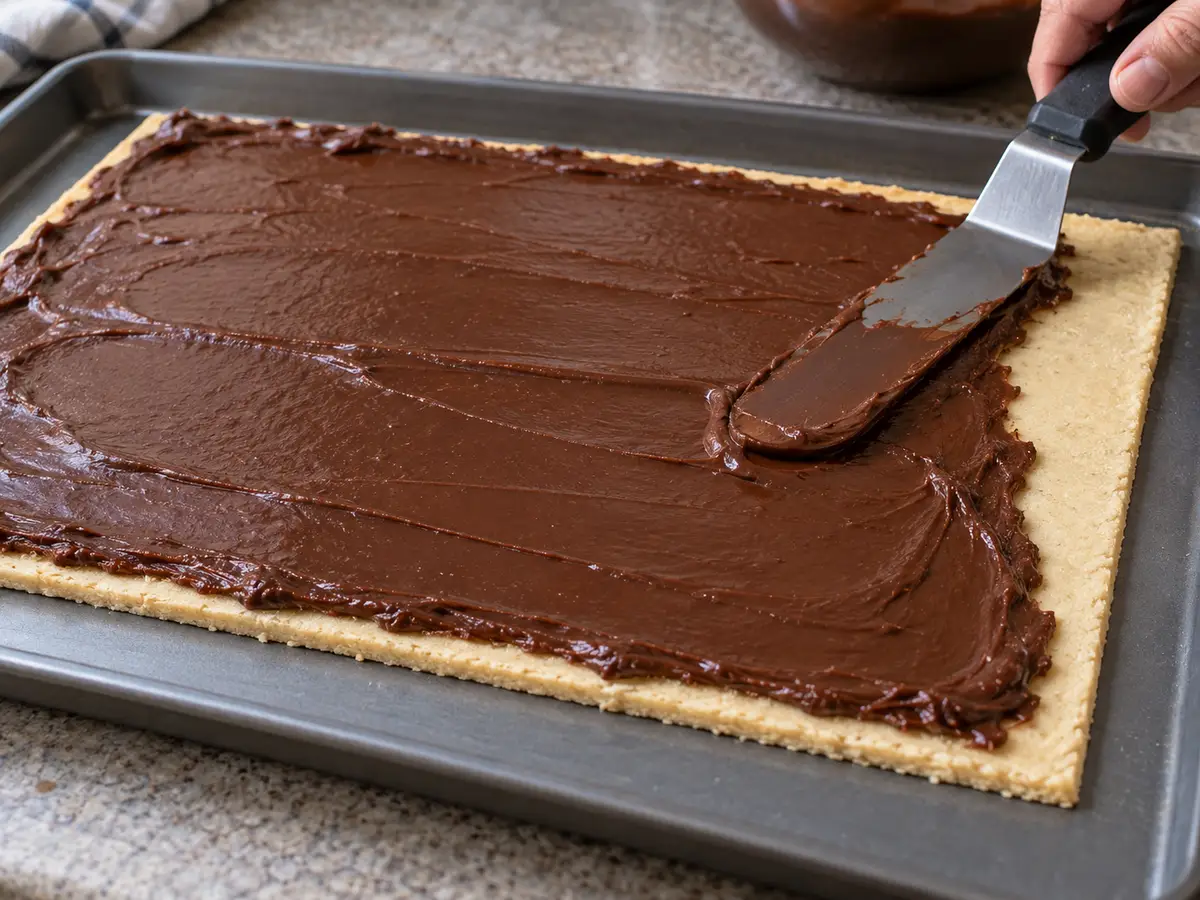
AI-generated Place the first cooled pastry sheet on a flat tray that fits in the fridge. Divide the still-warm, easily spreadable cream into five roughly equal portions. Spread the first portion over the pastry right to the edges and cover with the second sheet. Repeat until you have six sheets and five even layers of cream. Leave the final sheet without cream on top. Fit any broken pieces together within a layer and use all the cream.
AI-generated Cover the top with baking paper, place a flat board or tray over it and add a light, evenly distributed weight so the cream does not squeeze out at the sides. Leave for about an hour, until the cake is no longer warm. Then cover it and refrigerate with the weight in place for 12 hours. The pastry will soften from the cream and the layers will come together.
Remove the weight and paper from the cold cake. Break the remaining 150 g chocolate into a small saucepan, add 40 g butter and warm briefly over a very low heat, stirring. Once most of the chocolate has softened, remove the pan from the heat and finish melting it by stirring. Spread the fluid glaze evenly over the top of the cake. Refrigerate for about 30 minutes to set.
Plan for 24 small rectangular servings. With a warm, sharp knife wiped dry, gently score the glaze first, then cut through all the layers along the same lines. Wipe the knife between cuts to keep the edges clean. Serve chilled and keep the remaining portions covered in the fridge.
Estimated nutrition
We couldn't estimate the nutrition for this recipe yet.

Rate this recipe
0 ratings
Comments