
AI-generated
Pasticciotti leccesi – shortcrust pastries with vanilla custard
Log in or create a free account to save recipes.
Source: https://recipheon.com/en/recipes/desserts/pasticciotti-leccesi-shortcrust-pastries-with-vanilla-custard
About this recipe
Pasticciotti leccesi are oval pastries from Salento, with a tender, crumbly lard crust enclosing thick vanilla custard. Their golden, gently domed lids hide a pale, velvety filling, while the edges crumble pleasantly at the first bite. In this home version, the custard is made from scratch with milk and egg yolks, and the dough is rolled between sheets of paper without dusting it with extra flour. Chilling both components thoroughly makes the molds easier to fill and seal. Serve the pastries after cooling, when the crust is still crisp and the center is mild and creamy.
Ingredients
For 8 pastries
310 g plain wheat flour, type 550: 280 g for the dough and 30 g for the custard
140 g white sugar: 90 g for the dough and 50 g for the custard
120 g pork lard without additives: 115 g for the dough and 5 g for the molds
100 g eggs without shells, beaten (about 2 medium eggs, M): 80 g for the dough and 20 g for brushing
40 g additional egg yolks (about 2 yolks), for the custard
400 g whole milk, 3.5% fat, for the custard
10 g sugar with real Bourbon vanilla, for the custard
1 g salt, for the dough
Steps
Weigh out 100 g of beaten whole eggs. Reserve 20 g in a covered container and refrigerate for brushing later. In a bowl, mix 280 g of flour, 90 g of sugar and the salt. Add 115 g of lard and rub in to make fine crumbs. Pour in the remaining 80 g of eggs and briefly knead into a smooth dough, just until combined. Flatten, wrap and refrigerate. Use all the additional 40 g of yolks for the custard.
Heat the milk in a small saucepan until almost boiling. In a bowl, mix 40 g of yolks with 50 g of sugar, the Bourbon vanilla sugar and 30 g of flour until smooth. Gradually pour in the hot milk, whisking continuously. Pour into the saucepan and heat over a low or medium heat, stirring constantly across the base and into the corners. Once the custard thickens noticeably and begins to bubble slowly, cook for about another 2 minutes over a low heat. It should be smooth and thick, with the whisk leaving a clear trail.
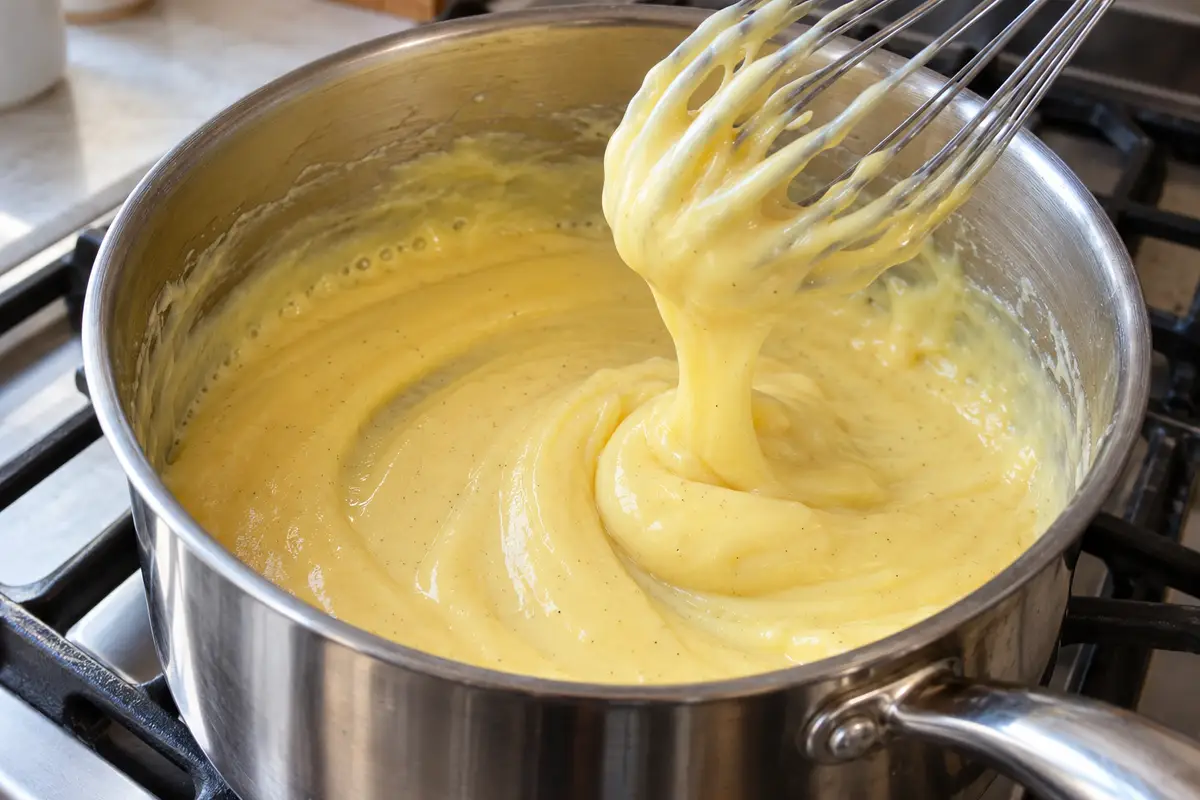
AI-generated Transfer the custard to a wide, shallow dish and cover with plastic wrap intended for contact with food pressed directly against its surface. Cool for about 30 minutes, then refrigerate for 60 minutes. Keep the dough in the refrigerator during this time; both components should be cold before shaping the pastries. The dough and custard chill at the same time.
Preheat the oven to 200°C with conventional top and bottom heat. Prepare 8 oval metal molds, each holding about 150–170 ml and measuring roughly 11 × 7 × 3 cm. Thinly spread the remaining 5 g of lard inside them. Roll about two thirds of the dough in batches between sheets of baking paper to about 3 mm thick. Line the bases and sides of the molds, pressing the dough into place without stretching it. Keep the rest for the lids. Briefly press the scraps together and use them for the remaining bases or lids; do not dust with extra flour.
Briefly stir the cold custard with a spoon to make it smooth again. Divide all the custard evenly between the 8 lined molds. Smooth it out, keeping the upper edges of the dough clean so the lids can be sealed firmly in place. The filling should not rise above the edge of the dough.
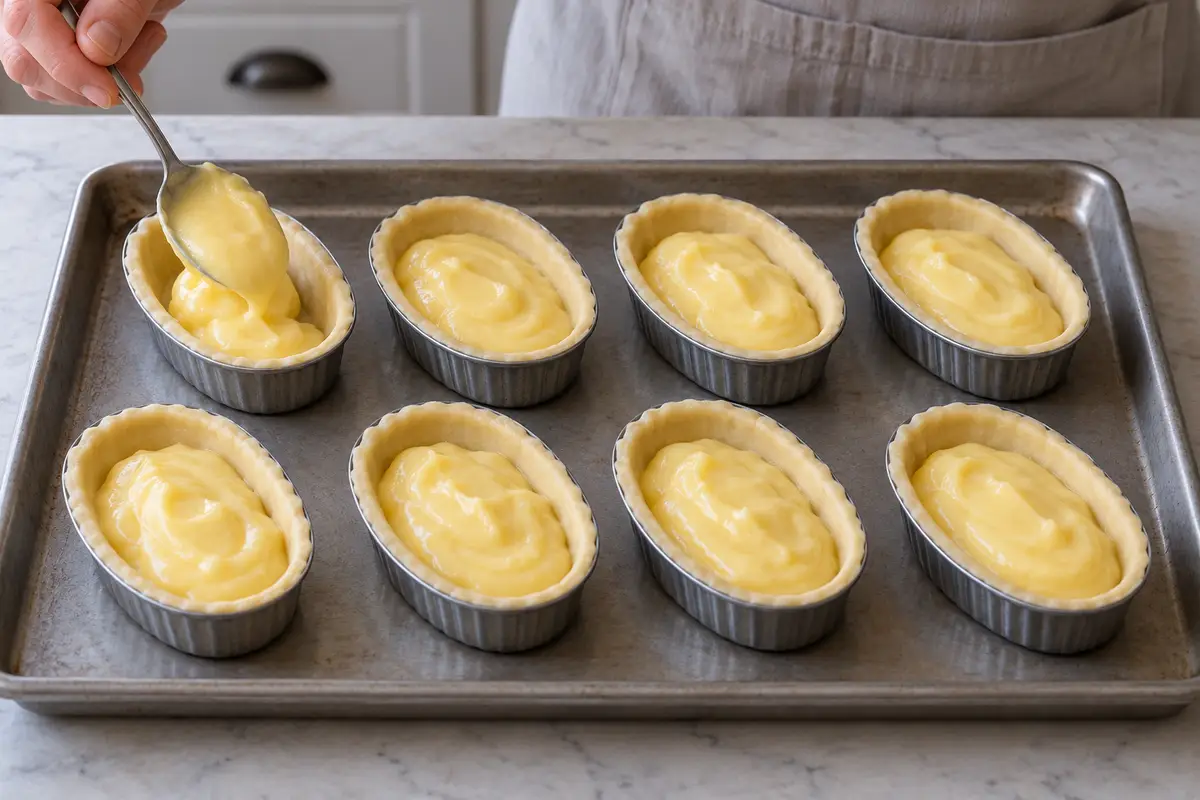
AI-generated Roll the remaining dough and collected scraps between sheets of paper to make lids about 3 mm thick. Before closing the pastries, use the scraps to patch thinner areas of dough so that all of it is used. Place the lids over the custard and carefully press them onto the edges of the bases, enclosing the filling. The tops may be gently domed. Place all the molds on one baking sheet.
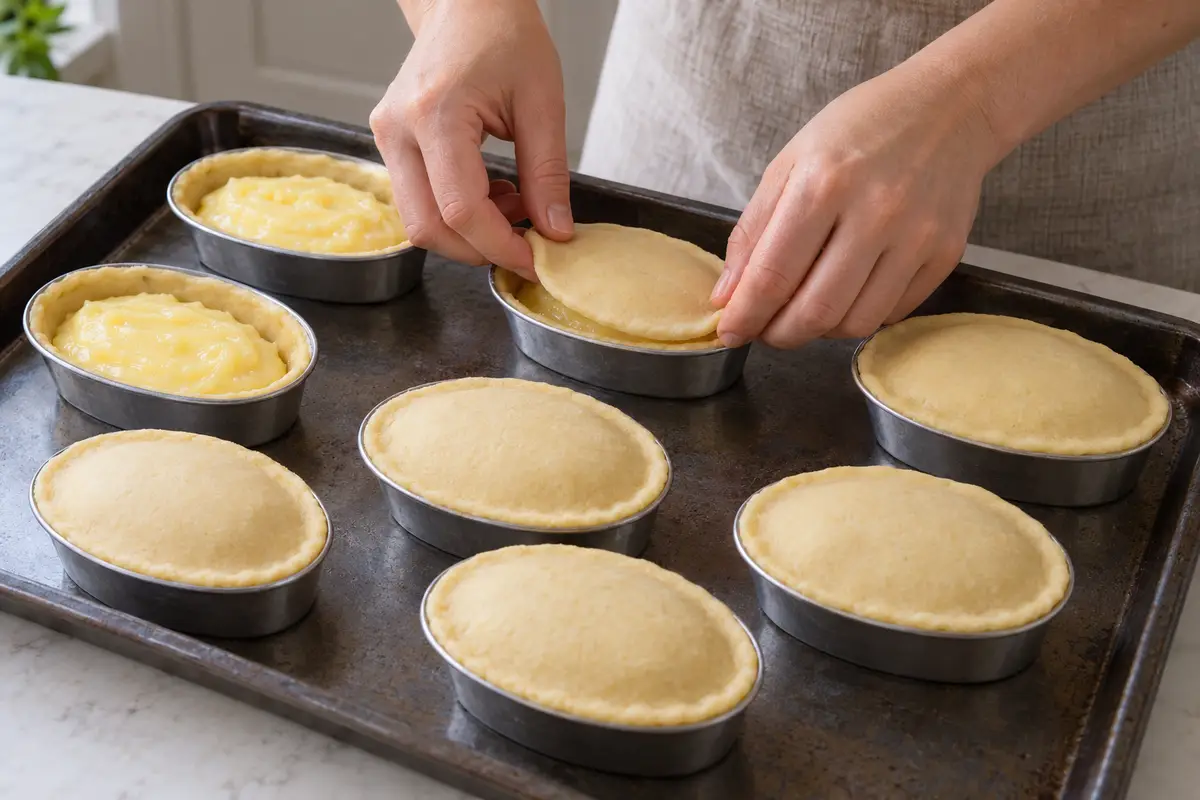
AI-generated Take the reserved 20 g of beaten eggs out of the refrigerator and briefly stir again. Brush all of it thinly over the tops of the 8 pastries. Take care not to flood the space between the dough and the rims of the molds.
Place the single baking sheet of molds on the middle rack of the preheated oven. Bake for 25–30 minutes at 200°C, until the tops are clearly golden and the edges are baked and firm. Check the browning towards the end; small cracks in the lids are fine. Do not remove the hot pastries from the molds immediately, as the dough is delicate at this stage.
Leave the pastries in their molds for about 15 minutes, then carefully remove them and transfer to a wire rack. Cool for about another 45 minutes, until the filling is no longer hot and the crust has firmed up. Serve without any accompaniments. Once cooled, keep leftover pastries in a closed container in the refrigerator and eat within 2 days.
Estimated nutrition

Rate this recipe
0 ratings
Comments