
AI-generated
Cassoulet — white beans baked with duck and sausage
Log in or create a free account to save recipes.
Source: https://recipheon.com/en/recipes/main-dishes/cassoulet-white-beans-baked-with-duck-and-sausage
About this recipe
Cassoulet is a French dish of white beans slowly baked with meat beneath a browned crust. This home version combines dried beans with ready-cooked duck confit and fresh, unsmoked Toulouse-style pork sausage. Soak the beans overnight, then cook them until tender the next day before putting them in the oven. Remove the bones from the duck legs, keeping the meat and skin in large pieces, and measure the packing fat separately. Onion, carrot and garlic enrich the sauce without cream or tomatoes. The surface browns naturally during baking; no breadcrumbs are needed. The recipe makes four generous portions, so set aside an unhurried afternoon. Save the remaining bean cooking liquid and excess confit fat for another use.
Ingredients
Beans and cooking liquid
400 g dried white beans, such as lingot or cannellini
1.5 l cold water for soaking, to be discarded
2 l fresh water for the initial boil, to be discarded
1.5 l unsalted poultry stock; after cooking, reserve 700 ml for baking and set the rest aside
2 bay leaves
2 small thyme sprigs
Meat and vegetables
2 large duck confit legs, already fully cooked, about 600 g with bones and skin after removing the surrounding packing fat
20 g clean duck fat reserved from the confit packaging
400 g fresh, raw Toulouse-style pork sausage, unsmoked and without groats or bread, preferably in 4 pieces of about 100 g each
150 g peeled onion
150 g peeled carrot
15 g peeled garlic, about 4 cloves
3 g fine salt
1 g ground black pepper
Steps
Pick over the beans, rinse and cover with 1.5 l cold water in a large bowl. Cover and refrigerate for about 12 hours. The next day, discard all the soaking water and rinse the beans again. Do not use the soaking liquid for further cooking.
Put the soaked beans in a pot and add 2 l fresh water. Bring to a brisk boil, then boil uncovered for 10 minutes; watch that the foam does not boil over. Drain and discard this water. Complete this step on the stovetop before the gentler cooking and baking stages.
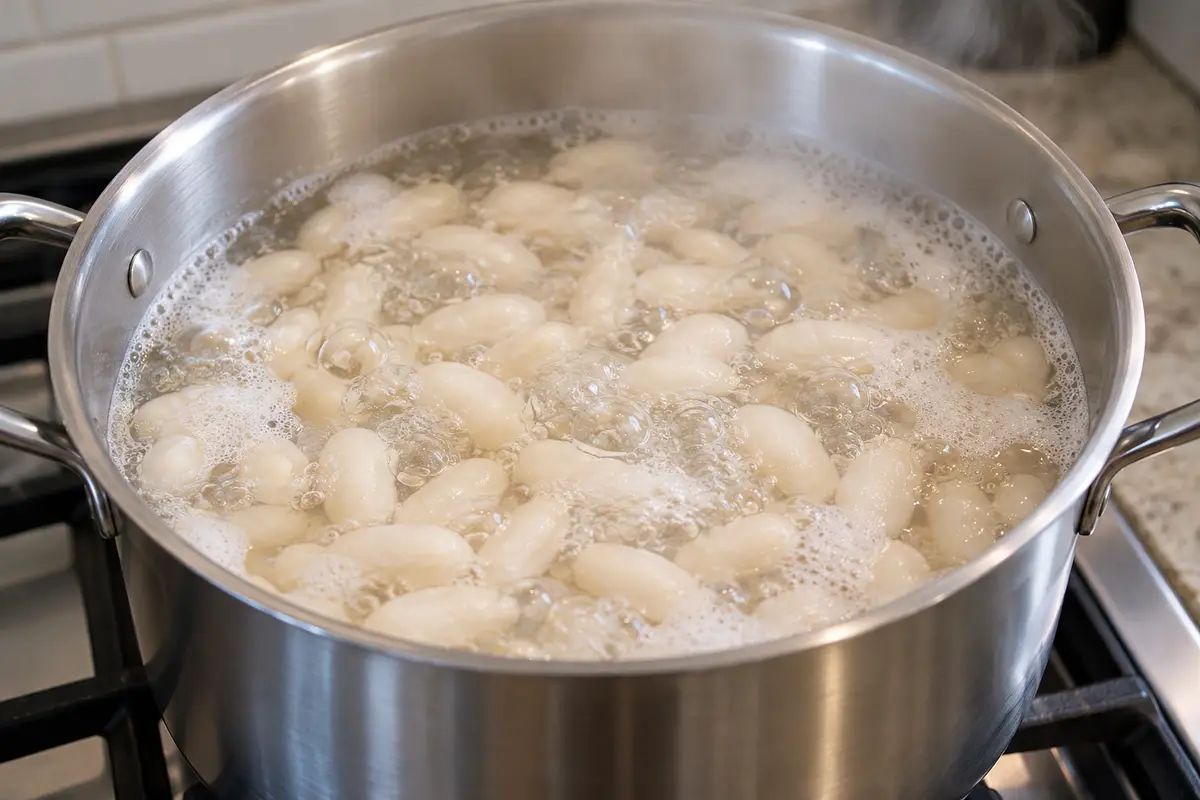
AI-generated Pour 1.5 l stock over the boiled beans and add the bay leaves and thyme sprigs. Bring to a boil, reduce the heat and simmer with the lid slightly ajar for about 60–90 minutes, until the beans are tender in the center but still mostly whole. Older beans may need longer. Do not put firm beans in the oven. If the liquid evaporates too quickly, cover the pot more tightly and reduce the heat.
While the beans cook, remove the surrounding fat from the confit legs, leaving the skin on; the meat is already cooked. Remove the bones with the help of a small knife and keep the meat and skin in large pieces. Weigh out 20 g clean fat from the packaging and set the rest aside. Heat those 20 g in a large skillet and brown the fresh sausage over medium heat for about 8–10 minutes, turning, until browned on the outside. Do not pierce the casings. Transfer to a plate; the sausage will finish cooking later in the oven. Keep all the fat and juices in the skillet for the dish.
Finely dice the onion and carrot and chop the garlic. Add the onion and carrot to the skillet used for the sausage; cook over medium-low heat for about 8 minutes, stirring. Add the garlic and cook for another minute. Drain the tender beans over a pot, removing the bay leaves and thyme sprigs. Measure out 700 ml of the liquid and save the remainder for another meal. Pour 100 ml of the measured liquid into the skillet and scrape up the flavorful browned bits. Add the entire contents of the skillet to the beans, add 3 g salt and all the pepper, and combine gently.

AI-generated Preheat the oven to 160°C with conventional top and bottom heat, without the fan. Choose a fairly deep, not too wide ovenproof dish with a capacity of about 4 l. Spread one third of the beans over the bottom, add all the duck pieces and cover with the remaining beans. Arrange the sausage on top, pressing it partly into the beans. Add 400 ml of the measured liquid: together with the 100 ml from the skillet, it should come roughly to the surface of the beans. Reserve the remaining 200 ml for adding during baking.
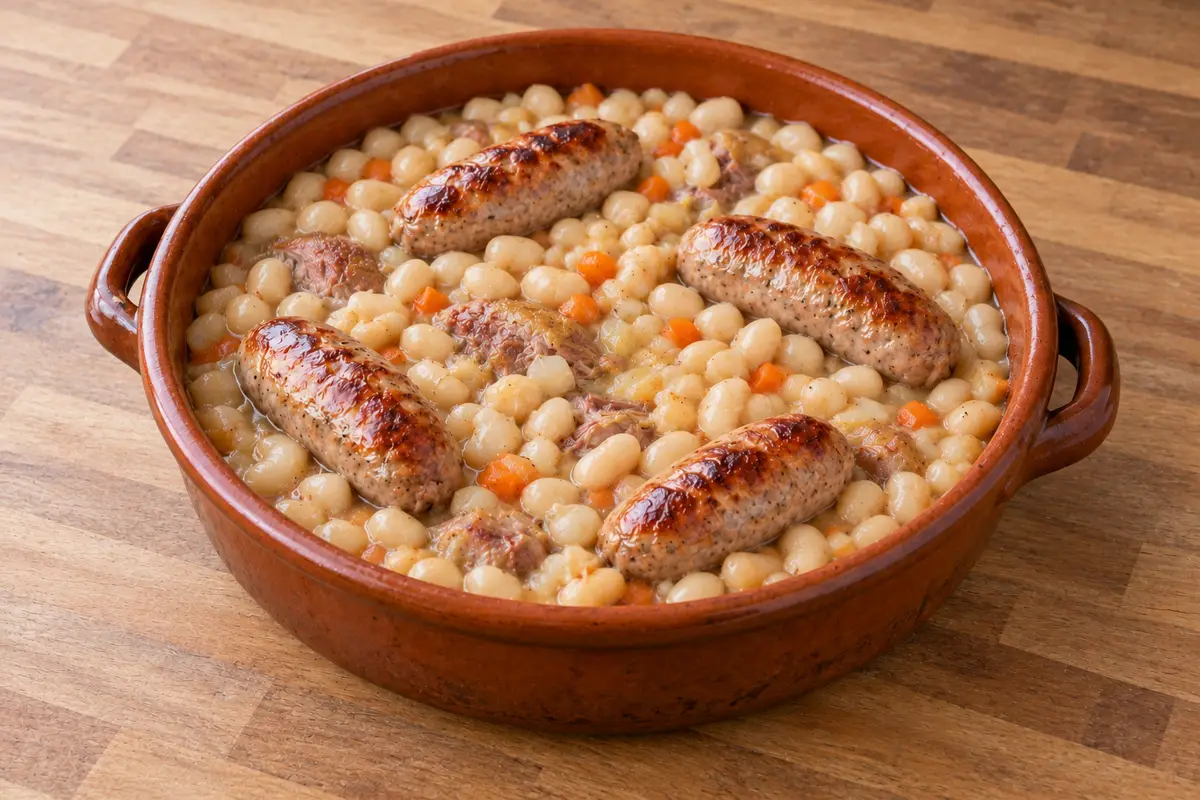
AI-generated Place the uncovered dish in the oven and bake for about 2–2.5 hours, until the beans are very creamy, the liquid has thickened and the top is browned. After about 45 minutes and again after 90 minutes, gently press the developing crust into the beans with a spoon, without crushing them, and add 100 ml reserved liquid around the edge of the dish each time. During the final part of baking, let a new golden-brown crust form. If the surface darkens too quickly, cover it loosely with foil. Do not sprinkle with breadcrumbs.
Remove the dish and leave for about 10 minutes, until it stops bubbling vigorously. Divide the duck meat and skin, the beans with all the remaining sauce and the four pieces of sausage into four generous portions. Scoop out with a broad spoon, keeping pieces of the browned surface intact, and serve hot. The bones, soaking and initial boiling water, excess fat set aside and unused stock are not included in the served portions.
Estimated nutrition

Rate this recipe
0 ratings
Comments