
AI-generated
Fabes con almejas — Asturian white beans with clams
Log in or create a free account to save recipes.
Source: https://recipheon.com/en/recipes/main-dishes/fabes-con-almejas-asturian-white-beans-with-clams
About this recipe
Fabes con almejas pairs large, creamy white beans with clams and their briny cooking liquor. In this home version, the sauce is thickened with majado: a paste of lightly fried bread, garlic and sweet paprika, mashed with a little bean cooking liquid. Start soaking the dried beans the evening before, then cook them patiently the next day until completely tender. The onion stays in the pot and becomes part of the sauce. Cook the clams separately once the beans are soft so they do not cook for too long. Strain the liquid released by the clams carefully to keep its flavor while removing any sand. Once everything is combined, only a few minutes of gentle cooking are needed. The finished dish should be juicy, with a lightly thickened sauce, intact beans and open clam shells. Divide all the beans, clam meat and sauce among four servings and serve hot.
Ingredients
Four servings of beans with clams
300 g dried large white fabes beans
1000 g live, commercially cleaned palourde clams, weighed in their shells
150 g peeled yellow onion
12 g peeled garlic
30 g extra-virgin olive oil
30 g ready-to-use plain white bread, including its soft crust
1 g ground sweet paprika
5 g washed and dried parsley leaves, net weight
4 g salt
1400 g fresh cooking water: 1300 g for the beans and 100 g for the clams
Steps
The evening before, sort through the 300 g dried beans and rinse them. Cover with plenty of cold water in a large bowl and refrigerate for about 12 hours; the beans will swell considerably. The soaking and subsequent rinsing water is extra process water, separate from the listed 1400 g cooking water. Buy fresh clams on the day you make the dish.
Drain off the soaking water and rinse the beans. Finely chop the onion. Put all the beans and onion into a heavy-bottomed pot with a capacity of about 4 l. Weigh out 1400 g fresh water: pour 1000 g into the pot, reserve 300 g to add to the beans later, and keep 100 g separately for the clams. Do not discard the onion at any later stage.
Bring the beans to a full boil and keep them boiling for at least 30 minutes. Adjust the heat so the water boils steadily but does not boil over; leave the lid ajar. If a lot of foam appears, lower the heat slightly while maintaining the boil. Do not replace this stage with simply heating over very low heat.
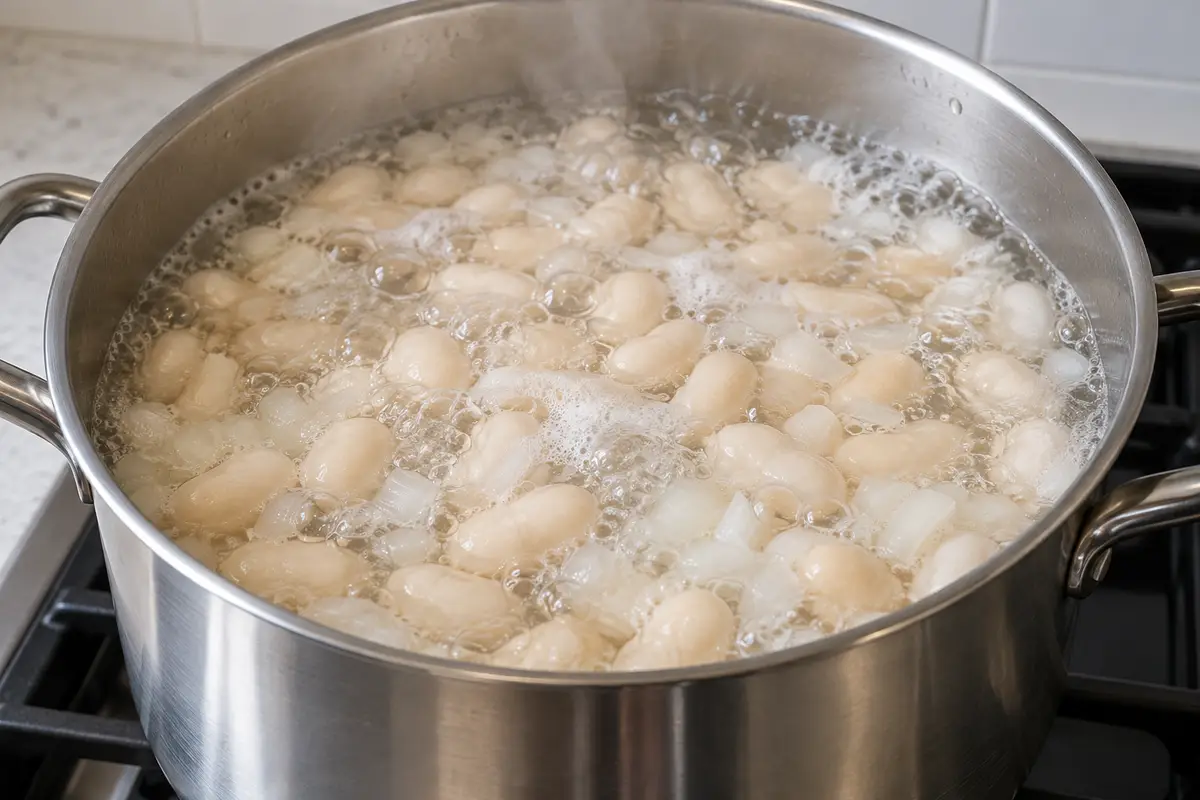
AI-generated Lower the heat, cover and simmer gently for about another 90–120 minutes, until every bean is completely tender, with no hard center. Gradually add the reserved 300 g water, using it all; the beans should remain submerged. Gently shake the pot and check the bottom. The cooking time depends on the beans. Keep all the liquid and onion; cook the clams only once the beans are tender.
Slice the garlic and tear the bread, including its soft crust, into small pieces. Heat all 30 g olive oil in a small frying pan over medium-low heat. Add the garlic and bread and fry for about 2–3 minutes, turning, until the bread is lightly golden and the garlic stays pale. Take the pan off the heat and stir in all the sweet paprika so it does not burn.
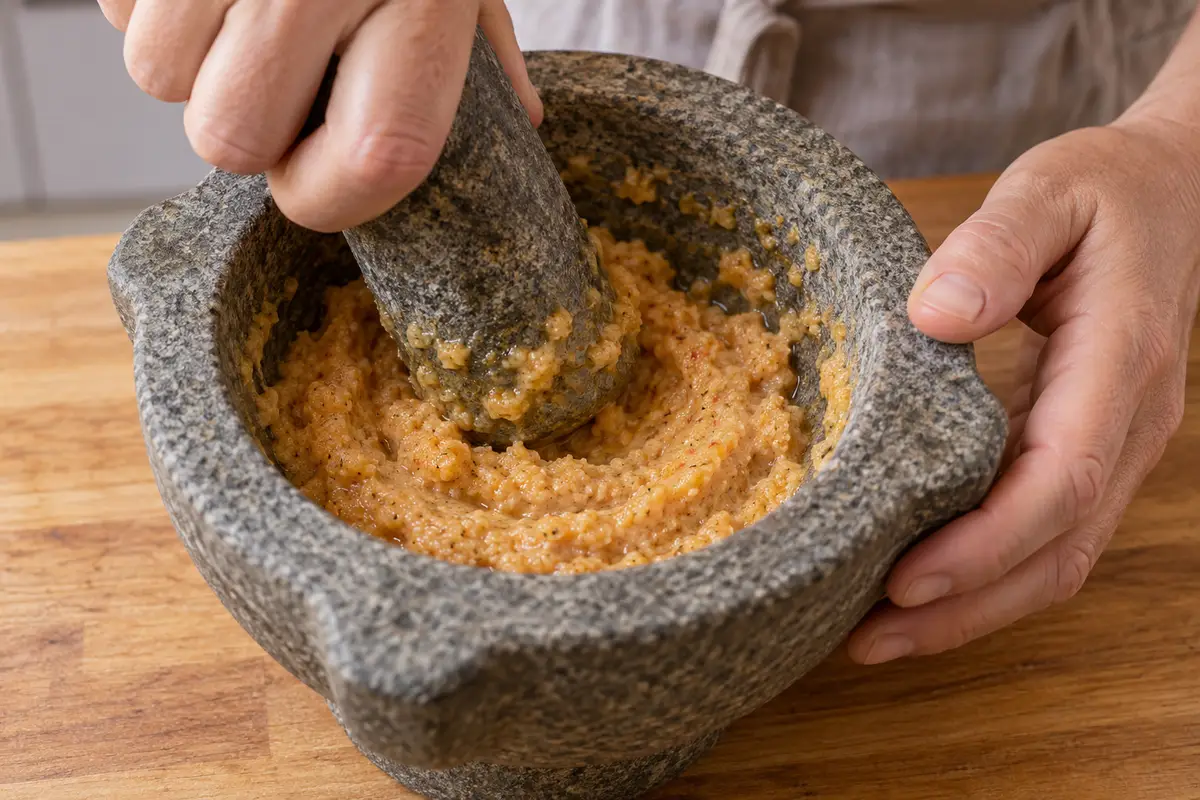
Transfer the entire contents of the pan, including the oil and paprika, to a mortar. Add a few tablespoons of hot cooking liquid from the bean pot and mash into a thick paste, as smooth as possible. You can use a small food processor. Scrape in all the bread, garlic and oil; the liquid will return to the dish with the paste and is not extra water.
AI-generated Keep the clams refrigerated until cooking, following the seller's instructions. Discard any with cracked shells and any open ones that do not close when tapped. Scrub the remaining clams, rinse briefly under cold running water, then drain. Use commercially cleaned clams; rinsing removes dirt from the shells.
Use a wide, deep-sided frying pan or lidded pot, about 28 cm in diameter, and pour in the reserved 100 g water. Add the clams, cover and heat over medium-high heat for about 5–7 minutes, shaking the vessel a few times, until the shells open. Watch out for hot steam. Discard any clams that remain closed after cooking, and keep the open ones with their liquid.
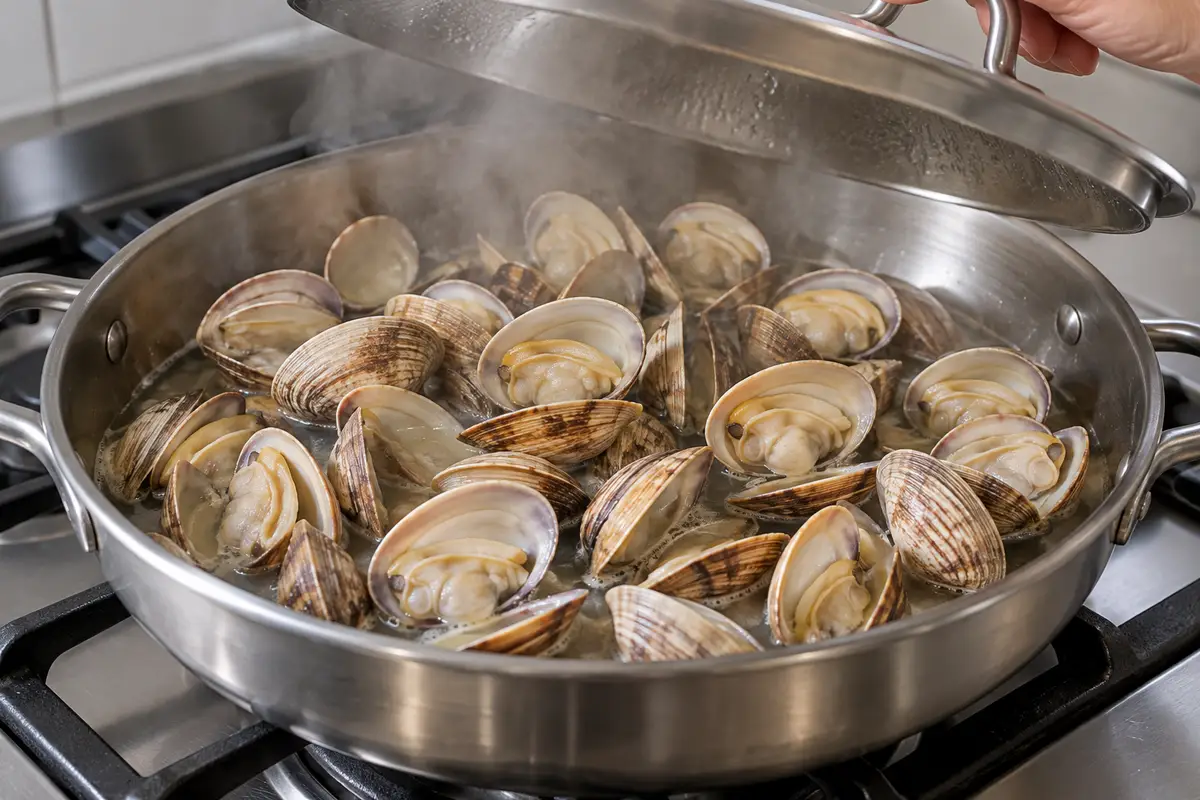
AI-generated Pour the clam liquid through a very fine sieve to catch any sand. Add all the strained liquid and all the majado to the tender beans, scraping the paste from the mortar. Add the 4 g salt and stir gently. Add the open clams with their meat and simmer everything gently for 4–5 minutes. The sauce should thicken slightly while staying fluid; do not drain it off.
Chop all 5 g parsley and stir it into the finished dish. Divide all the beans, clam meat and all the sauce among four deep plates; the shells are not edible. Serve immediately, hot. Cool any leftovers promptly in a shallow container, cover and refrigerate. Use the next day, reheating the entire serving until thoroughly hot.
Estimated nutrition

Rate this recipe
0 ratings
Comments