
AI-generated
Labskaus — potato and beef mash with beets, egg and pickles
Log in or create a free account to save recipes.
Source: https://recipheon.com/en/recipes/main-dishes/labskaus-potato-and-beef-mash-with-beets-egg-and-pickles
About this recipe
Labskaus is a hearty dish from northern Germany in which soft potatoes, beef and beets come together in a thick, pink mash. A freshly fried egg goes on top, while sweet-and-sour pickles add a pleasant crunch. This home version uses ready-to-eat canned corned beef and cooked beets, so the whole meal can be ready in about three-quarters of an hour. The onion softens gently in butter, the milk loosens the potatoes, and the meat and beets heat through together before everything is combined. Use a simple potato masher: small pieces of meat and vegetables give the dish its character, whereas prolonged blending would make the potatoes gluey. Half the pickles go into the mash, and the rest stay cool as an accompaniment on the plate. Fry the eggs last and serve straight away, while the mash is hot and the egg whites have just set.
Ingredients
For 4 servings
800 g raw peeled floury potatoes
300 g ready-to-eat canned corned beef, without draining off its edible juices
300 g cooked peeled beets without brine or additives, such as vacuum-packed beets
150 g sweet-and-sour pickles, drained weight, with 75 g each for the mash and serving
100 g raw peeled onion
4 medium eggs, size M, about 200 g raw weight without shells
30 g unsalted butter, 10 g for the onion and 20 g for the eggs
100 g whole milk, 3.2% fat, weighed
2 g salt, with 1 g each for the mash and eggs
0.3 g ground black pepper
Steps
Cut the peeled potatoes into evenly sized pieces, about 3 cm. Put them in a saucepan, add enough plain unsalted water to cover, and bring to a boil. Simmer for 18–22 minutes, until a fork slides easily into the center. Meanwhile, prepare the remaining ingredients. Reserve all the weighed salt for seasoning the food later; the cooking water will be drained off.
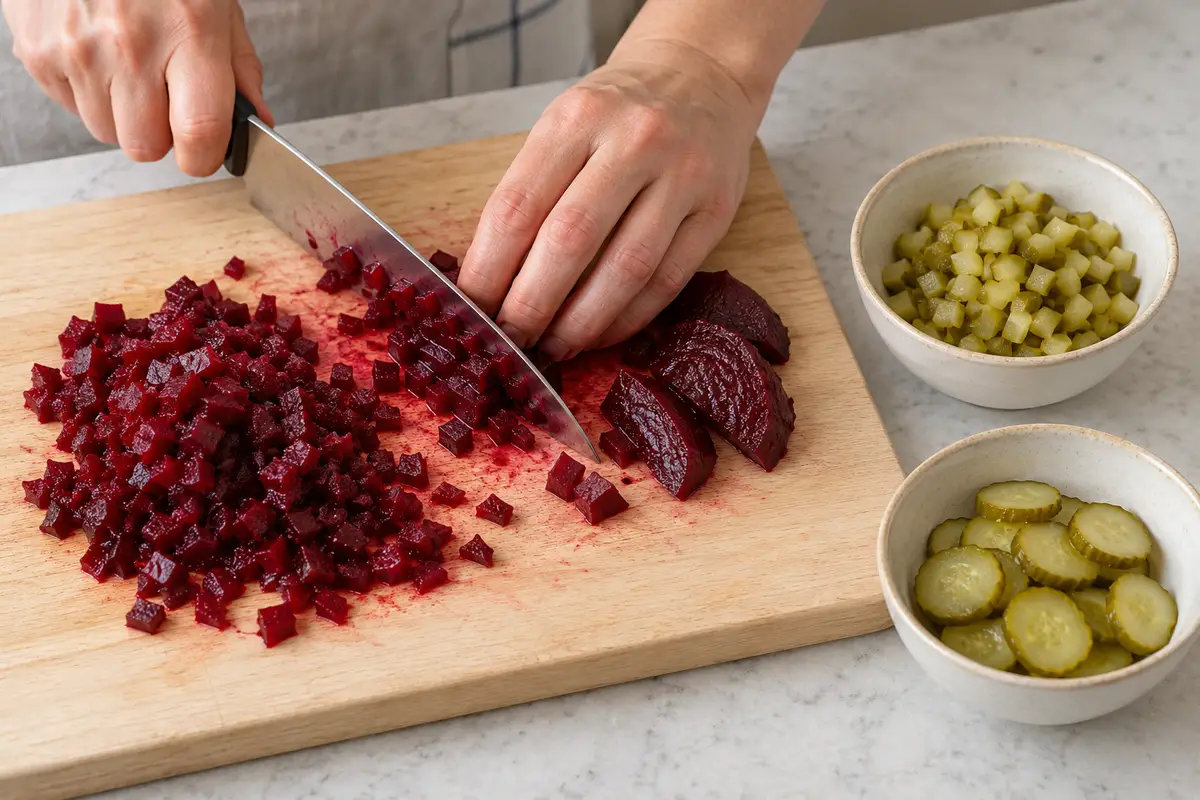
Finely chop the cooked peeled beets or grate them coarsely; keep any juice released as you cut them. Divide the weighed drained pickles into two portions of 75 g. Finely chop the first for the mash, then slice the second and set it aside for serving. Chop the onion and break the corned beef into small pieces with a fork. Do not add pickle brine or any extra beet liquid.
AI-generated Melt 10 g butter in a large skillet over medium or low heat. Add all the onion and cook for 5–6 minutes, stirring often, until soft and translucent. Do not brown it heavily, and do not let the butter burn. If the onion starts browning quickly, reduce the heat. The potatoes can continue cooking while you do this; no separate fat or water is needed in the skillet.
Add all the weighed corned beef and its edible juices to the onion. Break it up with a spatula and stir for about 2 minutes. Add all the beets and any juice released during chopping, then heat for another 3–4 minutes over low heat, until everything is hot. The meat is already a cooked canned product. Keep all the fat and juices in the skillet to combine with the potatoes later.
Drain the soft potatoes thoroughly. Return the saucepan to very low heat for about a minute and shake it to let surface moisture evaporate. Remove from the heat, add all 100 g of warmed milk, and mash with a hand masher. Transfer everything from the skillet to the saucepan, carefully scraping in all the fat and juices. Mash into the potatoes to make a thick pink mixture; do not use a blender.
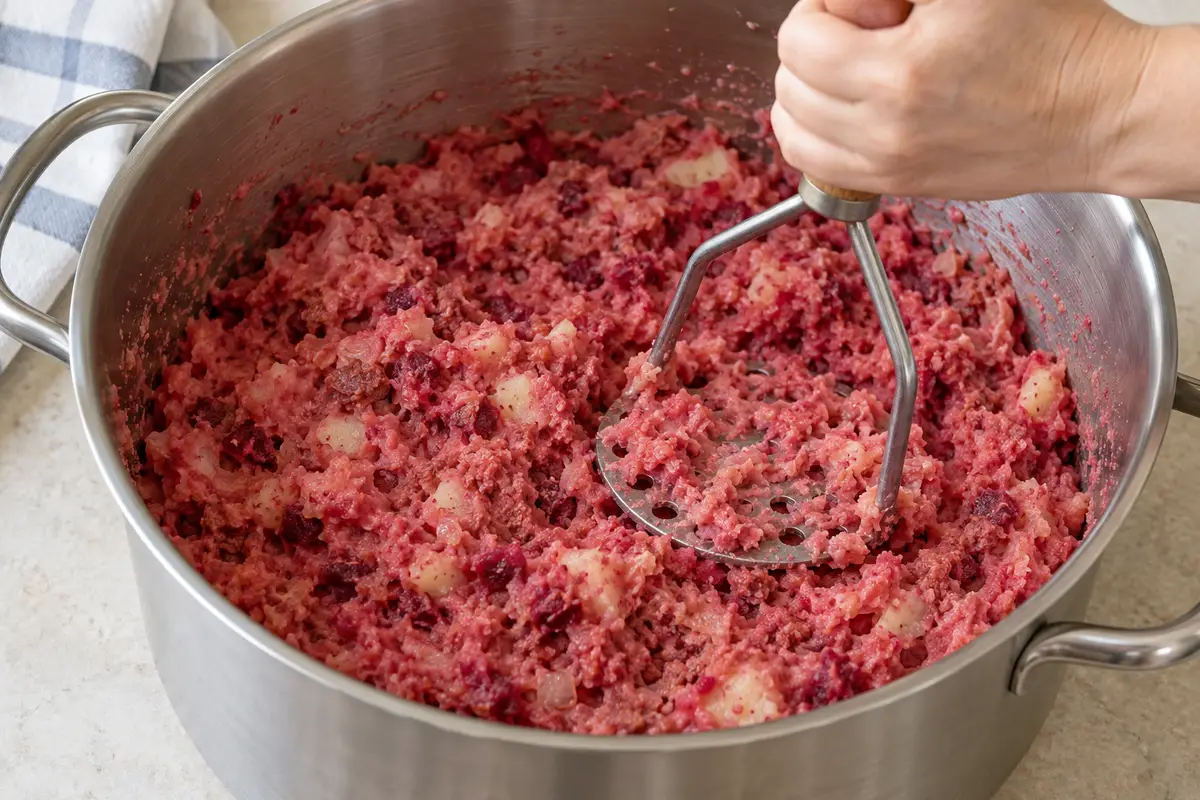
AI-generated Stir in 75 g finely chopped pickles, 1 g salt and all the pepper. Heat over low heat for about 2–3 minutes, stirring along the bottom, until evenly hot. The mash should be soft and spoonable, with small pieces of meat and vegetables. Cover and leave on the turned-off burner while you fry the eggs. Do not add extra milk or brine.
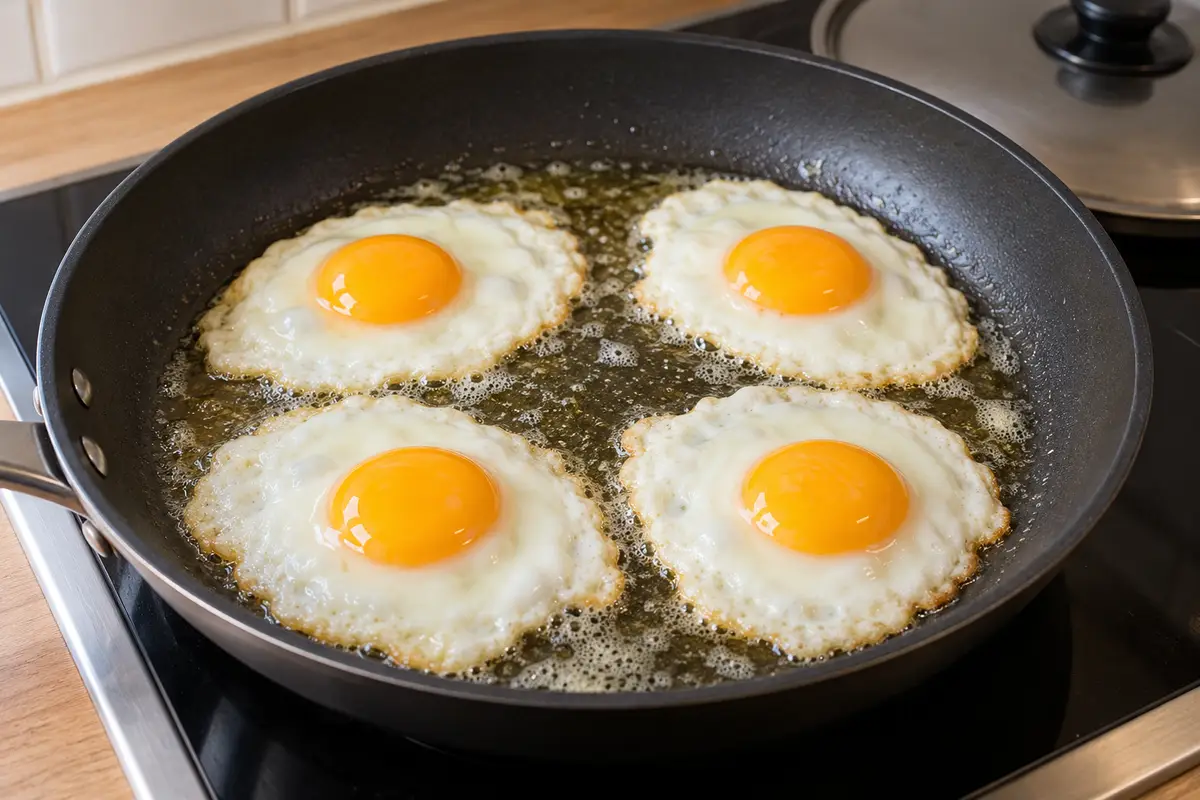
In a nonstick skillet about 28 cm in diameter, melt the remaining 20 g butter over medium or low heat. Carefully crack in the four eggs and sprinkle with the remaining 1 g salt. Fry for 4–6 minutes, until the whites are fully set. To set the tops and yolks more firmly, cover the skillet for the final 1–2 minutes. Keep the heat gentle so the butter does not darken and the whites do not become tough.
AI-generated Divide all the mash among four plates. Put one egg on each portion and distribute all the reserved 75 g pickles alongside. Spoon up the remaining butter from the skillet and divide it over the eggs and mash. Serve immediately. Quickly transfer any leftovers to a shallow container, cool and refrigerate; use the next day, reheating only once until hot in the center.
Estimated nutrition

Rate this recipe
0 ratings
Comments