
AI-generated
Panissa vercellese – rice with beans and salami
Log in or create a free account to save recipes.
Source: https://recipheon.com/en/recipes/main-dishes/panissa-vercellese-rice-with-beans-and-salami
About this recipe
Panissa vercellese is a hearty dish from the area around Vercelli in Piedmont, where rice is cooked gradually in bean broth. Onion, lardo, red wine and salam d’la duja, a soft salami matured under a layer of fat, give it its character. This preserving fat is removed before the salami is weighed; lardo, salted unsmoked pork fatback, is a separate ingredient. This home version with borlotti beans and Carnaroli rice keeps that distinctive combination. A little tomato paste adds color, and Parmigiano Reggiano brings the dish together off the heat. Panissa should be moist and creamy but fairly thick, with distinct grains of rice and soft beans. It should not be confused with Ligurian panissa made from chickpea flour or with Novara's paniscia.
Ingredients
For 4 servings
300 g dry Carnaroli rice
150 g dried borlotti beans
120 g peeled onion
40 g lardo, salted unsmoked pork fatback without rind
150 g mature salam d’la duja, without the casing and the fat used to preserve it
100 g dry red wine, such as Barbera
20 g double-concentrated tomato paste
40 g finely grated Parmigiano Reggiano
2000 g cooking water: 1200 g for the beans and 800 g kept hot in reserve for adding as needed
5 g salt
0.5 g ground black pepper
Steps
Sort through and rinse the dried beans. Put them in a bowl with about 900 g cold water for soaking only. Cover and refrigerate for about 12 hours, leaving room for them to swell. The next day, drain off the water and rinse the beans in a sieve.
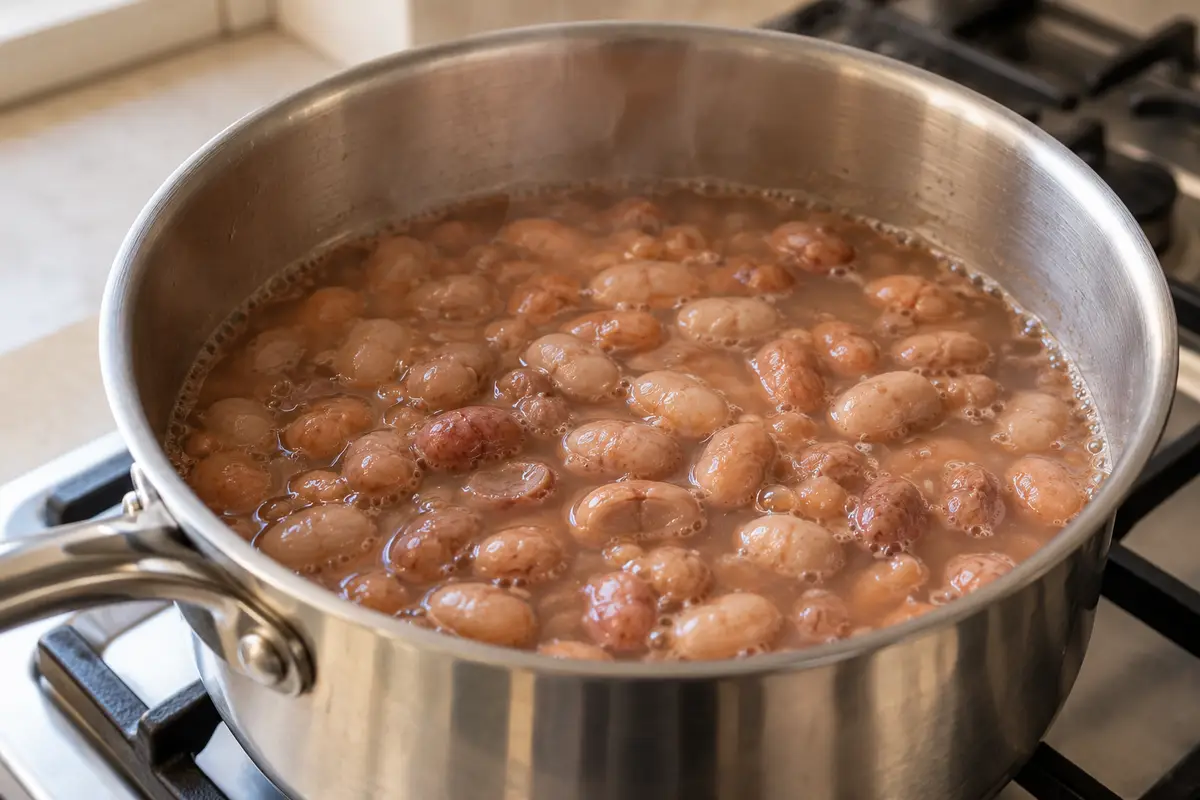
Put the beans in a pot and pour in the weighed 1200 g fresh water. Bring to the boil and cook in boiling water for at least 30 minutes. Then cook more gently under a slightly open lid for about 40–60 minutes, until the beans are completely soft. If they are still firm or the package recommends a longer time, keep cooking. Make sure the beans stay submerged, topping up with hot water from the weighed 800 g reserve as needed. Lift the soft beans into a bowl with a slotted spoon, keeping all the broth in the pot. Keep it hot; do not discard it.
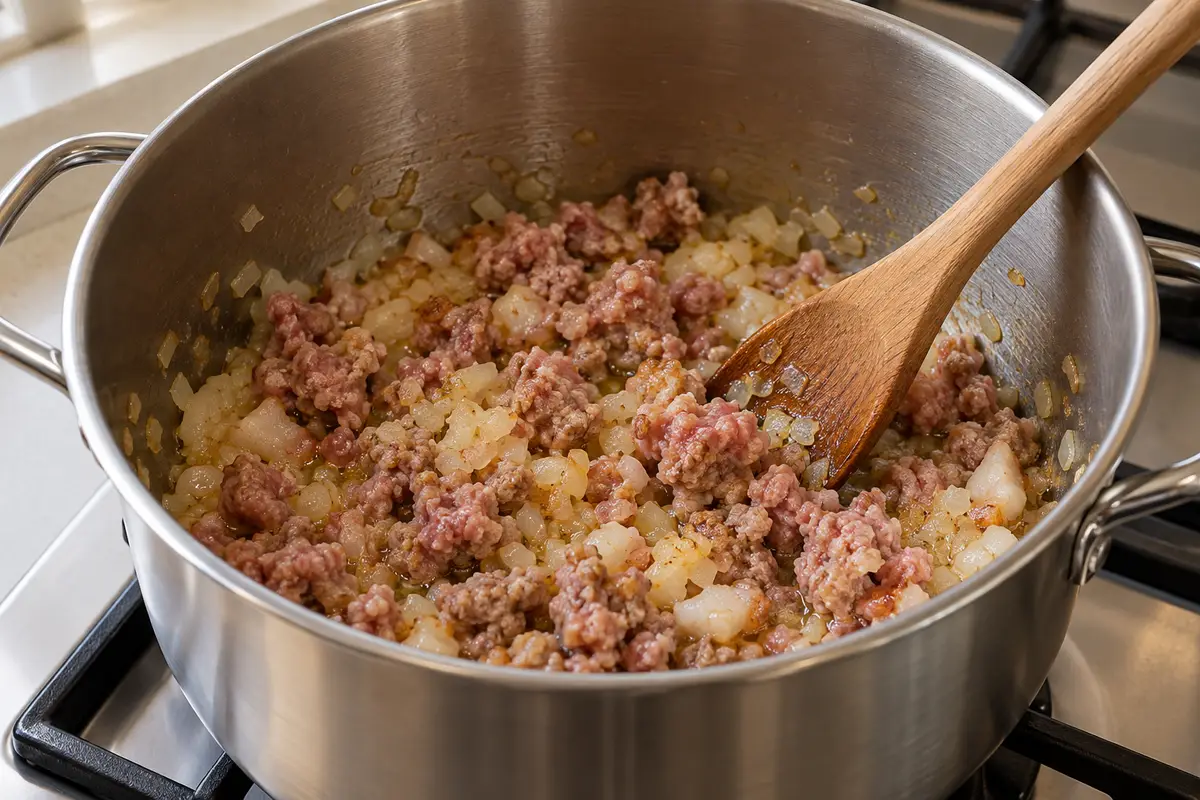
AI-generated Remove the salami's casing and the fat in which it matured, then weigh the edible portion and crumble it. Finely chop the onion and lardo. In a wide, heavy-bottomed pot, gently render the lardo for about 2–3 minutes. Add the onion and cook for about 8–10 minutes, stirring, until soft and lightly golden. Keep all the rendered fat in the pot; do not add butter or olive oil.
Add the crumbled salam d’la duja to the onion and lardo. Cook gently for about 2–3 minutes, stirring and breaking up larger pieces. The soft mature salami should combine with the onion while keeping small pieces. Do not replace it in this recipe with chorizo or hard, very dry salami.
AI-generated Add the dry, unwashed rice and stir for about 2 minutes so the grains are coated in fat and heated through. Add the tomato paste and stir for about another minute. Pour in the red wine. Cook for 2–3 minutes until the liquid has noticeably reduced, stirring and scraping the flavorful bits from the bottom.
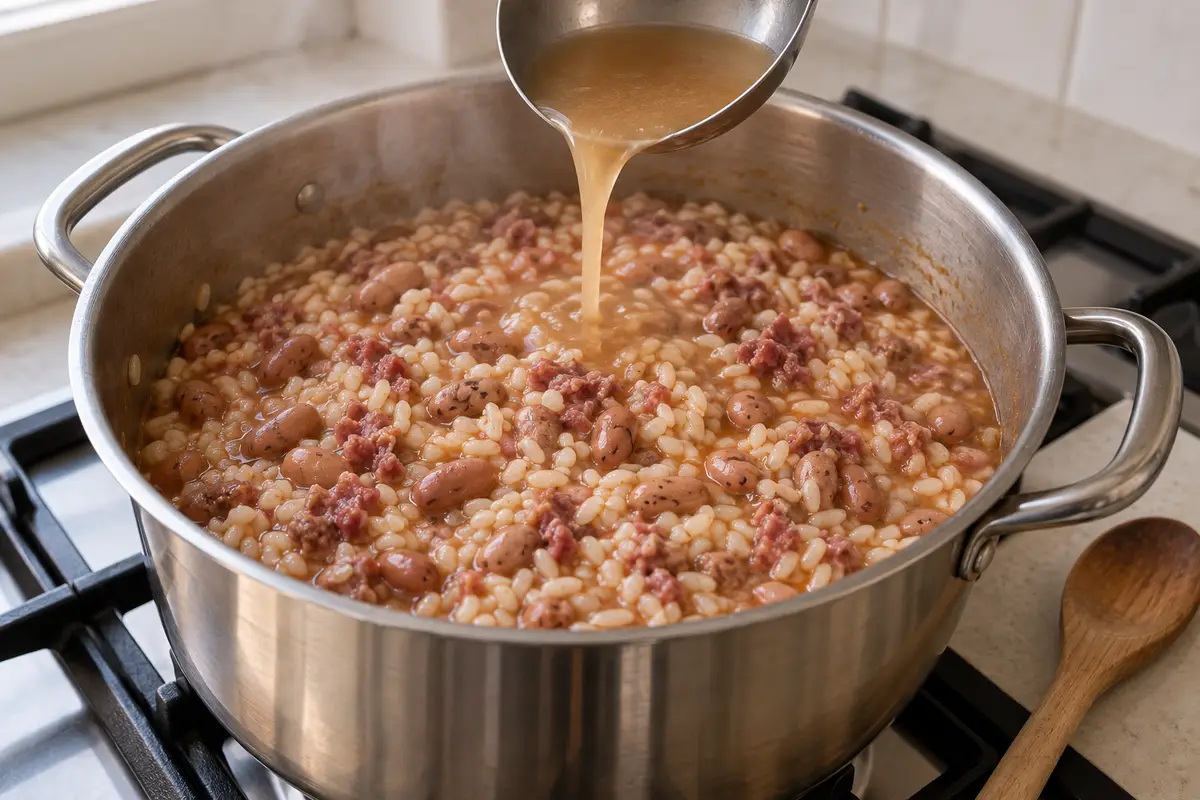
Add the cooked beans and the first ladleful of hot broth. Cook over a moderate heat for about 18–20 minutes, also following the time on the rice package. Stir frequently but gently, adding another ladleful when the previous one is almost absorbed. If the broth runs out, use the remaining hot water from the weighed reserve. By the end, the rice should be tender with slight resistance in the center, the beans completely soft and the dish moist and creamy. You do not need to use all the broth or reserve water; unused liquid is not part of the four servings.
AI-generated Take the pot off the heat. Add all the grated Parmigiano Reggiano and the weighed salt and pepper. Stir gently, cover and leave for about 5 minutes. Panissa thickens as it rests, so before covering it should still be slightly fluid, without a dry layer on the bottom.
Divide the panissa among four deep plates. Scoop up rice together with beans, salami and the creamy sauce. Serve hot, without extra cheese, herbs or other ingredients. Do not add the broth left in the bean pot to the servings.
Estimated nutrition
We couldn't estimate the nutrition for this recipe yet.

Rate this recipe
0 ratings
Comments