
AI-generated
Spanish Ham Croquettes
Log in or create a free account to save recipes.
Source: https://recipheon.com/en/recipes/main-dishes/spanish-ham-croquettes
About this recipe
Spanish ham croquettes have a golden, crisp coating and a creamy béchamel center with finely chopped serrano ham. Cooked until thick, the filling becomes firm enough to shape after thorough chilling, then turns soft again during frying. The croquettes are coated in flour, egg, and fine dry breadcrumbs in that order, carefully covering the entire surface. The recipe makes about twenty croquettes, or four tapas servings of five. With four hours of chilling for the filling, allow about seven hours in total, including the additional chilling of the coating. You can also make the filling in the evening and chill it overnight, which extends the total preparation time.
Ingredients
Croquette Filling
700 ml milk with 3.2% fat
80 g butter with 82% fat
160 g all-purpose flour, divided: 100 g for the béchamel and 60 g for breading, of which some may be left over
150 g cured serrano ham without skin or bones, edible weight
0.5 g ground black pepper
0.5 g ground nutmeg
Breading and Frying
2 medium eggs (size M), about 100 g without shells, for breading; some may be left over
200 g fine dry breadcrumbs for breading; some may be left over
1200 ml refined rapeseed oil for the deep-frying bath, not for serving
Steps
Chop the ham very finely into pieces about 2–3 mm so it spreads evenly through the filling. Measure out 100 g flour for the béchamel and 60 g for the coating separately. In a small pot, warm all 700 ml milk until distinctly warm, without bringing it to a boil. Have ready a wide, heavy-bottomed saucepan and a shallow dish about 25 × 20 cm for the filling.
Melt all 80 g butter in the saucepan over medium-low heat. Add the ham and stir for about 1 minute, just to release its aroma. Add the 100 g flour allocated to the béchamel and stir for about 3 minutes, working it into the butter. The roux should stay pale; do not brown it and do not burn the ham.
Pour in the warm milk in several additions, whisking thoroughly each time until the flour lumps disappear. Add all the pepper and nutmeg. Once the mixture starts bubbling gently, cook over low heat for about 15–20 minutes, stirring with a spatula and scraping the bottom and sides. It should be very thick and creamy and pull away from the bottom; a track drawn with the spatula should stay visible for a few seconds. Do not stop at the consistency of an ordinary sauce and do not add salt to the salty ham. The filling must thicken during cooking before chilling, without adding extra flour later.
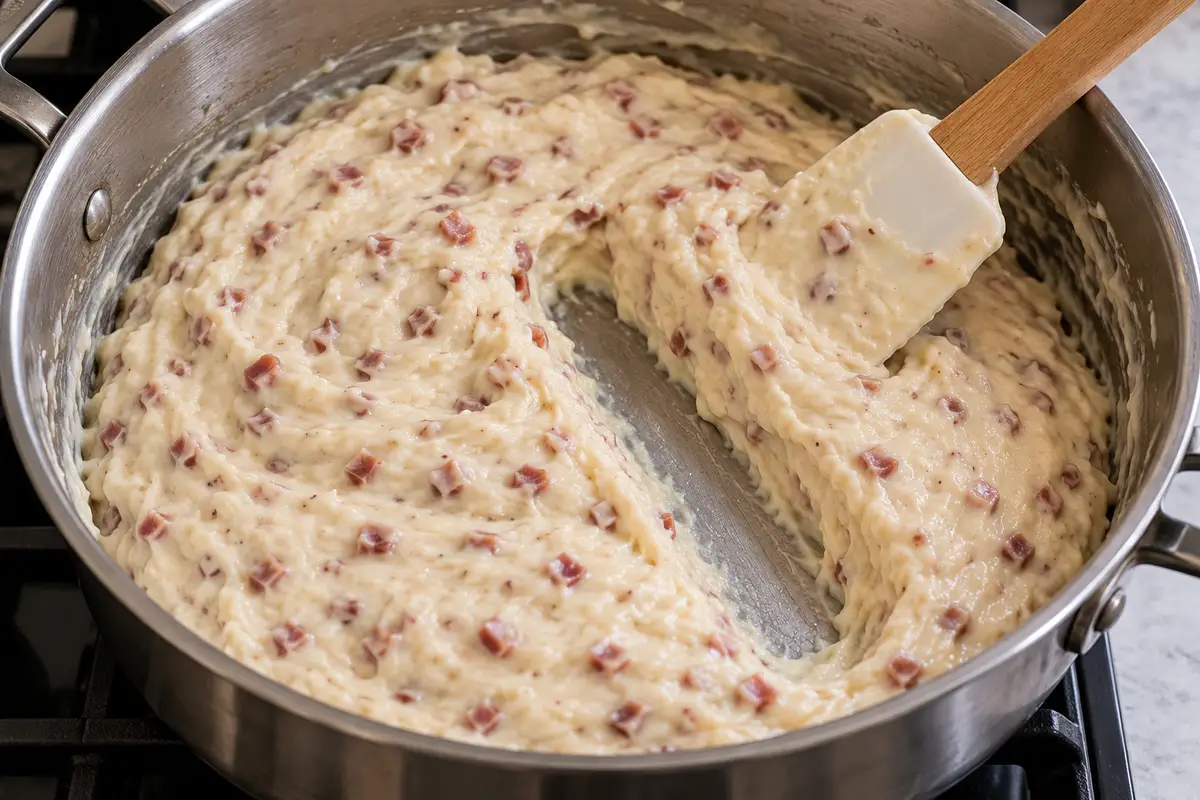
AI-generated Transfer the filling to the shallow dish and spread it about 2 cm thick. Let steam escape for about 10–15 minutes, then cover with plastic wrap touching the surface and promptly refrigerate. Do not leave it on the counter for several hours. Chill for at least 4 hours, until all the filling is cold and firm. Alternatively, leave it in the refrigerator overnight and finish the next day; the total time will then be correspondingly longer.
Remove the wrap and divide all the cold filling into 20 portions as equal as possible. An easy method is to mark four rows of five portions in the dish and scoop them out with a spoon. Shape short, smooth logs with rounded ends, roughly 6 cm long and 3 cm thick. Dividing all the filling evenly matters more than the exact dimensions. Work promptly so it does not warm up too much; if it starts becoming sticky and soft, briefly return the dish of remaining filling to the refrigerator. Do not thicken it with extra flour.
Prepare three separate shallow dishes: one with the remaining 60 g flour, one with beaten eggs, and one with breadcrumbs. Coat each croquette lightly in flour and shake off the excess, then dip it in egg, let it drip briefly, and coat it thoroughly in breadcrumbs. Gently press the crumbs on, covering the entire surface and both ends without cracks or exposed areas. Apply a single coating. Place the croquettes separately on a plate or tray. The breading quantities allow for leftovers: discard any remains that have come into contact with egg; do not add them to the finished dish.
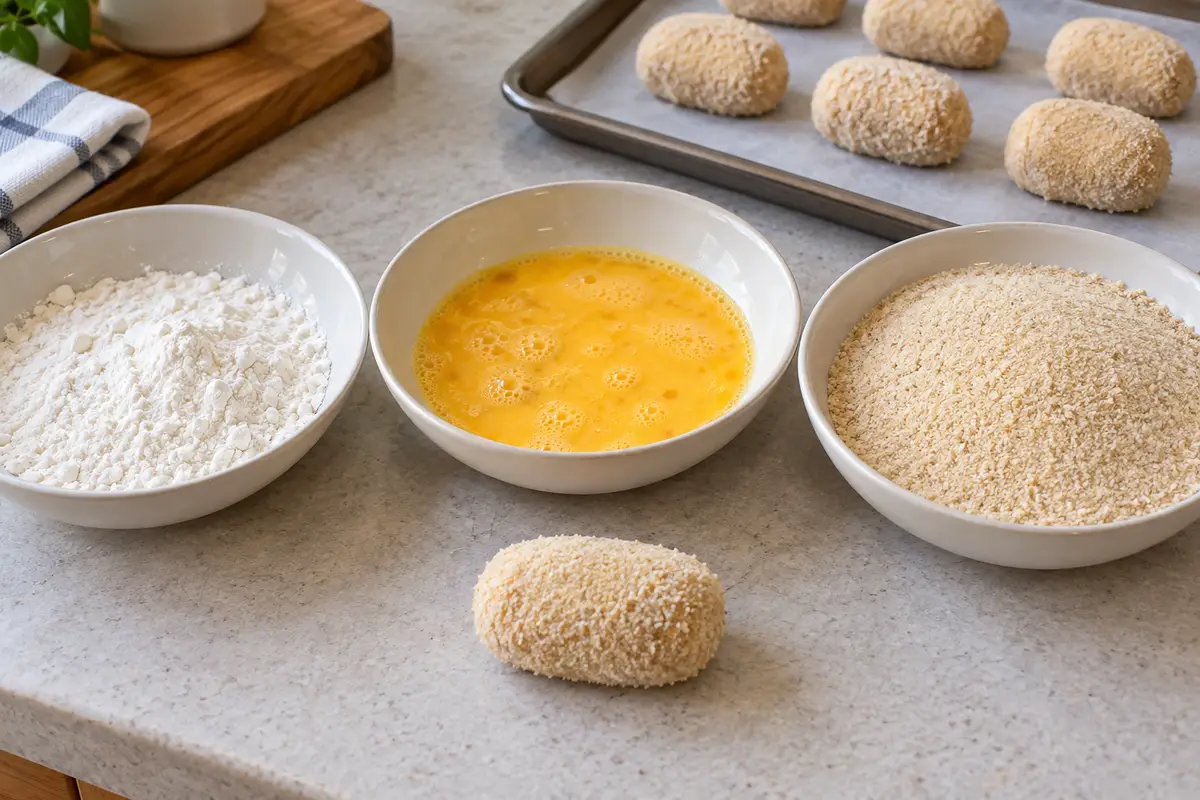
AI-generated Refrigerate the breaded croquettes for 30 minutes. Then pour the oil into a tall pot about 18–20 cm in diameter with a capacity of at least 3 l: 1200 ml should make an oil bath about 4–5 cm deep. The oil must not rise above halfway up the pot; leave at least 5 cm below the rim. Heat it over medium heat to about 175°C. Without a thermometer, a pinch of the measured breadcrumbs provides a cue: it should immediately be surrounded by small bubbles and gradually turn golden, rather than darken instantly or sit without visible frying. The oil must not smoke. Keep the croquettes refrigerated until frying.
Carefully lower 4 cold croquettes at a time into the oil, using a slotted spoon, for example, and fry for about 3–4 minutes per batch. Turn gently so the coating becomes evenly golden and the center has time to heat through. Maintain steady, active frying at about 175°C, without smoking. Do not overcrowd the pot and do not add all the croquettes at once: a large temperature drop encourages splitting and oil absorption. Let the oil return to temperature before the next batch. Lift the golden croquettes out with a slotted spoon onto paper towels, leaving space between them; fry all 20 in five batches this way.
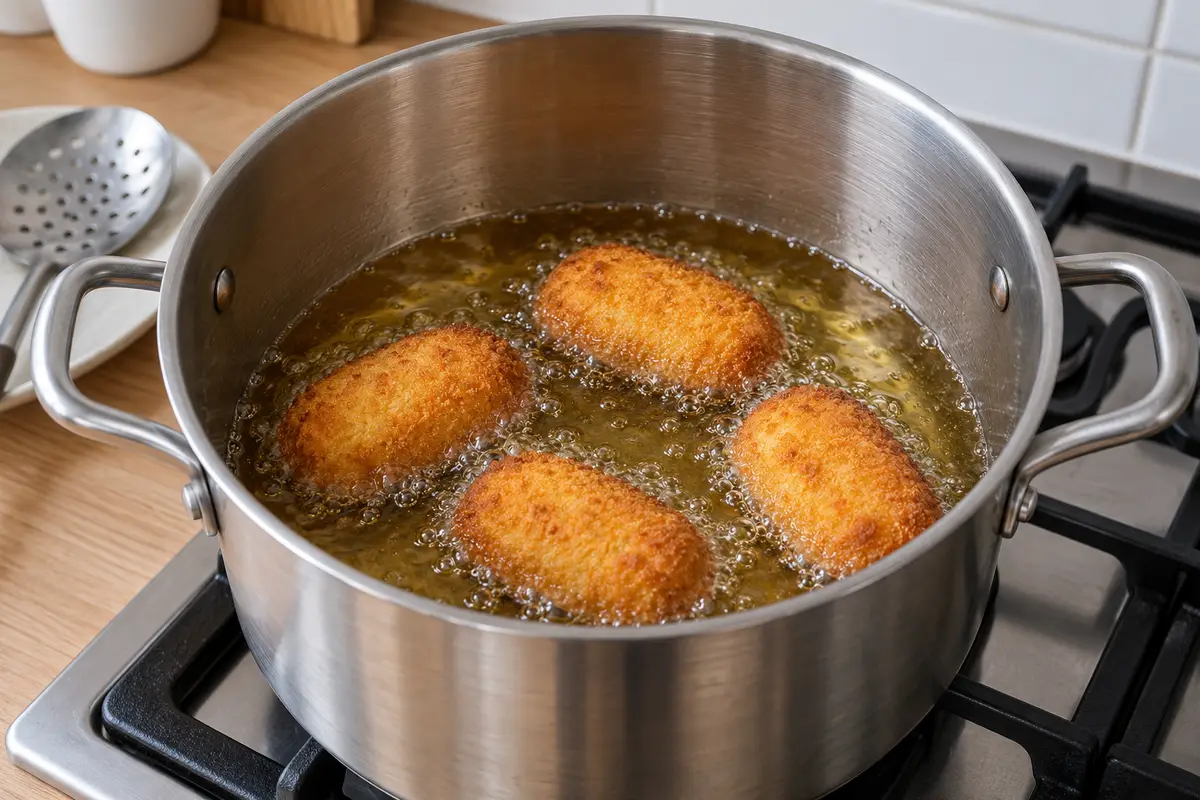
AI-generated After frying, leave the croquettes for about 5 minutes before tasting the creamy, very hot center. Serve 5 croquettes for each of the four tapas servings, without sauces or garnish. The oil remaining in the pot is a working frying bath and is not part of the served dish.
Estimated nutrition

Rate this recipe
0 ratings
Comments