
AI-generated
Zwiebelkuchen — onion and bacon tart with a yeast crust
Log in or create a free account to save recipes.
Source: https://recipheon.com/en/recipes/main-dishes/zwiebelkuchen-onion-and-bacon-tart-with-a-yeast-crust
About this recipe
Zwiebelkuchen is a savory German bake with a fluffy yeast crust supporting a generous layer of soft onions. In this homemade version, dough made from type 550 wheat flour, milk and butter holds a filling of gently cooked onions and smoked bacon, combined with sour cream and eggs. Caraway and black pepper give it a bold, warming aroma. First soften the onions thoroughly in a skillet, retaining all rendered bacon fat and evaporating the free liquid. Let them cool before combining with the egg mixture so the filling stays smooth. Baking in a metal pan on a lower rack helps cook the yeast base, while a short rest afterward makes slicing easier. The result is one round tart for eight servings, with a browned rim and a moist, set center, without extra cheese, sauce or decoration.
Ingredients
All dough for one tart
250 g dry all-purpose wheat flour, type 550, all for the dough, without extra flour for dusting
150 g milk, 3.2% fat, weighed, lukewarm, not 150 ml
30 g unsalted butter, 82% fat, soft, all for the dough
10 g fresh baker's yeast, not dry yeast
4 g fine salt
All onion and sour cream filling
800 g raw yellow onions, net weight after peeling and removing the ends
150 g raw cured and smoked pork bacon, without skin or bones, net weight; all bacon, rendered fat and juices used
200 g thick sour cream, 18% fat, weighed, not sweet cream
100 g raw whole eggs without shells, about 2 medium eggs, all whites and yolks used
2 g fine salt
1.5 g whole caraway seeds, Carum carvi, not cumin or nigella
1 g ground black pepper
Weighed butter for the pan
5 g of the same unsalted butter, 82% fat, to lightly grease the pan; residue left after unmolding is not served
Steps
Prepare a metal springform pan with an internal diameter of about 26 cm and sides at least 5 cm high, plus a deep skillet about 28 cm across. Separately weigh 30 g butter for the dough and 5 g for the pan. Use those 5 g to lightly grease the springform's bottom and sides. Prepare a rolling pin and paper for rolling. All 250 g flour goes into the dough; do not reserve dusting flour and do not prepare oil for the onions.
Mix 10 g fresh yeast into all 150 g slightly warm milk. Add 250 g type 550 flour, 4 g salt and 30 g soft butter. Bring together and knead for about 8–10 minutes, until smooth, elastic and cohesive. Gather all crumbs from the bowl. Do not add sugar, egg, baking powder, extra flour or unweighed liquid; the milk should not be hot.
Shape a ball and put in a bowl without extra greasing. Cover, leaving room to rise, and set in a warm, undisturbed place for about 60–75 minutes. The dough should become noticeably puffier and approach double its volume. A cooler kitchen may require longer. Prepare the onions and bacon during the rise so they have time to cool before mixing with eggs.
Peel the onions, remove the ends and only then weigh 800 g. Cut into thin half-moons. Remove any bacon skin or bones before weighing 150 g if it was not already trimmed; keep all edible fat. Cut into small cubes. Prepare the weighed 2 g filling salt, 1.5 g whole caraway and 1 g pepper. Do not replace the bacon with ready-made crisp bacon bits or lean ham.
Put all the bacon into a cold, dry skillet. Cook over medium heat for about 5–7 minutes, stirring, until it starts releasing fat and lightly browning. Do not drain on paper and do not pour off fat or juices. Add half the onions and stir; once slightly softer with more room in the pan, add the rest. All bacon pieces and all fat stay in the skillet.
Add the weighed filling salt, caraway and pepper. Cook gently over low or medium heat for about 20–25 minutes, stirring often; the skillet may be covered for the first 10 minutes. Then cook without a lid to evaporate watery liquid. The onions should be completely soft, translucent or lightly golden, without firm raw pieces. Do not let them burn dark and do not drain in a strainer; the remaining fat belongs in the filling.
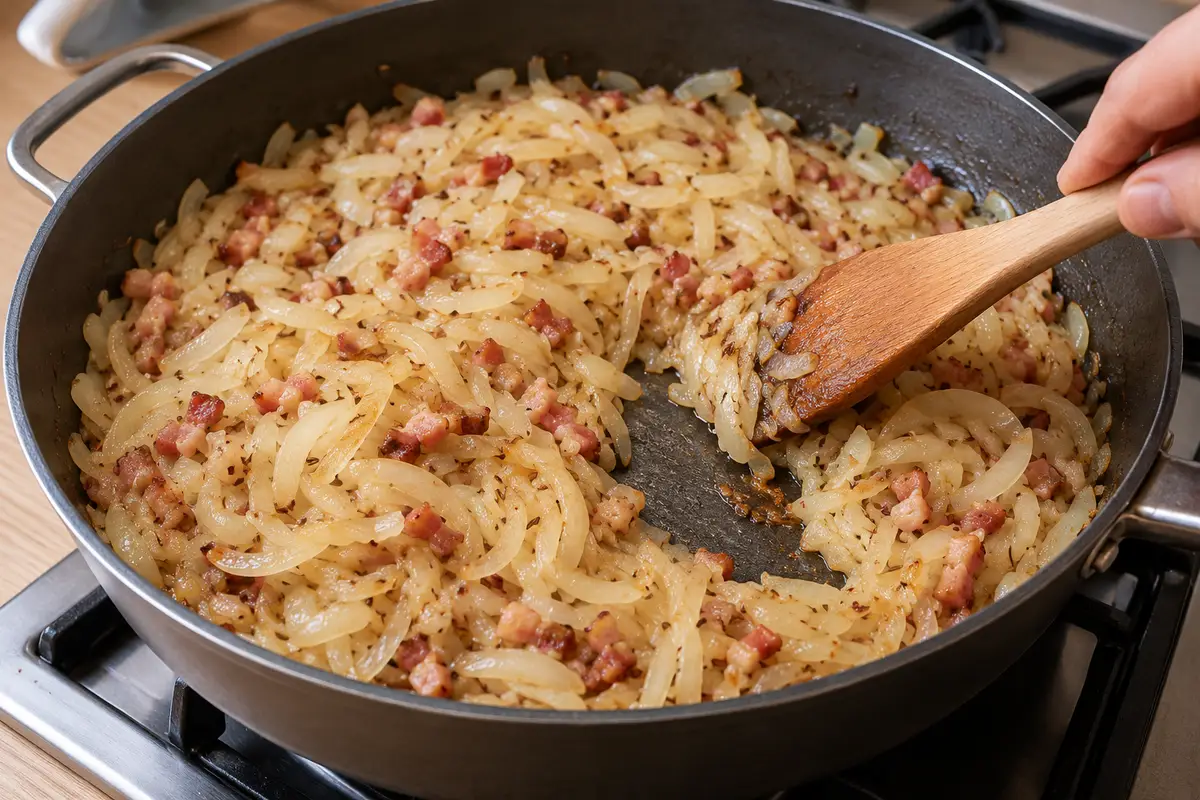
AI-generated Take the skillet off the heat and transfer all onions, bacon, fat and remaining juices to a wide bowl. Scrape the skillet thoroughly with a spatula without pouring anything off. Leave for about 20–30 minutes until no more than barely lukewarm. Do not mix hot onions with eggs, so they do not set before baking. Use all the cooked filling without weighing out and discarding any portion after cooking.
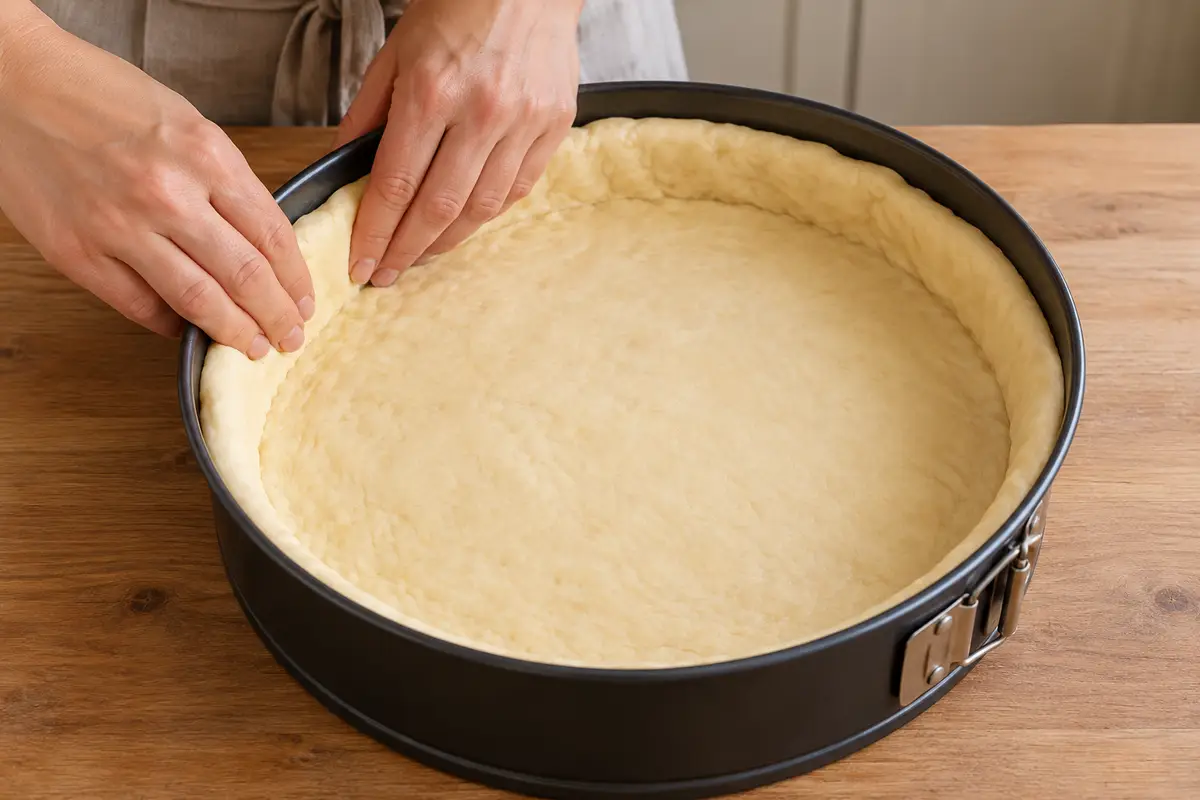
Gently gather the risen dough and roll between sheets of paper into a round about 34 cm across. Transfer to the greased pan and remove both sheets. Press the dough over the bottom and form an even rim about 3–4 cm high. Do not trim any scraps; spread small thick spots into the dough with your fingers. Use the entire portion without dusting flour, brushing on butter or rolling out new dough.
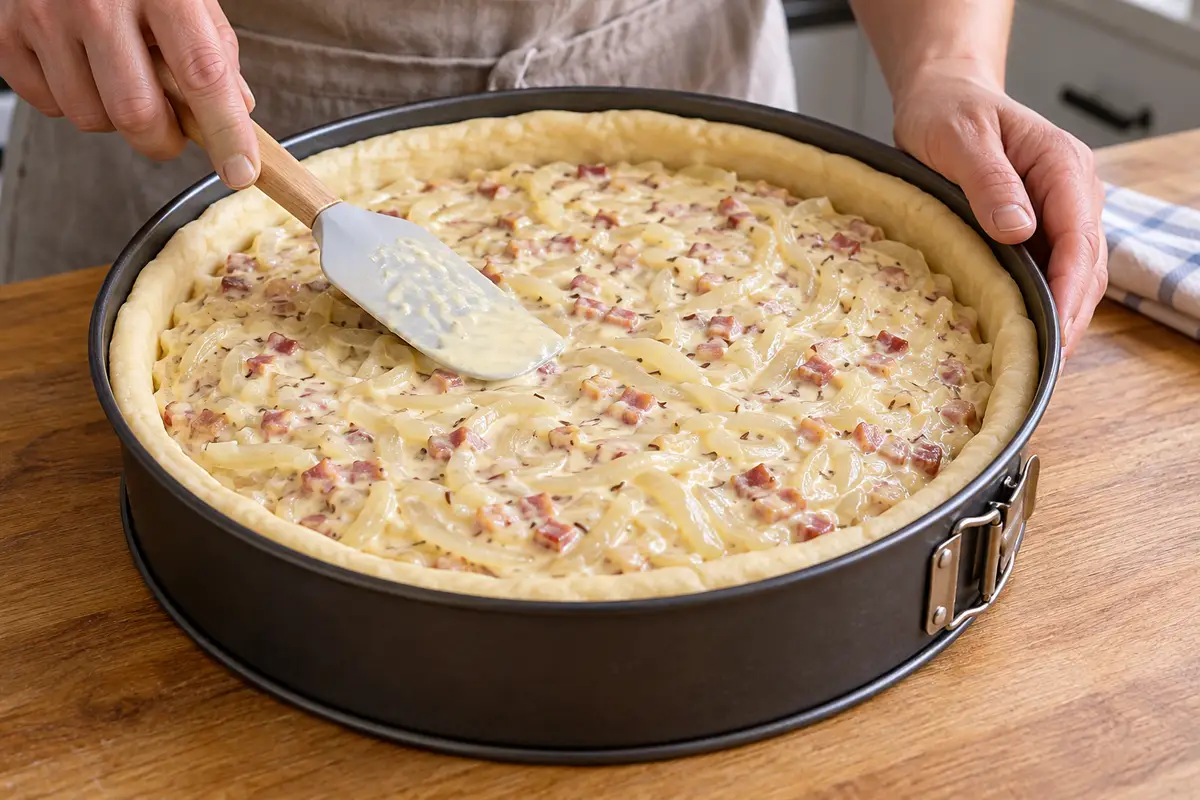
AI-generated Beat all 100 g raw eggs without shells and mix with 200 g sour cream, 18% fat, until smooth. Add all the onions and bacon, no warmer than barely lukewarm, with the retained fat and juices. Mix thoroughly, scraping the egg mixture from the sides. Do not add cheese, flour, milk or extra cream; the filling includes all weighed ingredients and seasonings from the skillet.
Transfer all filling into the dough-lined pan and level it, keeping the rim above its surface. Scrape all the mixture from the bowl without setting any aside. Leave the tart for about 15–20 minutes so the dough rim becomes slightly puffy. Meanwhile, preheat the oven to 190°C, conventional heat. Do not top with cheese, herbs or extra bacon, and do not brush the rim with egg.
AI-generated Place the pan below the middle of the preheated oven and bake at 190°C for about 45–55 minutes. The rim should brown and the center set; when the pan is gently moved, it may tremble slightly but should not ripple like liquid. If the top darkens quickly, loosely cover with foil and continue baking. Do not remove a tart with a still-fluid filling; near the end, also check that the visible edge of the base is baked.
After baking, leave in the pan for about 20 minutes to let the filling settle. Carefully release the ring and cut the whole tart into eight portions, including all base and rim. Fat residue in the pan is not served. Once cool, refrigerate leftovers within 2 hours of baking and eat within 2 days. Reheat portions at 160°C for about 15–20 minutes until hot throughout; do not add more fat.
Estimated nutrition

Rate this recipe
0 ratings
Comments