
AI-generated
Gravlax — Dill-Cured Salmon with Mustard Sauce
Log in or create a free account to save recipes.
Source: https://recipheon.com/en/recipes/snacks/gravlax-dill-cured-salmon-with-mustard-sauce
About this recipe
Gravlax is salmon cold-cured with salt, sugar, and dill, thinly sliced and served with mustard sauce. The flesh becomes firmer but keeps a delicate, silky texture; the sweet-and-sour dill sauce balances its saltiness. This Scandinavian appetizer relies on an evenly thick fillet, refrigeration, and time, not cooking. Buy salmon explicitly intended to be eaten raw that has been professionally frozen to control parasites. Curing alone does not destroy them, and freezing does not eliminate all microorganisms. Choose a center-cut piece without skin or bones so it is easy to coat with the mixture and slice later. Allow 12–24 hours to thaw in the refrigerator and 36–48 hours to cure; the stated time allows for the longer end of both stages and about 30 minutes of hands-on work. The recipe makes 6 appetizer portions, each with a small serving of sauce.
Ingredients
Salmon and divided ingredients
500 g raw farmed Atlantic salmon fillet, without skin or bones, weighed after thawing and patting dry; purchased frozen after professional freezing to control parasites, intended to be eaten raw
30 g coarse sea salt for curing; excess salt and the released liquid will be discarded, and the amount of salt retained in the fish has not been measured
40 g white sugar: 30 g for curing and 10 g for the sauce; excess curing mixture will be discarded, and the amount of sugar retained in the fish has not been measured
30 g fresh dill, tender sprigs without thick stems: 20 g for curing, then discarded with the mixture, and 10 g for the sauce
1/2 teaspoon ground white pepper for curing; excess discarded with the mixture
Mustard sauce
30 g smooth Dijon mustard
30 ml refined rapeseed oil, all for the sauce
15 ml white wine vinegar with 6% acidity
Steps
Choose a frozen center-cut piece of Atlantic salmon without skin or bones, of an even thickness of about 2–3 cm, yielding 500 g of flesh after thawing and patting dry. The seller must confirm that the fish is intended to be eaten raw and has been professionally frozen to control parasites; an ordinary fresh fillet and home freezing alone do not meet this requirement. Remove the frozen fish from its packaging, including any vacuum packaging, place in a clean dish with a lid, and thaw in the refrigerator at 0–4°C for about 12–24 hours, until the center is soft with no ice remaining. Start curing immediately after thawing, also observing any earlier use-by deadline given by the seller.
Pour off the thawing liquid, pat the fillet dry with paper towels, and weigh out 500 g of flesh. Run your fingers over the surface and remove any remaining pin bones with tweezers. Rinse the dill and dry thoroughly; roughly chop 20 g for curing and refrigerate the remaining 10 g in a separate sealed container for the sauce. Wash your hands and utensils after contact with raw fish, and keep the fillet chilled between these brief tasks.
Mix the salt, 30 g of sugar, and white pepper. Scatter half the mixture and half the dill reserved for curing over the bottom of a glass or ceramic dish that holds the fish in a single layer. Add the fillet and cover with the remaining mixture and dill, pressing them gently onto the top and sides. Cover the dish with a lid and refrigerate immediately.
Cure for 36–48 hours at 0–4°C: for a piece closer to 2 cm thick, start checking the texture after 36 hours; for a thickness of about 3 cm, plan on 48 hours. About every 12 hours, turn the fillet with clean utensils in the liquid collecting in the dish, then immediately cover and return to the refrigerator. The flesh should be noticeably firmer but still supple, with plenty of liquid in the bottom. These are texture cues, not proof of safety: curing does not cook the fish and does not replace prior freezing to control parasites.
Lift the salmon out of the dish and gently scrape off the dill and remaining crystals of curing mixture. Wipe the surface thoroughly with paper towels without rinsing the fish. Pour away all the liquid and discard the removed mixture; do not use either in the sauce. Transfer the cleaned fillet to a clean, covered container and refrigerate while you make the sauce.
Finely chop the reserved 10 g of dill. Mix the mustard, vinegar, and remaining 10 g of sugar in a small bowl, then pour in the oil in a thin stream, whisking vigorously for about 1–2 minutes. When the sauce is smooth, slightly thick, and glossy, stir in the dill. Refrigerate while you slice the fish.
Place the cold fillet on a clean board. Use a long, sharp knife to cut very thin slices across the grain, holding the blade at a low angle to the board to make wide, delicate slices. Use smooth strokes without pressing hard; a firm, chilled fillet is easier to slice without tearing. Arrange the slices loosely on a chilled platter.
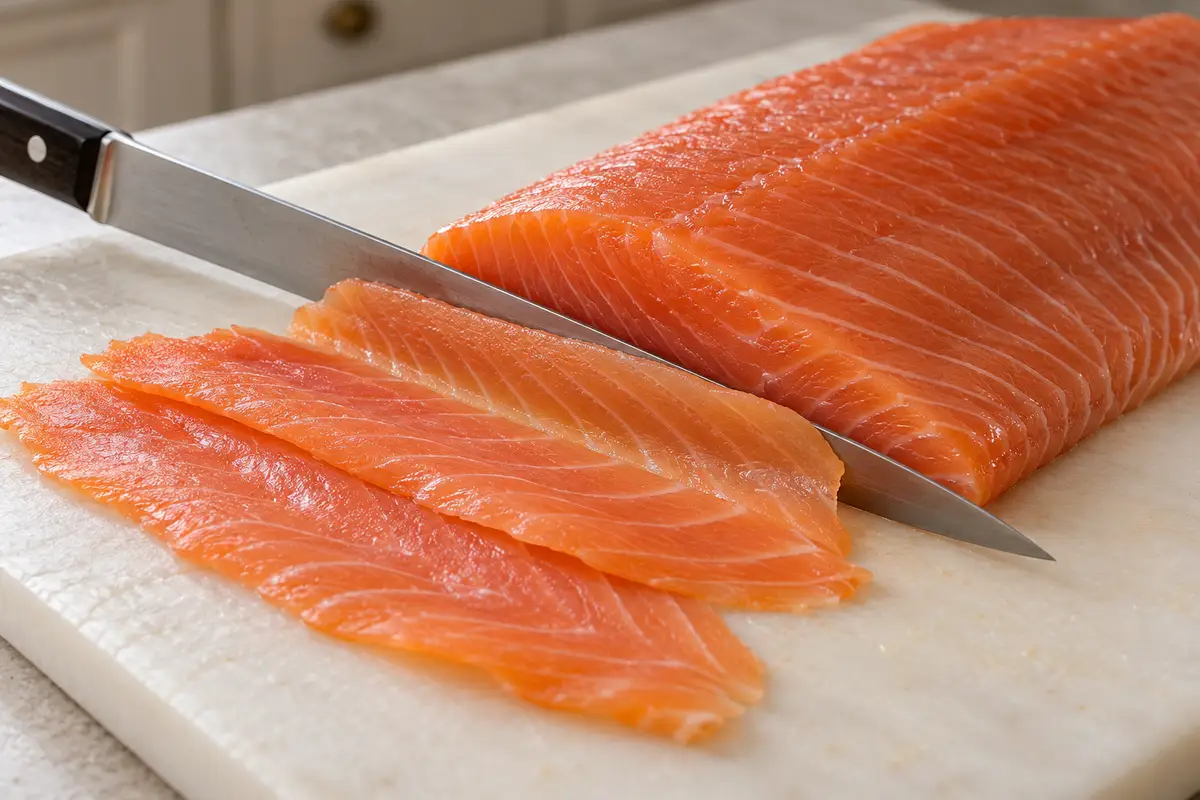
AI-generated Divide the fish and all the sauce into 6 appetizer portions; serve the sauce alongside so it can be spooned onto the slices as you eat. Serve straight from the refrigerator and put out only as much fish as will be eaten immediately. Store any remaining gravlax and sauce separately, covered, at 0–4°C and use within 24 hours of finishing the cure, without exceeding any earlier deadline given by the seller. Do not leave the fish at room temperature for more than 1 hour in total.
Estimated nutrition

Rate this recipe
0 ratings
Comments