
AI-generated
Homemade Ajvar with Roasted Peppers and Eggplant
Log in or create a free account to save recipes.
Source: https://recipheon.com/en/recipes/snacks/homemade-ajvar-with-roasted-peppers-and-eggplant
About this recipe
Homemade ajvar is a spread made from roasted red peppers and eggplant, with mellow garlic and gentle acidity. The peppers give it a rich red color and natural sweetness, while soft eggplant brings the vegetables together into a creamy, slightly grainy spread. The skins should become very wrinkled during roasting so they separate easily from the flesh. Draining the peeled vegetables is just as important: less free juice makes it easier to cook them down gently into a spread that holds on a spoon. Brief processing leaves a fine texture, and simmering in a wide pot concentrates the flavor without drying the mixture out. Allow about 3 hours and 20 minutes from start to finish, including roasting, draining and cooling. These quantities make eight portions of spread or a side condiment for immediate serving; ajvar prepared in advance must be kept in the refrigerator.
Ingredients
Vegetables and seasonings
800 g raw thick-fleshed red bell peppers, about 4 large peppers, weighed without stems, seeds and white membranes, with skins; the skins and juice drained after roasting are discarded
300 g raw eggplant, about 1 medium eggplant, weighed without the stem, with skin; the skin and juice drained after roasting are discarded, while the small seeds remain in the flesh
60 ml refined sunflower oil, divided: 20 ml at the start of cooking and 40 ml added to the spread
9 g raw garlic, weighed after peeling
20 ml white wine vinegar (6% acidity)
6 g fine salt
4 g white sugar
0.5 g ground black pepper
Steps
Preheat a fan oven to 220°C. Have ready two rimmed baking sheets, a bowl with a cover, a large strainer, a food processor and a wide, heavy-bottomed pot. Halve the peppers lengthwise, remove the stems, seeds and white membranes, and weigh out 800 g of flesh with the skins still on. Weigh the eggplant after trimming off its stem, then halve it lengthwise. Set the peppers skin side up on one sheet and the eggplant cut side down on the other, without brushing them with oil.
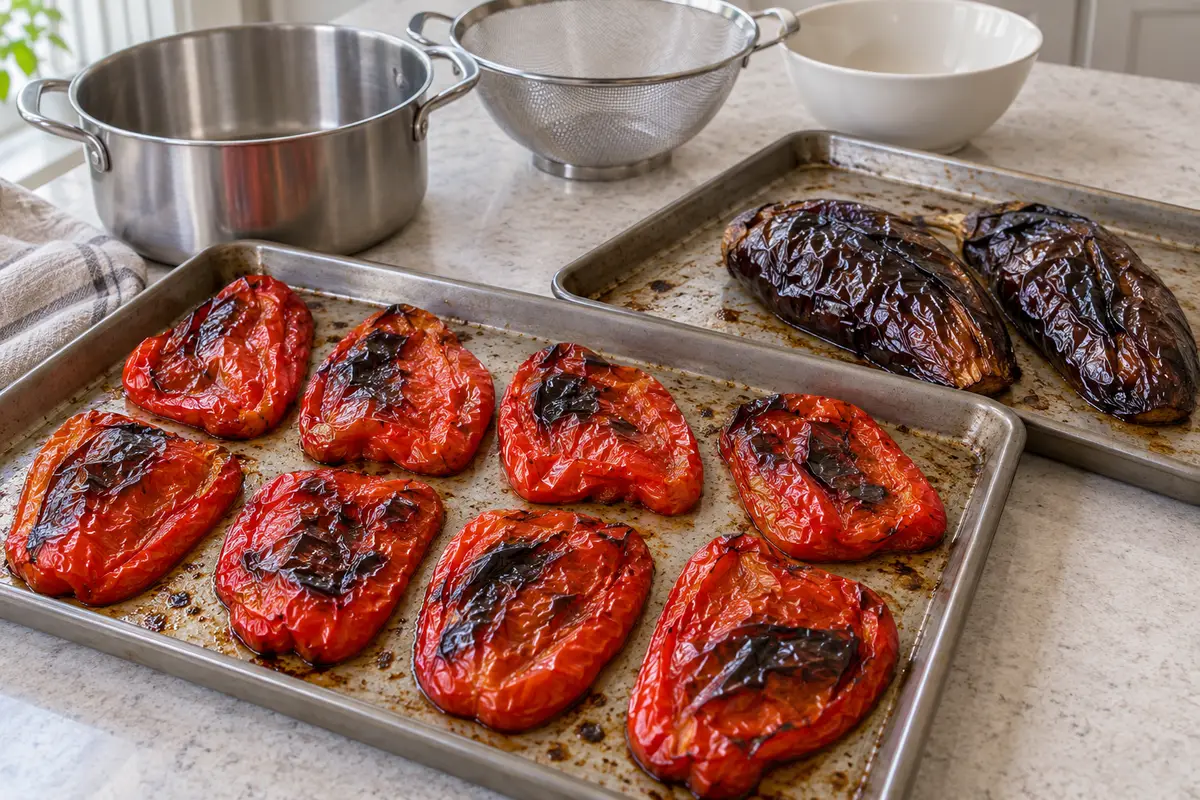
Put both sheets in the oven, one rack position above the middle and the other one below. Roast for about 35–45 minutes; about halfway through, swap their positions and turn them from front to back. The peppers should collapse and their skins develop blisters and dark patches; the eggplant should be completely soft, including its thicker center. Remove whichever vegetables are ready first if they soften at different rates, and roast any firmer ones for a few minutes longer.
AI-generated Transfer the hot peppers to the bowl and cover for about 15 minutes so the steam loosens their skins; let the eggplant cool slightly on its sheet meanwhile. Once the vegetables are comfortable to handle, peel the peppers and scoop the eggplant flesh out with a spoon, leaving its skin behind. Keep the small eggplant seeds. Do not rinse the peeled vegetables: remove any clinging pieces of skin with your fingers. Put the flesh in the large strainer over a bowl.
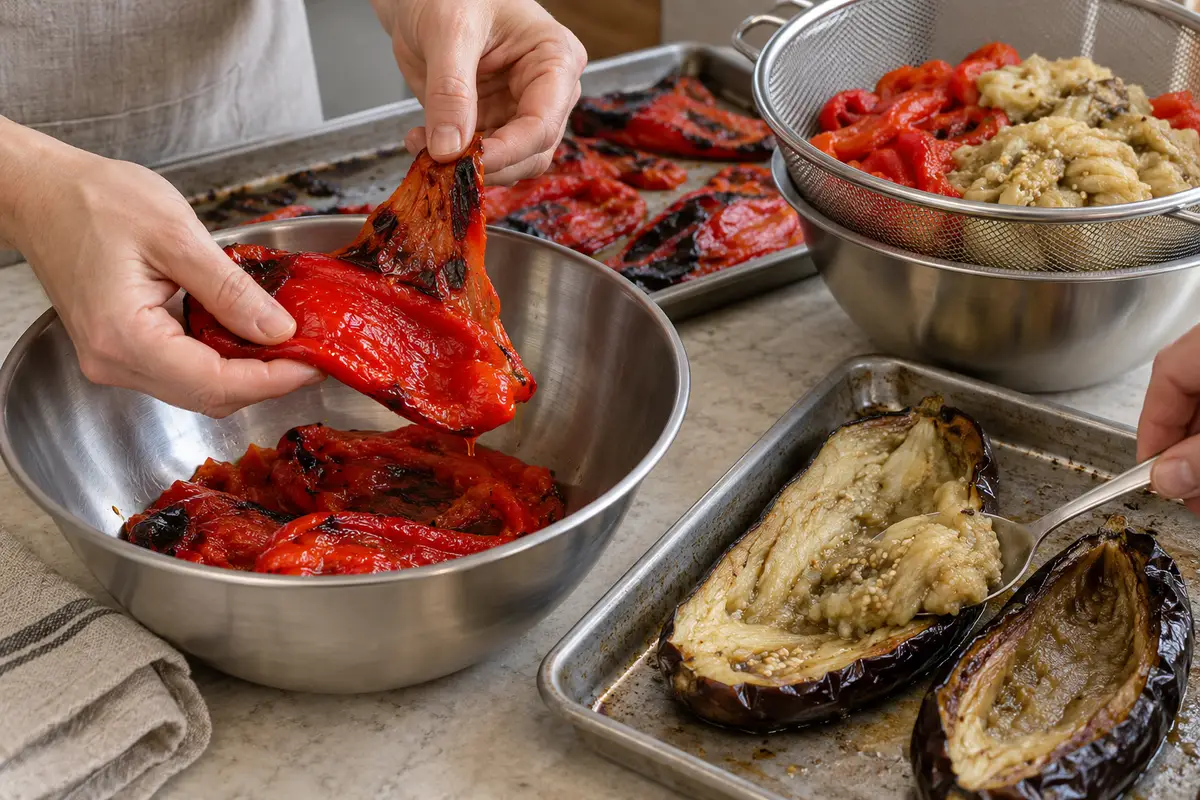
AI-generated Leave the peeled vegetables in the strainer for about 30 minutes, until juice stops draining freely. Do not squeeze them hard; discard the drained liquid. Put the flesh in the food processor and pulse briefly to a fine, slightly grainy mixture, without turning it into a completely smooth mousse. Finely chop the garlic separately.
Heat 20 ml oil in the wide pot over low heat. Add the garlic and stir for about 30 seconds, just until fragrant, without browning it. Add the processed vegetables, salt and pepper, then raise the heat to medium-low so the mixture starts bubbling gently. Gradually stir in the remaining 40 ml oil in two additions over the first approximately 15 minutes of cooking.
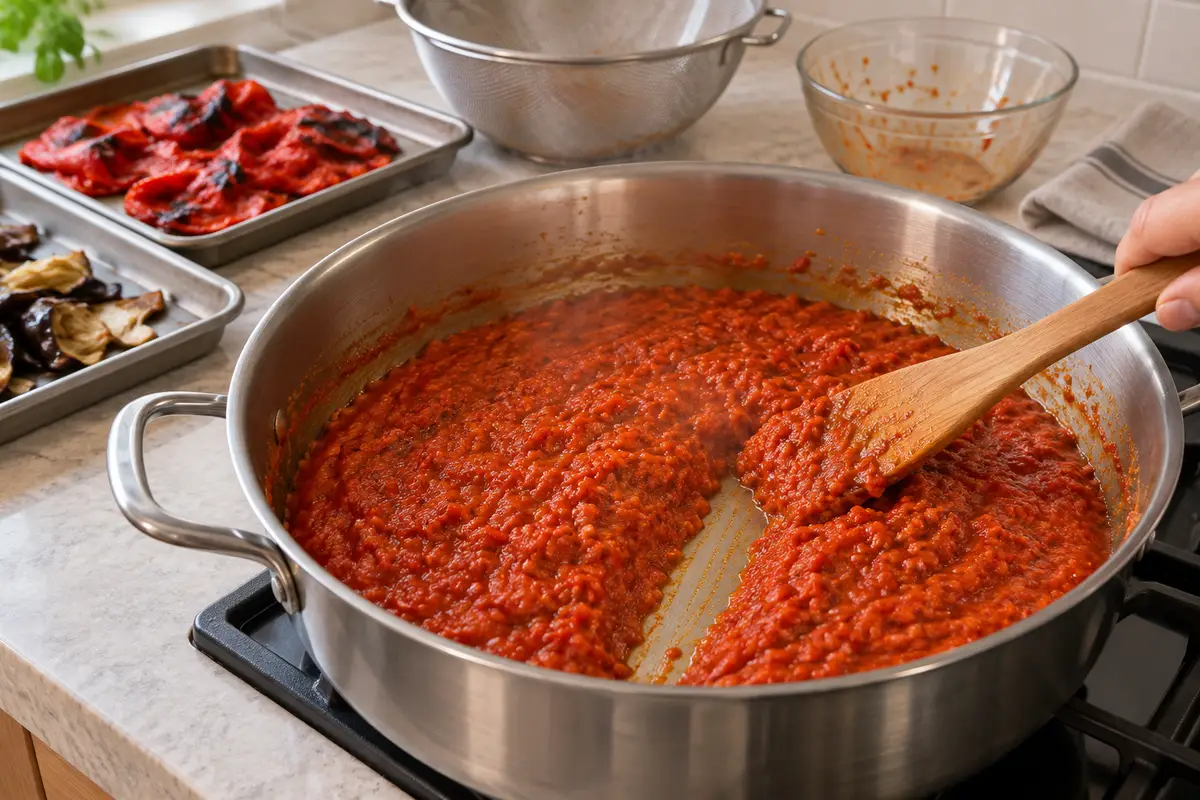
Cook without a lid over medium-low heat for about 35–40 minutes in total from when bubbling begins, stirring frequently along the bottom; this includes the cooking time in the previous step. Toward the end, lower the heat if the spread starts splattering heavily or sticking. The ajvar should become noticeably thicker, and a spatula drawn across the bottom should leave a track that does not close for a moment; water should not separate around the mixture. Stir in the sugar and all the vinegar, then cook for about 2–3 minutes longer. If the vegetables are juicier, extend the reduction by a few minutes rather than turn up the heat.
AI-generated Transfer the ajvar to a wide dish and leave for about 30 minutes, until lukewarm; once cooled, it should be spreadable, not runny. Divide into eight portions of spread or a side condiment. If making it ahead, transfer it to shallow containers and, once it stops steaming, cover and refrigerate. This recipe is for immediate use, not for canning or storage at room temperature.
Estimated nutrition

Rate this recipe
0 ratings
Comments