
AI-generated
Rissóis de camarão — Portuguese turnovers with creamy shrimp filling
Log in or create a free account to save recipes.
Source: https://recipheon.com/en/recipes/snacks/rissois-de-camarao-portuguese-turnovers-with-creamy-shrimp-filling
About this recipe
Rissóis de camarão are Portuguese cooked-dough turnovers with creamy shrimp filling and a crisp breadcrumb coating. Beneath the golden crust are tender dough and a thick milk sauce with shrimp pieces, onion, parsley, and a little lemon. This home version starts with cooked, peeled, ready-to-eat shrimp that are already chilled and drained. We do not make a separate stock. The filling must cool thoroughly so the half-moons can be sealed, while the cooked dough becomes smooth and easy to roll. Use all the filling and every dough scrap. The quantities make about 24 pieces for six snack servings, without extra sauce or salad. Allow about 3 hours and 15 minutes, including chilling, shaping by hand, breading, and every frying batch.
Ingredients
Cooked dough
250 g all-purpose flour (type 450 or 500)
350 ml water for the dough
25 g regular unsalted butter for the dough
3 g salt for the dough
Up to 20 g all-purpose flour for dusting, only as needed; loose unused flour is not served
Creamy filling
200 g cooked peeled ready-to-eat shrimp, chilled, without heads, shells, or tails; weighed after draining and drying
200 ml milk (3.2% fat)
25 g regular unsalted butter for the filling
25 g all-purpose flour (type 450 or 500) for the filling
60 g raw onion, weighed after peeling
10 g freshly strained lemon juice, weighed without seeds
5 g fresh parsley leaves and tender stems, weighed after trimming and washing
3 g salt for the filling
0.3 g ground black pepper
0.2 g ground nutmeg
Coating and frying
2 whole size-M eggs for coating; unused beaten egg is not served
150 g fine breadcrumbs for coating; loose crumbs that do not stick are not served
1000 ml sunflower oil for frying; the remaining bath and oil dripping onto the tray are not served
Steps
Check that the shrimp are already cooked, peeled, and ready to eat; drain, pat dry, and only then weigh them. Chop into small pieces so the filling fits easily inside the turnovers. Finely chop the onion and parsley and strain the lemon juice. Measure the filling and dough ingredients separately so you do not mix up the flour and butter portions.
Melt the filling butter in a saucepan and soften the onion over low heat for about 5 minutes, without browning. Add the filling flour, stir for 1–2 minutes, then gradually pour in the milk, whisking out lumps. Simmer gently for 5–7 minutes until very thick, holding a spoon trail and not spreading when scooped. Stir in the shrimp, filling salt, pepper, nutmeg, lemon juice, and parsley; heat for another 1–2 minutes. Spread in a shallow dish, cover the surface, and refrigerate after a brief initial cool. Allow about 45–60 minutes for all cooling and chilling; the filling must be cold and firm before shaping. Make the dough during this time.
Bring 350 ml water to a boil in a pot with the dough butter and salt. Take off the heat, add all the dough flour at once, and stir vigorously with a wooden spoon. Return to low heat and stir for about 3–4 minutes until it forms a smooth ball and pulls away from the bottom. Transfer to the work surface, wait until safe to touch, and knead briefly until smooth. Cover so it does not dry out and let cool to room temperature; do not put cold filling into hot dough.
Work in portions, keeping the remaining dough covered. Roll about 2 mm thick and cut circles about 11 cm across; dust the surface only when necessary, using the measured extra flour. Gather scraps immediately, cover, and roll again until all the dough is used. Remove loose flour from the surfaces that will be sealed.
Put about 20–25 g cold filling in the center of each circle, leaving a clean edge. Fold in half, gently expel the air around the filling, and firmly pinch the entire edge with your fingers. Do not stretch and do not pierce the dough; filling must not stick out of the seam. Make the rest the same way, distributing all the filling and using all the dough; you will get about 24 pieces, with the last ones possibly smaller. Allow about 45–60 minutes for rolling, shaping, and later breading the entire batch.
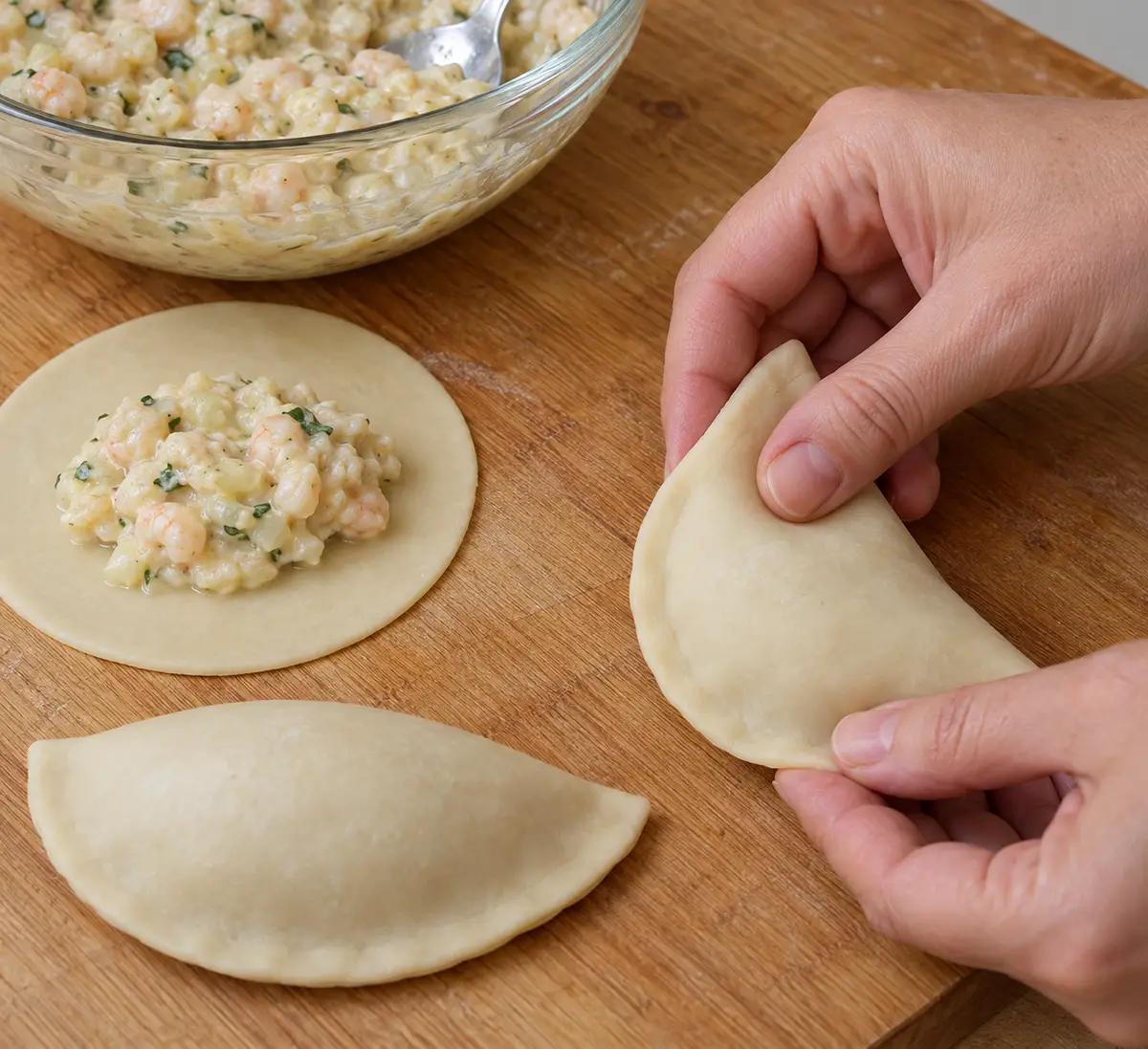
AI-generated Beat both eggs in a shallow bowl and put the breadcrumbs in another dish. Dip each turnover in egg, let excess drip off, then coat with a thin even layer of crumbs, including the edge. Arrange in a single layer and refrigerate until frying. Discard egg and breadcrumb leftovers that do not stick; do not add loose flour from the work surface to the dish.
In a deep pot about 22 cm in diameter with a base about 20 cm across, heat all the oil to about 170–175°C; the layer will be about 3 cm deep, with plenty of space above it. Add three turnovers at a time, leaving space between them. Fry for about 3–4 minutes in total, turning carefully, until the crumbs are evenly golden and the center is well heated. Let the oil recover its temperature between batches; lower the heat if the coating darkens too quickly. You can cut open the first turnover after draining to check that the filling is heated through and, if needed, fry subsequent batches longer over moderate heat. Fry all the turnovers, lifting them out with a slotted spoon onto a rack over a tray.
Wait about 3–5 minutes before eating because the creamy filling is hot. Serve each batch warm, without covering and without stacking tightly. Divide all the rissóis among six snack servings; do not serve the oil from the pot or tray.
Estimated nutrition

Rate this recipe
0 ratings
Comments