
AI-generated
Saucisson brioché lyonnais — sausage in buttery brioche
Log in or create a free account to save recipes.
Source: https://recipheon.com/en/recipes/snacks/saucisson-brioche-lyonnais-sausage-in-buttery-brioche
About this recipe
Saucisson brioché is a Lyonnais bake in which tender yeast dough wraps around one piece of cooked sausage. Its golden crust and soft crumb made with eggs and butter make a simple snack to cut into thick slices. This home version starts with an already cooked, cooled and peeled Lyonnais cervelas, so there is no separate sausage-poaching stage to plan. The dough is kneaded before the soft butter is added, left to rise, then chilled so the filling can be wrapped without dusting with flour. A thin coating of flour and egg helps the sausage bond to the dough. After a second rise, the brioche goes into a conventional oven; a short rest after baking makes it easier to slice evenly. One loaf provides eight snack portions. The end slices contain more dough, so each portion represents an average across the whole loaf, and both ends are served as well.
Ingredients
Sausage and dough
350 g plain Lyonnais cervelas sausage, already cooked and cooled, in one piece, net weight after removing the casing
250 g dry white wheat flour, type 550: 246 g for the dough and 4 g for the sausage
150 g raw beaten whole egg without shells, about 3 medium eggs: 125 g for the dough, 15 g for the sausage and 10 g for the top
40 g whole milk, 3.2% fat, weighed
80 g soft unsalted butter, not clarified
10 g fresh pressed yeast
15 g white sugar
4 g salt
Steps
Start with sausage that is already cooked, cold and peeled; choose one piece about 18–20 cm long. Beat the eggs and weigh out 150 g without shells. Separate 125 g for the dough, 15 g for the sausage and 10 g for the top; cover the last two portions and refrigerate. Set aside 4 g of the flour for coating, leaving 246 g for the dough.
In a bowl, mix the yeast with the sugar and room-temperature milk. Add 125 g of egg, 246 g of flour and the salt. Knead with a dough hook on low speed for about 5–7 minutes, or a little longer by hand, until the ingredients form a springy dough. It may be quite firm at this stage; do not add liquid and do not add extra flour.
Add the soft butter in several small portions, kneading each addition in fully. Continue for about 8–10 minutes until the dough is smooth, elastic and starts to pull away from the bowl. It may loosen briefly as the butter is added; scrape it together with a spatula and keep kneading instead of adding flour.
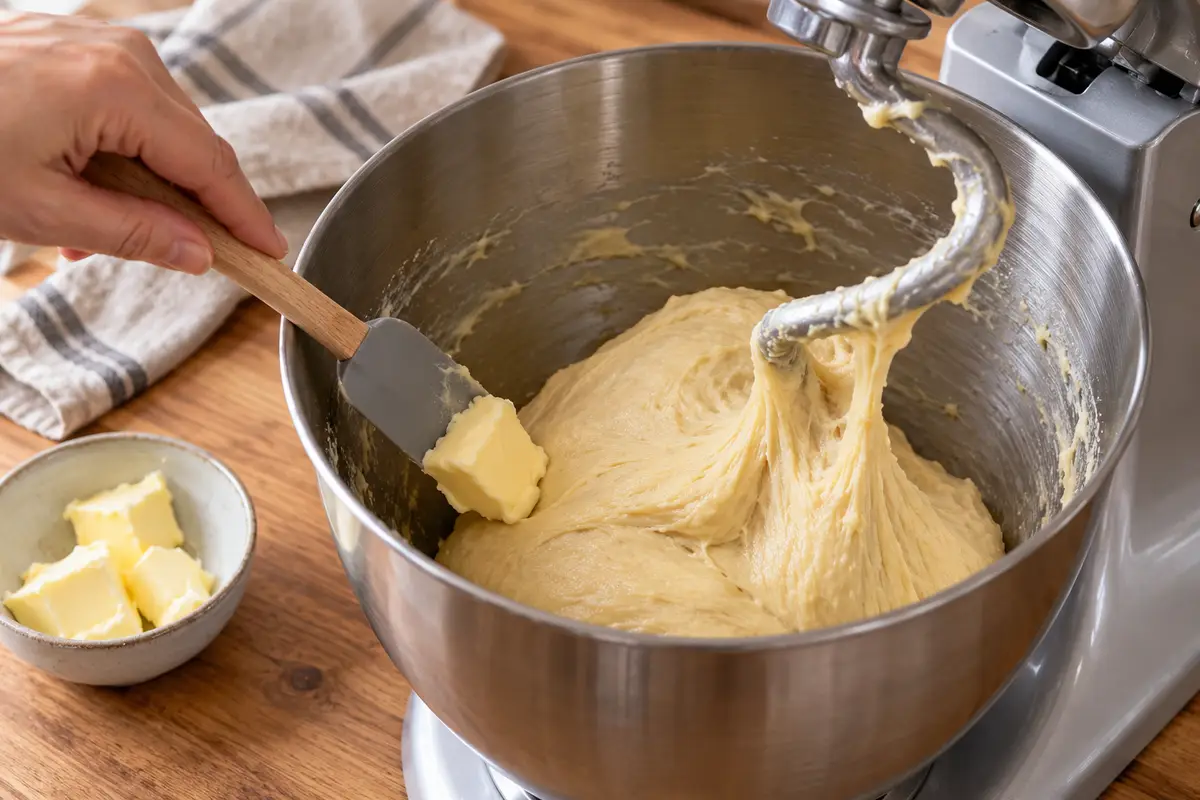
AI-generated Gather the dough into a ball and leave it covered in the bowl for about 60–90 minutes in a draft-free spot at room temperature. It should expand noticeably, approaching twice its original volume. Do not put it on a hot radiator. If the kitchen is cooler, allow the yeast more time and judge by the appearance of the dough.
Gently deflate the dough, cover and refrigerate for about 45 minutes until noticeably firmer. Line a loaf pan with internal dimensions of about 25 × 10 × 8 cm with parchment paper. Roll the cold dough between two sheets of parchment into a rectangle about 25 × 22 cm. Do not use extra flour or grease the pan.
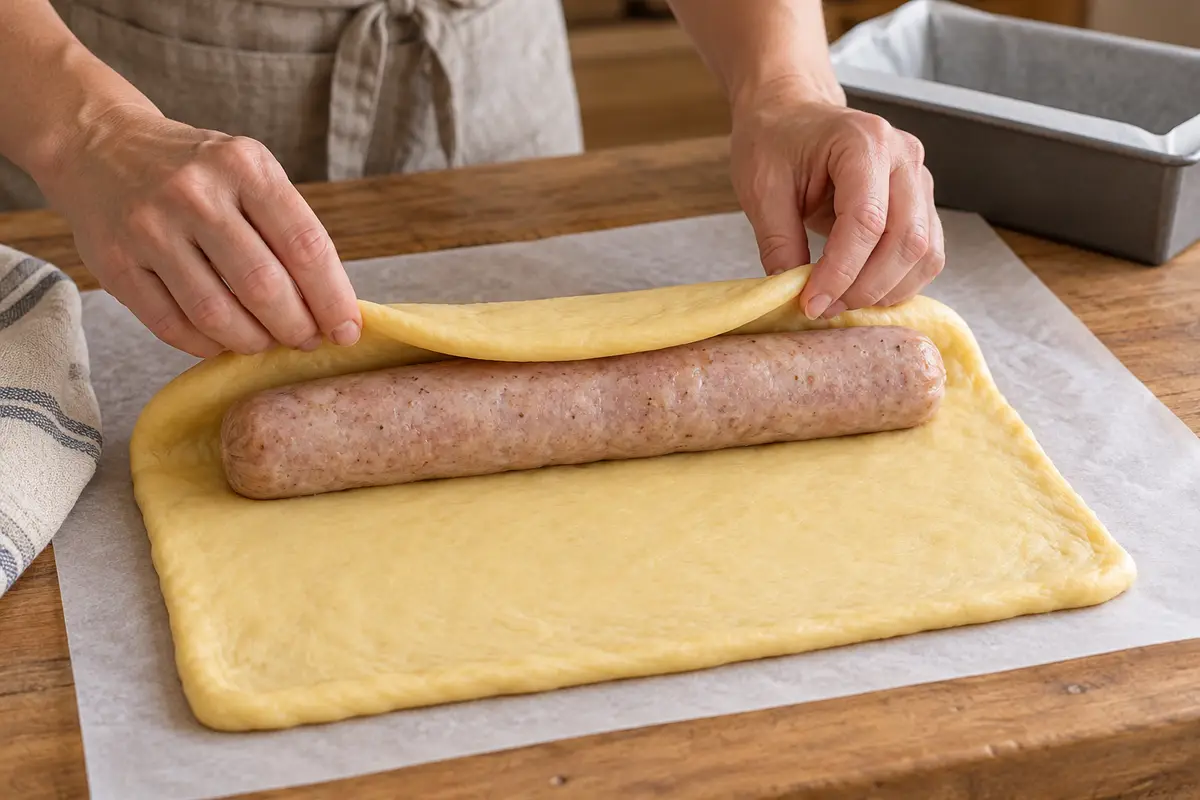
Pat the surface of the cold sausage dry. Spread all the reserved 4 g of flour thinly over it, then brush with all 15 g of egg. Place it on the dough rectangle parallel to the 25 cm side. Wrap the dough around it without stretching, then seal the seam and both ends. Transfer to the loaf pan seam-side down, keeping all the dough.
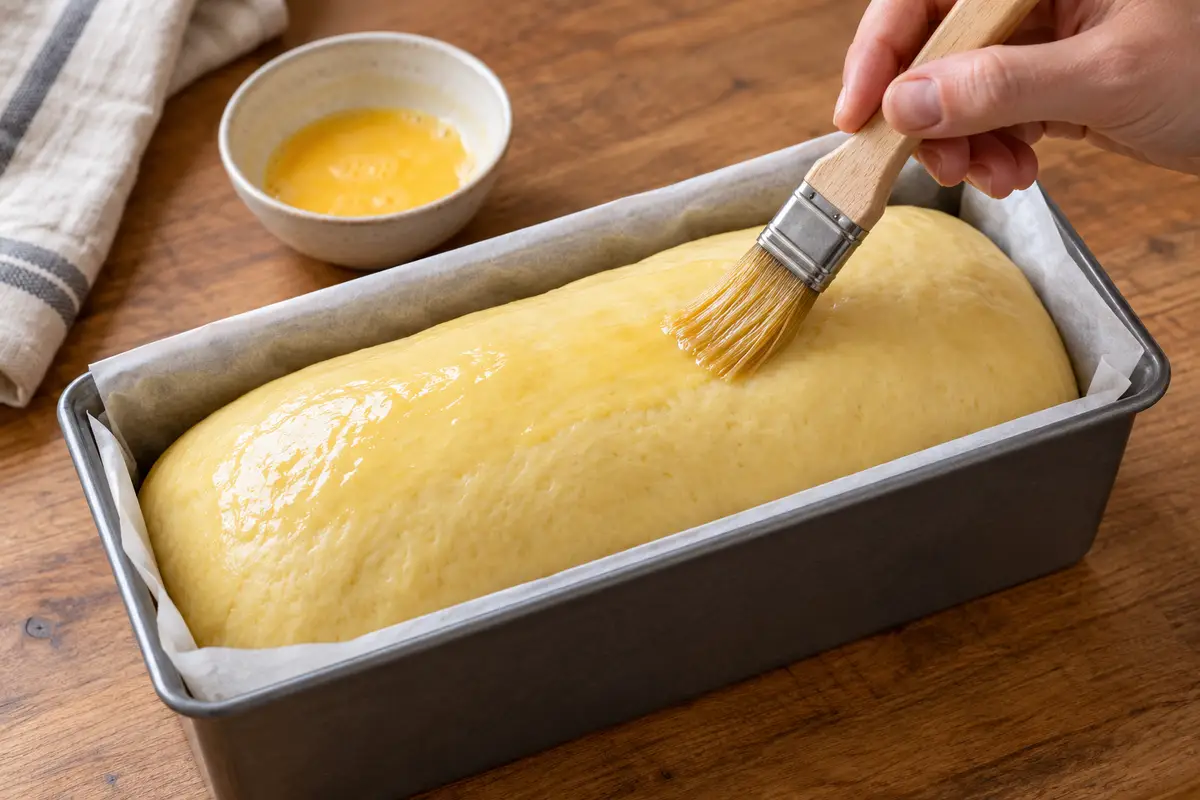
AI-generated Cover the pan so the covering does not stick to the surface and leave for about 45–60 minutes. The dough should become noticeably puffy and fill more of the space around the sausage. Toward the end of the rise, preheat the oven to 180°C with conventional top and bottom heat. Do not speed up the rise by putting the pan in a hot oven.
Gently brush the risen top with all the reserved 10 g of egg. Bake on the middle rack for about 35–40 minutes until the brioche is well risen and evenly golden, including the sides. If the top browns quickly, cover loosely with foil and finish baking. Do not open the oven during the first 25 minutes.
AI-generated Leave the baked brioche in the pan for about 10 minutes. Lift it out using the parchment, remove the paper and cool on a rack for about 20 more minutes. This helps the crumb hold its shape. Use a sharp serrated knife to cut it into eight snack portions; serve both ends as well. Do not trim off any dough and do not discard any pieces.
Serve the slices slightly warm, while the dough is still soft and the sausage can be sliced neatly. The end portions will contain more dough than the middle slices. Cool any uneaten loaf and refrigerate it covered within 2 hours of baking. Use within 2 days; thoroughly reheat only the portions you need before serving again.
Estimated nutrition

Rate this recipe
0 ratings
Comments