
AI-generated
Schüttelbrot – Thin, Crisp Rye Flatbreads with Caraway and Fennel
Log in or create a free account to save recipes.
Source: https://recipheon.com/en/recipes/snacks/schuttelbrot-thin-crisp-rye-flatbreads-with-caraway-and-fennel
About this recipe
Schüttelbrot is a thin, hard and crisp rye flatbread from South Tyrol. Caraway and fennel seeds give it its distinctive aroma. The soft, sticky dough is flattened by shaking a board, producing irregular edges. In this home version, the portions sit on parchment paper so they can be moved onto a baking sheet without stretching or folding. It uses a yeast sponge, without sourdough starter. The recipe makes 8 flatbreads about 17–18 cm wide, with 1 per serving. Allow about 5 hours: an hour for the sponge, 30 minutes for the dough to rise, 4 successive batches of baking and complete cooling. Prepare the next batch while the previous one bakes. The bread becomes fully crisp once cool; any extra drying will extend the preparation time.
Ingredients
Yeast sponge
100 g type 720 rye flour
100 ml lukewarm water, about 30°C
6 g fresh baker’s yeast
Dough
200 g type 720 rye flour
100 g type 550 all-purpose flour
300 ml lukewarm water, about 30°C
6 g fresh baker’s yeast
8 g salt
2 g whole caraway seeds, not cumin seeds
2 g whole fennel seeds
For shaping
40 g type 720 rye flour for dusting; use only as much as needed and discard the rest
Steps
Dissolve 6 g yeast in 100 ml lukewarm water in a bowl. Add 100 g rye flour and stir with a spoon to make a soft, smooth mixture. Cover and leave in a warm place for about 60 minutes, until the sponge is noticeably puffed and bubbly. The water should feel pleasantly lukewarm, not hot.
Lightly crush the caraway and fennel in a mortar, leaving some seeds whole. Dissolve the remaining 6 g yeast in 300 ml lukewarm water. Add to the sponge with 200 g rye flour, the all-purpose flour, salt and seeds. Stir with a sturdy spoon for about 3–5 minutes, scraping up from the bottom. The dough should be very soft and sticky, like a thick paste; do not add flour to make a normal springy ball. Cover and leave for about 30 minutes, until lighter and noticeably aerated.
Have 2 baking sheets with a flat surface of at least 38 × 28 cm, a large flat board and 8 squares of parchment paper about 22 × 22 cm ready. Measure out the 40 g shaping flour separately. Lightly dust the paper and a spatula or spoon with it. Divide the dough into 8 equal rounded portions of about 100 g and place each on its own paper square. Leave the first 2 at room temperature for about 15 minutes; cover the remaining 6 and refrigerate. While each batch bakes, take the next 2 portions out of the refrigerator about 15 minutes before shaping them. Preheat the oven to 210°C on the conventional setting, without a fan.
Put the paper with one portion on the flat board and lightly dust the top of the dough with some of the measured flour. Hold the board with both hands low over the counter, make short up-and-down movements and gradually rotate it. The dough should settle and spread into a thin, irregular round about 17–18 cm wide and about 3–4 mm thick. Do not roll it out and do not knead it into a stiff flatbread. If it sticks, use a little of the remaining shaping flour. Transfer the flatbread onto the baking sheet by lifting it with its paper. Shape the second one the same way, leaving about 2 cm between them. Discard any unused shaping flour after preparing all the batches.
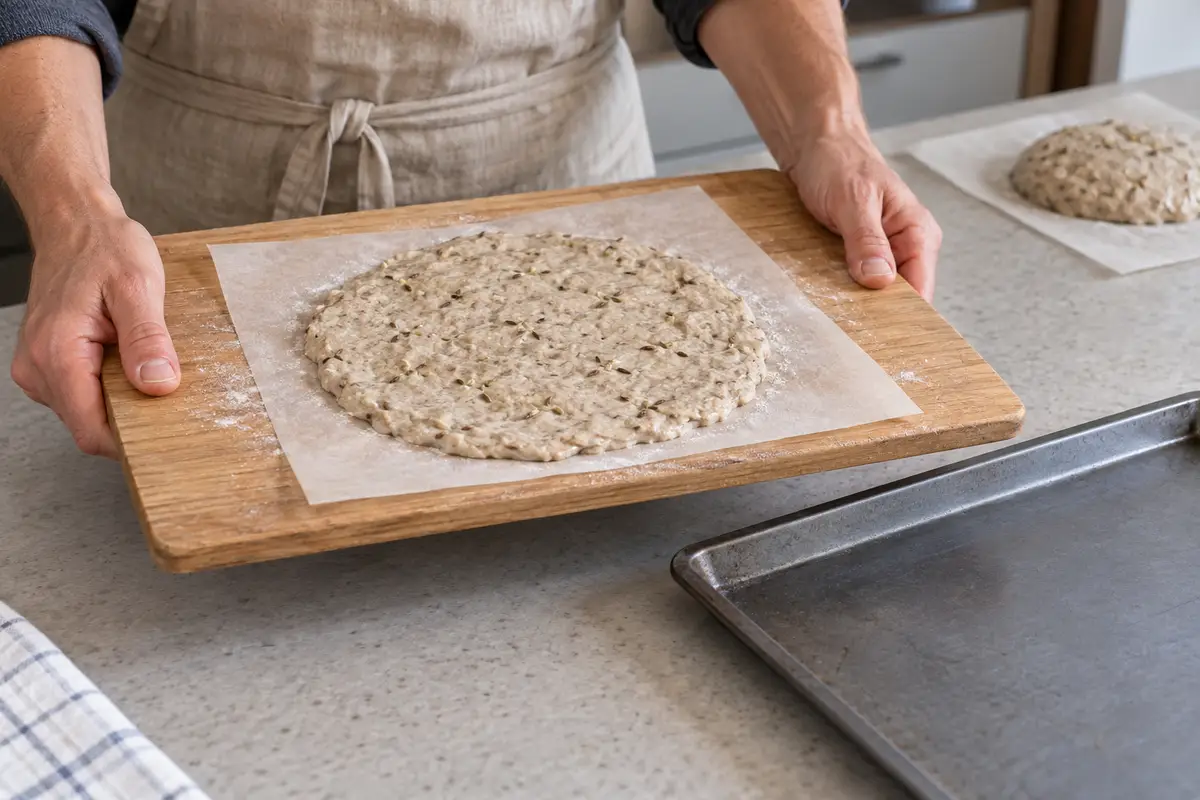
AI-generated Put the first baking sheet on the middle rack and bake for about 25–30 minutes, until the flatbreads are well browned, dry underneath and firm at the edges. Watch the thinner edges toward the end so they do not burn. While they bake, prepare the next 2 portions on the second, cool baking sheet. Always bake 2 flatbreads on one sheet at a time, making 4 batches in total. Let a baking sheet cool before reusing it; do not put raw dough on hot metal. Transfer baked flatbreads straight to a wire rack.
Cool the flatbreads on a wire rack without covering them for at least 30 minutes, until completely cold. They should be hard, dry in the center and break with a clear snap. If one still bends once cool, dry it further at 140°C on the conventional setting for about 10–15 minutes, then cool completely on the rack again. Do not stack warm flatbreads. Serve 1 per serving, breaking it with your hands. Only put completely cold, dry bread into a dry tin.
Estimated nutrition

Rate this recipe
0 ratings
Comments