
AI-generated
Cullen Skink — Scottish Smoked Haddock Soup
Log in or create a free account to save recipes.
Source: https://recipheon.com/en/recipes/soups/cullen-skink-scottish-smoked-haddock-soup
About this recipe
Cullen skink is a Scottish soup of smoked haddock, milk and potatoes, with distinct flakes of fish. For this version, choose chilled cold-smoked fillets that require cooking, not ready-to-eat hot-smoked fish. Gentle poaching infuses the milk with smoky flavor. The potatoes and onion cook at the same time in a second pot, and mashing some of the soft potatoes thickens the soup without cream. Keep the remaining cubes and large haddock flakes intact rather than blending everything smooth. Once combined, heat the soup gently and serve with chives.
Ingredients
Soup
400 g undyed cold-smoked haddock fillets, chilled, without skin or bones, weighed before cooking; must be cooked
500 g raw peeled starchy potatoes, type C
150 g peeled onion
750 ml milk (3.2% fat)
400 ml water for cooking the potatoes, retained in the soup
40 g unsalted butter (82% fat)
0.5 g ground black pepper
5 g fresh chives
up to 1 g salt, optional, as needed
Steps
Cut the potatoes into cubes about 1.5 cm across and finely chop the onion. Melt the butter over medium-low heat in a heavy-bottomed pot large enough for the entire soup. Add the onion and cook gently for about 8–10 minutes, stirring occasionally, until soft and translucent, without browning. Start cooking the fish in a second pot while the onion softens.
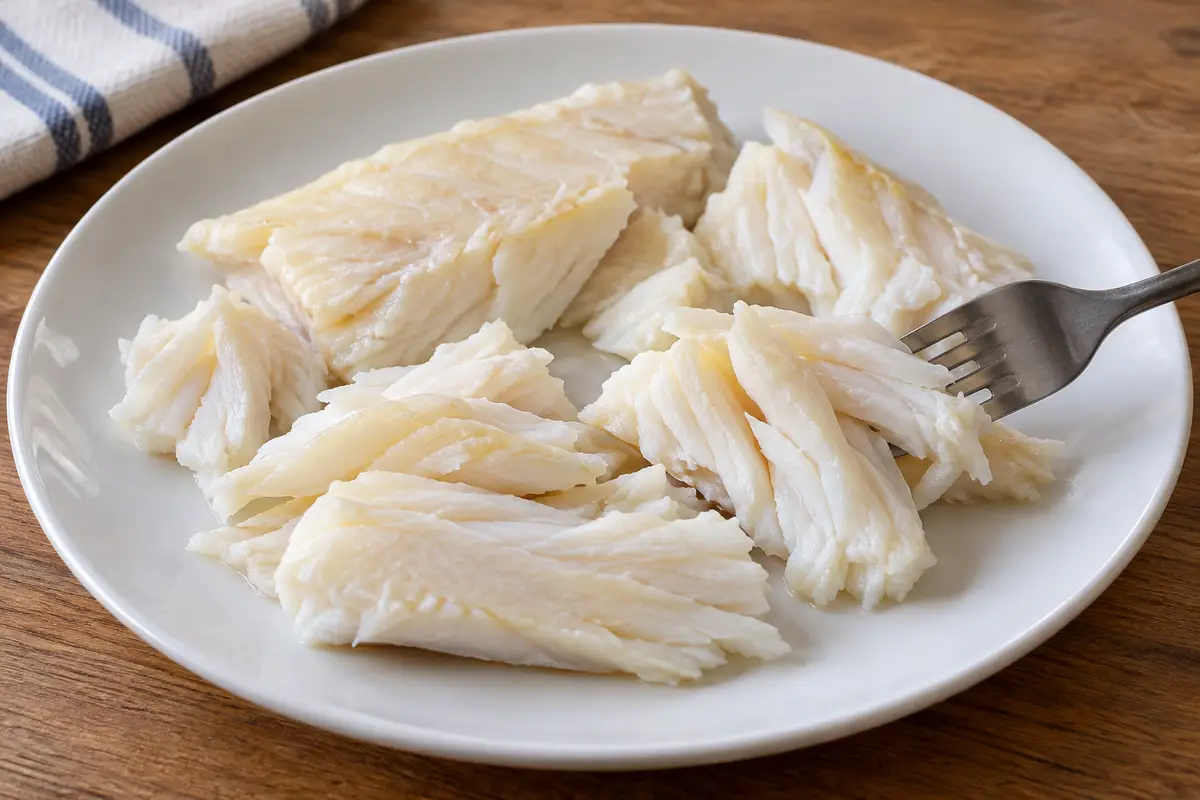
Cut the chilled cold-smoked haddock fillets that require cooking into larger pieces that fit in a single layer in a small saucepan. Pour in the milk and heat over low heat until the liquid starts to steam and small bubbles appear around the edges. From this point, cover and poach over very low heat for about 8–10 minutes, without a rolling boil; the flesh should be opaque and flake easily. Cook thicker pieces longer, and follow the longer cooking time if one is specified by the manufacturer. Lift the cooked fish onto a plate with a slotted spoon, leave for about 5 minutes until comfortable to handle, then break into large flakes, removing any remaining bones. Reserve the milk and keep it covered.
AI-generated Meanwhile, once the onion is soft, add the potatoes and the measured water to it. Bring to a gentle boil, reduce the heat, cover and cook for about 15–20 minutes, until the potatoes are completely soft and break apart easily when pressed with a fork. Stir occasionally. Do not drain the liquid.
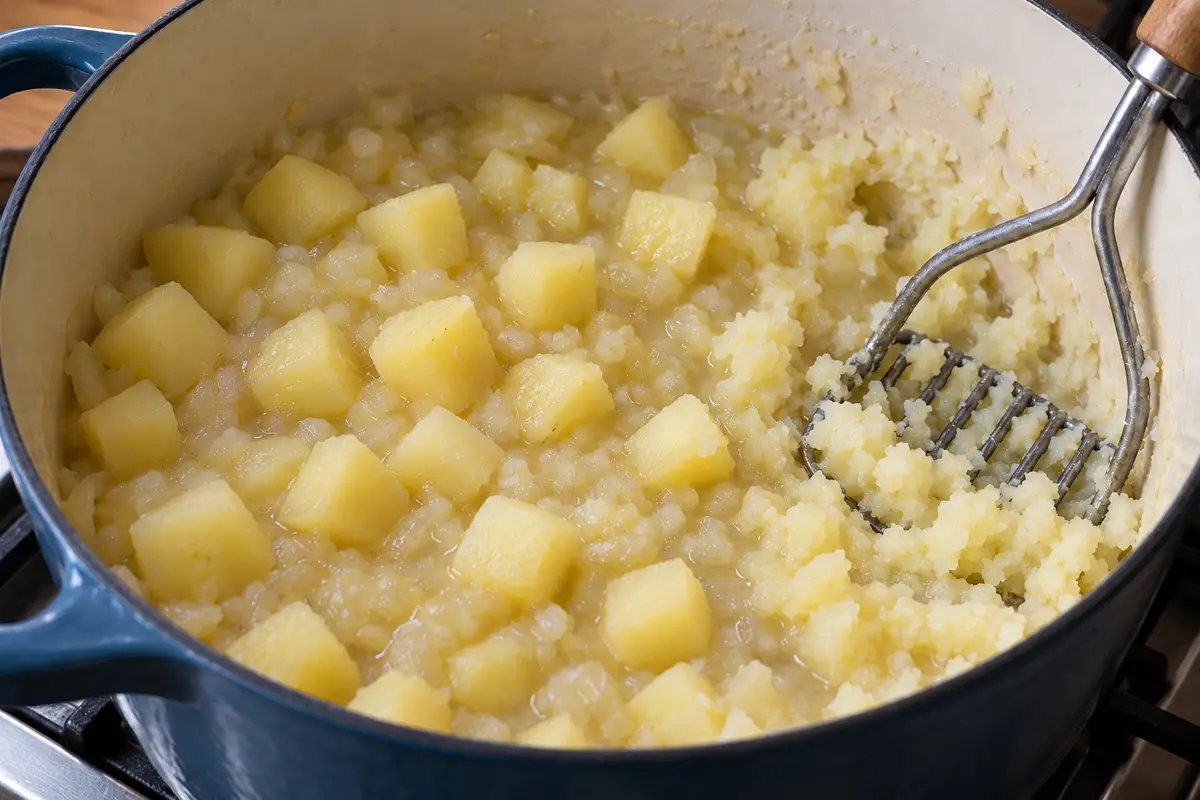
Using a fork or potato masher, mash about one third of the cooked potatoes against the side of the pot. Leave the remaining pieces whole and stir the mashed potatoes into the onion and liquid. This makes a thicker, uneven base with visible cubes; do not blend the soup until smooth.
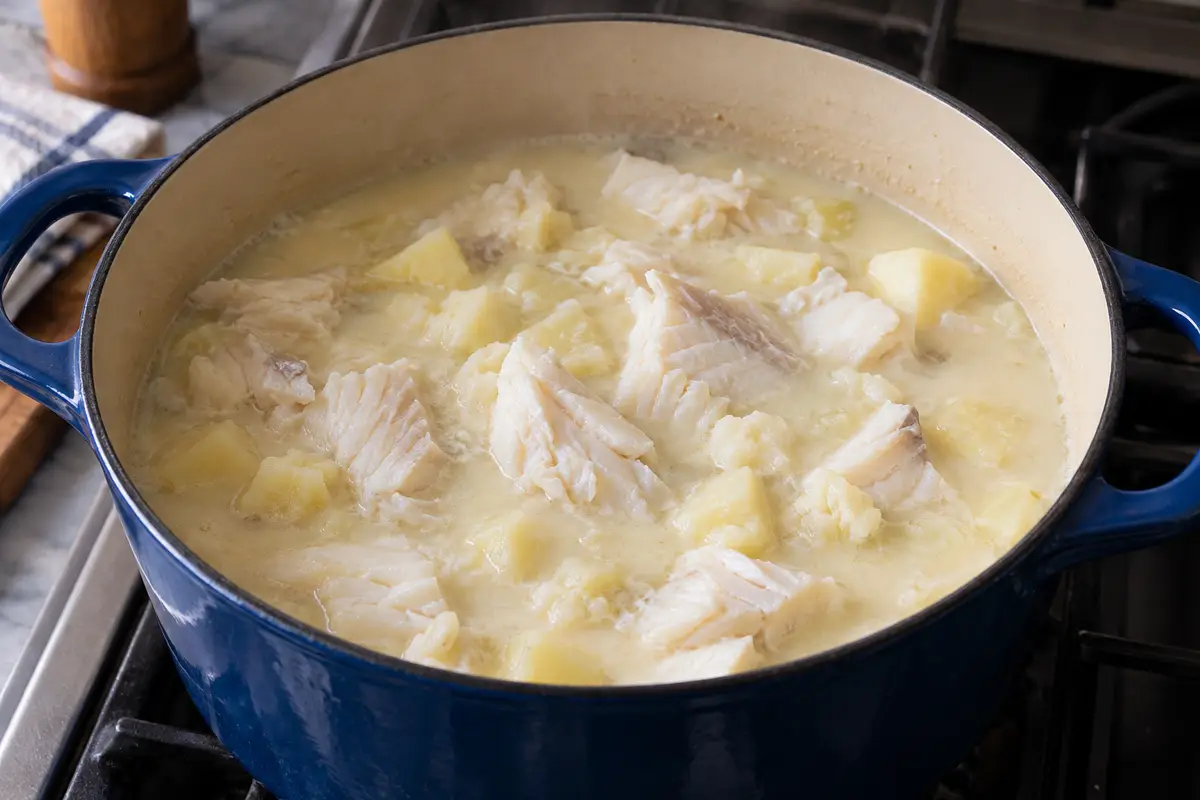
AI-generated Pour the reserved milk into the potatoes, add the haddock flakes and stir gently. Heat over low heat for about 5–7 minutes, until the soup is hot and lightly steaming. Do not bring to a boil, and stir carefully to keep the fish in large flakes.
AI-generated Finely chop the chives. Add the pepper to the soup, taste and add salt only if needed, using no more than 1 g. Divide among 4 bowls, sprinkle with chives and serve hot.
Estimated nutrition

Rate this recipe
0 ratings
Comments