
AI-generated
Canelés — cakes with a caramel crust and moist vanilla centers
Log in or create a free account to save recipes.
Source: https://recipheon.com/en/recipes/desserts/caneles-cakes-with-a-caramel-crust-and-moist-vanilla-centers
About this recipe
Canelés are small Bordeaux cakes with a dark caramel crust and moist vanilla centers scented with rum. The thin milk, flour and egg batter rests overnight in the refrigerator to help develop the characteristic interior. It is stirred gently, without whipping up foam and without baking powder. This home version is designed for twelve nonstick-coated metal molds, each holding about 90 ml. The temperatures stay within the 220°C limit suitable for the chosen mold type; no special wax or copper molds are used. After an initial hotter stage, the cakes bake longer at a lower temperature until their sides and tops are distinctly browned. They are best cooled and eaten the same day, without toppings or accompaniments. These quantities make twelve cakes; the whites left from separating the additional yolks are not part of this recipe.
Ingredients
Batter for twelve canelés
500 g milk with 3.2% fat, weighed, with 400 g for heating and 100 g for cooling the milk
180 g fine white sugar
100 g type 550 wheat flour
2 whole eggs, size M, about 100 g without shells
2 additional yolks from other size M eggs, about 36 g without whites or shells; save the remaining whites for another dish
25 g butter with 82% fat for the batter
30 g light rum with an alcohol content of about 40%, weighed
1 vanilla bean
1 g salt
Preparing the molds
15 g butter with 82% fat for lightly greasing the molds; unused excess stays outside the cakes
Steps
Split the vanilla bean lengthwise and scrape out the seeds. Put the seeds and empty pod in a small saucepan with 400 g milk and the 25 g butter intended for the batter. Heat over medium-low heat until the butter melts, the milk steams and small bubbles appear around the edge; do not boil it for long. Take off the heat for about 10 minutes. Remove the empty pod, add the remaining 100 g cold milk and leave for a few more minutes until the liquid is lukewarm, not hot. The vanilla seeds stay in the milk.
In a bowl, mix the two whole eggs, two additional yolks, all the sugar and salt with a hand whisk, just until combined. Do not beat into a pale foam. Add the flour and some of the lukewarm milk and mix until smooth, then gradually add the remaining milk with butter. Add all the weighed rum at the end. Scrape down the sides and stir gently to make a thin, uniform batter similar to pancake batter. Do not add the remaining egg whites or any leavening agent.
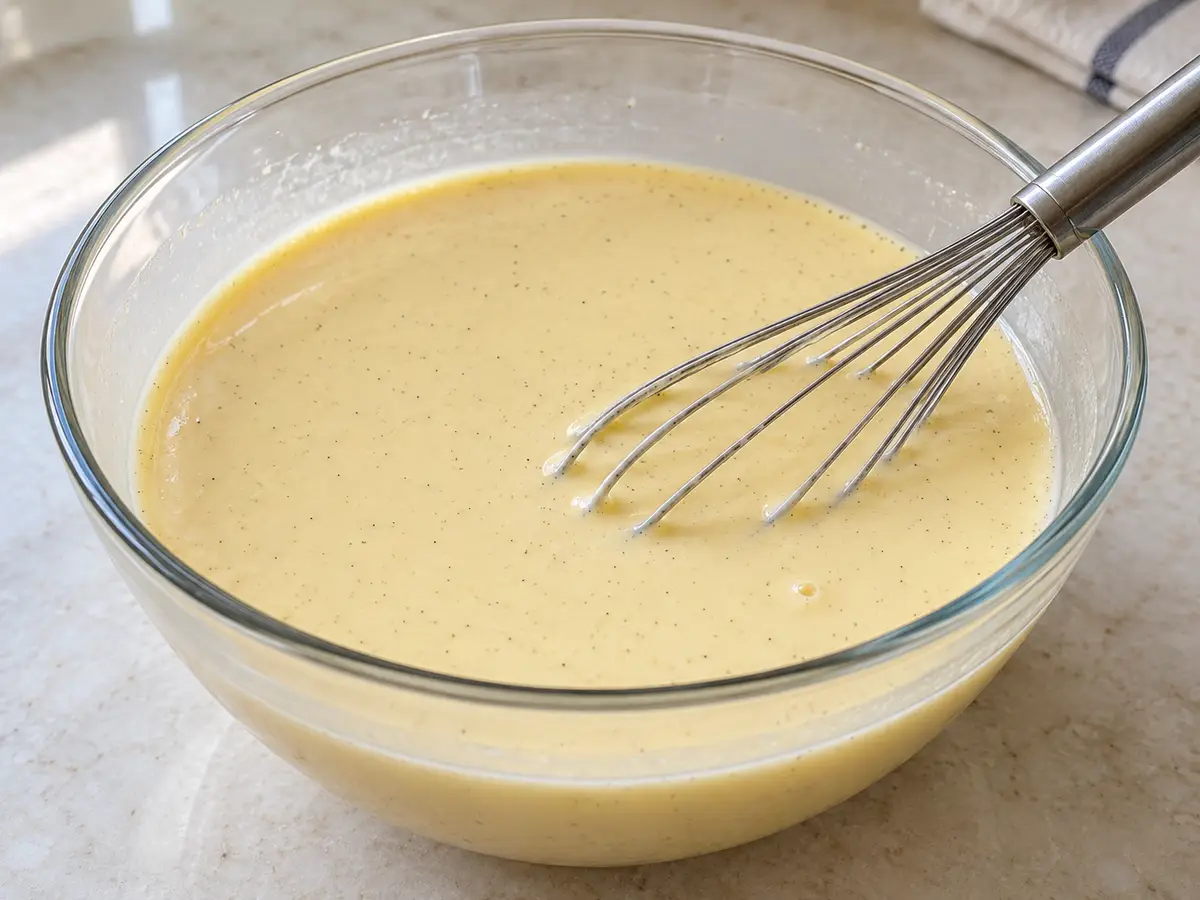
AI-generated Pour the batter into a jug with a lid or cover the bowl tightly and immediately refrigerate for 12–24 hours. Do not leave the batter on the counter overnight. The flour may settle during the rest, so gently recombine the layers before filling the molds, without whipping. Do not discard any liquid ingredients and do not strain the batter.
Have ready twelve coated metal canelé molds, each with a capacity of about 90 ml and an internal height of about 5 cm, rated for baking at 220°C. Arrange them with small gaps on an ordinary metal baking sheet. Melt the separate 15 g butter and use a brush to grease the bases and every groove very thinly. Do not leave pools of butter; do not pour unused butter into the batter. Preheat the oven to 220°C with conventional top and bottom heat. This method is for the metal molds described, not a silicone mold for miniature cakes.
Take the batter out of the refrigerator for about 20 minutes while the oven preheats, then gently stir with a whisk or spatula, lifting the settled flour from the bottom. Divide all the batter evenly among the twelve molds: about 80–81 g each, usually about 70–75 ml. Leave roughly 1 cm of space below the rim and do not fill to the top. These figures are approximate; the stated mold capacity matters. If a few larger bubbles remain on the surface, remove them with the tip of a teaspoon.
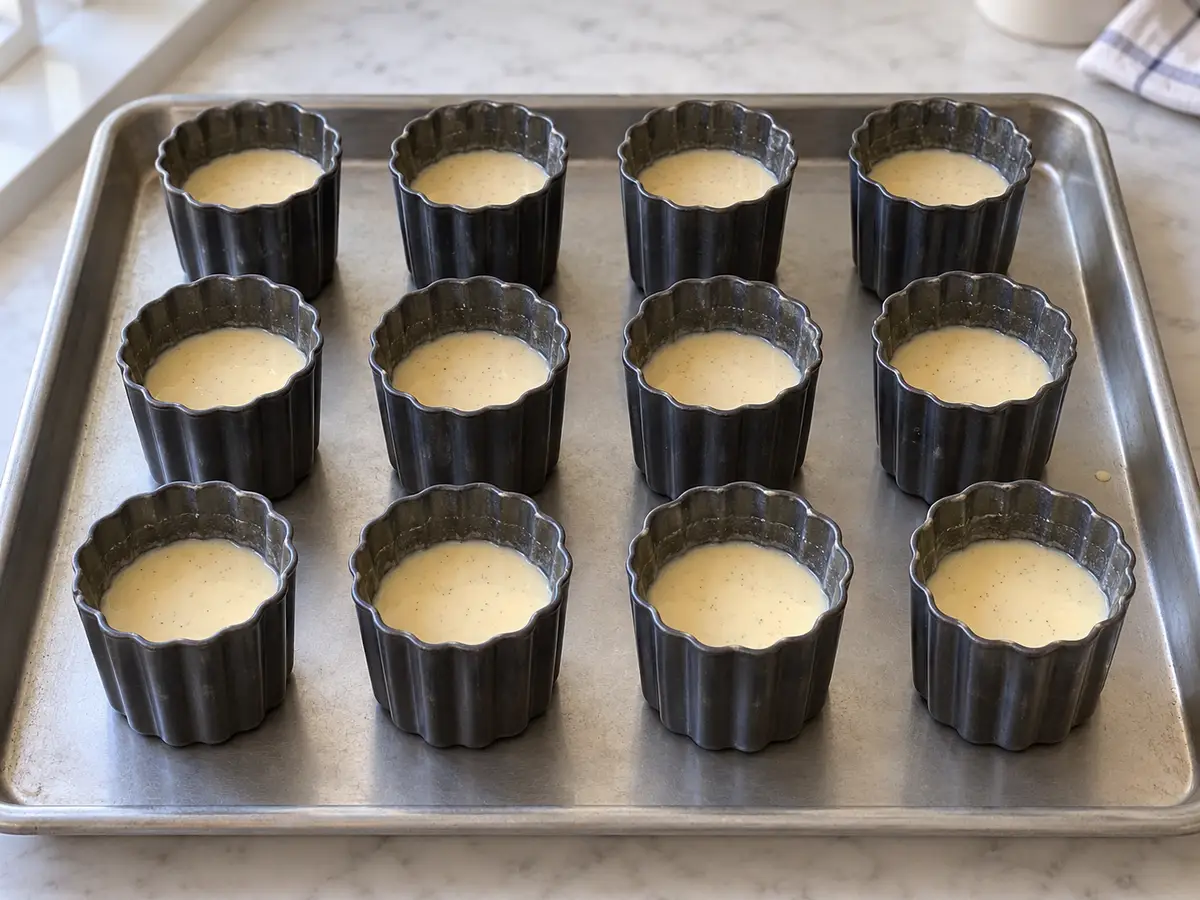
AI-generated Put the baking sheet on the lower-middle rack of the preheated oven. Bake for 20 minutes at 220°C, then, without removing the sheet, lower the temperature to 180°C and bake for about another 55–65 minutes. Do not open the oven during the first 30 minutes of the total baking time. The canelés may rise slightly at first and then settle. When ready, they should have a distinctly dark brown caramel crust, without black burned patches. If still pale toward the end, bake for a few more minutes at 180°C. Do not exceed 220°C with these molds.
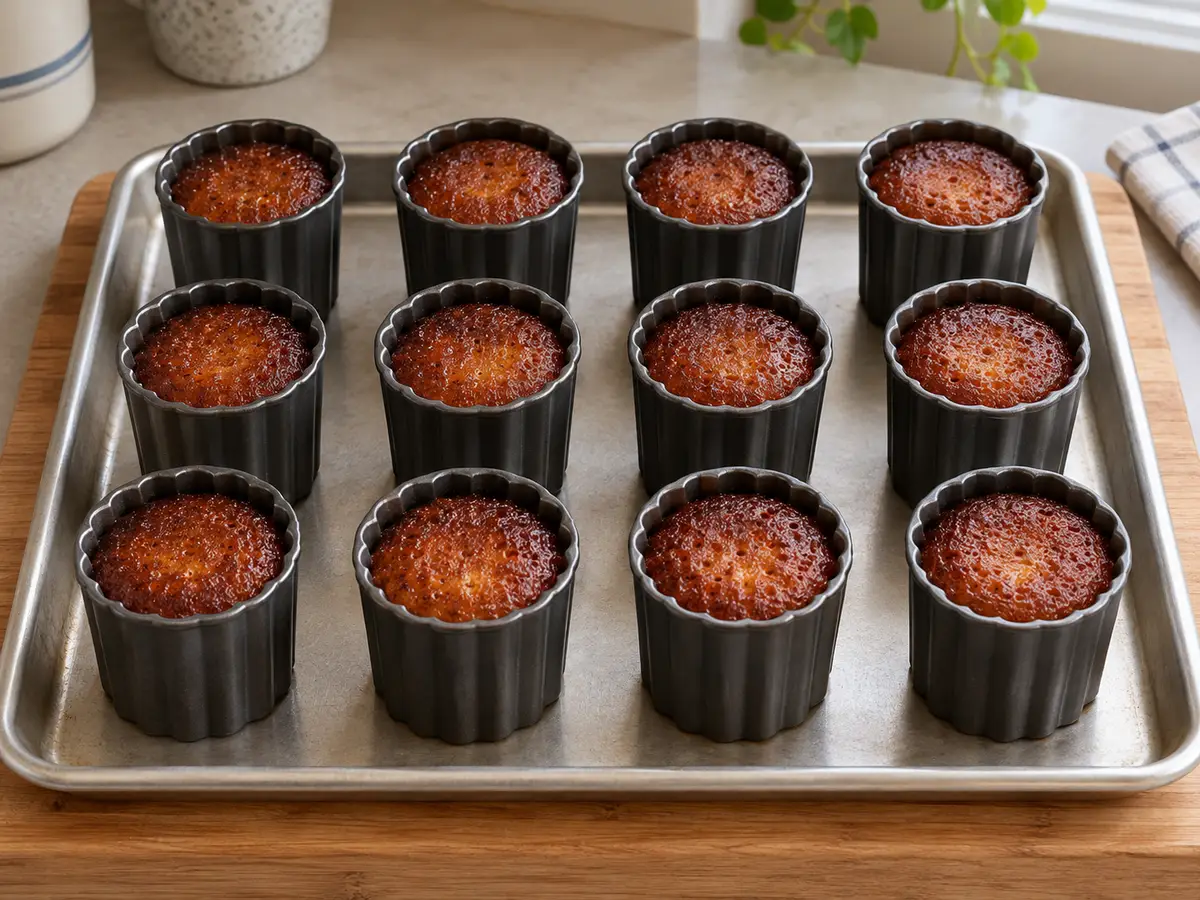
AI-generated After taking them out of the oven, wait about 3–5 minutes. Hold the hot molds with a thick towel and carefully turn them over to release the cakes onto a rack. Do not leave the canelés to cool completely in their molds. Cool on the rack for about 45–60 minutes, until the crust firms up and the center is no longer hot; the inside should stay moist, not dry like sponge cake. Serve one cake per portion, without extra sugar, cream or sauce. They are best the same day. Refrigerate any leftovers in a closed container until the next day at the latest, allowing for a softer crust.
Estimated nutrition

Rate this recipe
0 ratings
Comments