
AI-generated
Koldskål — Danish buttermilk dessert with homemade kammerjunkere
Log in or create a free account to save recipes.
Source: https://recipheon.com/en/recipes/desserts/koldskal-danish-buttermilk-dessert-with-homemade-kammerjunkere
About this recipe
Koldskål is a chilled Danish dessert of buttermilk, vanilla and lemon, served with crisp kammerjunkere cookies. It is light and pourable, sweet-tart and not thick like pudding. In this homemade version, mix the buttermilk with ready-to-use pasteurized egg yolks gently beaten with sugar. Do not replace them with raw yolks from eggs cracked out of their shells. Weighed sugar with real ground vanilla provides the vanilla flavor, while freshly squeezed lemon juice adds freshness. Each of the four bowls also gets six homemade cookie halves: first bake twelve small rounds, then split them and bake again with the cut sides up. Once completely cool, they are crisp, so add them only when eating. The entire buttermilk mixture and all twenty-four cookie halves are intended for serving, without extra fruit, mint or decorations.
Ingredients
All the chilled buttermilk mixture
1000 g plain buttermilk, 1.5% fat, weighed, unsweetened and without flavorings, chilled
40 g ready-to-use pasteurized liquid egg yolk, 100% yolk without added sugar or salt, labeled for desserts without heating, not raw yolks from eggshells
50 g white sugar for the buttermilk mixture
8 g sugar with real ground vanilla for the buttermilk mixture
20 g freshly squeezed lemon juice, weighed after removing seeds and straining, without zest
Twelve cookies split into twenty-four halves
150 g all-purpose wheat flour, type 550, all for the dough, with no extra flour for dusting
40 g unsalted butter, 82% fat, whole and not clarified, cold, for the dough
40 g white sugar for the cookies
4 g sugar with real ground vanilla for the cookies
3 g regular baking powder, not baking soda alone
1 g salt
50 g raw whole egg without the shell, about 1 medium egg, all for the baked cookies
Steps
Put all 150 g flour, 40 g sugar, 4 g sugar with real vanilla, 3 g baking powder and 1 g salt in a bowl. Add all 40 g cold butter in small cubes. Briefly rub in with your fingertips or a pastry blender until fine crumbs form without large pieces of butter. Do not melt the butter and do not grease the baking sheet; parchment paper is enough.
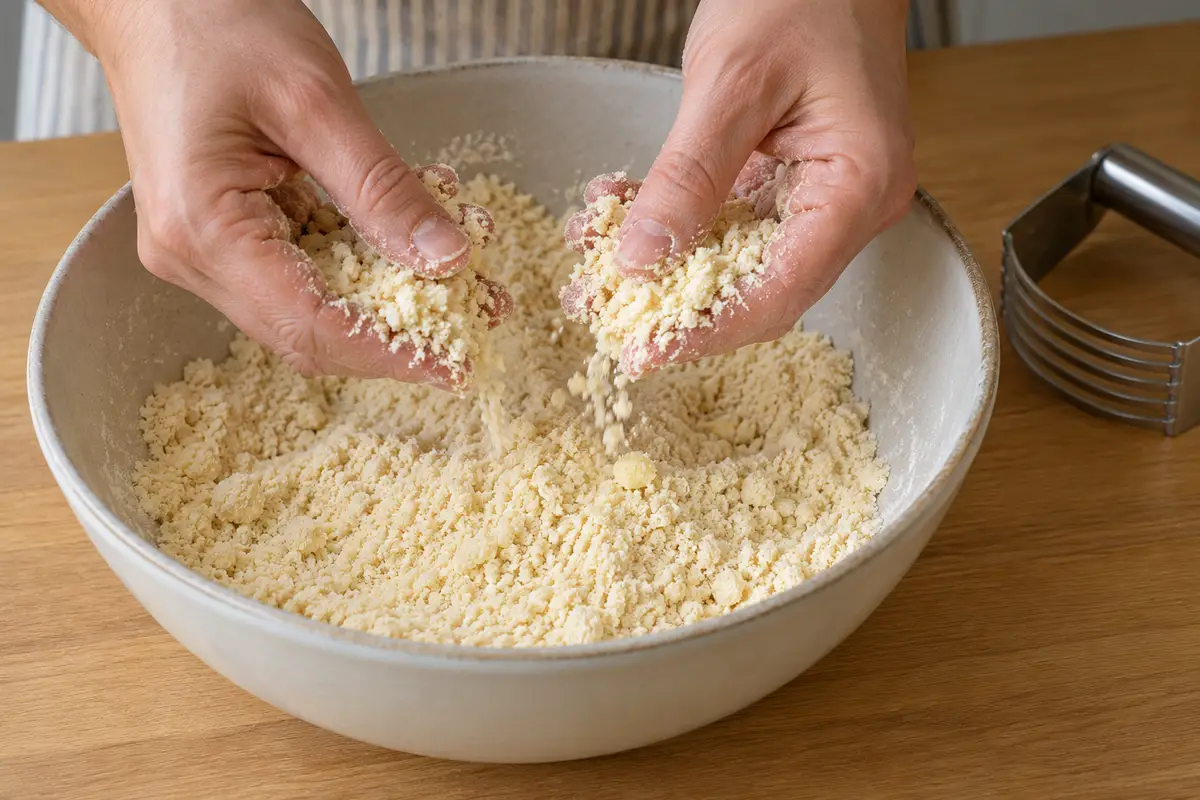
AI-generated Add 50 g beaten raw whole egg without the shell and quickly bring together into a soft, smooth dough. Gather all crumbs from the bowl, flatten the dough into one piece, cover and refrigerate for about 30 minutes. Do not add flour and do not add milk. This egg will be baked in the cookies; set aside separate ready-to-use pasteurized yolks for the cold buttermilk mixture.
In a clean bowl, spend about 3–4 minutes beating 40 g ready-to-use pasteurized yolks with 50 g sugar and 8 g sugar with real vanilla, until slightly paler and thicker. Gradually mix in all the weighed buttermilk, totaling 1000 g, and 20 g strained lemon juice. Scrape all the mixture from the sides. Cover and refrigerate for at least an hour while making the cookies.
Preheat the oven to 180°C, conventional heat. Line an ordinary baking sheet about 30 × 40 cm with parchment. Divide all the chilled dough into twelve pieces, about 24 g each. Roll into balls with dry hands and flatten slightly into rounds about 4 cm wide and 1–1.5 cm thick. Leave gaps of at least 3 cm. Do not flour the counter, do not trim the edges and do not leave any dough behind.
Bake on the middle rack for about 18–22 minutes, until the cookies rise, turn lightly golden at the edges and feel firm when touched with a spatula. Remove the sheet and leave for about 5 minutes so the rounds can be handled safely. Reduce the oven setting to 150°C, conventional heat; while cutting the cookies, briefly open the door slightly to release excess heat.
Transfer the cookies to a cutting board and carefully cut each horizontally into two halves with a small serrated knife. Hold the slightly cooled cookie at the side, away from the blade; do not cut it in your hand. This makes twenty-four halves. Arrange them on the same parchment, cut sides up, with small gaps. Keep the edible crumbs from cutting to serve as well.
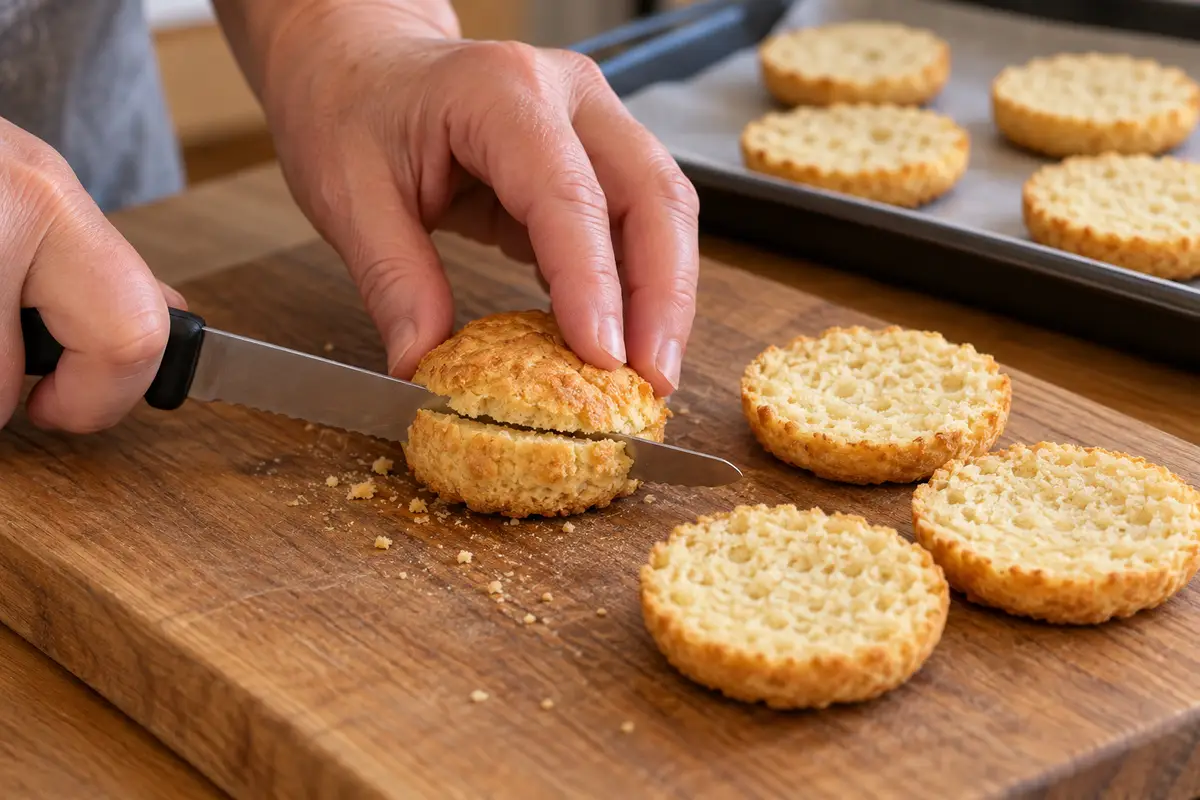
AI-generated Return the halves to the oven, now set to 150°C, and bake for about 20–25 minutes, until dry and lightly golden, including the cut surfaces. If they brown quickly, move the sheet lower and finish once the texture is dry. Transfer all halves to a rack and cool for about 30 minutes, until completely cold. Judge crispness after cooling; do not seal warm cookies in a container.
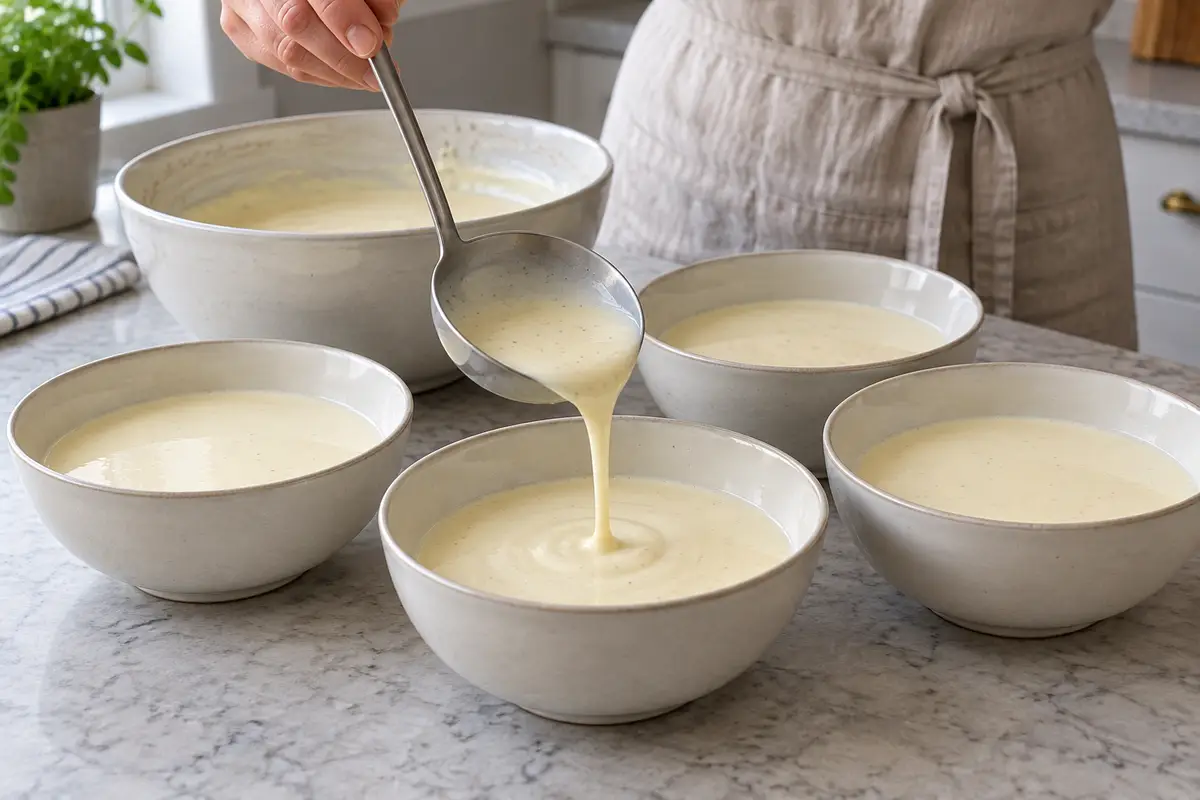
Take out the thoroughly chilled buttermilk mixture only once the cookies are completely cold. Briefly stir with a whisk to recombine any separated ingredients, without prolonged beating. Pour the entire bowlful into four deep bowls, each with a capacity of about 350–400 ml, scraping out the rest with a spatula. Koldskål should remain pourable and slightly creamy; do not thicken it with flour, gelatin or extra eggs.
AI-generated Divide all twenty-four cookie halves among the four servings, six per person. Add the reserved crumbs too. Put some halves on the dessert just before eating and serve the rest beside that same portion to keep them crisp. Use all the buttermilk mixture and all the cookies, without extra sugar, mint, fruit or a lemon garnish.
Keep the buttermilk mixture covered in the refrigerator and preferably eat it the day it is made, by the following day at the latest, allowing for any shorter after-opening limit on the yolks or buttermilk. Do not leave it out of the refrigerator for more than 2 hours. Store completely cold, dry cookies separately in an airtight container for up to 5 days; eat any already soaked in the dessert immediately. Do not freeze the assembled bowls.
Estimated nutrition

Rate this recipe
0 ratings
Comments