
AI-generated
Liège waffles — yeasted waffles with caramelized pearl sugar
Log in or create a free account to save recipes.
Source: https://recipheon.com/en/recipes/desserts/liege-waffles-yeasted-waffles-with-caramelized-pearl-sugar
About this recipe
Liège waffles use soft, buttery yeast dough shaped into balls, not poured into the waffle iron. Their hallmark is coarse Belgian pearl sugar: some pieces stay crunchy inside, while sugar near the surface creates glossy patches of caramel. The finished waffle has irregular, slightly rounded edges and a dense, tender crumb like a sweet roll. In this home version, the dough first rises without pearl sugar, making it easier to knead; the large pieces added later do not dissolve during a long wait. Butter is worked in gradually until the dough is smooth and elastic. After a short rest, the portions go into an ordinary waffle iron with deeper nonstick plates. Gentle heat cooks the center and turns the caramel golden without burning the sugar. The recipe makes eight waffles cooked in pairs, without extra greasing and without toppings. They need a few minutes on a rack after cooking, because fresh caramel is very hot. Serve plain and slightly warm to enjoy the butter, fluffy center and crunchy sugar pieces.
Ingredients
Buttery yeast dough
300 g type 550 wheat flour
100 g milk with 3.2% fat, weighed and gently warmed
12 g fresh baker's yeast
18 g fine white sugar
50 g beaten whole egg without shell, about 1 medium (M) egg; any excess is excluded from the dough
4 g fine salt
0.5 g ground cinnamon
120 g softened unsalted butter with 82% fat, cut into cubes
The signature sugar for Liège waffles
150 g coarse Belgian pearl sugar for Liège waffles, type C40, with pieces about 6–10 mm across; not fine decorating sugar, powdered sugar, brown sugar or syrup
Steps
The milk should be gently warm, pleasant to the touch. Dissolve the yeast and fine sugar in all 100 g milk. In a large bowl, mix the flour, salt and cinnamon. Add the yeast milk and the weighed 50 g whole egg. Mix, then knead for about 5 minutes, until no dry flour remains. The dough will be fairly firm. Do not add butter or pearl sugar yet and do not add water. Exclude any egg beyond the weighed 50 g from the recipe.
Add the softened butter a few cubes at a time, working in each addition before the next. Knead by hand or with a dough hook on low speed for about another 10–12 minutes. The dough will be slippery at first, then become smooth, soft, elastic and slightly sticky. Scrape residue from the sides into the dough. Do not add flour, do not melt the butter and do not grease the bowl with extra fat. All 120 g butter must go into the dough.
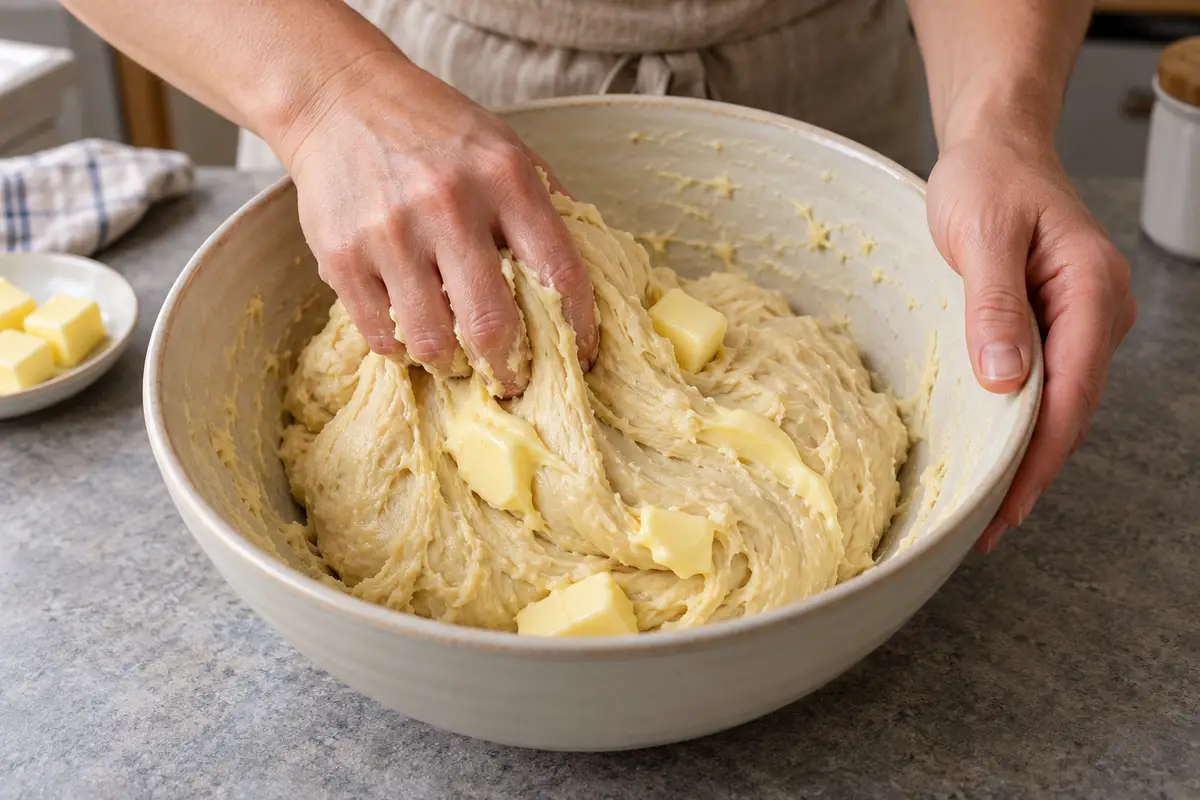
AI-generated Gather the dough into a ball, leave in the same bowl and cover. Leave at room temperature for about 75–90 minutes, until nearly doubled in volume and clearly puffy. In a cool kitchen, it may need a little longer. Do not put the bowl on a hot radiator. Keep the pearl sugar separate for now; it goes into the dough only after this rise, not dissolved in the milk.
Gently deflate the dough with your hand. Add all 150 g coarse pearl sugar and briefly fold the dough over itself until the pieces are evenly distributed. Gather sugar from the bottom of the bowl and press into the dough. Do not mix at high speed, do not roll out and do not crush the pieces: they should remain noticeable as large white bits. Fine sugar for decorating baked goods does not replace the coarse sugar intended for Liège waffles here.
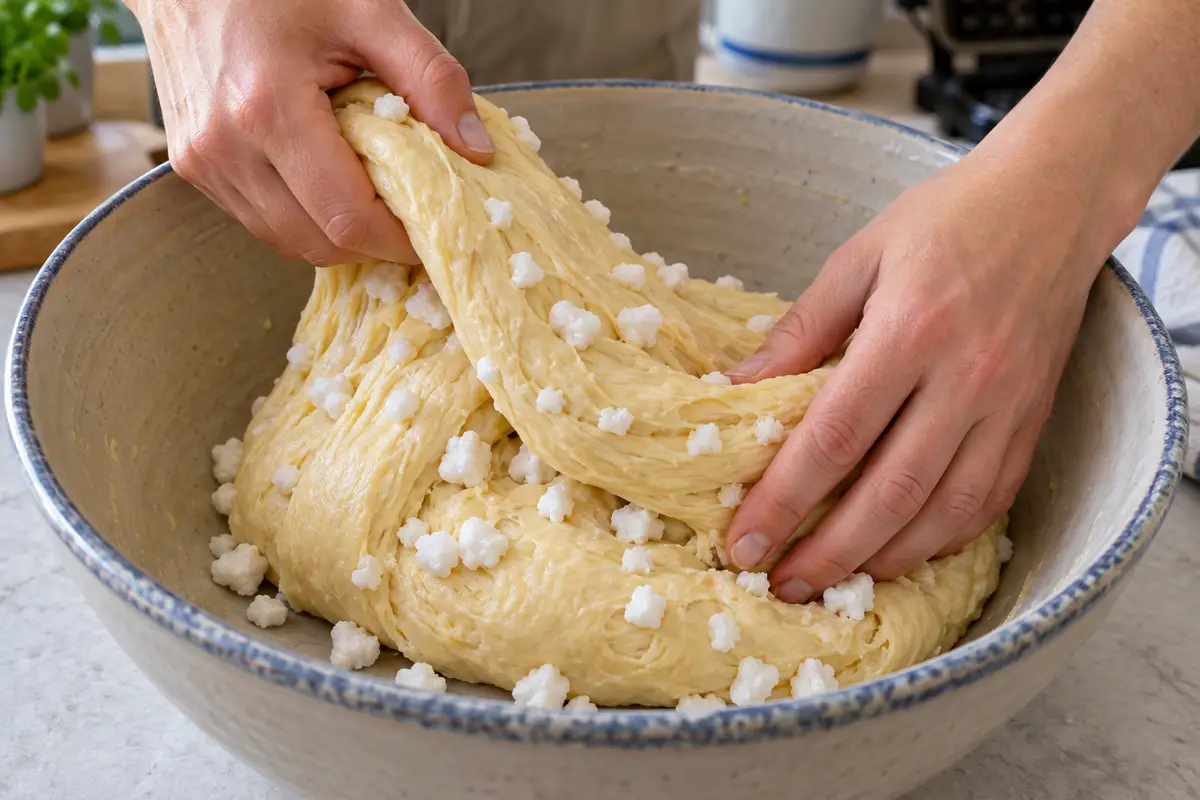
AI-generated Divide all the dough with sugar into eight equal portions of about 94 g. Gently gather each into a rounded ball without vigorous kneading; lightly press exposed sugar pieces inward. Space them out on parchment on a tray and cover loosely. Do not dust with flour or sugar. Do not discard any dough scraps or loose sugar from the bowl: distribute them among the same eight portions. Do not refrigerate the dough overnight after adding sugar.
Leave the covered portions at room temperature for about 20–25 minutes, until slightly puffy; do not wait for them to double. Plan to cook two at a time. As the first pair goes into the waffle iron, cover and refrigerate the other six portions. Take out the next two just before their batch. This brief chilling slows further rising and sugar dissolving while they wait. Colder portions may need a little longer to cook.
Use an electric waffle iron with nonstick plates for two thicker waffles, each about 10 × 12 cm. Preheat closed for the time recommended in the manual, usually about 5–8 minutes. Start at a medium heat setting; if the appliance displays a temperature, choose about 180°C. Do not immediately set it to maximum. Do not add oil or butter to the plates: this rich dough cooks without separate greasing. Have a silicone or wooden spatula and a rack ready.
Put one portion in the center of each section; do not spread it across the whole plate. Close gently, without pressing hard. Cook for about 4–6 minutes, until the waffles are golden with amber caramel patches and steam has noticeably subsided. Do not open for the first 3 minutes. Remove with a spatula without touching the caramel and place separately on a rack. If sugar darkens quickly or starts smoking, reduce the heat; burning the surface does not cook the center through.
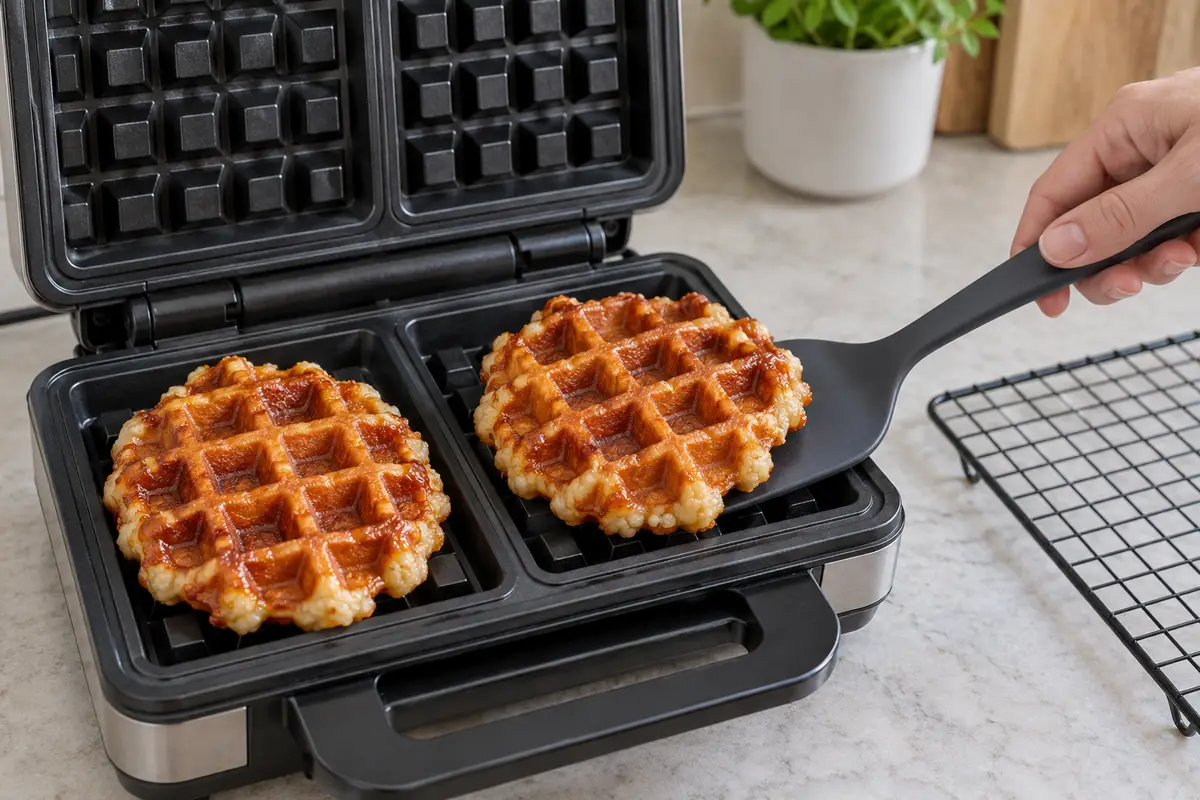
AI-generated Cook the remaining three pairs, taking the portions from the refrigerator in turn and letting the appliance regain heat between batches. Give cold dough another 1–2 minutes if needed. If sugar or burnt residue builds up on the plates, switch off and unplug the iron. Wait until it has cooled enough to handle safely, then remove residue with a soft utensil according to the manual; preheat again afterward. Do not scrape the coating with metal and do not wipe hot plates with a wet cloth. Plate residue is excluded from the servings.
Cool each batch on a rack for at least 10 minutes, until the caramel is no longer very hot and has set; do not test it with your finger or try it straight after removing the waffles. Do not stack warm waffles. Serve plain, slightly warm or cooled. One serving is one of the eight waffles, without sauce or dusting sugar. Once completely cooled, store in an airtight container for up to 2 days in a cool place or freeze for up to 2 months. Reheat thawed waffles in the oven for about 5–7 minutes at 160°C.
Estimated nutrition

Rate this recipe
0 ratings
Comments