
AI-generated
Welsh cakes — buttery Welsh griddle cakes
Log in or create a free account to save recipes.
Source: https://recipheon.com/en/recipes/desserts/welsh-cakes-buttery-welsh-griddle-cakes
About this recipe
Welsh cakes are small cakes cooked on a hot flat griddle or heavy frying pan. They have golden surfaces, delicately crumbly edges and a soft, dense center dotted with small dried grapes. Cold butter is rubbed into flour as for pastry, while egg and a little milk just bind the ingredients. Baking powder gives the rounds a gentle lift; there is no yeast or runny pancake batter. This home version uses small raisins, not dried currant berries. A little cinnamon brings out their flavor without overpowering the butter. Gentle cooking in a pan thinly brushed with butter matters most: too much heat browns the surface before the center can cook through. Roll the dough to an even thickness and use every scrap, gently pressing them together again rather than kneading at length. The warm cakes receive a light sugar coating and are ready after a brief cooling. The recipe makes twenty small cakes, best on the day they are made, when their buttery aroma is most pronounced.
Ingredients
Buttery dough with raisins
225 g type 550 wheat flour
4 g baking powder
1 g fine salt
0.5 g ground cinnamon
100 g cold unsalted butter with 82% fat, cut into small cubes
60 g fine white sugar
60 g small raisins made from dried grapes, with no added sugar or oil; chop larger ones, and do not use dried currant berries
50 g beaten whole egg without shell, about 1 medium (M) egg; any excess is excluded from the dough
20 g milk with 3.2% fat, weighed
Shaping, pan and sugar coating
15 g additional type 550 wheat flour for light dusting; unused flour is excluded from the cakes
10 g unsalted butter with 82% fat for thinly brushing the pan, divided into four portions of 2.5 g
20 g fine white sugar for a light coating; sugar left on the plate does not belong to the servings
Steps
Mix the 225 g flour, baking powder, salt and cinnamon in a bowl, distributing the baking powder evenly through the flour. Have the cold cubed butter ready. Separate the raisins and remove any hard stems before weighing out 60 g; finely chop larger fruits. Do not soak them and do not add soaking water to the dough. These are dried grapes, not dried blackcurrants.
Add all 100 g cold butter to the dry ingredients. Rub in quickly with your fingertips, lifting the mixture and loosening lumps, until it resembles fine crumbs. Do not cream until smooth and do not melt the butter. Small pieces of fat may remain visible. Stir in the 60 g sugar and all the prepared raisins until evenly distributed.
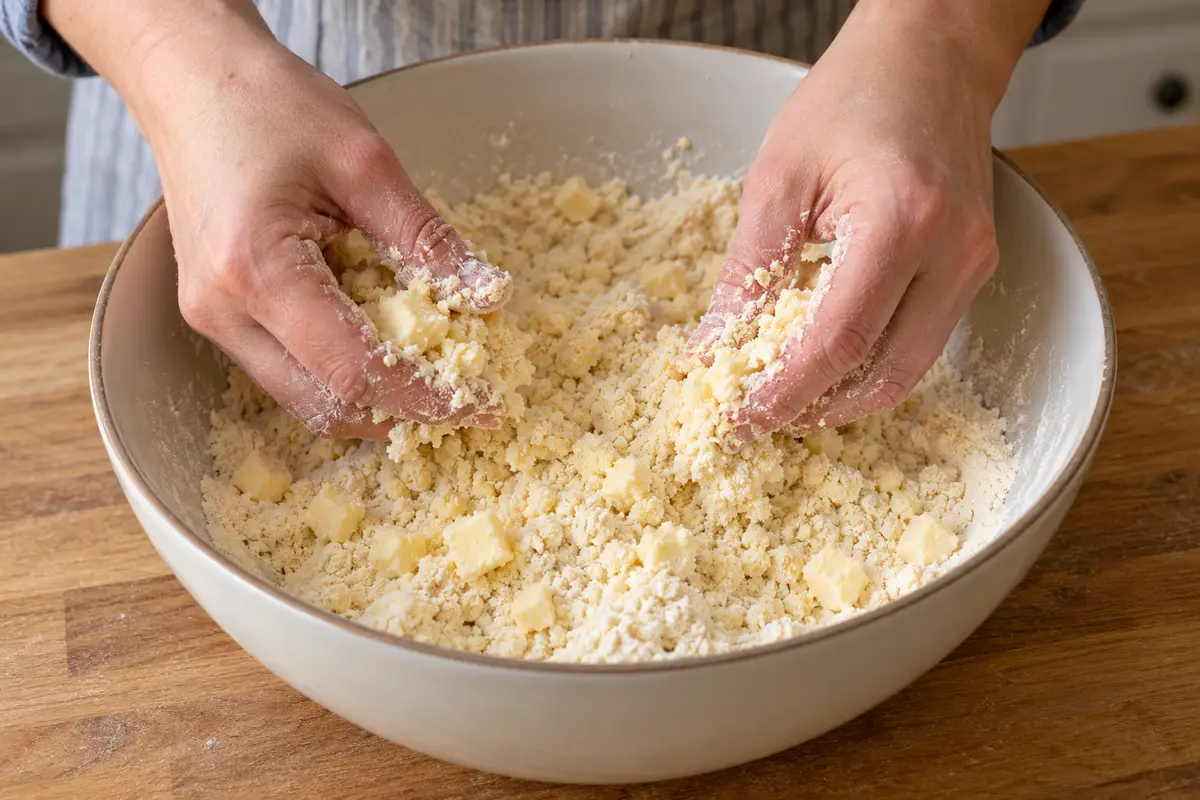
AI-generated Beat the egg without shell and weigh out exactly 50 g; set any excess aside, outside this recipe. Combine the weighed egg with all 20 g milk and add to the crumbs. Mix with a fork, then briefly bring together by hand, just until the dry flour disappears and a cohesive, soft dough forms. Do not knead like bread dough, do not add extra milk and do not add the dusting flour. Gather all crumbs and raisins from the bowl into the dough.
Flatten the dough into a thick disk, cover and refrigerate for 15 minutes so the butter firms up and rolling evenly is easier. Do not wait for it to rise: there is no yeast in this dough. Prepare a rolling pin, a round 6 cm cutter and a wide spatula. Separately weigh out 15 g flour for sparingly dusting the counter, rolling pin and cutter. Do not grease the utensils with extra butter.
Lightly dust the counter and rolling pin with some of the weighed flour. Roll the chilled dough evenly to about 8 mm thick. Cut 6 cm rounds, pressing the cutter straight down. Lift with a wide spatula and arrange side by side on a tray. Overly thick cakes are harder to cook through in the pan, while much thinner ones become dry. Do not stretch the rounds while moving them and do not press them back into flour.
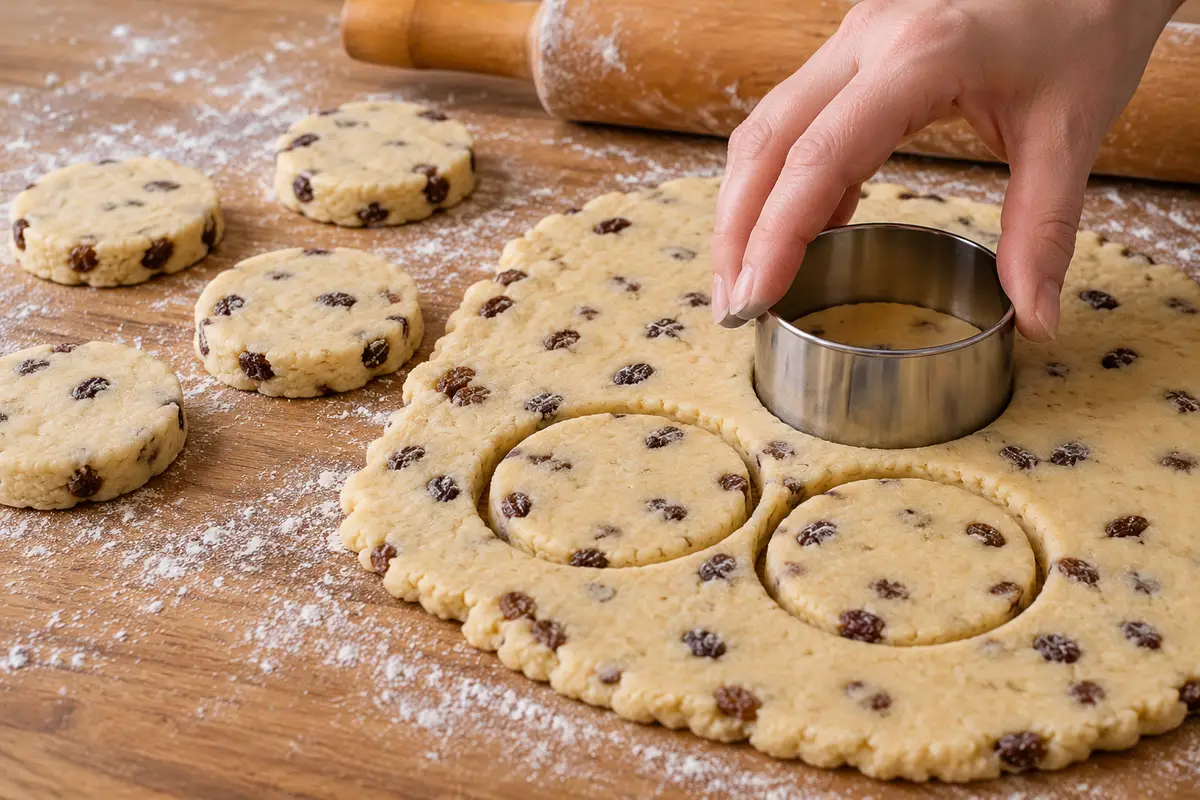
AI-generated Gather all the scraps with their raisins, gently press together, roll again to about 8 mm and keep cutting. Repeat briefly, without lengthy kneading. Make 20 small cakes from all the dough; shape the last portions by hand to a similar diameter and thickness if needed. Do not set aside any dough scraps outside the servings. Leave unused flour on the counter or in its bowl rather than forcing it into the dough. Keep the tray of waiting rounds in a cool place.
Heat a heavy, thick-bottomed frying pan about 24–26 cm across over low or medium-low heat for 3–4 minutes. Thinly brush on the first 2.5 g butter; it should only coat the surface, not create a pool. Keep the other three portions of butter for later batches. If the butter immediately darkens or smokes, take the pan off the heat briefly and reduce the heat. Do not add oil and do not test the heat with a drop of water.
Put five rounds in the pan, leaving space between them. Cook without covering for about 4–5 minutes on the first side, until the bottom is golden. Turn carefully with a wide spatula and cook for another 4–5 minutes. Do not press down on the cakes. They should rise slightly, have matte sides and an elastic, soft center without wet dough. If they darken after just a minute, the heat is too high; reduce it. If pale, cook gently a little longer rather than sharply increasing the heat.
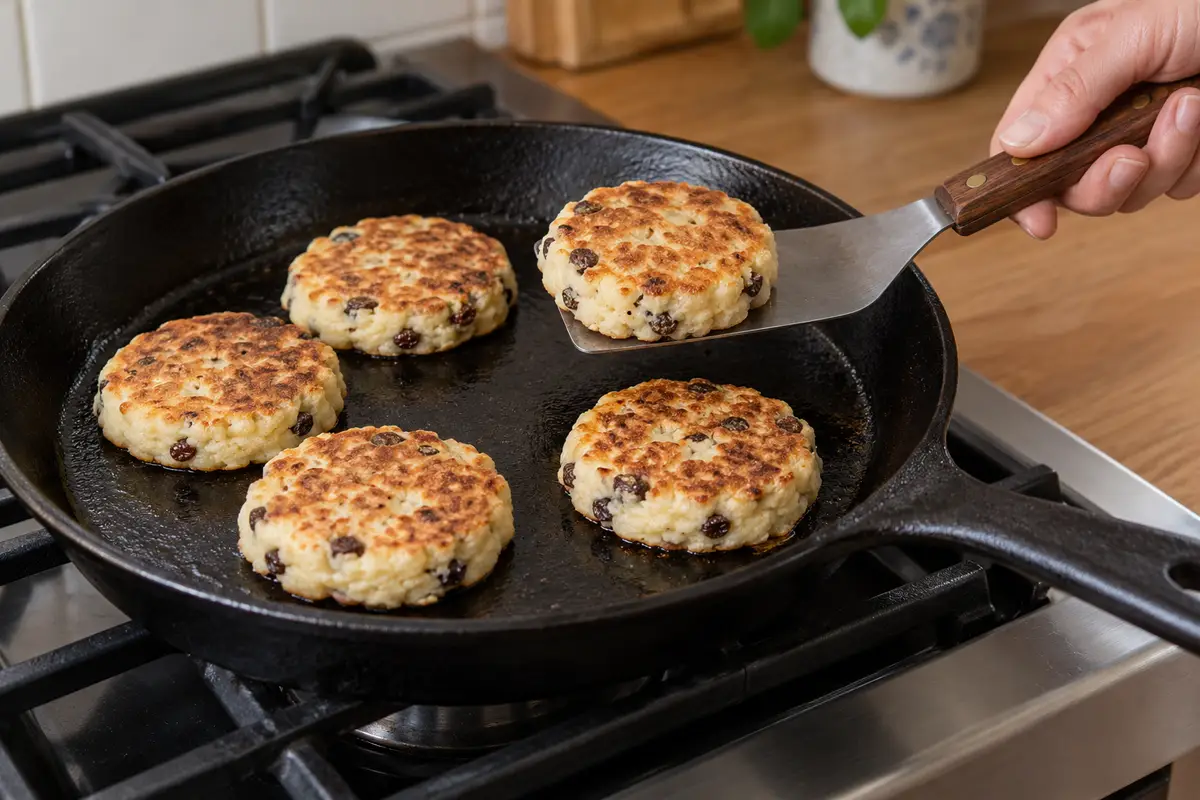
AI-generated Transfer the first batch to a rack. Cook the remaining three batches of five in the same way, thinly brushing the pan with another 2.5 g butter each time. Keep the heat gentle; take the pan off the heat before removing burnt crumbs. Put the separate 20 g sugar on a plate. While still warm, lightly coat both sides of the cakes, shaking off excess. Remaining sugar and fat on utensils or in the pan are excluded from the servings. Do not add serving butter.
Leave each batch on a rack for about 10 minutes before serving. The cakes are delicate straight from the pan and firm up as they cool; the center stays dense and soft, not fluffy like a pancake. One serving is one of the 20 cakes, without extra spreads. They are particularly good the day they are made. Once completely cooled, store in an airtight container for up to 2 days in a cool place or freeze for up to 2 months. Do not seal warm cakes in a container.
Estimated nutrition

Rate this recipe
0 ratings
Comments