
AI-generated
Sticky Toffee Pudding — Moist Date Cake with Warm Toffee Sauce
Log in or create a free account to save recipes.
Source: https://recipheon.com/en/recipes/desserts/sticky-toffee-pudding-moist-date-cake-with-warm-toffee-sauce
About this recipe
Sticky toffee pudding is a soft, moist date cake with warm toffee sauce that soaks into the crumb and coats each serving. Dates soaked in hot water and blended into a paste give the cake a deep flavor and an even, tender texture. Dark muscovado sugar adds notes of molasses, while butter and cream make a smooth sauce without a separate caramel-making step. The dessert bakes in one square pan, making it easy to divide into nine servings. Some of the sauce goes onto the cake as soon as it comes out of the oven; during a short rest, it soaks into the top while the crumb stays soft. Serve the remaining sauce warm so it runs down the sides of each piece instead of setting into a firm glaze. The key points are to let the date paste become lukewarm before combining it with the eggs and to finish baking when no raw batter remains in the center.
Ingredients
Cake and pan preparation
200 g soft dried dates with no added sugar, weighed after pitting and before soaking
200 ml water for soaking the dates; all the liquid stays in the cake
3 g food-grade baking soda
130 g butter with 82% fat: 75 g softened for the cake, 5 g for the pan and 50 g for the sauce
210 g dark, soft, moist muscovado sugar: 90 g for the cake and 120 g for the sauce; do not use dry demerara sugar
2 size L eggs, about 110 g without shells, at room temperature
175 g type 450 wheat flour
4 g baking powder
5 ml vanilla extract for the cake
2 g fine salt: 1 g for the cake and 1 g for the sauce
For the toffee sauce
200 g liquid, unsweetened whipping cream (30% fat)
Steps
Preheat a conventional oven (no fan) to 180°C and place a rack in the middle. Check that the dates have no pits, chop them finely and put them in a tall, heatproof container suitable for an immersion blender. Bring the measured 200 ml water to a boil, pour it over the dates and stir in all the baking soda. Leave for 10 minutes to soften the fruit; meanwhile, prepare the pan and start creaming the butter as described below. Do not drain the liquid from the dates. Allow the oven to preheat for at least 20 minutes before putting the cake in.
Blend the soaked dates with all their liquid using an immersion blender, keeping the head submerged so the warm mixture does not splatter. You should have a thick paste with fine pieces of fruit and no large chunks. Transfer all of it to a wide bowl and leave for about 10 minutes, stirring occasionally, while you continue preparing the butter mixture. The paste must be lukewarm before you add it to the batter: a little on a clean teaspoon should feel only slightly warm to the touch, not hot. If it still feels distinctly hot, wait longer.
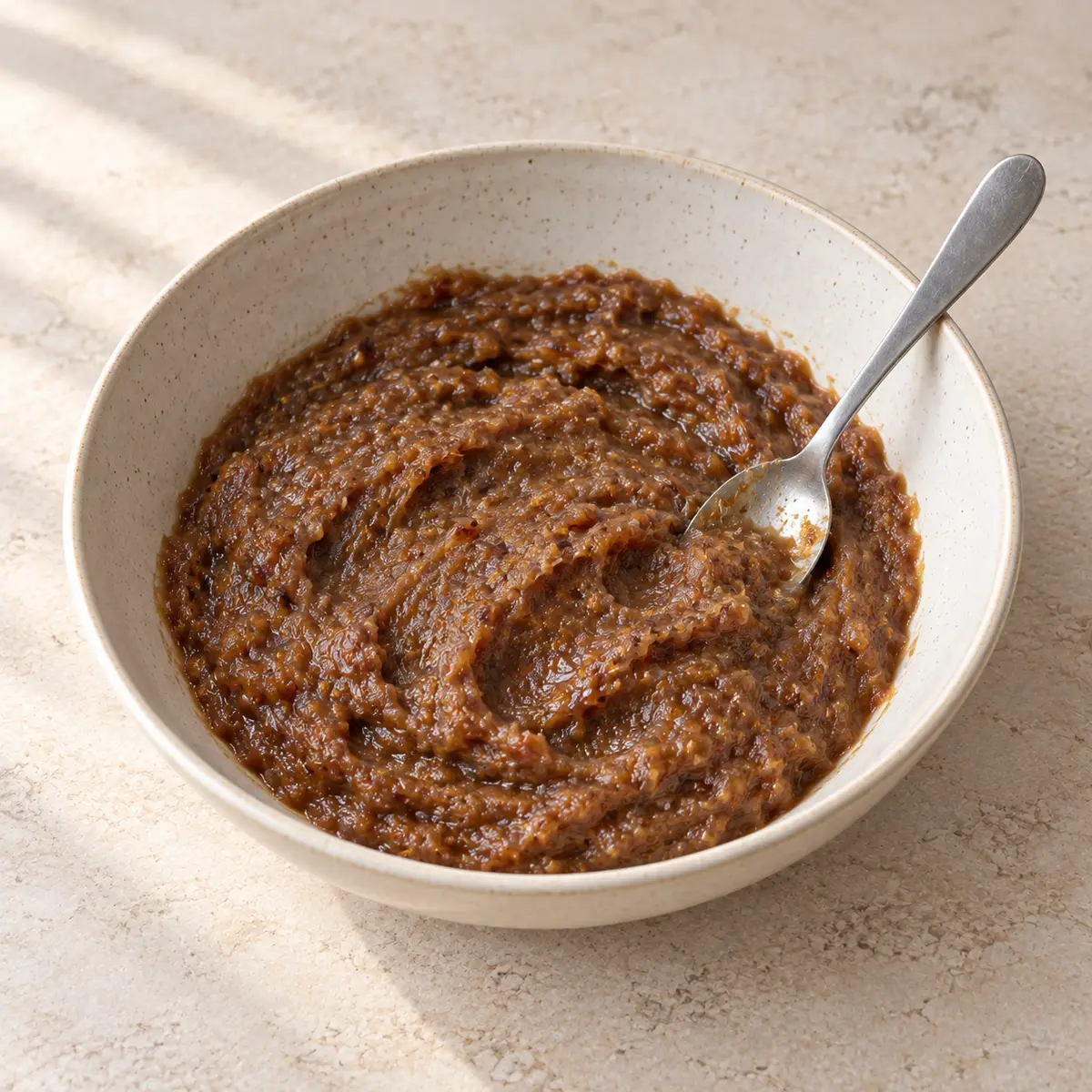
AI-generated While the dates soak and cool, use all 5 g butter to grease the bottom and sides of a metal baking pan measuring 20 × 20 cm inside and at least 5 cm deep. Line the bottom with a piece of parchment paper cut to fit; do not dust the pan with flour. In a large bowl, beat 75 g softened butter with 90 g muscovado using a mixer on medium speed for about 3–4 minutes, breaking up lumps of sugar, until lighter in color and creamy. Add the eggs 1 at a time, beating for about 1 minute after each and scraping down the sides of the bowl. Finally, mix in all the vanilla extract.
In a separate bowl, thoroughly combine all the flour, baking powder and 1 g salt. Use a spatula to fold half this dry mixture into the butter mixture, followed by half the lukewarm date paste. Add the remaining dry mixture and the rest of the paste, scraping it thoroughly from the bowl. Mix just until no dry flour remains; do not beat for a long time after adding it. The finished batter should be thick but soft and easy to spread with a spatula.
Transfer all the batter to the prepared pan, thoroughly scraping the bowl and spatula. Spread it into the corners and smooth the top so the cake has an even thickness throughout. Do not set the batter aside for later: once mixed with the baking powder, it should go into the preheated oven.
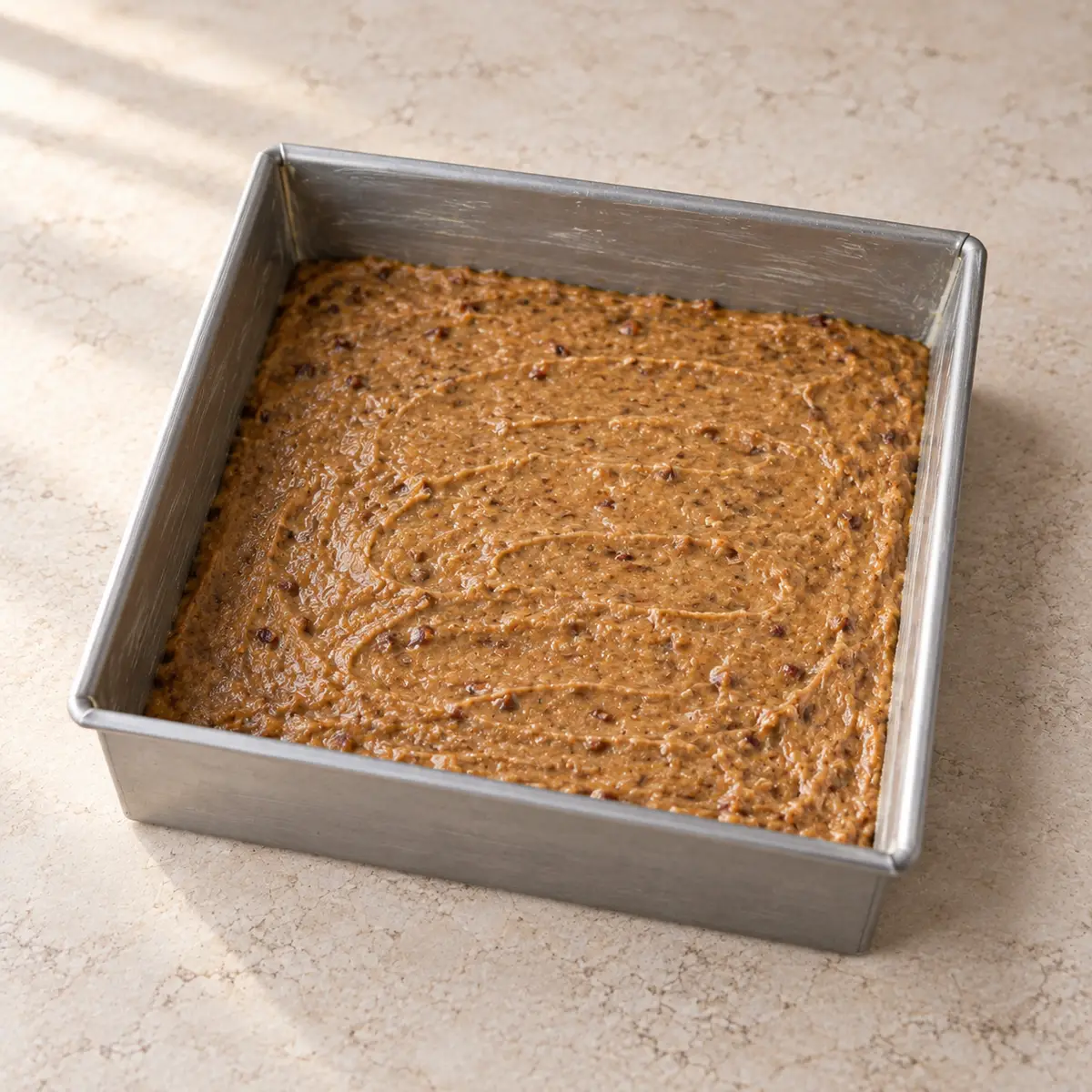
AI-generated Place the pan on the middle rack and bake at 180°C on the conventional setting for about 35–40 minutes. Do not open the oven during the first 30 minutes. Toward the end, the top should be risen and spring back when touched gently, and a skewer inserted into the center should come out without liquid, raw batter; a few moist crumbs or tiny pieces of date are fine. If raw batter remains on the skewer, bake for about 5 more minutes and check again. Make the sauce while the cake bakes.
Put the remaining 50 g butter, 120 g muscovado, all the cream and the remaining 1 g salt in a saucepan with a capacity of about 1 l. Heat over low heat, stirring, until the butter melts and the lumps of sugar dissolve. Bring to a gentle boil and cook over low heat for about 3–4 minutes, stirring frequently and scraping the bottom; the whole process, including melting, will take about 8–10 minutes. The sauce should be smooth and glossy and fall from a spoon in a broad, flowing ribbon. Do not reduce it to the consistency of chewy caramel, as it will thicken further as it cools. Remove from the heat and cover until the cake comes out of the oven.
Take the baked cake out of the oven and set the pan on a wire rack. Immediately poke the top with a skewer at intervals of about 2 cm, going roughly halfway through the cake. Stir the warm sauce, measure out about 1/4 of the total amount and spread it evenly over the hot cake, including around the edges. Keep the remaining 3/4 of the sauce in the covered saucepan for serving. Leave the cake in its pan without covering it for 20 minutes so the sauce can soak in and the pieces can be lifted out without crumbling.
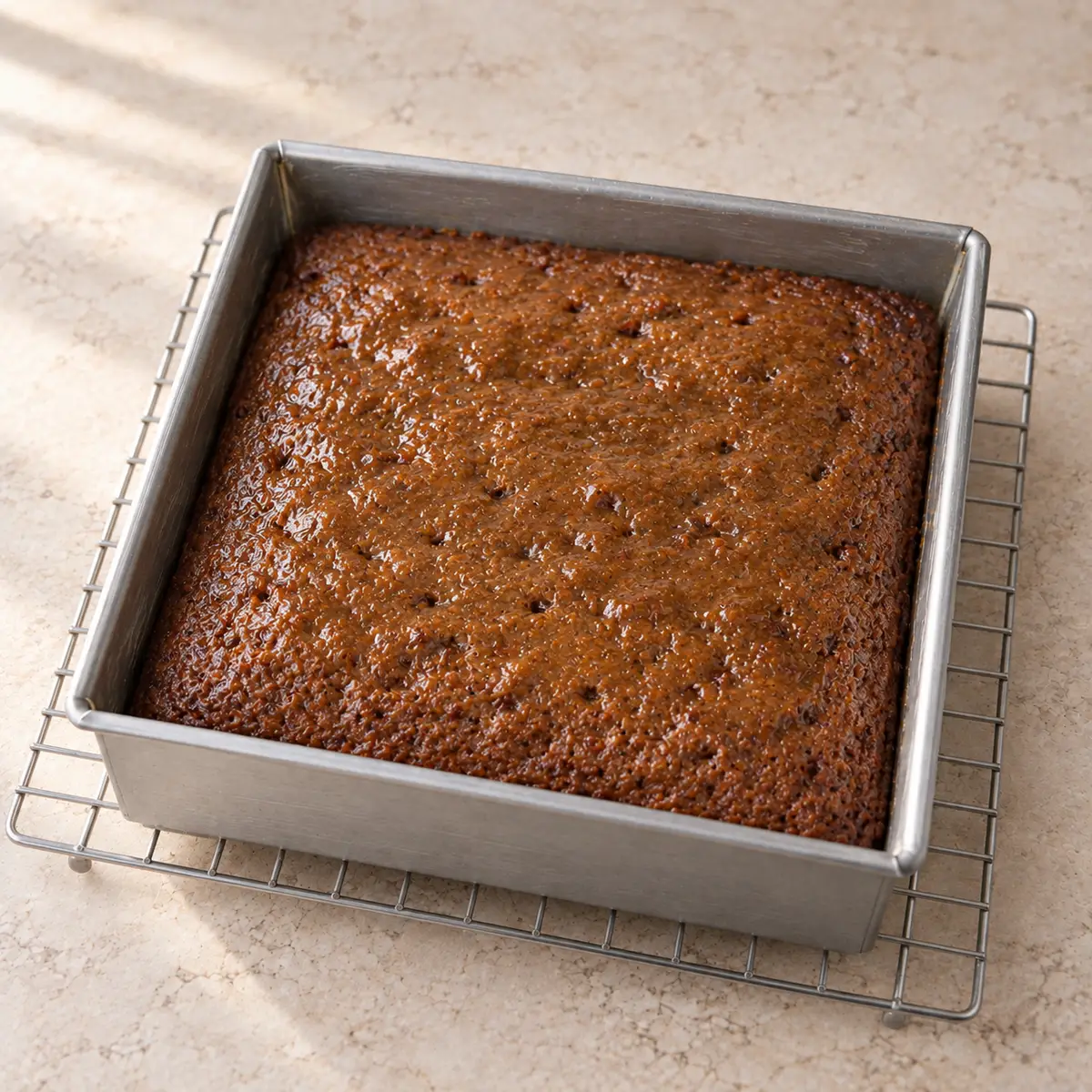
AI-generated Toward the end of the resting time, gently reheat the reserved sauce over low heat, stirring just until it flows again; do not boil it again for a long time. Cut the warm cake in the pan into 9 squares in a 3 × 3 grid. Lift them out with a wide spatula, leaving the paper on the bottom of the pan. Divide all the remaining warm sauce among the servings, scraping it thoroughly from the saucepan, and serve immediately. The sauce should run down the sides of the cake while the center stays soft and moist.
Estimated nutrition

Rate this recipe
0 ratings
Comments