
AI-generated
Pão de ló de Ovar — sponge cake with a creamy center
Log in or create a free account to save recipes.
Source: https://recipheon.com/en/recipes/desserts/pao-de-lo-de-ovar-sponge-cake-with-a-creamy-center
About this recipe
Pão de ló from Ovar is a Portuguese cake made with plenty of egg yolks, with a thin golden top and a moist, creamy center. This home version relies on beating eggs and sugar for a long time, then baking briefly to leave a delicate interior surrounded by a light sponge edge. Use pasteurized liquid whole eggs and pasteurized liquid egg yolks without additives. Prepare a metal cake pan without a center tube, measuring 20 cm across and at least 6 cm deep, and line it with parchment extending well above the rim. Serve after an hour of cooling, keeping the paper beneath the soft center; the cake makes eight small servings.
Ingredients
For a 20 cm cake pan
120 g pasteurized liquid whole eggs, without additives
150 g pasteurized liquid egg yolks, without additives
150 g white sugar
50 g plain wheat flour, type 550
Steps
Preheat the oven to 200°C with conventional top and bottom heat. Line a metal cake pan without a center tube, measuring 20 cm across and at least 6 cm deep, with a large sheet of parchment. Fit it against the bottom and sides, leaving several centimeters of paper above the rim. Do not grease the pan or paper. Keep the egg products refrigerated until needed.
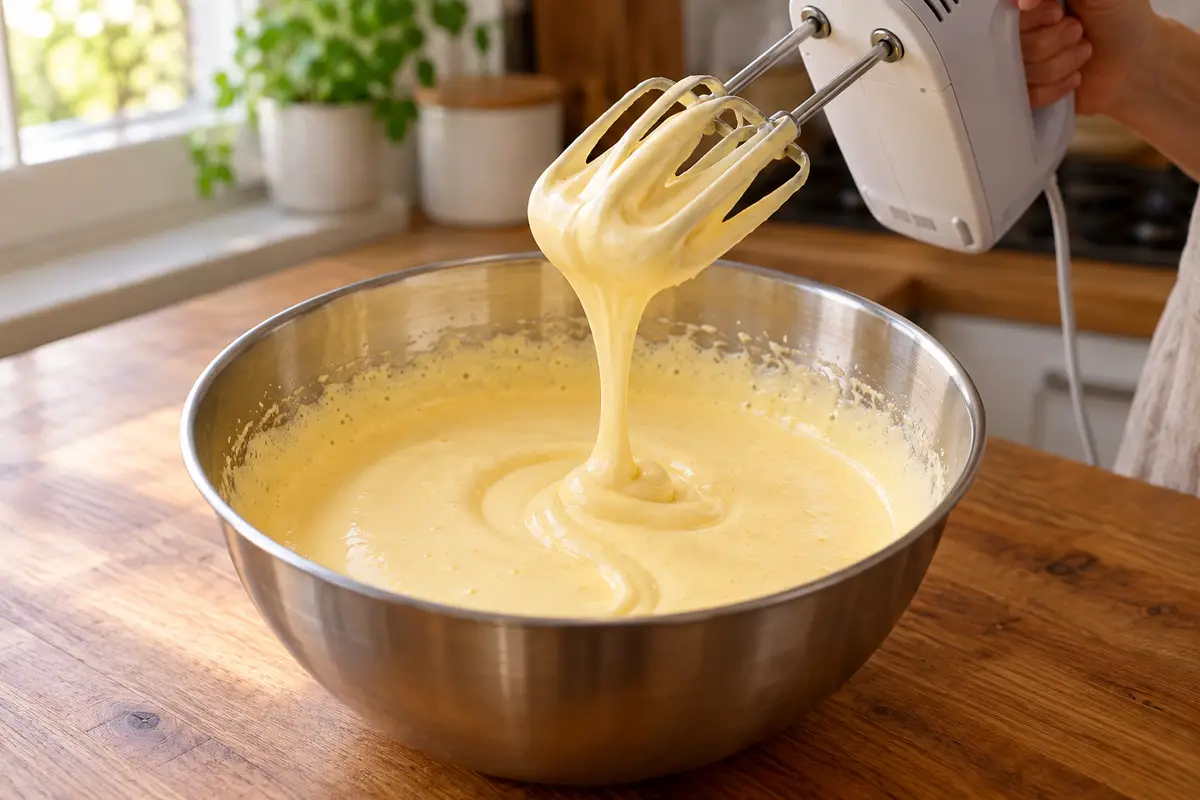
Pour the weighed liquid whole eggs and egg yolks into a large bowl. Add all the sugar. Beat with an electric mixer for about 15 minutes, until the mixture increases noticeably in volume and becomes pale and very thick. When the beaters are lifted, it should fall in a broad ribbon that leaves a trail on the surface for a few seconds.
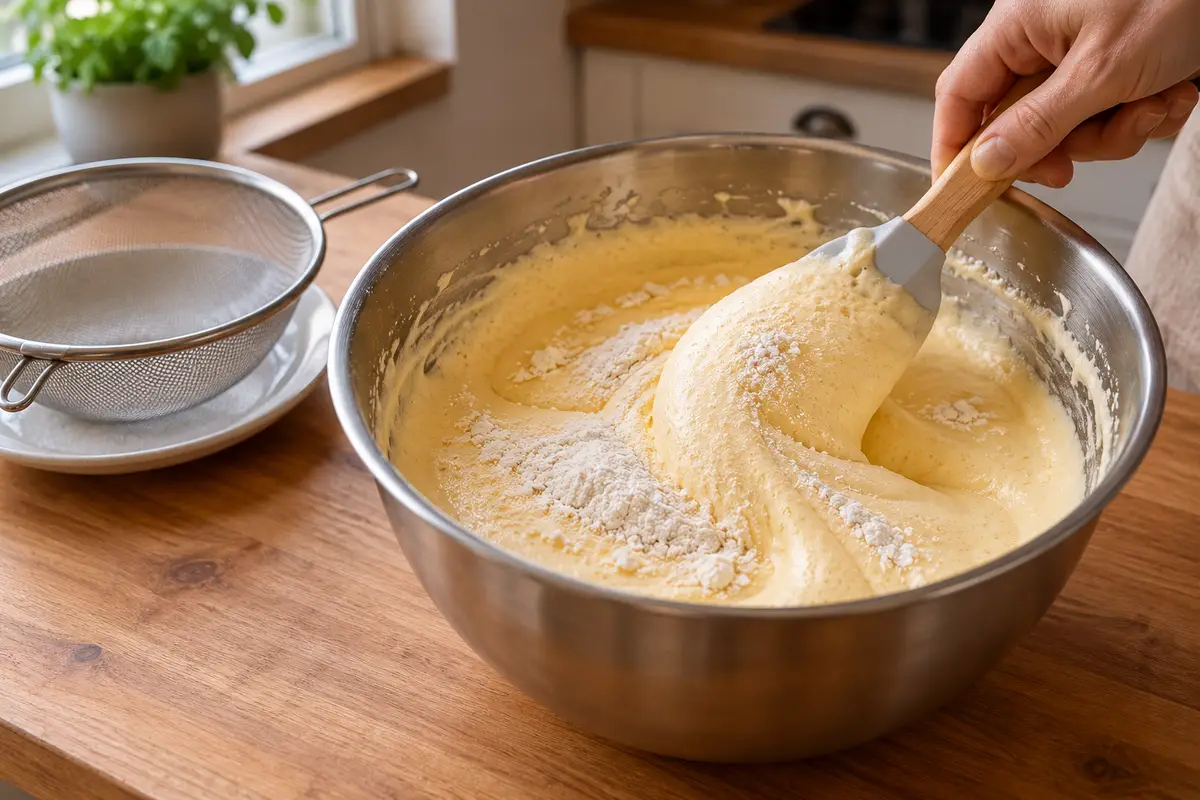
AI-generated Sift half the flour over the whipped mixture and fold it in with a spatula, lifting from the bottom upward. Add the remaining flour in the same way. Use all 50 g and mix briefly, just until the dry streaks disappear, to keep the batter light.
AI-generated Transfer all the batter to the prepared pan, scraping the sides and bottom of the bowl thoroughly. Gently smooth the surface. Leave the tall paper edges spread around the pan to support the sponge as it rises.
Place the pan on the middle oven rack and bake for about 15–20 minutes. Toward the end of baking, the edges should be risen and set, with a thin golden layer on top. The center remains soft and jiggles slightly when the pan is gently moved. Carefully remove the pan and place it on a heatproof trivet.
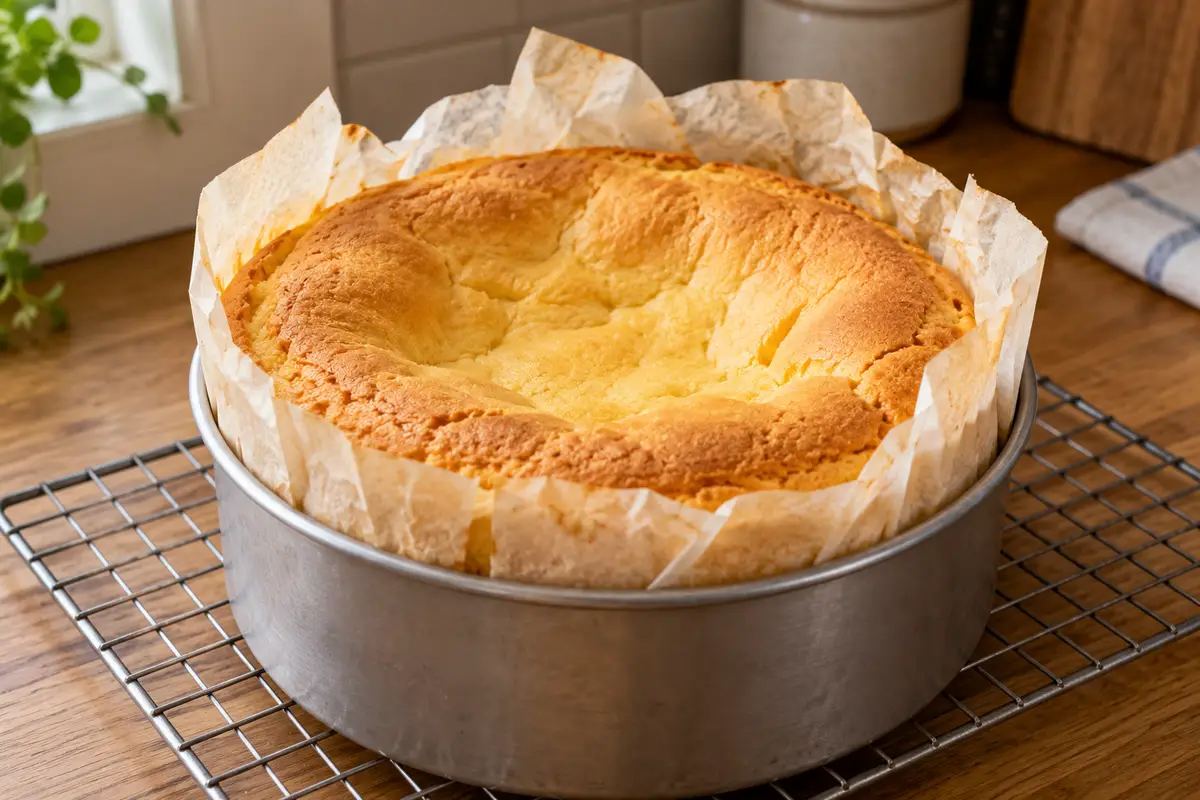
AI-generated Leave the cake in the pan to cool for about an hour. The center may sink slightly. Transfer the cake to a plate with the paper, which supports the creamy interior. Divide into eight small servings, scooping up the soft center together with the sponge edge. Keep any leftover cake covered in the refrigerator and use it the next day.
Estimated nutrition
We couldn't estimate the nutrition for this recipe yet.

Rate this recipe
0 ratings
Comments