
AI-generated
Prinsesstårta — Swedish cake with vanilla cream and marzipan
Log in or create a free account to save recipes.
Source: https://recipheon.com/en/recipes/desserts/prinsesstarta-swedish-cake-with-vanilla-cream-and-marzipan
About this recipe
Prinsesstårta is a Swedish cake with three pale sponge layers, vanilla cream and a fluffy dome of whipped cream beneath green marzipan. Its characteristic shape is formed by smoothing the cream before covering the cake with thinly rolled almond paste. In this home version, the vanilla cream is cooked from scratch with milk, egg yolks and starch, thoroughly chilled, then lightened with a small portion of the whipped cream. The rest creates the soft, rounded top. The cake contains no jam or additional soaking syrup: resting with the filling in the refrigerator provides moisture. Its only decoration is a small white rose made from reserved marzipan, without separate sugar decorations. The recipe makes twelve servings of a cake measuring 22 cm across. Marzipan trimmings and unused rolling sugar are excluded from these servings.
Ingredients
Pale sponge cake
4 whole eggs, size M, about 200 g after cracking, without shells
120 g fine white sugar
120 g type 450 wheat flour
Cooked vanilla cream
300 g milk with 3.2% fat, weighed
3 additional yolks from separate size M eggs, about 54 g without whites or shells; save the whites for another dish
60 g fine white sugar
30 g pure cornstarch
15 g butter with 82% fat
1 vanilla bean
Whipped cream and marzipan
500 g well-chilled whipping cream with 36% fat, weighed
20 g confectioners' sugar without added starch for the cream
500 g pale marzipan with about 50% almonds, suitable for rolling; reserve 20 g for the white rose and color the remaining 480 g green; keep trimmed excess outside the servings
a little green gel food coloring for the marzipan
10 g confectioners' sugar without added starch for lightly dusting while rolling; unused sugar is excluded from the servings
Steps
Line the bottom of a 22 cm springform pan with parchment paper; do not grease the sides. Preheat the oven to 170°C with conventional top and bottom heat. Beat the four whole eggs and 120 g sugar with a mixer for about 8–10 minutes, until very pale, thick and fluffy, with a ribbon that stays visible briefly as it falls. Sift the flour and gently fold it in with a spatula in two additions, reaching the bottom of the bowl. Transfer all the batter to the pan and level it. Bake for about 30–35 minutes, until the sponge is springy and a skewer comes out without wet batter. Wait 10 minutes, loosen the sides with a knife, remove the cake and peel off the paper. Cool on a rack for about 60 minutes, until completely cooled.
Split the vanilla bean and scrape out the seeds. Heat the milk in a saucepan with the seeds, the empty bean and 30 g of the sugar allocated to the cream, until steaming strongly. Remove the empty bean. In a bowl, mix the three additional yolks with the remaining 30 g sugar and all the cornstarch. Gradually pour in about half the hot milk, whisking, then return everything to the saucepan. Heat over medium-low heat, stirring constantly across the bottom and around the sides. Once clearly bubbling, cook for a full 2 more minutes, stirring vigorously. Take off the heat and mix in all 15 g butter. The base should be thick and smooth, without lumps of starch.
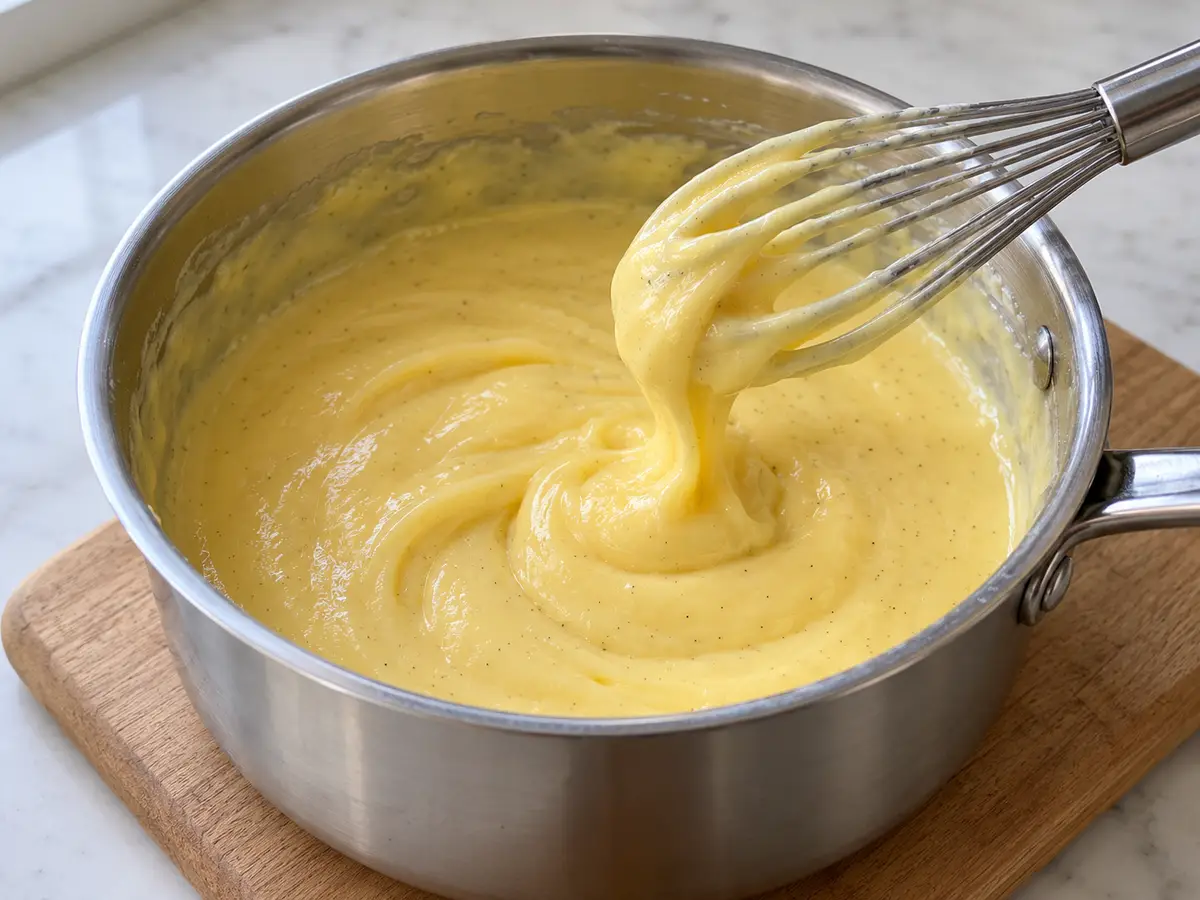
AI-generated Transfer the hot base to a wide, shallow dish in a layer about 2 cm deep. Stand it in cold water for 10–15 minutes, stirring the cream a few times; no water must get inside. Press plastic wrap directly against the surface and refrigerate for about 60–90 minutes, until the cream is completely cold. Do not add whipped cream to a lukewarm base. You can prepare the cream in advance and leave it covered in the refrigerator until assembling the cake.
From the full 500 g marzipan, reserve 20 g for one small white rose and cover tightly. Add green gel coloring a little at a time to the remaining 480 g, kneading until evenly pale green; do not thin the paste with water. Wrap it so it does not dry out. Cut the completely cold sponge horizontally into three layers, keeping every part. Do not separately slice off the top and do not trim the circumference. Use the thinnest top layer to close the cake. Prepare a flat plate or cake board large enough to hold the whole cake.
Briefly whisk or beat the cold vanilla base until smooth. In a separate chilled bowl, whip all 500 g cold cream with 20 g confectioners' sugar until it holds clear, springy beater marks. Do not beat until grainy. Weigh out about 100 g finished whipped cream and gently fold it into all the cold vanilla base, preferably in two additions. Divide the resulting filling into two equal parts. Immediately refrigerate the remaining whipped cream, about 420 g, while you fill the sponge layers.
Place the bottom sponge layer on the plate and spread half the vanilla filling over it, leaving only a narrow margin at the edge. Cover with the middle sponge layer, press lightly and add the second half of the filling. Spread it evenly, using it all. Add the third, thinnest sponge layer and gently level the cake with your hand, without squeezing the filling out. Do not add jam, soaking syrup or any other layers. If the filling softens as you work, refrigerate the cake for about 15 minutes before finishing with whipped cream.
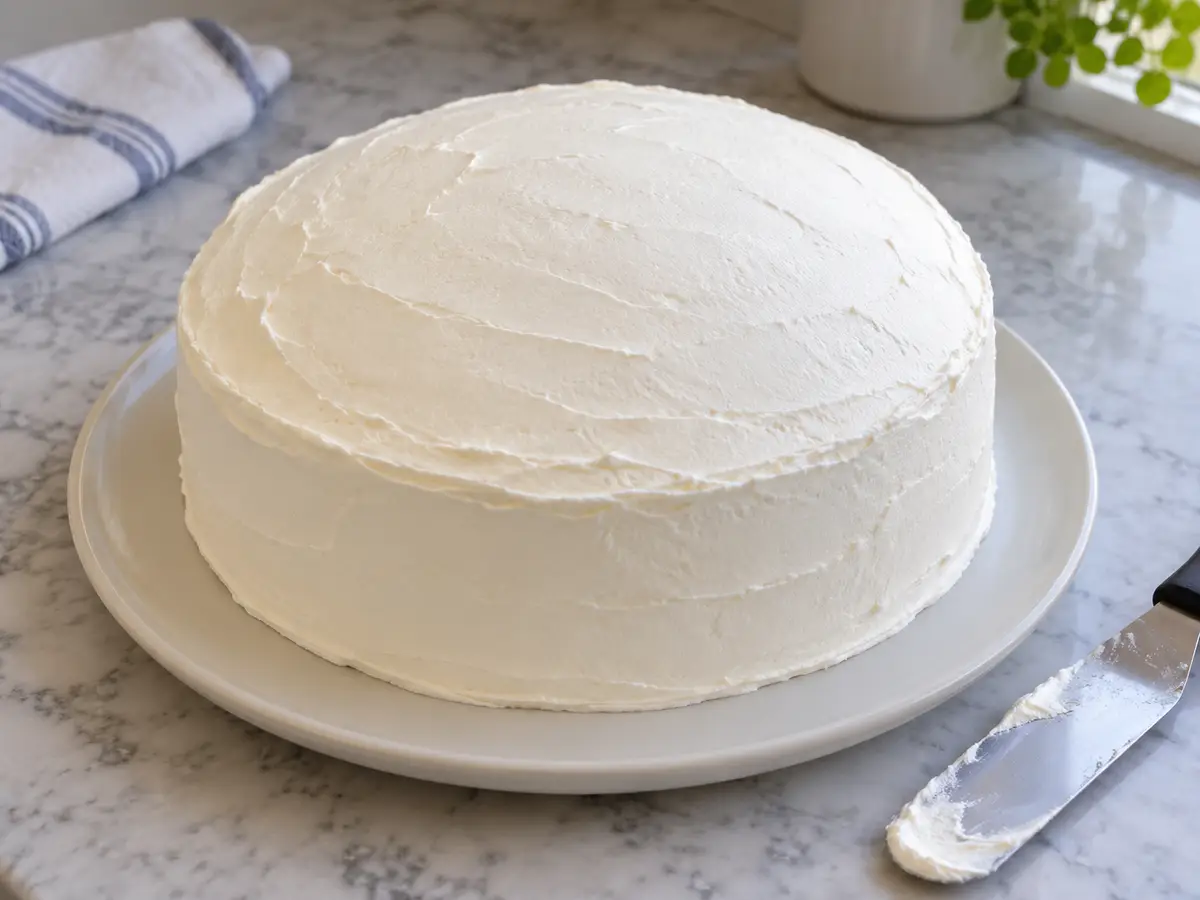
Thinly cover the sides of the cake with some of the remaining whipped cream, filling any gaps around the edges. Place all the rest on top, higher in the middle and lower at the edges. Smooth the cream with a spatula into a gentle, broad dome, without a sharp peak; do not press hard on the sponge. Use all the reserved cream, including for smoothing the sides. Refrigerate the cake for about 45–60 minutes, until the surface is cold and stable. Do not put heavy marzipan onto soft, warmed cream.
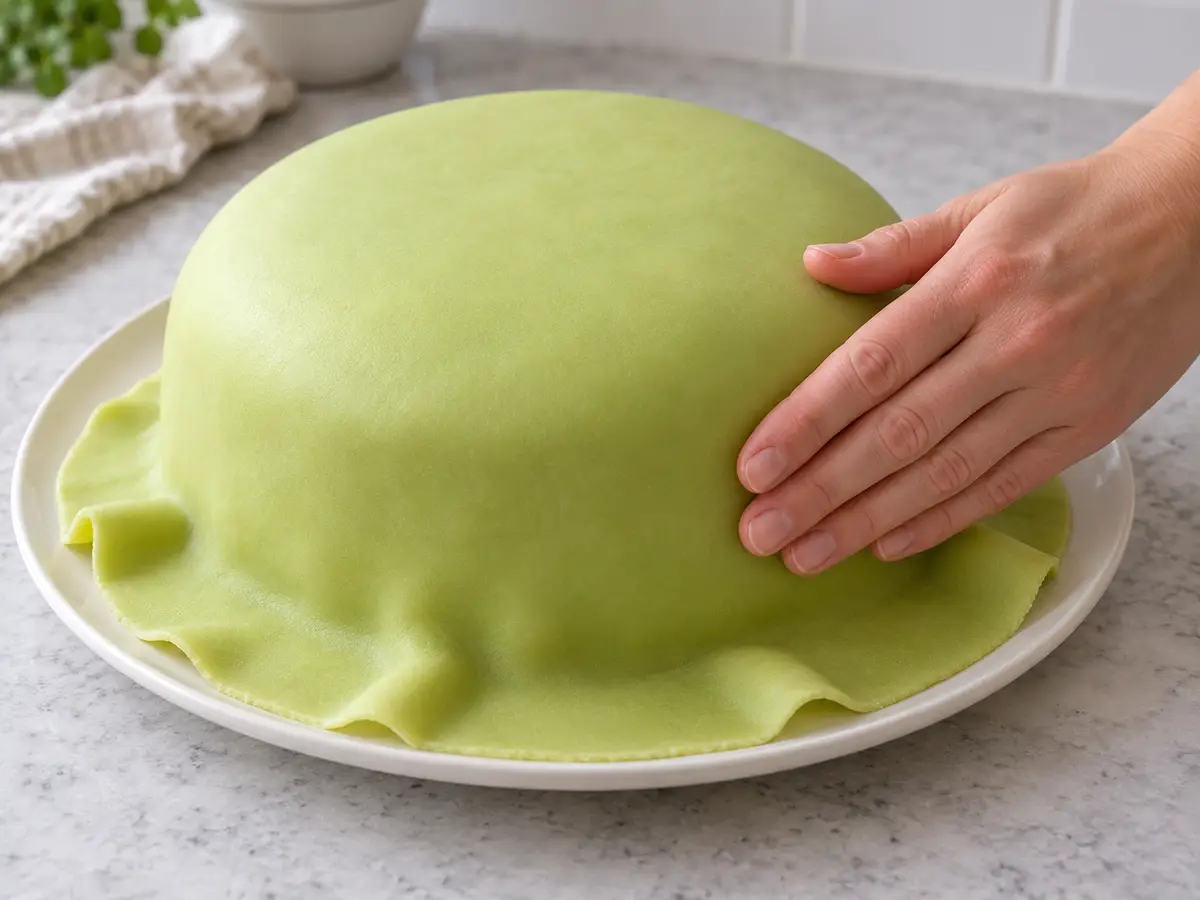
AI-generated Roll the green marzipan between two large sheets of parchment paper into a circle about 40 cm across and about 3 mm thick. If it sticks, use the weighed 10 g confectioners' sugar very sparingly; you do not need to use it all. Peel off the top paper, transfer the marzipan to the well-chilled cake and carefully remove the second sheet. Smooth by hand from the center of the dome toward the sides. At the base, gently lift the loose edge and ease out folds rather than pressing them into the cream. Trim the excess right by the plate, without stretching the covering. Keep marzipan trimmings and unused sugar outside the servings.
AI-generated Divide the reserved 20 g white marzipan into five small balls and flatten each between your fingers into a thin petal. Loosely roll the first petal into the center and wrap the others around it, gently turning the edges outward. Make one small rose, using the entire reserved portion, and place it in the center of the cake. Do not add leaves, fruit or extra sprinkles. Refrigerate the cake under a tall cover for at least 3 hours before slicing. It is best served the same day after this chilling so the marzipan keeps its smooth surface.
Take the cake out of the refrigerator about 10–15 minutes before serving. Cut into twelve servings with a sharp knife, wiping the blade after every cut so the layers remain distinct. Immediately cover the remaining cake and return it to the refrigerator. Eat within 24 hours of assembly; the marzipan may gradually absorb a little moisture from the cream. Do not leave the cake on a warm table between servings.
Estimated nutrition

Rate this recipe
0 ratings
Comments