
AI-generated
Puff Pastry Slices with Homemade Custard
Log in or create a free account to save recipes.
Source: https://recipheon.com/en/recipes/desserts/puff-pastry-slices-with-homemade-custard
About this recipe
These custard slices sandwich a thick layer of cooked vanilla custard between two crisp puff pastry sheets. A buttery base and lightly dusted top enclose a pale filling made from milk, cream and egg yolks. Bake the sheets separately, first under a light weight to keep them even, then uncovered until the layers are golden and dry. The custard needs to cook after thickening and cool completely before assembly. Cut the top sheet into rectangles beforehand so the knife mainly cuts through the filling and base when portioning, rather than crushing the whole cake. An adjustable frame supports the custard during chilling and fits the outline of the pastry, which naturally shrinks in the oven. The whole cake makes twelve servings.
Ingredients
Pastry and Vanilla Custard
600 g ready-made uncooked puff pastry made from all-purpose flour, with butter as its only fat, divided into two 300 g pieces; chilled, not frozen
750 ml cow's milk, 3.5% fat, divided: 150 ml cold for the egg yolks and 600 ml for heating
100 ml liquid whipping cream made from cow's milk, 30% fat
6 raw yolks from size M hen's eggs, about 100 g edible yolks only, without whites or shells
120 g fine white sugar
70 g dry cornstarch
60 g butter made from cow's milk, 82% fat
5 ml vanilla extract
15 g powdered sugar for dusting the whole cake
Steps
Preheat the oven to 200°C on the conventional (no-fan) setting. Have ready two flat metal baking sheets at least 30 × 40 cm, parchment paper, a rolling pin, a rack, a saucepan with a capacity of about 2 l, a whisk, a spatula, an adjustable rectangular cake frame at least 6 cm tall and a tray about 40 × 30 cm that fits in the refrigerator. Roll each 300 g piece of pastry between sheets of paper into a rectangle about 24 × 30 cm and about 4 mm thick, without dusting with flour. Prick all over with closely spaced fork holes; keep the second sheet in the refrigerator until it is ready to bake.
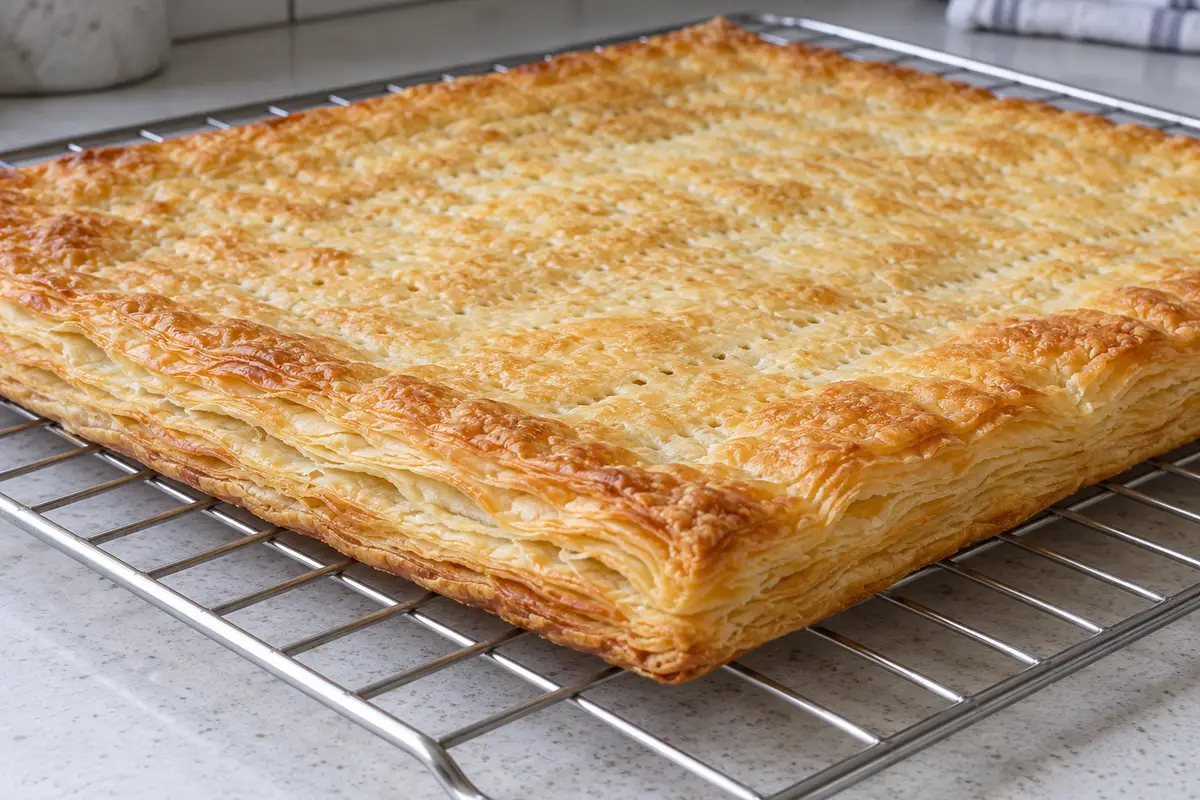
Transfer the first pastry sheet, still on its bottom paper, to a baking sheet, cover with a second sheet of paper and weigh it down with the empty second baking sheet. Bake on the middle rack for about 15 minutes, remove the top baking sheet and paper, and bake uncovered for another 10–15 minutes, until evenly golden with dry, clearly separated flaky layers, including on the underside. Bake the second pastry sheet the same way: these are two successive batches of about 25–30 minutes each. Transfer the baked sheets to a rack and cool for about 30 minutes until completely cool; do not trim anything and do not discard anything. Prepare the custard while the sheets cool.
AI-generated In a bowl, mix all 6 yolks with 120 g fine sugar, 70 g cornstarch and 150 ml cold milk until smooth, with no dry lumps. In the saucepan, heat the remaining 600 ml milk with 100 ml cream and 5 ml vanilla until bubbles appear around the edge. Gradually whisk two ladlefuls of this hot liquid into the yolks, whisking constantly, then pour everything from the bowl back into the saucepan. Do not add any extra milk or cream.
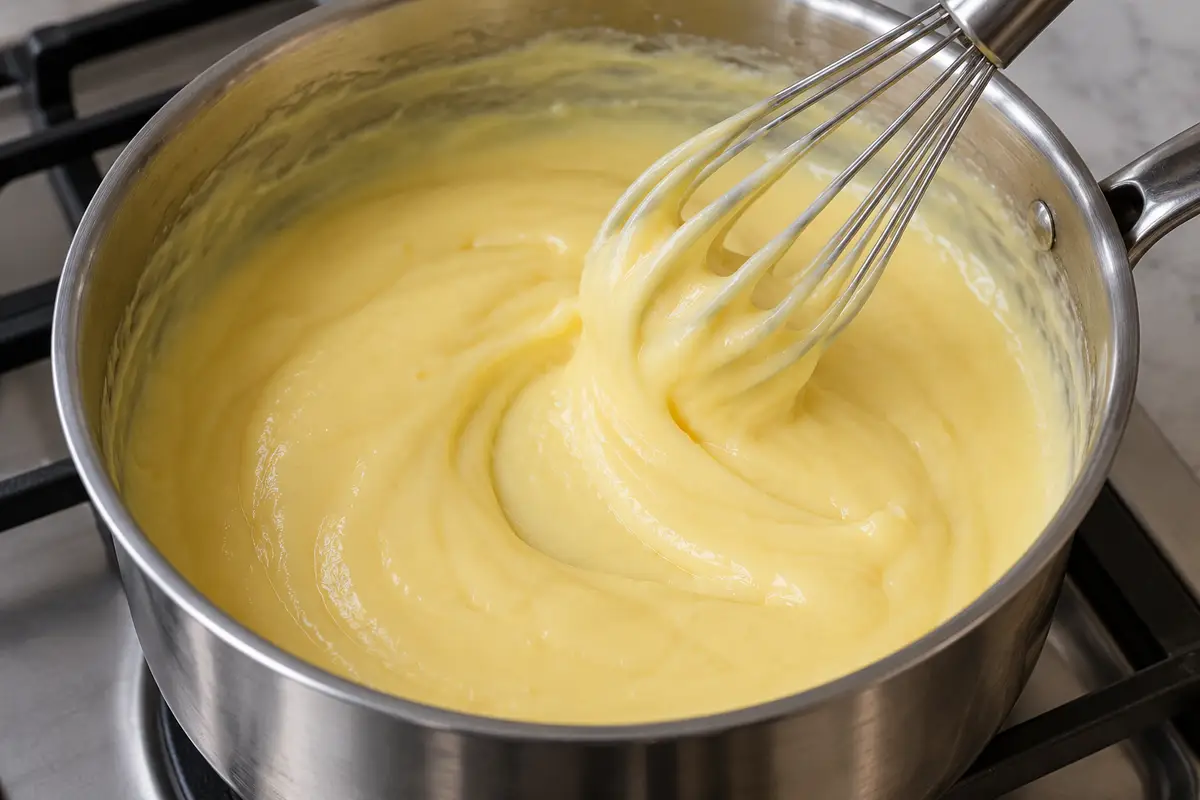
Cook the mixture over medium-low heat, whisking constantly across the bottom and into the corners of the saucepan, until the custard noticeably thickens and slow bubbles appear. Reduce the heat and cook for another 2 minutes from that point, stirring vigorously to cook the starch and yolks without scorching. Remove from the heat, add all 60 g butter and stir until it melts and the mixture is smooth. The custard should be thick and briefly hold a whisk trail, with no lumps or separated liquid.
AI-generated Transfer all the custard to a wide dish in a layer about 2–3 cm deep and cover the surface with plastic wrap suitable for contact with hot food. Cool for about 90 minutes until completely cool; this overlaps the pastry cooling, so do not wait an extra 30 minutes after the custard has cooled. Choose the larger cooled pastry sheet for the base and gently cut the other into 12 rectangles with a serrated knife, dividing the short side into three and the long side into four sections. Keep all the pastry, including the edges, every piece and all the crumbs; the baked sheets will be slightly smaller than the raw sheets, usually about 22 × 28 cm.
Place the whole bottom sheet on the tray and fit the adjustable frame to its actual outline, without trimming the pastry. Briefly stir the completely cooled custard with a spatula, spread all of it over the base and level it, especially at the corners. Arrange all 12 top pieces side by side in their original layout, settling them lightly without pressing them into the filling; use the gaps between the pieces to account for the small difference in size between the sheets. Scatter the reserved crumbs over the top.
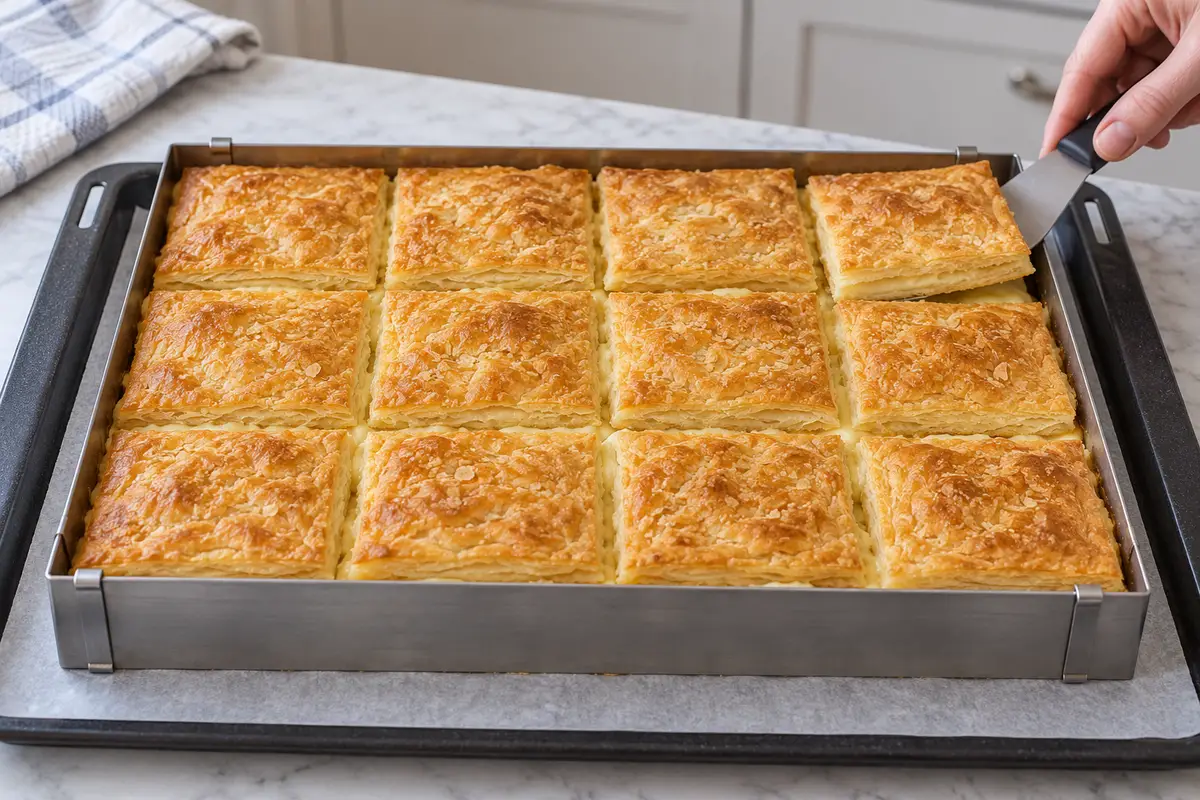
AI-generated Put the cake in the refrigerator immediately and chill for at least 4 hours. Keep the frame in place until the filling sets and holds an even layer when sliced. Cover the cake so the cover does not touch the top, and do not leave it on the counter while you wait.
Carefully remove the frame and dust the cake with 15 g powdered sugar through a sieve. Cut the filling and bottom pastry sheet along the edges of the precut top rectangles, using a sharp knife with a gentle sawing motion through the base. You will have 12 servings, each with one top piece; serve chilled. Return the remaining servings to the refrigerator immediately.
Estimated nutrition

Rate this recipe
0 ratings
Comments