
AI-generated
Sfogliatelle ricce with ricotta and candied orange
Log in or create a free account to save recipes.
Source: https://recipheon.com/en/recipes/desserts/sfogliatelle-ricce-with-ricotta-and-candied-orange
About this recipe
Sfogliatelle ricce are Neapolitan shell-shaped pastries whose thin layers open out during baking. Inside is a thick filling of ricotta, cooked semolina and candied orange, scented with vanilla and cinnamon. Strong Manitoba wheat bread flour, water and lard spread between very thin sheets create the crisp shell. A pasta machine is useful at home: three ribbons are stretched in turn and wound into one dough log, which chills overnight in the refrigerator. The next day, gently slide the layers of the cut disks apart with your fingers to form hollow shells, then fill and close them. Work patiently and keep unused dough covered. This quantity makes twelve medium pastries, including the end pieces of the log. Each receives its share of the filling and, after baking and a little cooling, a light dusting of powdered sugar. Their crunch is most enjoyable on the day of baking, when they are just slightly warm.
Ingredients
All dough and lard for the layers
300 g dry strong Manitoba wheat bread flour, about 14% protein, all for the dough with no extra flour for rolling
120 g water for the dough, weighed
10 g liquid honey
3 g fine salt
90 g plain rendered pork lard without additives, soft: 5 g to coat the outside of the dough, 80 g between the layers and 5 g for the log and hands during shaping
All ricotta and semolina filling
80 g dry fine durum wheat semolina
240 g water for cooking the semolina, weighed
200 g thick cow's-milk ricotta, net weight after draining in the refrigerator, without loose whey
100 g white sugar for the filling
40 g ready-made diced candied orange peel, the full edible portion of the product, finely chopped
8 g sugar with real Bourbon vanilla
1 g ground cinnamon
Light dusting before serving
12 g pure powdered sugar without starch for a light dusting; residue in the sieve and on the paper is not served
Steps
Use ricotta already drained in the refrigerator: weigh 200 g thick cheese without loose whey. Weigh both quantities of water separately. Divide the lard into 5 g for coating the dough, 80 g for the layers and 5 g for the log and hands. Prepare a pasta machine, rolling pin and clean work surface; all the weighed flour goes into the dough, with no dusting flour.
Mix 300 g bread flour with the salt, honey and 120 g water. Knead for about 10–15 minutes until the very stiff, initially lumpy dough comes together. Flatten small pieces and pass through the widest pasta-machine setting, folding and joining them again. Coat the smooth dough with the first 5 g lard, cover tightly and rest for 30 minutes.
While the dough rests, bring all 240 g water to a boil in a saucepan. Gradually add 80 g semolina, whisking vigorously. Reduce the heat and cook for about 8–10 minutes, stirring across the bottom, until a very thick, smooth paste pulls away from the sides. Do not drain any liquid and do not add water; all the cooked semolina goes into the filling.
Spread the semolina in a shallow dish and cover its surface. After about 10 minutes, refrigerate until completely cool. Mash with all 200 g ricotta, 100 g sugar, the vanilla sugar and cinnamon, breaking up every lump. Add all the chopped orange. Cover the thick filling and refrigerate until the next day, alongside the chilling dough log.
Divide all the dough into three equal pieces; keep two tightly covered. Flatten the first and pass it through the pasta machine, reducing the gap one setting at a time, until it forms a very thin long ribbon. Support it with the rolling pin so it does not stretch under its own weight. If it springs back or tears, cover for 5–10 minutes and resume, without adding flour or water.
Work in sections: gently stretch the ribbon by hand until translucent and about 15 cm wide. Spread thinly with some of the 80 g lard and roll tightly from a short end. Roll out the remaining two pieces in the same way. Overlap the beginning of each new ribbon about 2 cm onto the previous end and wind onto the same dough log. Use all the dough and all 80 g lard, keeping the ends even.
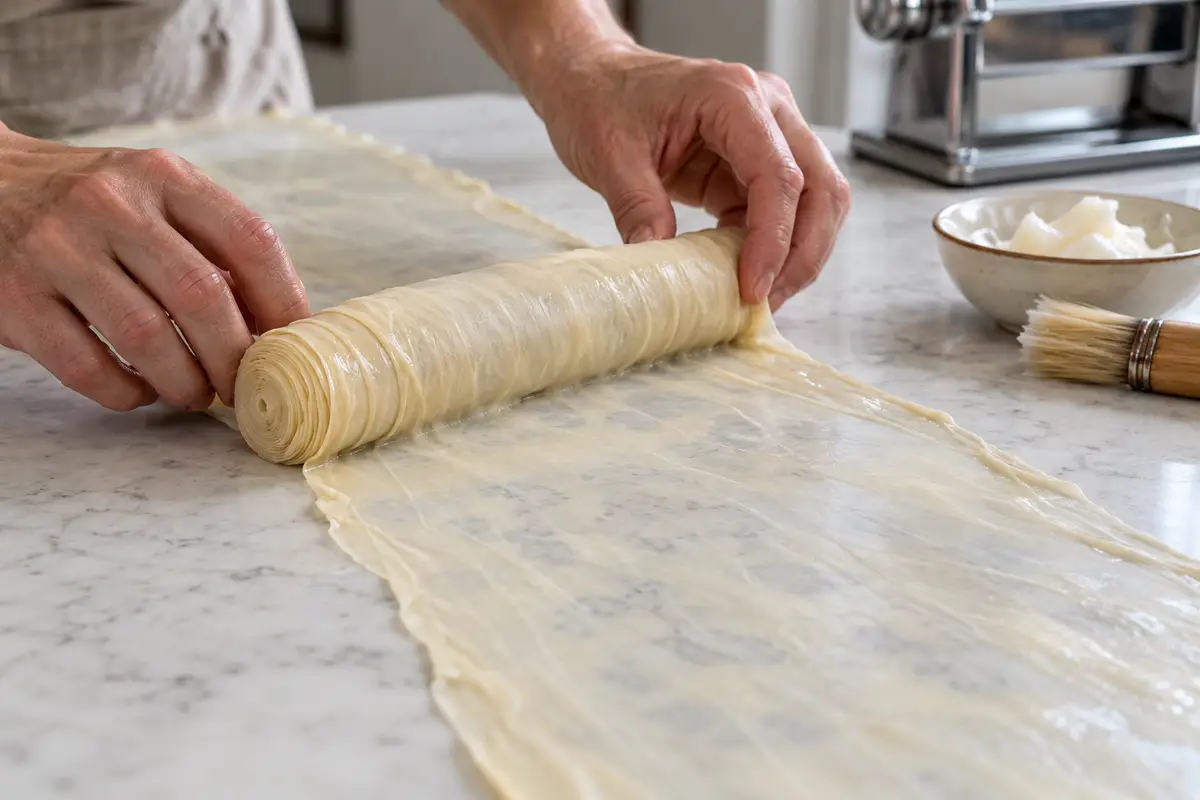
AI-generated Gently even the log to about 15 cm long, without cutting off the ends or crushing the layers. Use a little of the last 5 g lard to coat it, keeping the rest covered for greasing your hands. Wrap the log tightly and refrigerate for 8–12 hours. The filling also stays refrigerated; do not leave it on the counter overnight.
The next day, preheat the oven to 200°C, conventional heat. Line a tray with internal dimensions of 30 × 40 cm with parchment, without extra fat. Cut the cold log with a sharp knife into 12 disks about 1.25 cm thick. Use both end pieces too; lay the disks flat and cover them so their surfaces do not dry out.
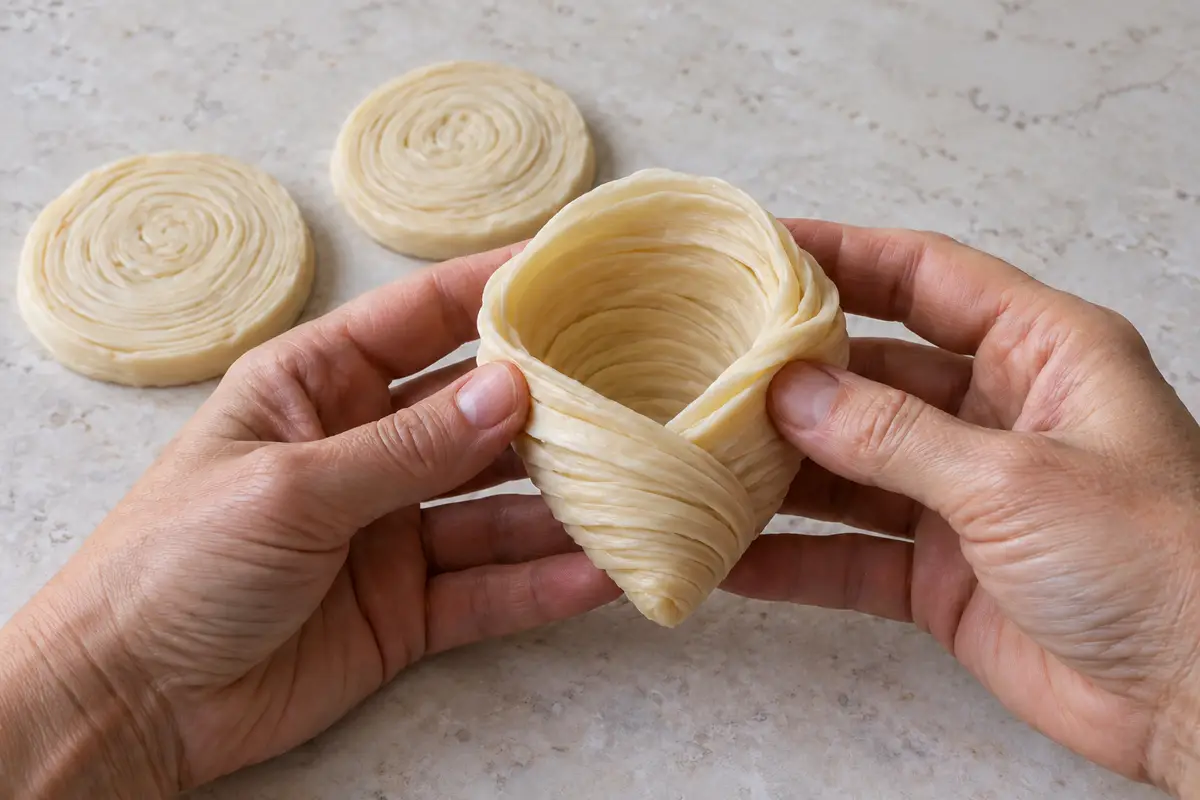
Grease your hands with the reserved lard. Hold a disk between your fingers and gently slide its spiral layers apart from the center toward the edge. Push the center outward with your thumbs, supporting the dough with your other fingers, until you have a hollow cone of overlapping layers. Do not tear the base and do not roll the disk into a flat sheet.
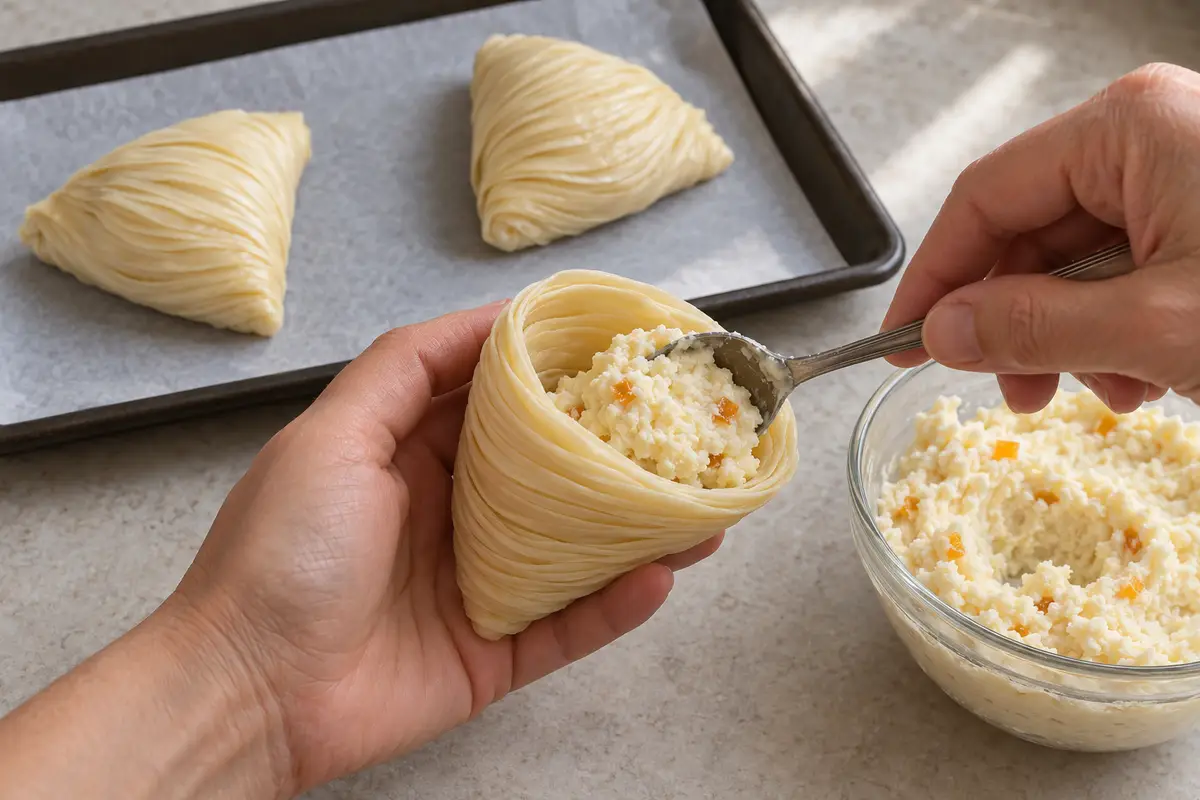
AI-generated Divide all the cold filling among the 12 shells, spooning some into the end pieces as well. Bring the opening's edges together and press gently to make a closed shell shape. Aim for about 8 cm wide and 6 cm deep. Arrange on the tray in three columns and four rows, with gaps of about 2 cm; keep every piece of dough and filling.
AI-generated Bake one tray on the middle rack for about 25–35 minutes. The shells should turn distinctly golden, with the thin layers opening out and drying. If the tops darken too quickly, cover loosely with aluminum foil and finish baking. Leave on the tray for about 5 minutes, then carefully transfer to a rack with a spatula.
Cool on the rack for about another 15 minutes until the filling is no longer hot. Lightly sift powdered sugar over the pastries; do not serve residue from the sieve or paper. A serving is one shell, approximately 90 g. They are best on the day of baking. Once cool, cover leftovers and refrigerate for up to 2 days; reheat for about 8–10 minutes at 160°C before serving.
Estimated nutrition

Rate this recipe
0 ratings
Comments