
AI-generated
Kouign-amann — Breton Butter Cake with Crisp Caramel
Log in or create a free account to save recipes.
Source: https://recipheon.com/en/recipes/desserts/kouign-amann-breton-butter-cake-with-crisp-caramel
About this recipe
Kouign-amann is a Breton bake made from yeast dough layered with salted butter and sugar that turns into caramel. This version makes a single round cake with a soft, layered center and deeply browned edges. The butter is enclosed in the dough as it is for puff pastry, while the sugar goes into two later folds. Refrigerator rests help preserve the layers and make rolling easier. You need an ordinary rolling pin and a metal cake pan measuring 22 cm across with a sealed base. The recipe takes several hours, including rising and chilling, but each task is explained step by step. After baking, carefully remove the cake from the pan before the caramel hardens, then let it cool until pleasantly warm. One cake makes eight portions.
Ingredients
Yeast dough
250 g all-purpose flour, type 550
150 ml lukewarm water
8 g fresh baker's yeast
3 g fine salt
Butter layers and caramel
200 g demi-sel salted butter with 80% fat, including 180 g for layering and 20 g for the pan
200 g fine white granulated sugar, including 80 g for the second fold, 80 g for the third, 20 g for the pan, and 20 g for the top
15 g all-purpose flour, type 550, measured separately for light dusting
Steps
Dissolve the yeast in 150 ml lukewarm, not hot, water. Add 250 g of flour and 3 g of salt. Knead by hand for about 8–10 minutes until the dough is smooth and elastic. Do not add sugar or butter at this stage. If it feels slightly sticky at first, keep kneading rather than adding extra flour.
Cover the bowl and leave at room temperature for about 60–90 minutes, until the dough has visibly increased in volume, roughly doubling. Gently press out the excess gas, shape into a flat rectangle, and cover. Refrigerate for 30 minutes. Before you enclose the butter, the dough should be cool and easy to roll so it does not warm the butter from inside.
During the first rise, weigh out 180 g of butter. Place between two sheets of parchment paper, pound with a rolling pin, and shape into an even square about 16 × 16 cm. The butter should be cool but bend without crumbling; leave hard butter out of the refrigerator for a few minutes, or chill it again if soft and shiny. Remove the paper before enclosing the butter. Prepare a solid metal cake pan, not a springform pan, measuring 22 cm across and at least 4 cm deep. Line the base with a parchment circle. Use all the remaining 20 g of butter to grease the paper and sides, then sprinkle 20 g of sugar over the base and sides. Divide the remaining sugar into portions of 80 g, 80 g, and 20 g. Keep the measured 15 g of dusting flour separate.
Lightly dust the work surface with some of the measured flour. Roll the cool dough into a rectangle about 18 × 36 cm. Place the butter square on one half, leaving a border, cover with the other half, and seal the edges thoroughly. You will have a packet about 18 × 18 cm. Gently roll it out to about 18 × 54 cm, making sure the butter does not escape at the sides. Fold into thirds like a letter: fold the bottom third over the middle, then the top third over the folded packet. Wrap and chill for 30 minutes. Do not add sugar during this fold yet.
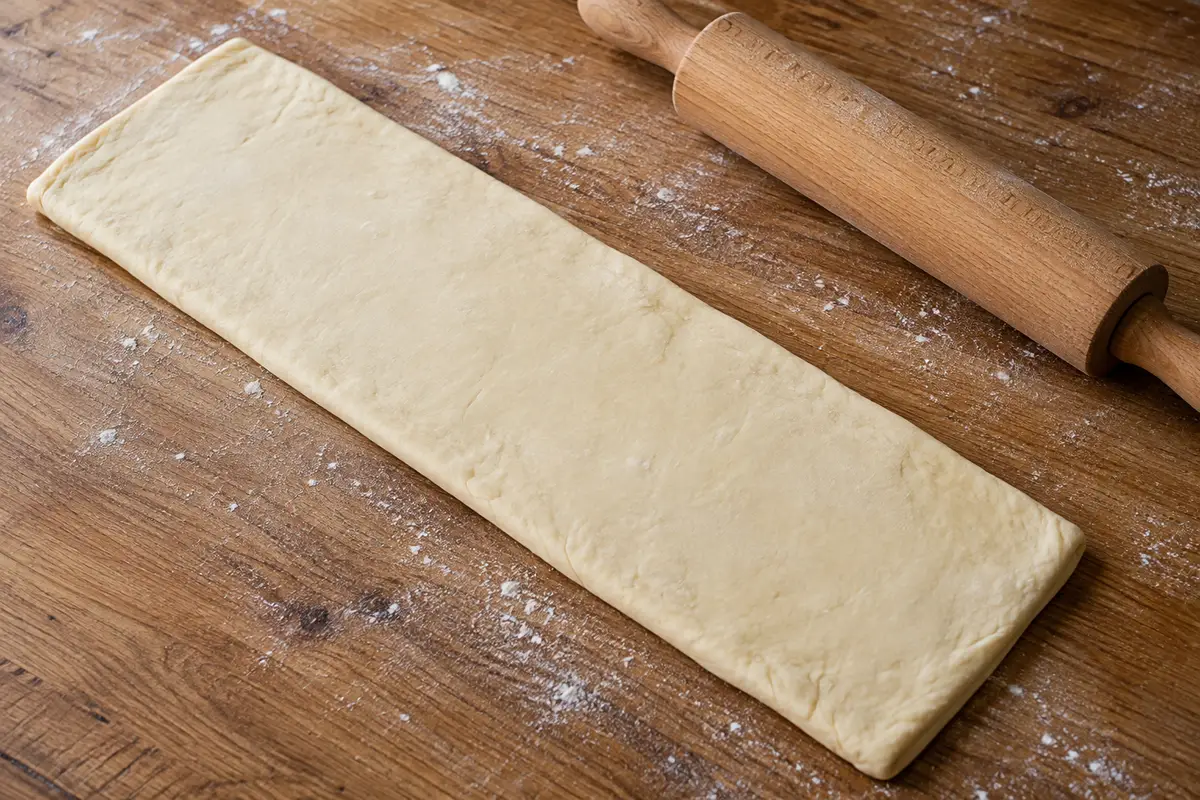
AI-generated Give the packet a quarter turn from the direction of the previous rolling. Using the same measured flour sparingly for dusting, roll out again to about 18 × 54 cm. Sprinkle the first 80 g of sugar evenly over the dough and press it in gently with the rolling pin. Fold into thirds as before. Wrap and refrigerate for 15 minutes. Work promptly: once the sugar is added, the dough gradually becomes moister. If the butter starts to smear, stop rolling and let it firm up again in the refrigerator.
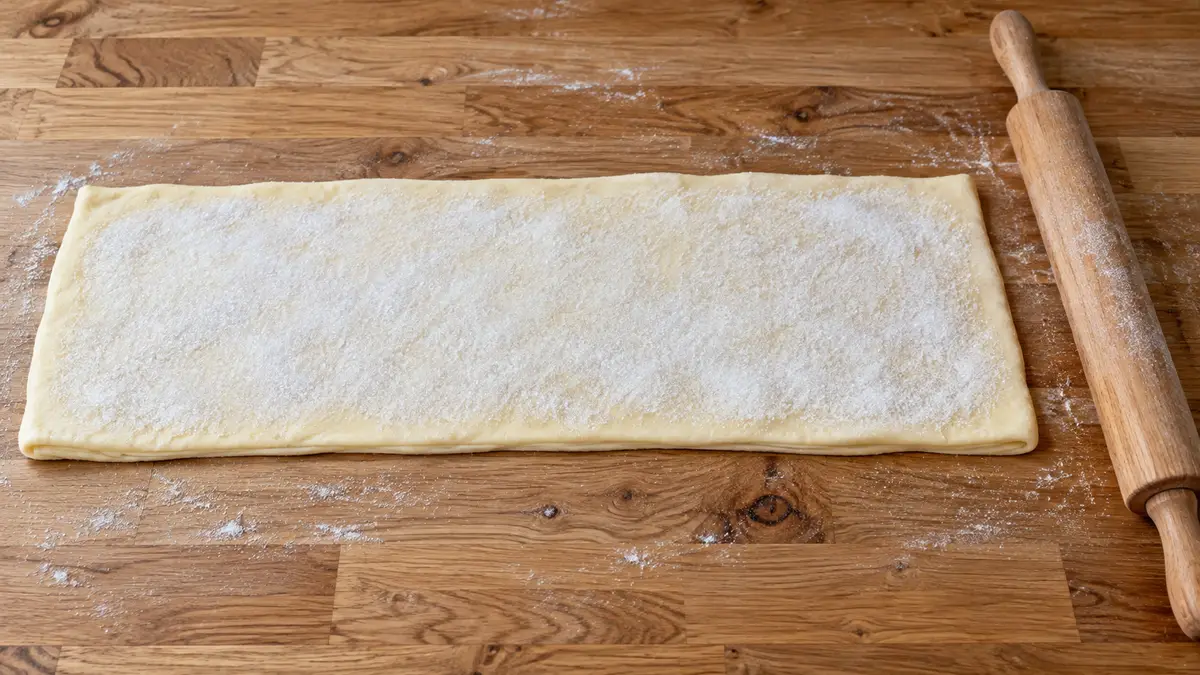
AI-generated Give the packet another quarter turn, roll out to about 18 × 54 cm, and sprinkle over the second 80 g of sugar. Press the sugar in lightly, then fold into thirds. Now gently roll the packet into a square about 26 × 26 cm. Fold all four corners toward the center, pressing their tips lightly. Transfer the dough to the prepared pan with the folded corners facing up, then carefully ease it into a 22 cm circle with your hand. Sprinkle the final 20 g of sugar over the top. Do not use more flour than the measured amount; leave any unused flour and spilled raw sugar on the work surface out of the cake.
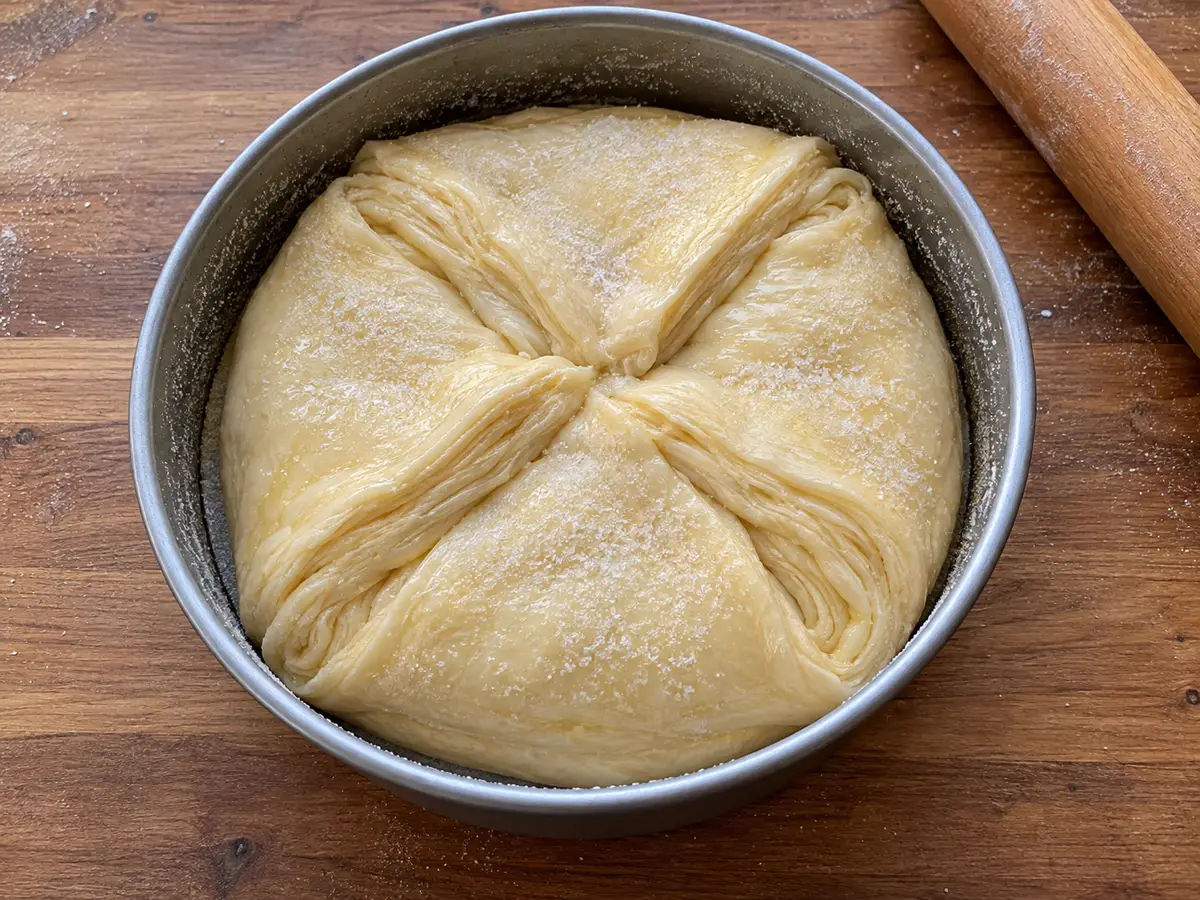
AI-generated Loosely cover the pan and leave in a place that is not too warm for about 30–45 minutes, until the dough puffs up a little. Do not wait for it to double in volume, and do not place the pan beside a hot oven so the butter does not leak out before baking. During the last 20 minutes, heat the oven to 200°C using conventional top and bottom heat. Just before baking, make several shallow cuts in a crosshatch pattern on the surface, without cutting through to the bottom.
Place the pan on a rimmed baking sheet and bake on a lower-middle rack for about 35–45 minutes. The cake should brown well, with amber caramel bubbling around the edges. If the top darkens too quickly, loosely cover it with aluminum foil for the final fifteen minutes or so. Do not stop baking while the surface is still pale, but do not let the caramel turn black.
After taking the cake out of the oven, wait about 5 minutes. Prepare a large, flat, heatproof plate and work over a rimmed baking sheet. Wearing oven mitts, cover the pan with the plate, invert firmly, and carefully lift off the pan before the caramel hardens. Remove the paper with a spatula. Spoon any remaining melted butter and caramel onto the cake; do not touch the hot caramel with your hands. Leave for about 20–30 minutes, until the cake is warm and the caramel is no longer hot enough to burn. Cut into eight portions and serve the same day, while the edges are at their crispiest.
Estimated nutrition

Rate this recipe
0 ratings
Comments