
AI-generated
Æbleflæsk – browned bacon with apples and onions
Log in or create a free account to save recipes.
Source: https://recipheon.com/en/recipes/main-dishes/aebleflaesk-browned-bacon-with-apples-and-onions
About this recipe
Æbleflæsk is a Danish classic of browned bacon, soft apples and onions, served with rye bread. This home version calls for raw smoked pork belly bacon that must be cooked. Use it without the rind, along with tart apples with their skins on. First, render the bacon slowly in a pan, then soften the onions and apples in its fat. Some of the fruit may break down, forming a thick, lightly sweet base for the crisp strips of meat. Add sugar and salt only after tasting, as the amount needed depends on the apples and bacon. Allow about 1 hour 10 minutes for 4 servings with bread, including frying the bacon in two batches.
Ingredients
Bacon, apples and bread
300 g raw smoked pork belly bacon that needs cooking, weighed without rind, bones or cartilage
800 g tart apples with the skins on, weighed after removing cores and stems
200 g raw onion, peeled
240 g ready-to-eat rye bread with the crust, about 8 thin slices
For seasoning and cooking the apples
20 g sugar set aside for seasoning; use only as much as needed
50 ml water as a single reserve for cooking the apples
2 g salt set aside for the final seasoning; use only if needed
0.5 g freshly ground black pepper
Steps
Pat the bacon dry and cut it into strips about 0.5 cm thick. Choose raw smoked bacon intended for cooking. Quarter the apples, remove the cores and stems, then weigh out 800 g of flesh with the skins on and cut into wedges that are not too thin. Slice the onion into thin half-moons. Get the bread ready to serve later.
Arrange half the bacon in a cold, wide frying pan. Heat over medium-low heat and, once the fat begins to render, fry for about 8–10 minutes, turning the strips, until well browned, crisp at the edges and fully cooked. Give them a little longer if needed; do not let them burn. Transfer to a plate without paper towels, keeping the fat in the pan. Fry the second batch in the same way and add it to the plate.
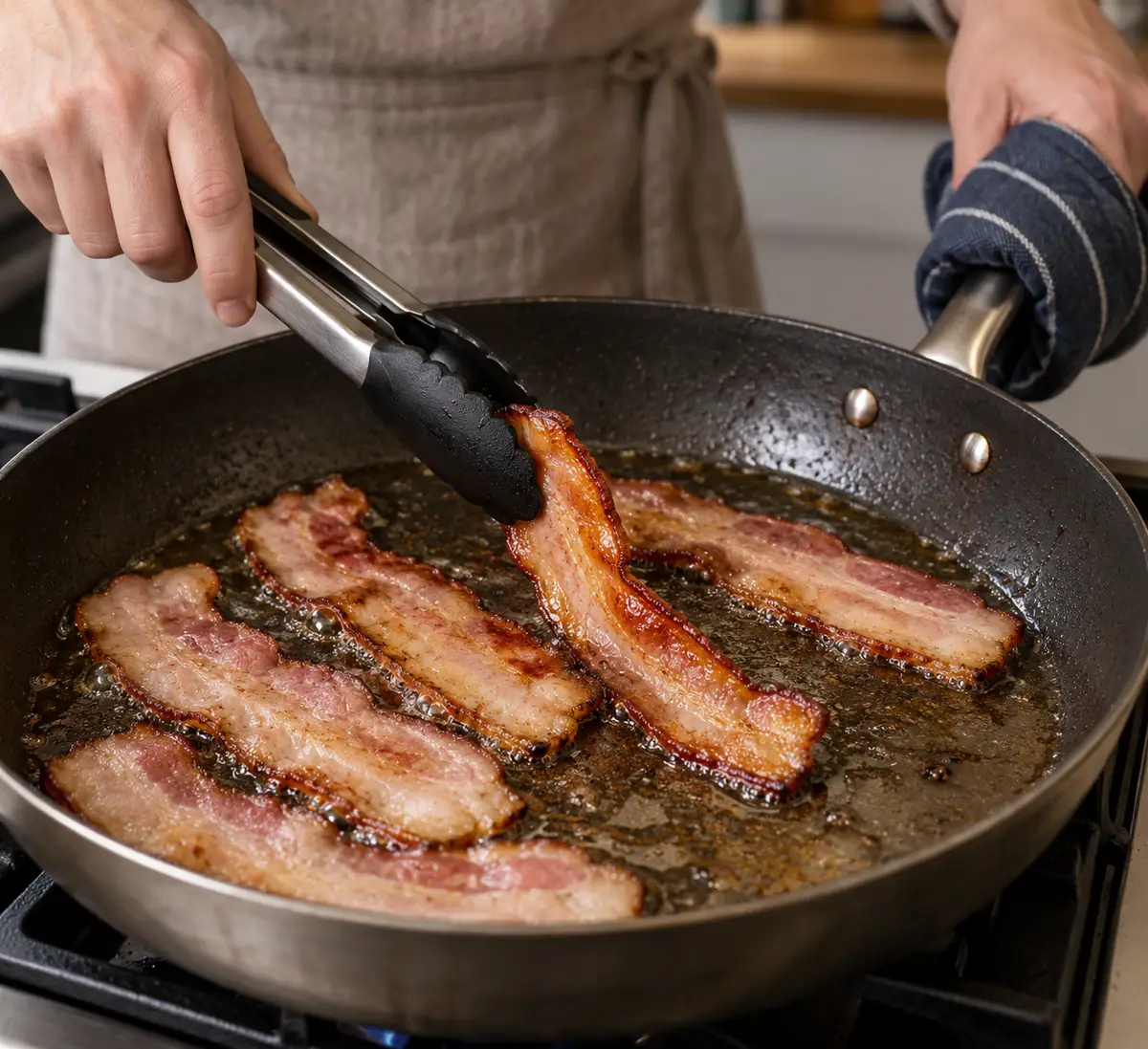
AI-generated Add the onion to the pan with all the bacon fat. Cook over medium-low heat for 6–8 minutes, stirring, until softened and starting to turn lightly golden. Scrape up the browned bits from the bottom with a wooden spatula to flavor the onion. Do not pour off the fat; it stays in this version of the dish.
Add all the apples and gently mix with the onion. Cover and cook over low heat for 12–18 minutes, gently turning the wedges every few minutes. If the bottom starts to dry out, add small amounts from the single measured reserve of 50 ml water; you do not need to use it all. The apples should soften, and some may break down, but leave some recognizable pieces as well. Cook firmer fruit a little longer.
Add all the black pepper and taste the apples. Add small amounts from the reserved 20 g sugar only if the fruit is too tart. Add salt only if needed, using up to 2 g from the reserve, as the bacon is already salty. If there is still water in the pan, cook without a lid for 2–3 minutes until the excess evaporates. Keep all the apples, onion and fat. Arrange all the bacon on top, add the juices from the plate and heat for about 1 more minute.
Divide the entire contents of the pan among 4 plates, with the bacon on top of the soft apples and onions. Add a share of the weighed bread to each portion, using all 240 g. Serve right away while the bacon still has crisp edges. Keep any unused sugar, salt and water for other dishes.
Estimated nutrition

Rate this recipe
0 ratings
Comments