
AI-generated
Fennel Braised with White Wine and Lemon
Log in or create a free account to save recipes.
Source: https://recipheon.com/en/recipes/main-dishes/fennel-braised-with-white-wine-and-lemon
About this recipe
Fennel braised with white wine and lemon has tender, juicy layers, lightly golden edges, and a delicate anise aroma. Cut the bulbs into lengthwise wedges, leaving a small piece of the base to hold the layers together as you turn them. A brief sauté adds color, while gentle braising under a lid softens the center as well. Lemon juice added at the end freshens the pale sauce. Do not reduce the liquid until the pan is dry: the fennel tastes best with its pan juices spooned over it. The stated weight is for trimmed bulbs without tough outer layers, stalks, or green fronds. This recipe makes four side-dish portions. Cooking the wine does not remove all of its alcohol.
Ingredients
Fennel and sauce
600 g raw fennel bulbs after trimming, about 3 medium bulbs; edible weight without stalks, green fronds, or tough outer layers, with a small piece of the base retained
25 ml extra-virgin olive oil
150 ml dry, unfortified white wine
150 ml water, divided: 100 ml for braising and 50 ml for topping up the liquid and finishing the sauce; do not drain the liquid
20 g freshly squeezed lemon juice, without seeds, peel, or white pith
4 g salt
0.5 g ground black pepper
Steps
Cut off the stalks with their green fronds and remove any tough or damaged outer layers from the bulbs. Trim the dry end of the base, leaving a small piece so the layers do not fall apart during braising; wash the bulbs and weigh out 600 g of trimmed fennel. Cut each bulb lengthwise into about six wedges, 2–3 cm thick at their widest point, cutting through the base, then dry thoroughly. Have a wide, deep skillet about 30 cm across with a lid ready, large enough to hold the pieces in a single layer.
Heat the olive oil over medium heat and place the wedges flat side down in the skillet without overlapping. Cook for about 8–10 minutes in total, turning once, until golden patches appear on both cut surfaces. Lift the pieces with a wide spatula to keep their shape. If the edges darken, lower the heat; the centers will cook through during braising.
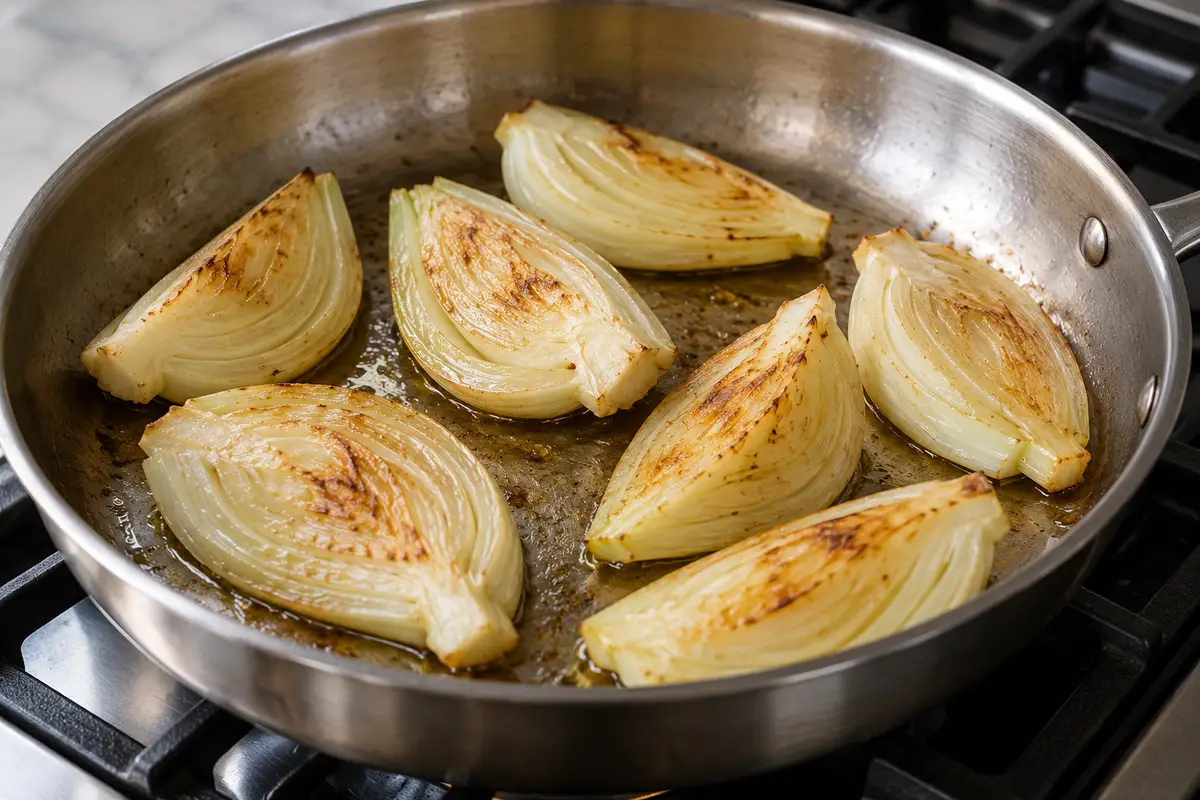
AI-generated Pour in the wine and cook without a lid for about 2–3 minutes, gently lifting the browned bits from the bottom with a spatula. Add 100 ml of water, the salt, and the pepper, cover, and braise over low heat for about 25–30 minutes, keeping the liquid at a gentle bubble not a rolling boil. Carefully turn the wedges halfway through; if too much liquid evaporates, add the reserved 50 ml of water a spoonful at a time and cover again. The fennel is ready for the next step when a fork slides easily into the thickest part of a wedge near the base and the layers are tender but still hold their shape. If the center offers noticeable resistance, braise for about 5 more minutes before removing the lid.
Remove the lid and add the weighed lemon juice and any remaining reserved water. Cook without a lid over medium heat for about 5–8 minutes, occasionally spooning the sauce over the fennel. The liquid should reduce, leaving a pale, glossy sauce in the bottom that is still fluid enough to pour over the vegetables. Stop reducing before the skillet dries out; the sauce should not become a thick glaze.
Use a wide spatula to transfer the fennel wedges to a serving platter or four plates, keeping the tender layers intact. Spoon the pan sauce over them and serve warm as a side dish. Divide both the fennel and the sauce into four portions.
Estimated nutrition

Rate this recipe
1 rating
Comments