
AI-generated
Kiszka ziemniaczana – Podlasie potato sausage with bacon
Log in or create a free account to save recipes.
Source: https://recipheon.com/en/recipes/main-dishes/kiszka-ziemniaczana-podlasie-potato-sausage-with-bacon
About this recipe
Kiszka ziemniaczana is a regional dish of finely grated potatoes in natural pork casings. In this homemade version, sautéed onion, smoked bacon, and marjoram enrich the filling, while a little flour helps bind it. Keep all the juice and starch from the grated potatoes so the center stays soft as the casing browns in the oven. Have a large rimmed baking sheet, a wide funnel or sausage-stuffing attachment, and six lengths of casing ready. Fill them loosely, leaving room for the filling to expand. The stated time includes soaking the casings for three hours; their package instructions may call for longer preparation.
Ingredients
For 6 servings
1500 g raw potatoes, weighed after peeling
200 g yellow onion, weighed after peeling
200 g uncooked smoked bacon without skin or bones
30 g type 550 wheat flour
10 g pure pork lard: 5 g for the baking sheet and 5 g for brushing the sausages
10 g salt
2 g dried marjoram
1 g ground black pepper
2.4 m cleaned natural pork casings, about 40–45 mm in diameter, for six lengths of 40 cm each
Steps
Use cleaned food-grade casings intended for homemade sausages. Soak them in lukewarm water for about 3 hours, or follow the manufacturer's instructions if they call for longer. Then rinse the insides thoroughly with lukewarm water, using a wide funnel, and drain. After soaking, measure out six lengths of 40 cm each without stretching them, allowing for the ends to be tied. Discard the soaking and rinsing water. Grate the potatoes only once the casings are ready.
Finely dice the bacon and onion. Put the bacon in a dry skillet and cook over medium heat for 8–10 minutes, stirring, until some fat renders and the pieces begin to brown. Add the onion and cook for about 5 minutes more, until softened. Remove from the heat. Keep all the bacon, onion, and skillet fat for the filling.
Finely grate the peeled potatoes directly into a large bowl, using the fine holes of a grater or a suitable food processor disc. The mixture should be fine and moist. Do not squeeze it, and do not pour off the juice. Scrape any starch and pulp left on the grater into the bowl; all the liquid from the grated potatoes must go into the filling.
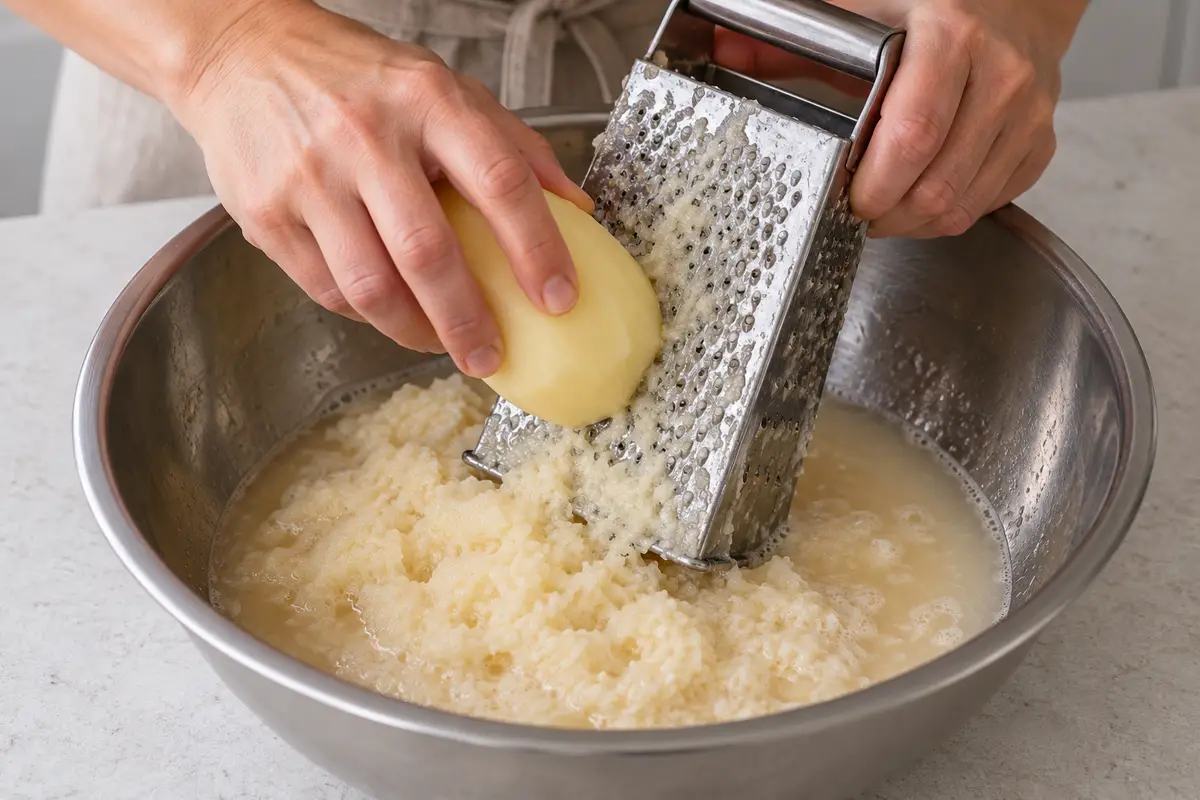
AI-generated Preheat the oven to 180°C with conventional top and bottom heat. Add all the flour, salt, marjoram rubbed between your palms, and pepper to the potatoes. Add the warm bacon and onion along with all the skillet fat. Mix thoroughly with a spoon, scraping the starch from the bottom. The filling will be moist and fairly loose; do not add more flour, and do not drain off the liquid.
Tie one end of each length of casing with kitchen string. Add the filling in small amounts through a wide funnel or sausage-stuffing attachment, gently easing it along the casing. Divide all the filling among the six lengths. Do not pack it down, and do not stretch the casings into tight cylinders: they should stay soft, with plenty of room for the filling to expand. Stir the filling as you work so that no juice or starch is left at the bottom of the bowl.
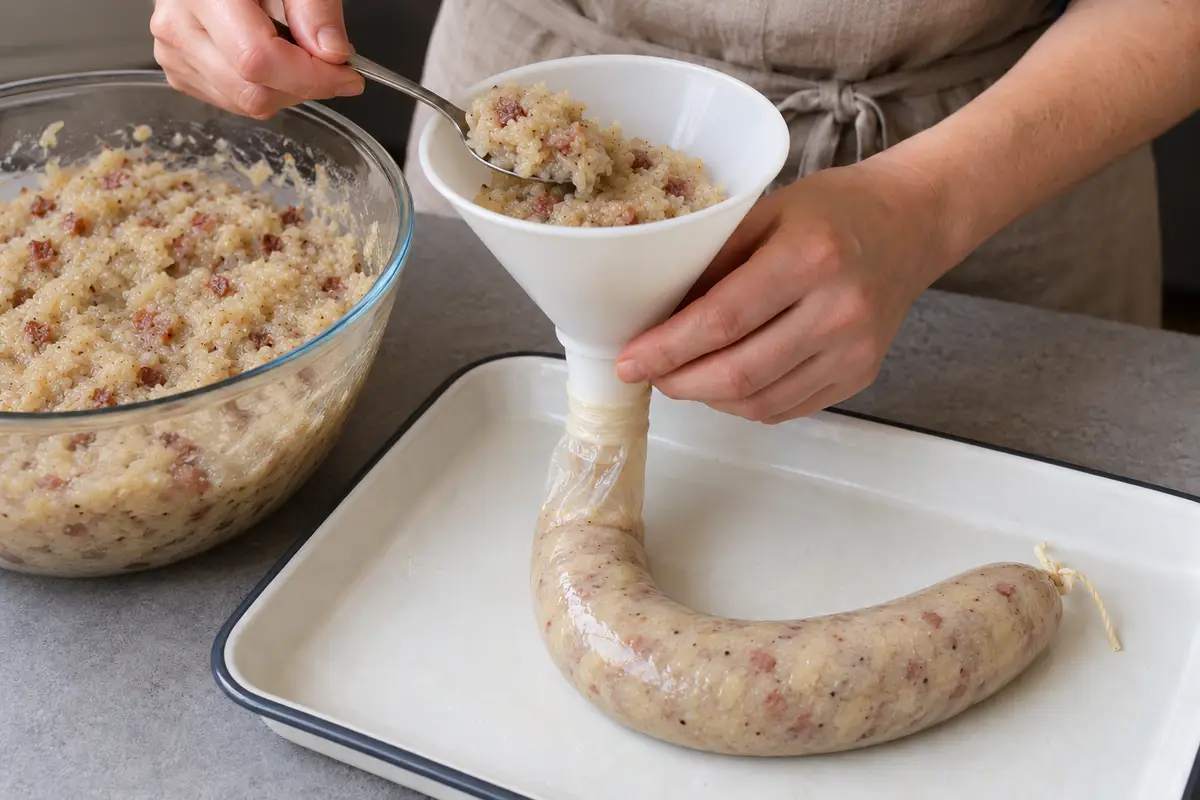
AI-generated Gently even out the filling in the casings and tie the remaining ends, keeping them loose. Shape six loosely curved sausages without twisting them tightly. Prick each one in several places with a clean toothpick so steam can escape during baking. Work carefully so as not to tear the delicate casings.
Grease a large rimmed baking sheet with half the measured lard, or 5 g. Arrange all six sausages with space between them, curving them gently so they fit without crowding. Soften the remaining 5 g lard in the warm skillet and spread a thin layer over the casings. Do not add water or extra fat to the baking sheet.
Place the sheet on the middle oven rack and bake for about 75–90 minutes. About halfway through, carefully turn the sausages with two wide spatulas without squeezing the casings. By the end, they should be golden brown, with a firm, fully baked potato filling. If the tops brown too quickly, cover them loosely with parchment paper. Leave the rendered fat on the baking sheet; do not pour it over the finished sausages.
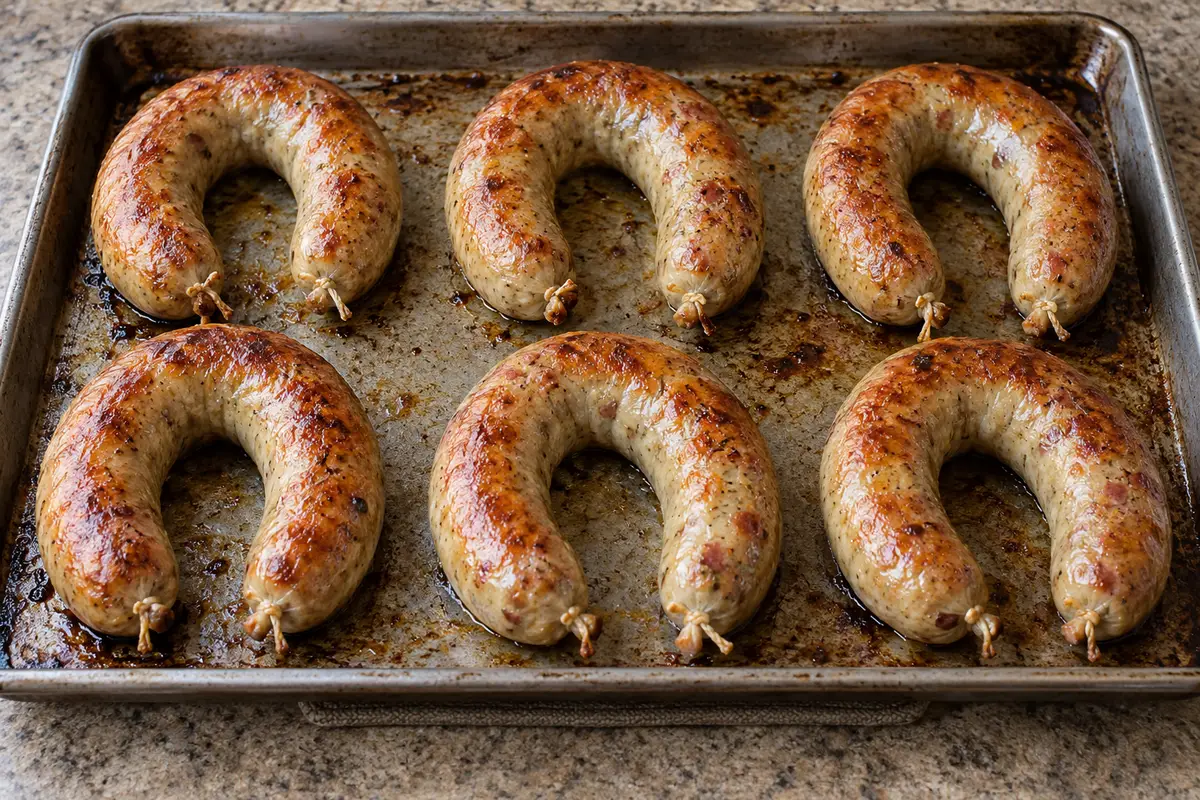
AI-generated After taking the sausages out, let them rest for about 10 minutes so the filling can firm up slightly. Transfer them to a platter with a wide spatula, leaving the excess fat on the baking sheet, and remove the kitchen string. Divide into six servings and serve without accompaniments. Once cooled, store leftovers in a sealed container in the refrigerator and use within 2 days.
Estimated nutrition
We couldn't estimate the nutrition for this recipe yet.

Rate this recipe
0 ratings
Comments