
AI-generated
Quiche Lorraine – French Bacon Tart with a Creamy Filling
Log in or create a free account to save recipes.
Source: https://recipheon.com/en/recipes/main-dishes/quiche-lorraine-french-bacon-tart-with-a-creamy-filling
About this recipe
Quiche Lorraine pairs a buttery, crisp pastry crust with smoked bacon and a delicate egg-and-cream filling. In this version, bacon, cream and a little nutmeg provide the flavor, without cheese or onion. The pastry is chilled first, then baked with weights and without them until the base is dry and lightly golden as well. This gives the liquid filling a thoroughly baked crust to sit in. The filling bakes at a gentler heat: it should set around the edges but retain a slight wobble in the center, without rippling like liquid. Resting before slicing helps produce neat slices with a creamy center. A quiche baked in a 24 cm pan serves 6.
Ingredients
Shortcrust pastry and pan preparation
215 g all-purpose flour: 200 g for the pastry and 15 g for dusting when rolling
105 g unsalted butter: 100 g cold butter for the pastry and 5 g for greasing the pan
50 ml cold water
4 g fine salt: 2 g for the pastry and 2 g for the filling
Bacon and egg-and-cream filling
200 g raw smoked pork bacon, not precooked, without rind or bones; the fat rendered in the skillet is not used
4 medium eggs (size M), about 200 g total without shells
300 ml liquid, unsweetened whipping cream (30% fat)
100 ml milk (3.2% fat)
1 g ground black pepper
0.5 g ground nutmeg
Steps
Mix 200 g flour and 2 g salt in a bowl. Add 100 g cold butter, cut into cubes, and briefly rub it in with your fingertips until the mixture forms fine crumbs with small pieces of butter. Pour in 50 ml cold water and press the dough together just until it stops crumbling apart; do not knead it for long, so the pastry stays tender. Reserve the remaining 15 g flour for rolling.
Flatten the dough into a disk about 2 cm thick, wrap tightly in plastic wrap and refrigerate for about 30 minutes. It should firm up noticeably but still roll out without crumbling. While it chills, prepare the bacon as described in the next step.
Cut the raw smoked bacon into strips about 5 mm thick and about 2 cm long. Put them in a cold, dry skillet about 24 cm in diameter and cook over medium heat for about 8–10 minutes, stirring frequently, until the bacon is cooked through and lightly browned and some of the fat has rendered; it should remain slightly tender, not dry and hard. Lift it out with a slotted spoon onto a plate and leave to cool slightly. Pour the rendered fat from the skillet into a separate container and do not add it to the filling.
Grease a metal tart pan with a removable bottom, measuring 24 cm across the inside and 3 cm deep, with the remaining 5 g butter. Using the reserved 15 g flour to dust the work surface and rolling pin gradually, roll the dough into a circle about 32 cm in diameter and about 3–4 mm thick. Transfer it to the pan on the rolling pin, lower it loosely onto the base and ease it into the corner where the base meets the sides, without stretching. Fold any overhang inward and gently press it against the upper sides to reinforce the rim; use all the dough without cutting off any scraps, and press any cracks together with your fingers.
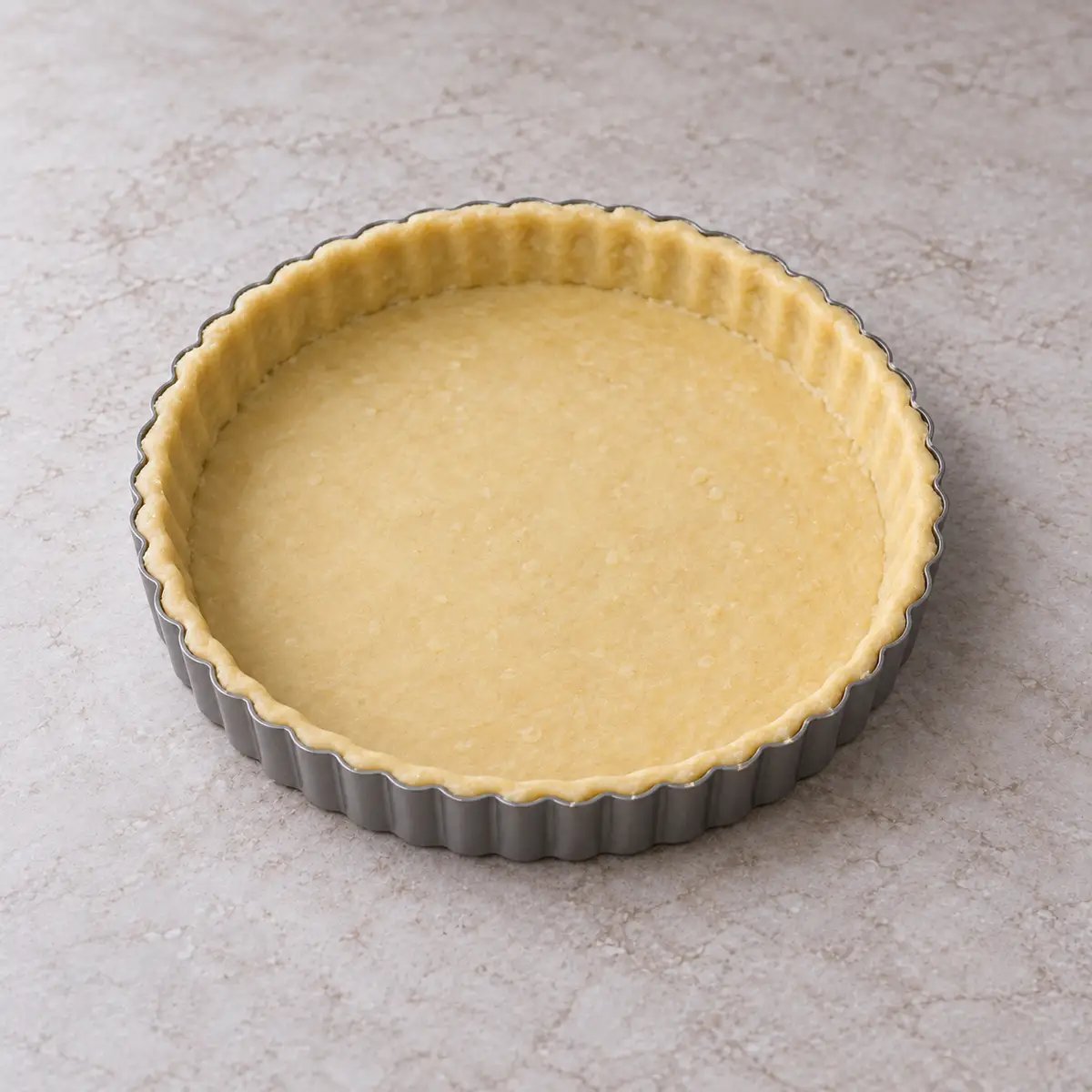
AI-generated Refrigerate the lined pan for about 30 minutes so the butter firms up again and the sides are less likely to slump during baking. Meanwhile, preheat the oven to 190°C on the conventional setting, without a fan, for at least 20 minutes; position a rack just below the center. Have ready a flat metal baking sheet to support the pan, parchment paper and enough ceramic pie weights to fill the pastry shell nearly to the rim. The weights are baking equipment and will be removed; they are not an ingredient in the dish.
Set the chilled pan on the baking sheet. Crumple and unfold a sheet of parchment paper, line the pastry with it and add ceramic pie weights nearly to the rim, pressing the paper against the sides; the weights should support the sides, not just sit on the base. Place in the preheated oven and bake at 190°C on the conventional setting, without a fan, for about 20 minutes, until the exposed pastry edges look matte and have set.
Carefully lift out the paper with the hot weights and set them aside to cool. Return the empty crust to the oven for about 10–15 minutes at 190°C on the conventional setting, without a fan, until the base is dry and lightly golden and the edges are more deeply browned; do not stop while the pastry is pale and damp. Remove the pan with its baking sheet, lower the oven temperature to 170°C and let the crust cool slightly for about 10 minutes while you prepare the filling.
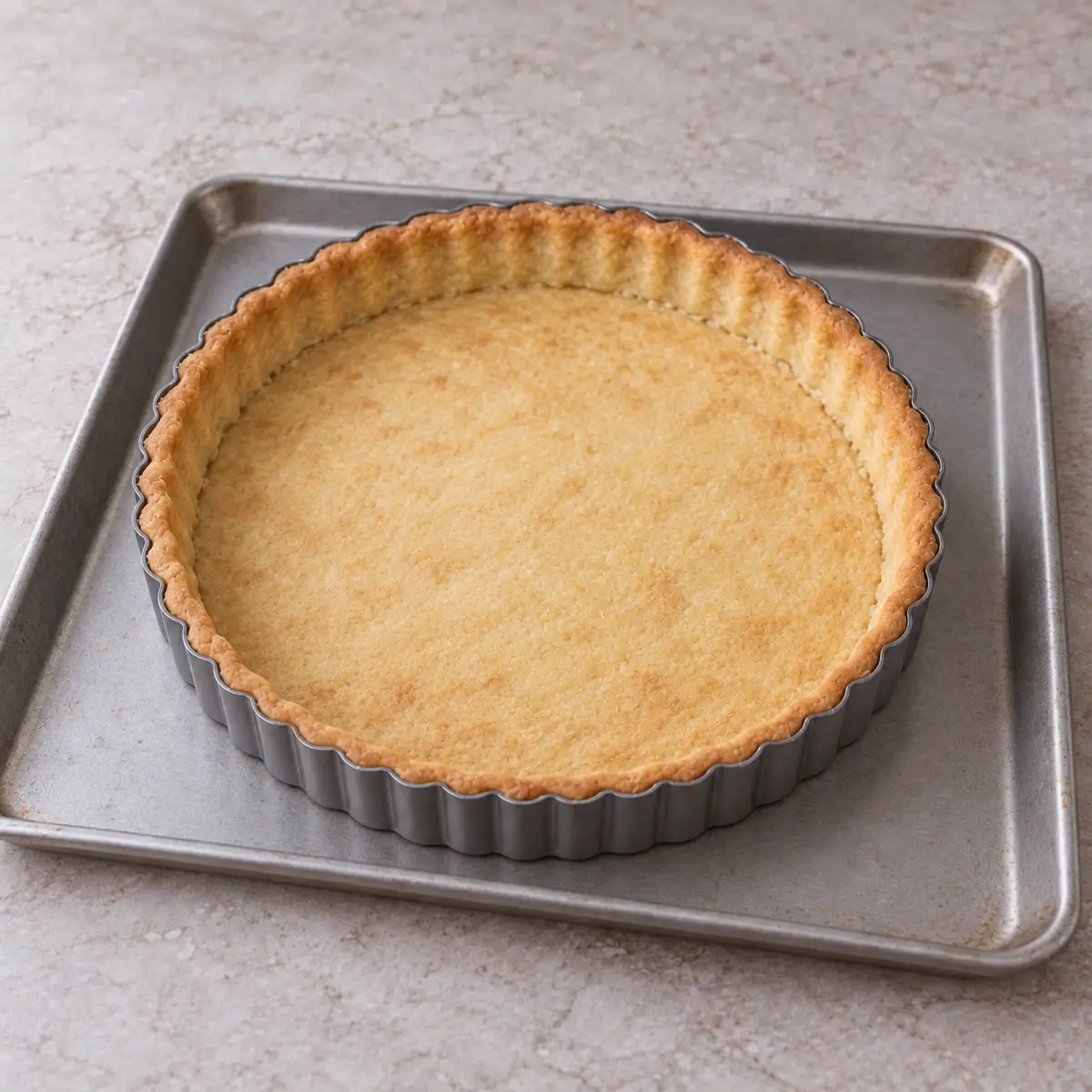
AI-generated Whisk the eggs in a bowl just until the whites and yolks are combined, without beating them until foamy. Add the cream, milk, remaining 2 g salt, pepper and nutmeg, then stir gently until smooth. Check that the cooked bacon is no longer hot; it should be no warmer than lukewarm before you fill the crust.
Keep the pan on its supporting baking sheet and spread all the cooled bacon evenly over the baked crust. Slowly pour in all the egg-and-cream filling, letting it flow between the pieces of bacon; in the specified pan, the filling should sit about 5–10 mm below the top edge of the pastry. Carry the pan to the oven on the baking sheet, keeping it level instead of pressing on the removable bottom.
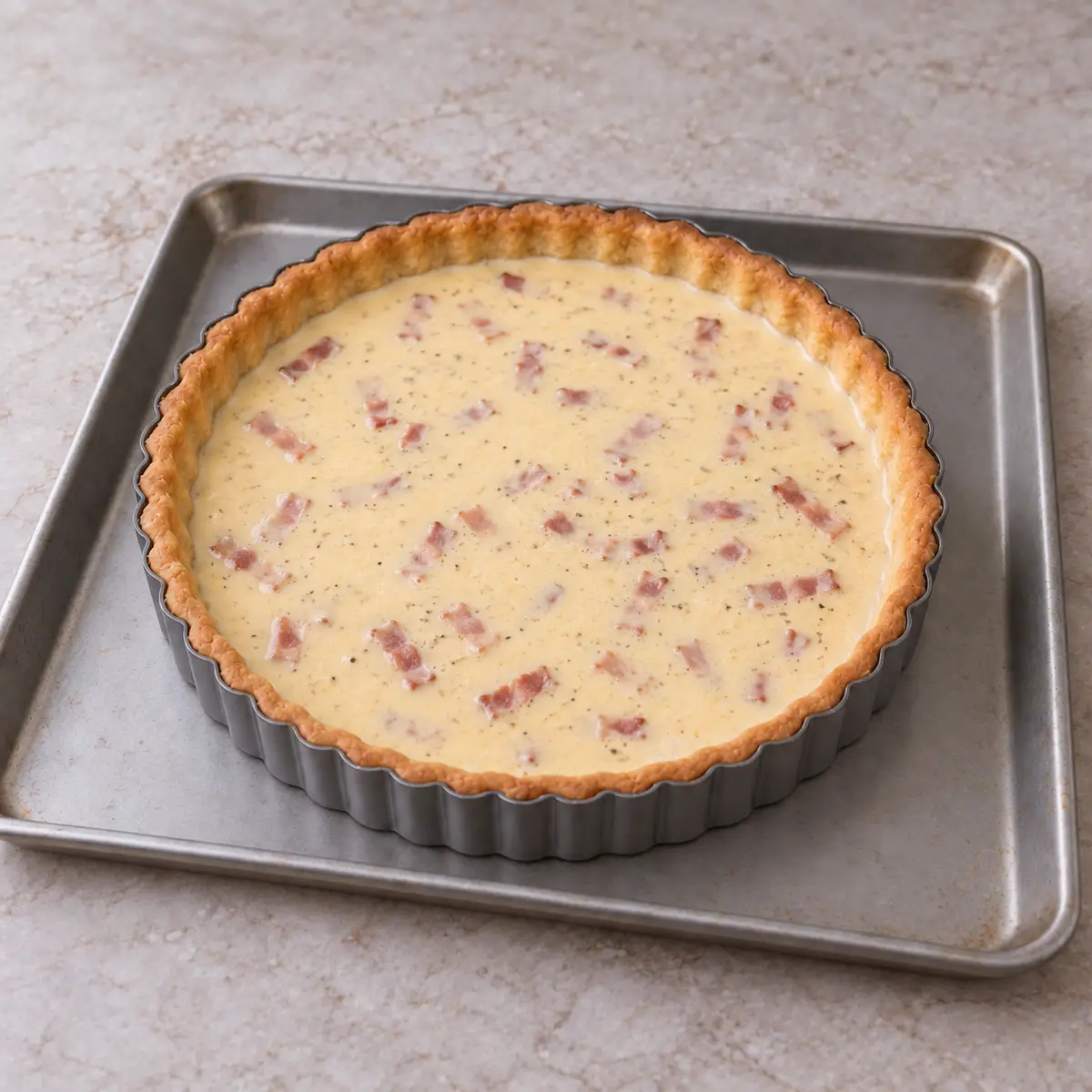
AI-generated Bake the quiche at 170°C on the conventional setting, without a fan, on the same rack for about 30–40 minutes; if the pastry rim starts to darken too much, shield just the edge with a strip of aluminum foil. The filling should be set around the edges and lightly golden on top, while an area about 4–5 cm across in the center may wobble gently as one when you lightly move the baking sheet; it should not ripple like liquid or look like raw egg mixture. If the center is still liquid, bake for about 5 minutes more and check again. Do not wait for the entire filling to puff up considerably and turn hard, as it will lose its creaminess after resting.
After removing the quiche from the oven, set the pan on a rack and let it rest for about 25–30 minutes without covering it so the filling can settle before slicing. Once the pan is comfortable to handle, carefully remove the outer ring and slide the quiche off the metal base onto a board or flat plate, supporting the delicate pastry with a wide spatula. Cut into 6 servings and serve warm, when the filling is set but still tender.
Estimated nutrition

Rate this recipe
0 ratings
Comments