
AI-generated
Saltimbocca alla Romana — Tender Veal with Ham and Sage
Log in or create a free account to save recipes.
Source: https://recipheon.com/en/recipes/main-dishes/saltimbocca-alla-romana-tender-veal-with-ham-and-sage
About this recipe
Saltimbocca alla romana pairs thin slices of veal with cured ham and sage in a white wine butter sauce. Pound the meat evenly and dust only the undersides with flour: this thin coating helps the veal brown and lightly thickens the sauce. The ham stays on top so it does not dry out through prolonged contact with the hot skillet. Cook the slices in four small batches instead of crowding them all into the skillet at once. Save the juices from every batch and combine them with cold butter at the end. The result is a smooth, slightly glossy sauce without cream; spoon it over the meat just before serving.
Ingredients
Veal and Toppings
600 g raw veal from the leg, without bones or thick membranes, in 8 slices of about 75 g each
100 g dry-cured prosciutto crudo, in 8 thin slices, without trimming off the soft fat
3 g fresh sage leaves, about 8 large leaves, without stems
1 g ground black pepper
30 g all-purpose flour for lightly dusting the meat; discard any unused flour
Cooking and Sauce
60 g butter (82% fat, no added salt): 40 g for cooking and 20 g cold butter for the sauce
20 g olive oil for cooking, divided into 4 portions of 5 g
160 ml dry white wine, divided into 4 portions of 40 ml
80 ml water for the sauce, divided into 4 portions of 20 ml
Steps
Preheat a conventional oven (no fan) to 60°C and place a wide ovenproof platter inside; you will use it to keep the meat warm briefly later. Pat the veal dry with paper towels. If any thin membranes remain along the edges, make shallow cuts in 2–3 places so the slices do not curl. Place each slice between two sheets of plastic wrap and pound with the flat side of a meat mallet to an even thickness of about 4 mm and dimensions of about 12 × 18 cm, without tearing the meat. Remove the plastic wrap and distribute the full 1 g of pepper among all the slices; no extra salt is needed, as the ham will season the meat and sauce.
Rinse the sage leaves and dry them thoroughly. Lay 1 slice of prosciutto over each slice of veal, fitting it to the meat; fold any overhanging ham inward without creating a thick layer. Place 1 sage leaf in the center and secure the ham and leaf with one wooden toothpick, threading it flat through all the layers like a pin. Use all 100 g of ham and all the leaves; do not roll up the meat.
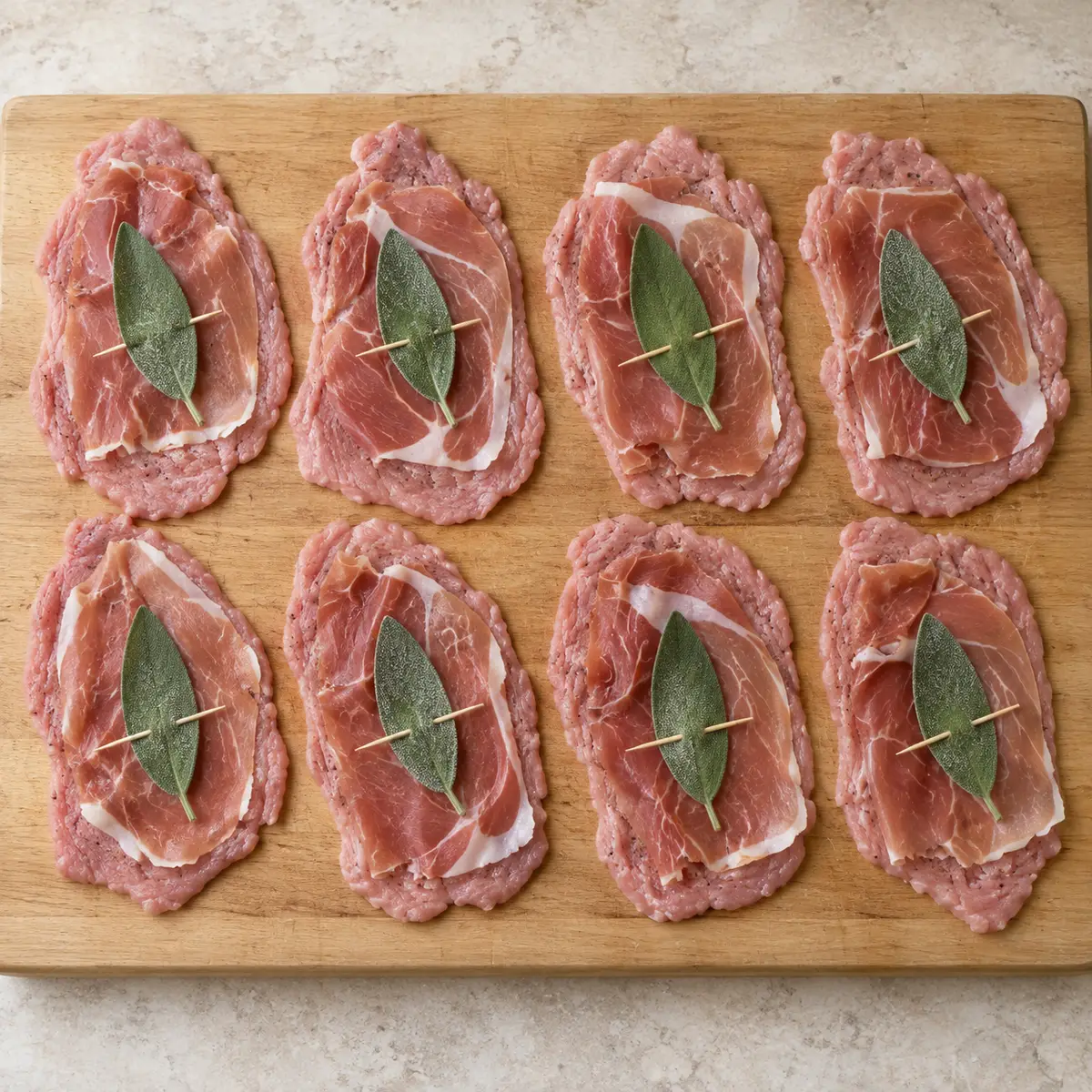
AI-generated Put 30 g of flour on a wide plate. Just before cooking each batch, press only the undersides of 2 prepared slices into the flour, on the side without ham, and gently shake off the excess. The meat should have a thin, even coating with no clumps. Do not coat the ham or sage. Dust the remaining slices only just before placing them in the skillet; after the last batch, discard the flour left on the plate.
Have ready a large skillet about 32 cm across, with a flat base at least 28 cm across, a lid that fits and a small saucepan for collecting the sauce. Heat 5 g of olive oil and 10 g of butter over medium heat for about 1–2 minutes, until the butter forms a pale foam but does not brown. Add 2 slices, floured side down, without overlapping them, and cook for about 2–3 minutes, until the undersides are lightly golden; check by carefully lifting the meat with a spatula. Do not turn the slices onto the ham side; reduce the heat if the fat darkens quickly.
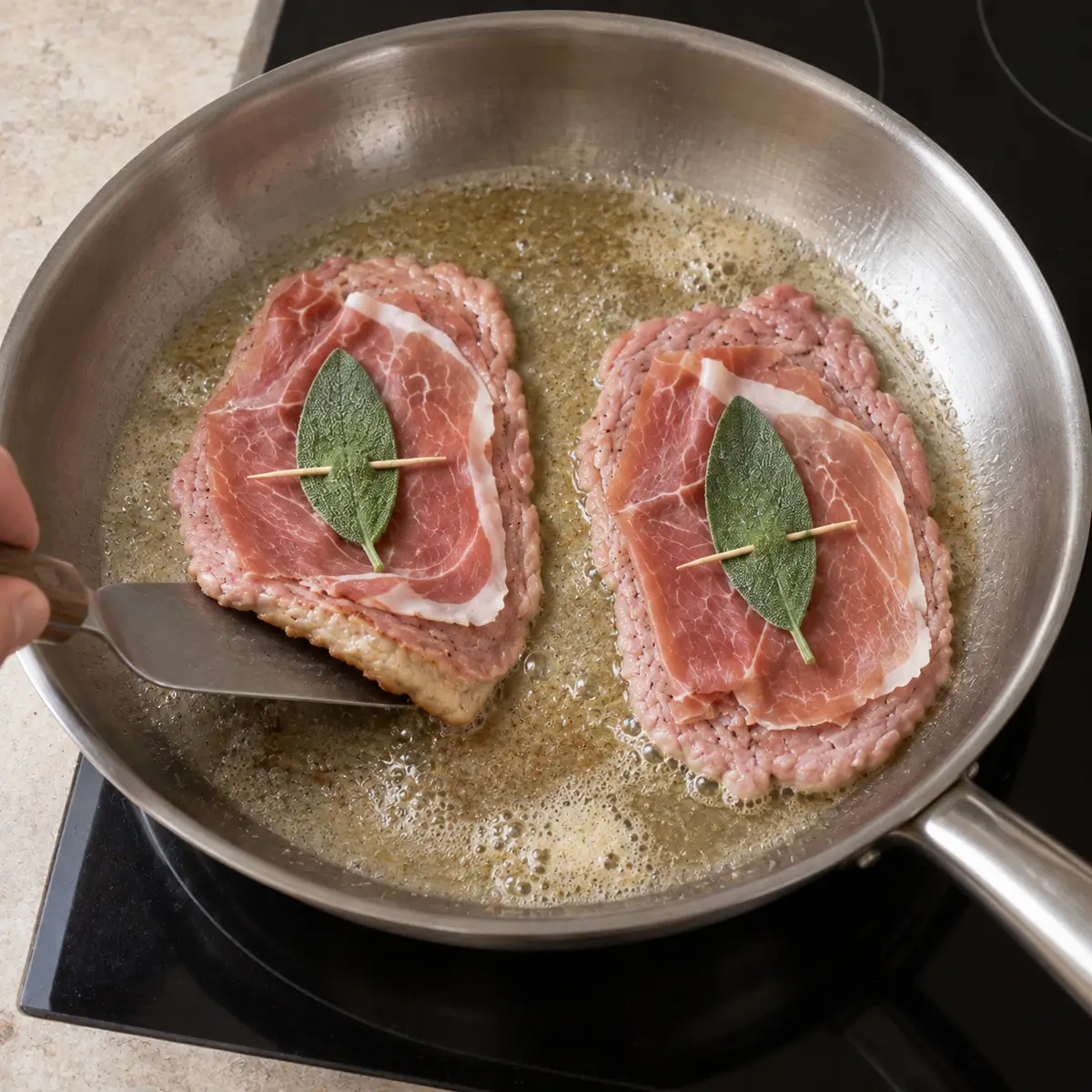
AI-generated Briefly remove the skillet from the burner, pour the first 40 ml of wine alongside the meat and return the skillet to medium heat. Let the liquid come to a full boil, add 20 ml of water, cover and cook over low heat for about 1 minute. The veal should feel springy and be completely opaque; a small cut in the thickest part must not reveal a raw, translucent center. If it is still undercooked, cover for another minute and check again, then transfer the cooked slices to the warm platter, ham side up, and place in the oven. Use a wooden spatula to loosen the light brown residue on the bottom into the remaining liquid, pour all the sauce into the saucepan and remove the empty skillet from the heat.
Cook the remaining 3 batches of 2 slices, repeating the flouring of the undersides, frying and brief covered cooking each time. For each batch, use 5 g of olive oil, 10 g of butter, 40 ml of wine and 20 ml of water: a total of the remaining 15 g of olive oil, 30 g of butter, 120 ml of wine and 60 ml of water. Check each batch just as you did the first before removing it from the skillet, adding the meat to the warm platter and all the sauce to the saucepan. Keep the first batch in the oven only while you cook the rest, about 15 minutes; do not extend this warming time, so the veal does not dry out.
Pour the juices from the platter into the saucepan holding the sauce from all 4 batches, carefully keeping the meat in place with a spatula. Cook the sauce uncovered over medium heat for about 2–3 minutes, until it thickens slightly and lightly coats a spoon; do not let the pan boil dry. Remove the saucepan from the burner, add the remaining 20 g of cold butter in several pieces and stir until melted and the sauce is smooth and slightly glossy. Do not bring the sauce back to a boil after adding the butter.
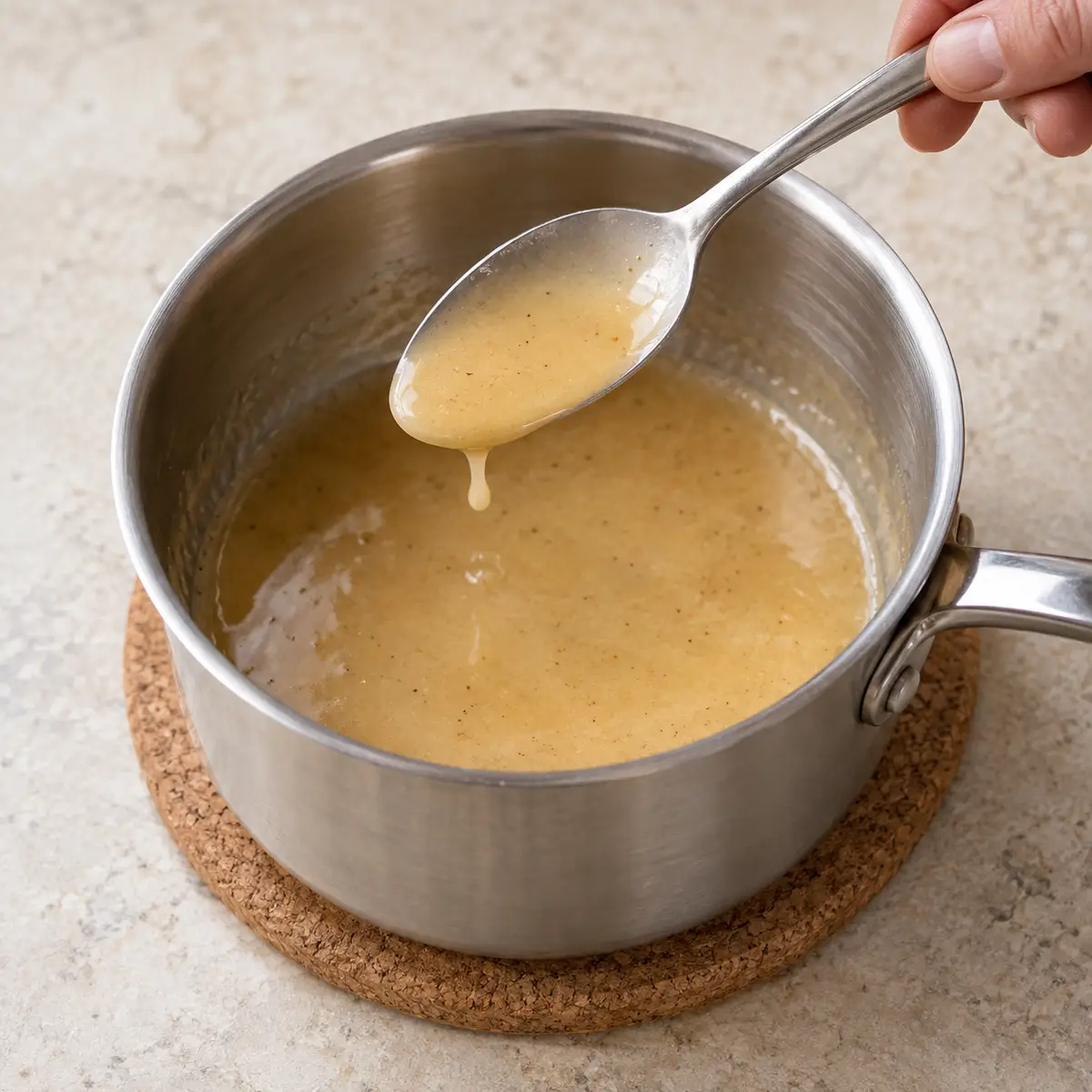
AI-generated Take the platter out of the oven and carefully remove all 8 toothpicks, holding the sage leaves in place on the meat. Divide the saltimbocca into 4 portions of 2 slices and spoon an equal share of the hot sauce over each, using all of it. Serve immediately while the meat is tender and the ham is still soft.
Estimated nutrition

Rate this recipe
0 ratings
Comments