
AI-generated
Ossobuco alla milanese — braised veal shank with gremolata
Log in or create a free account to save recipes.
Source: https://recipheon.com/en/recipes/main-dishes/ossobuco-alla-milanese-braised-veal-shank-with-gremolata
About this recipe
Ossobuco alla milanese consists of thick bone-in veal shank slices, braised until tender and served with lemon gremolata. In this version, the meat is surrounded by a golden brown sauce of onion, white wine and stock. Brief browning builds flavor, while gentle braising under a lid softens the connective tissue; the cooked veal yields easily to a fork but still holds its shape as a slice. Finely chopped parsley, garlic and just the yellow part of the lemon peel are added at the end to freshen the rich sauce. Allow about 3 hours and 25 minutes, with extra time for a particularly tough piece of meat: tenderness determines when braising is complete, not the clock alone.
Ingredients
Veal and sauce
1400 g raw hind veal shank with bone and marrow, cut crosswise into 4 slices of about 350 g each and 3–4 cm thick
200 g onion, weighed after peeling
30 g all-purpose flour for lightly dusting the meat; discard any unused flour
20 g olive oil for frying, divided into 2 portions of 10 g
35 g butter with 82% fat and no added salt
200 ml dry white wine
600 ml prepared mild beef stock, with no added salt, divided into 500 ml and 100 ml
6 g fine salt: 5 g for the meat and 1 g for the onion
1 g ground black pepper
up to 200 ml hot water to top up the sauce, only if too much liquid evaporates
Gremolata
15 g fresh parsley, leaves and tender stems
6 g finely grated yellow lemon zest, from about 1 large washed lemon
6 g garlic, weighed after peeling, about 2 small cloves
Steps
Prepare a wide, heavy pan with a lid, about 32 cm in diameter with a flat base at least 28 cm across. Check that the 4 shank slices fit flat in a single layer; if they overlap, choose a larger roasting pan with a lid. Finely dice the 200 g of peeled onion. Heat the 600 ml of stock in a separate small saucepan, measure out 500 ml to start the braise and reserve the remaining 100 ml for later.
Inspect the surfaces of the 4 shank slices and remove any small bone fragments with a damp paper towel, then pat the meat very thoroughly dry. Use scissors to snip the outer membrane in 3–4 places around each slice, about 5 mm deep; cut through the membrane without cutting through the meat all the way to the bone. This helps prevent the slices from curling as they fry. Leave the marrow in the bone and do not pound the meat with a meat mallet.
Distribute the 5 g of salt and the full 1 g of pepper over both sides of all the slices. Put the 30 g of flour on a wide plate and, just before frying, coat the first 2 slices, shaking off the excess thoroughly. Only a thin dusting should remain on the surface, with no thick white clumps; dust the next 2 slices only just before frying them. After preparing the second batch, discard the flour left on the plate.
Heat the pan over medium heat, add 10 g of olive oil and place the first 2 slices in it with space between them. Fry for 3–4 minutes on each side until the surfaces are golden brown; turn the meat with tongs without piercing it, and reduce the heat if the flour starts darkening too quickly. Transfer the browned slices to a plate, add the remaining 10 g of olive oil and brown the second batch in the same way. Keep the meat and its juices on the plate, and retain the light brown fond on the bottom of the pan; do not let it burn.
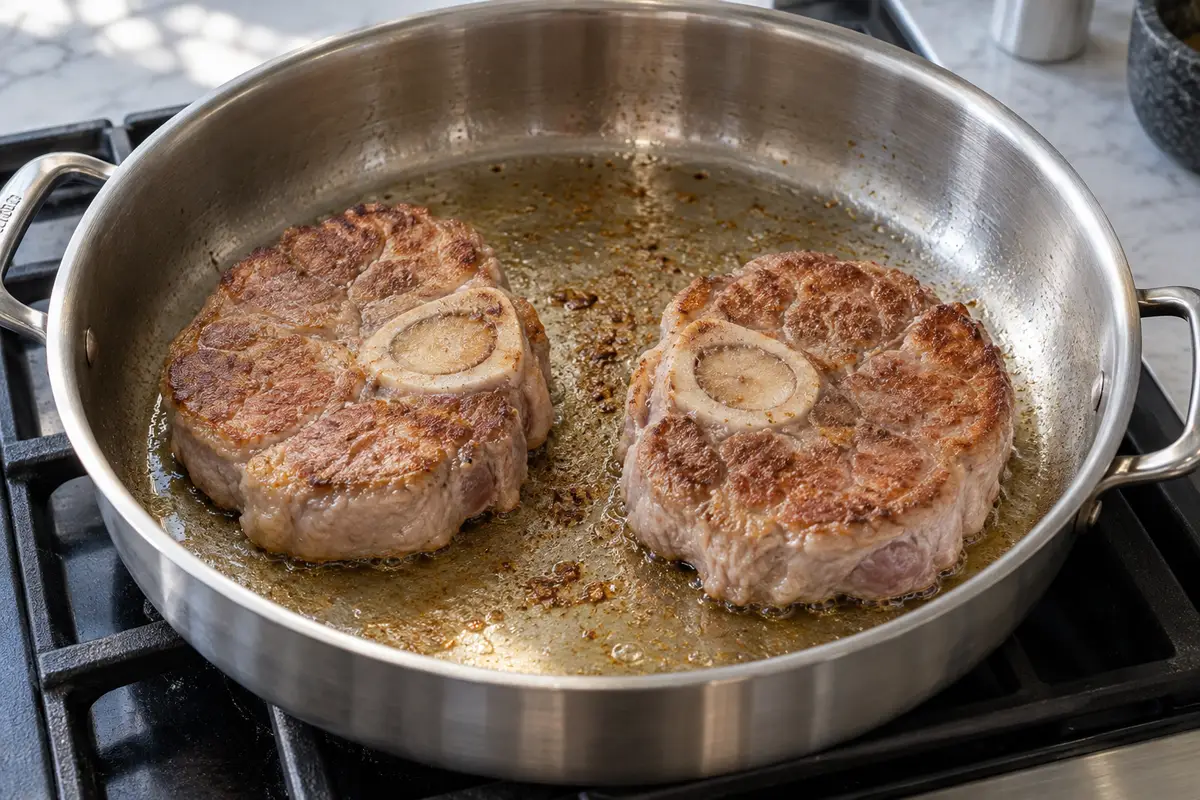
AI-generated Reduce the heat to low and wait about 30 seconds so the empty pan is not too hot. Add all 35 g of butter and, once it has melted, add the onion and the remaining 1 g of salt. Cook for about 8 minutes, stirring often and using a spatula to loosen the light brown bits of fond. The onion should soften and turn translucent, with a little gold in places; the butter and onion must not burn.
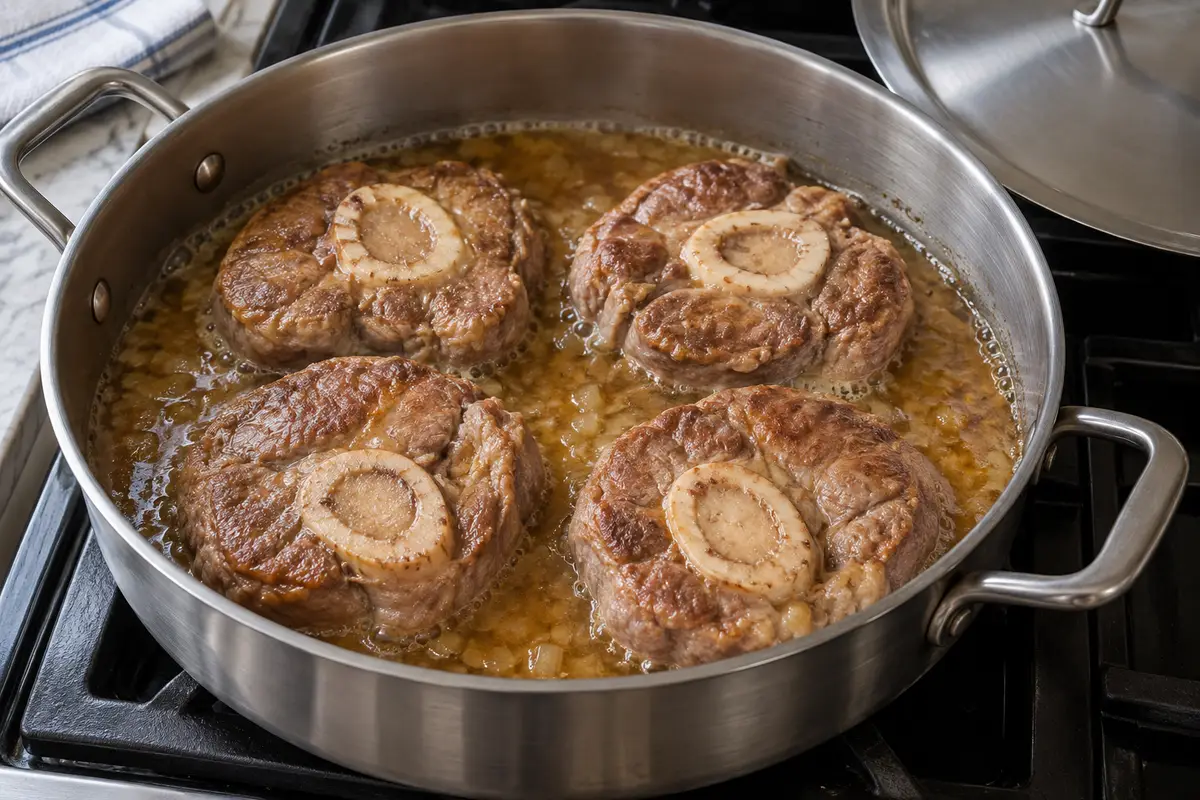
Briefly take the pan off the burner and pour in the 200 ml of wine, then return it to medium heat. Cook uncovered for about 4 minutes, gently scraping the fond from the bottom, until the volume of wine has reduced by about half. Add all 4 slices along with the juices from the plate, pour in the prepared 500 ml of hot stock and bring to a gentle simmer. The liquid should come roughly halfway up the meat; keep the slices in a single layer with their tops above the sauce.
Cover the pan and lower the heat until the sauce barely trembles with only occasional bubbles, without vigorous bubbling. Braise for about 120–150 minutes; after 60 minutes, carefully turn the slices, supporting them with a wide spatula, and add the remaining 100 ml of stock, reheated. Check the liquid about every 30 minutes: if its level falls below one third of the height of the meat, add hot water in 50 ml additions, using the prepared 200 ml as needed. After 120 minutes, test the meat with a fork in the thick part beside the bone: the fork should slide in with almost no resistance, and the fibers should separate easily. If the meat resists, continue cooking covered for 15 minutes at a time and test again; a particularly tough piece may need more than 150 minutes.
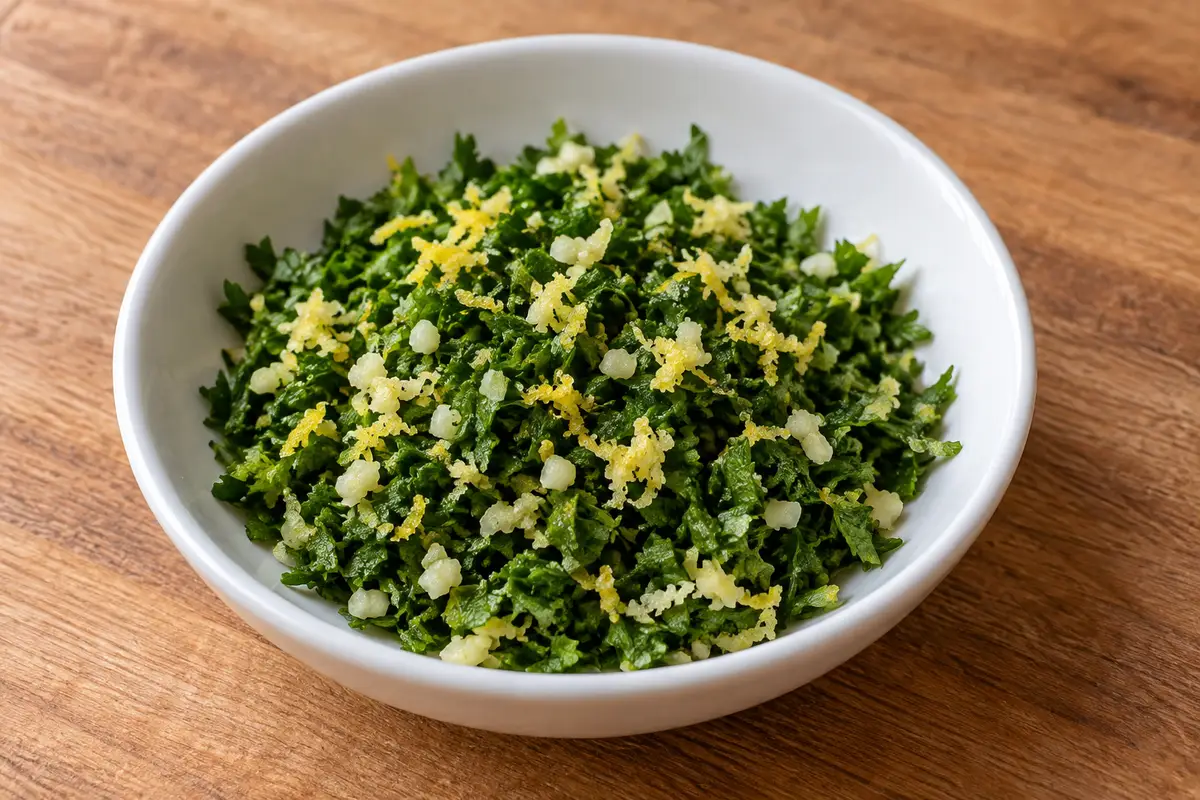
AI-generated Toward the end of braising, rinse the parsley and dry it very thoroughly. Finely chop all 15 g of parsley and 6 g of peeled garlic, then mix with the 6 g of freshly grated yellow lemon zest. Grate only the yellow layer, without the bitter white pith; do not add lemon juice. The gremolata should be a loose, fine mixture of green leaves, garlic and zest, not a wet paste; set it aside until the sauce is finished.
AI-generated Use a wide spatula to transfer the cooked meat to a warm platter, supporting the bones so the delicate slices do not fall apart, and cover loosely. Cook the sauce uncovered over medium heat for about 5–10 minutes, stirring, until it lightly coats a spoon; if it already has this consistency, skip the reduction. Keep the onion in the sauce and do not drain off any fat or juices. Return the meat, add the juices from the platter and warm over low heat for about 2 minutes, spooning the sauce over the tops; do not stir vigorously.
Take the pan off the heat and divide all the ossobuco between 4 warm plates, with 1 slice per serving. Spoon one quarter of the sauce over each serving and sprinkle with one quarter of the fresh gremolata, using all of it. Serve immediately; the soft marrow in the center of the bone can be scooped out with a small spoon and eaten with the meat and sauce. The bones stay on the plate and are not part of the edible portion.
Estimated nutrition

Rate this recipe
0 ratings
Comments