
AI-generated
Gray Potato Dumplings with Bacon and Onion
Log in or create a free account to save recipes.
Source: https://recipheon.com/en/recipes/main-dishes/gray-potato-dumplings-with-bacon-and-onion
About this recipe
Gray dumplings made from raw potatoes are soft and springy and pair well with bacon and onion. Their natural gray color develops as the finely grated potatoes darken. These are larger, irregular dumplings dropped from a spoon, not tiny dumplings and not rolled potato dumplings. Recover the starch from the squeezed-out liquid to help bind the moist dough, and add the limited flour reserve only if the test dumpling falls apart. Serve the bacon and onion with all the rendered fat, without extra oil. Allow about an hour and a half for four servings, including the test dumpling and cooking every batch.
Ingredients
Dumplings and Topping
1000 g raw floury potatoes, weighed after peeling
220 g dry all-purpose flour without raising agents, divided: 180 g for the dough and a measured 40 g reserve to use only if needed
1 raw size M egg, about 50 g edible weight without the shell
200 g raw smoked pork belly bacon with visible streaks of fat, without rind or bones
200 g onion, weighed after peeling
20 g fine salt, divided: 18 g for the cooking water and 2 g for the potato dough
1 g ground black pepper
For Cooking
3 l water for cooking the dumplings, drained away and not served as part of the dish
Steps
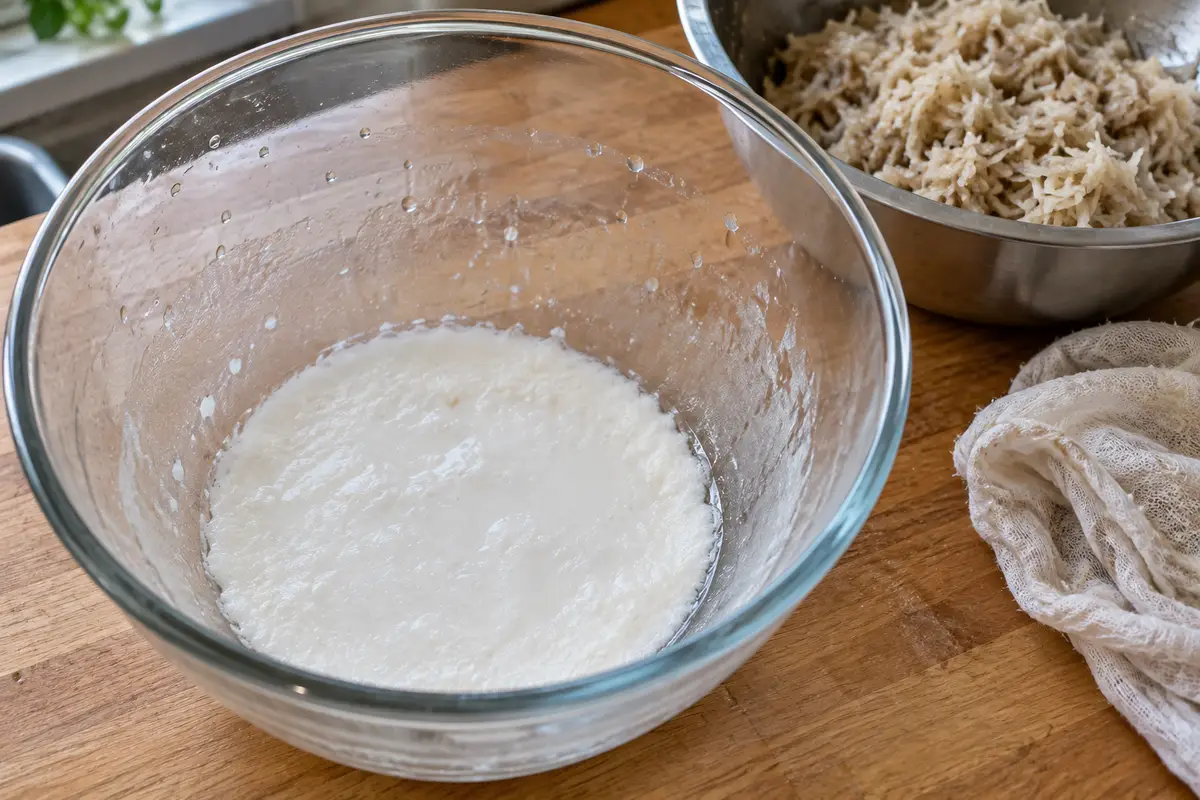
Grate the peeled potatoes on the finest holes of a grater. Transfer to a sieve lined with a clean cloth over a bowl and squeeze out the excess liquid: the potatoes should remain moist and compact, not dry and not crumbly. Keep all the collected liquid and let it stand for about 10 minutes so the starch settles on the bottom. Transfer the squeezed potatoes to a second bowl; their gradual graying is natural.
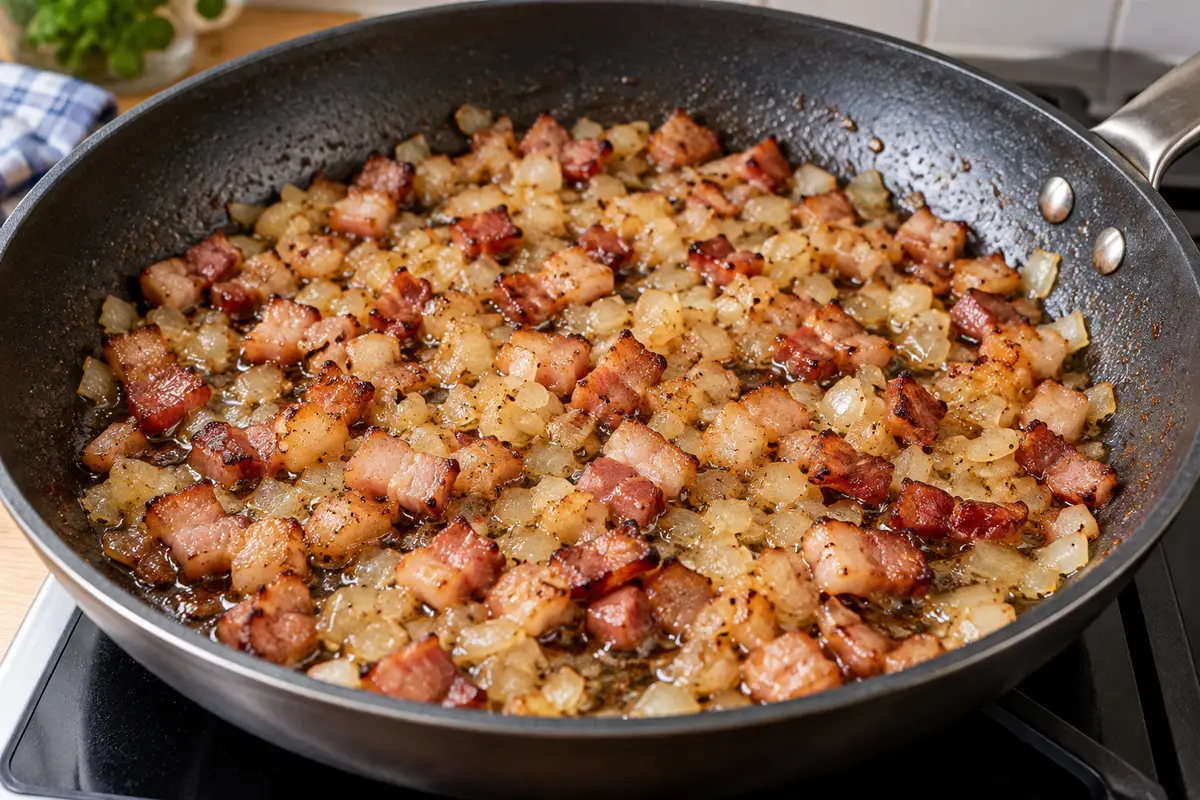
Cut the bacon into cubes about 0.5–1 cm and finely chop the onion. Put the bacon in a large cold skillet and cook over medium heat for about 8–10 minutes, stirring, until the fat renders and the pieces start to brown. Add the onion and cook for about another 8–10 minutes, until soft and lightly golden. Add all the pepper, reduce the heat to its lowest setting, and keep the topping warm; do not drain the fat and do not add oil. Meanwhile, bring the measured 3 l water and 18 g salt to a boil in a pot with a capacity of about 5–6 l. The starch settles while you prepare the topping.
AI-generated Carefully pour off and discard the watery liquid above the white sediment on the bottom of the bowl. Add the recovered wet starch to the squeezed potatoes along with the egg, 2 g salt, and the initial 180 g flour. Mix briefly but thoroughly; keep the 40 g reserve separate for now. The dough should be thick and moist and stay on the spoon, sliding off a tilted spoon only with help from a second spoon. Do not add packaged starch.
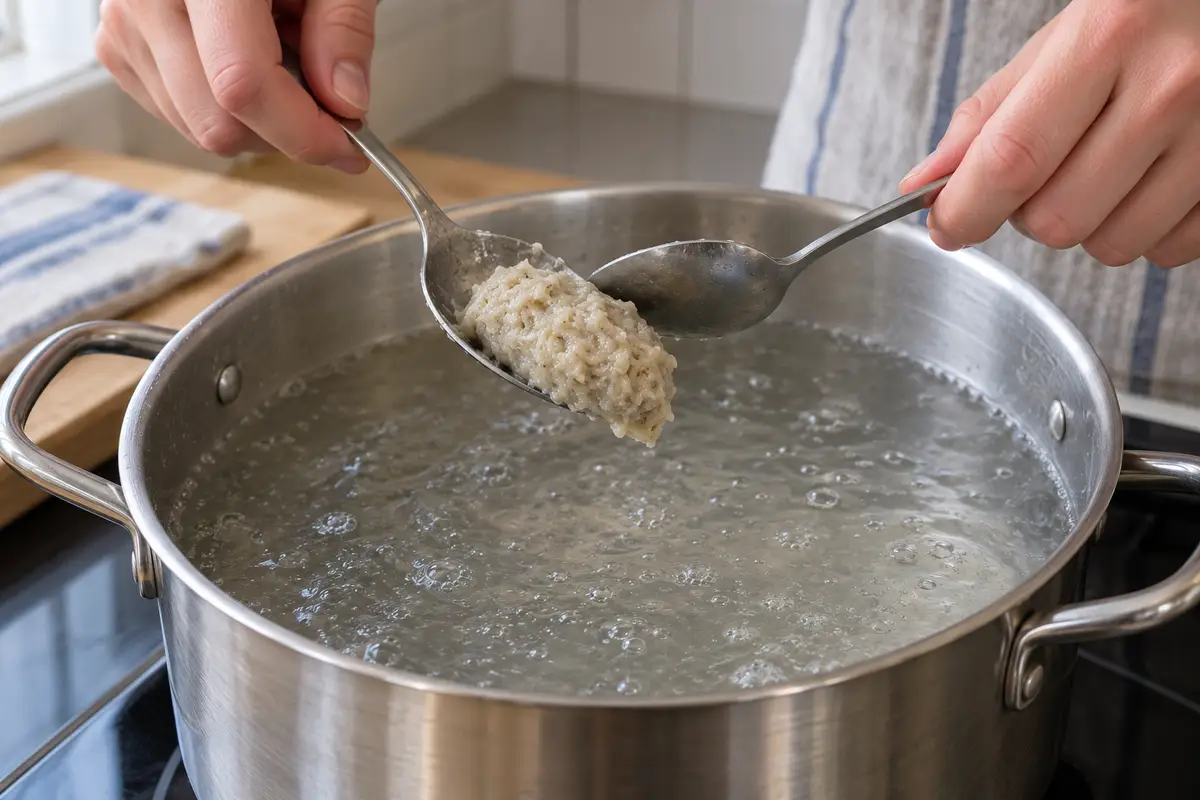
AI-generated Reduce the heat so the salted water boils gently. Dip a spoon in the pot water, scoop up a little less than a tablespoon of dough to make an irregular dumpling about 3–4 cm long, and carefully slide it off with a second spoon just above the water. Once it floats, cook for about another 5–6 minutes. Lift out with a slotted spoon and cut open: the dumpling should keep its shape, and the center should be evenly cooked, without raw, sticky dough. If the center is raw, cook the next dumpling for 1–2 minutes longer; do not judge doneness by floating alone.
AI-generated If the test dumpling falls apart, mix about 20 g of the measured flour reserve into the dough and cook another test dumpling the same way. If it still falls apart, add the remaining 20 g reserve. Do not exceed 220 g flour in total, and do not add flour just because the dough sticks slightly to the spoon. Once the test dumpling keeps its shape, leave the unused reserve aside; you do not need to add all the flour.
Drop the remaining dough into the water using a spoon dipped in the pot water, making dumplings similar in size to the test dumpling. Cook in 2–3 batches so they can float freely; do not overcrowd the pot. After adding each batch, gently stir the water with a spoon so the dumplings do not stick to the bottom, and maintain a gentle boil. Once they have all floated, cook for about another 5–6 minutes, or 1–2 minutes longer if the test dumpling needed it. Cut open one of the larger dumplings and make sure there is no raw, sticky dough in the center.
Lift out each cooked batch with a slotted spoon, drain well over the pot, and transfer to the skillet with the warm bacon and onion. Toss gently to coat the dumplings in the rendered fat; keep the skillet on its lowest heat while the remaining batches cook. Combine all the batches with all the topping and divide into four servings. Serve immediately, without any additional garnish; the cooking water is not served.
Estimated nutrition

Rate this recipe
0 ratings
Comments