
AI-generated
Käsespätzle – Cheese Spaetzle with Crispy Onions
Log in or create a free account to save recipes.
Source: https://recipheon.com/en/recipes/main-dishes/kasespatzle-cheese-spaetzle-with-crispy-onions
About this recipe
Käsespätzle are soft, homemade spaetzle coated in melted cheese and topped with thin, golden, crispy onions. The noodles are made from a thick egg batter pushed through a spaetzle maker directly into boiling water. Emmentaler gives them their stretchy texture, while Gruyère adds a more pronounced, nutty flavor; a little cooking water helps combine the cheese and noodles without a cream sauce. The onions are dusted with flour and fried separately in small batches so they become crisp, not just soft and browned. They go on top of the finished spaetzle just before serving to keep their crunch. The key is to melt the cheese gently over low heat and serve the dish immediately, before it begins to cool and thicken.
Ingredients
Spaetzle batter and cooking
400 g all-purpose flour for the batter
4 medium eggs, about 200 g total without the shells
150–180 ml cold water for the batter
28 g fine salt: 6 g for the batter, 20 g for the water and 2 g for the onions
0.5 g ground nutmeg
4 l water for cooking the spaetzle; 150 ml will be used to combine them with the cheese and the remaining water will be discarded
Crispy onions
300 g onion, weighed after peeling
30 g all-purpose flour for dusting the onions; any loose excess will be shaken off
500 ml refined sunflower oil for deep-frying the onions; the frying oil is not served with the dish
Cheese finish
200 g Emmentaler cheese in a block, weighed without the inedible rind
100 g Gruyère cheese in a block, weighed without the inedible rind
30 g unsalted butter with 82% fat
1 g ground black pepper
Steps
Place 400 g flour in a large bowl and add the eggs, 150 ml cold water, 6 g salt and all the nutmeg. Stir and beat vigorously with a wooden spoon for about 3–5 minutes, until the batter is smooth, sticky and begins to form bubbles. It should be much thicker than crepe batter and fall from the spoon in heavy strands that break off slowly. Reserve the rest of the water within the ingredient range for checking the consistency after the batter rests.
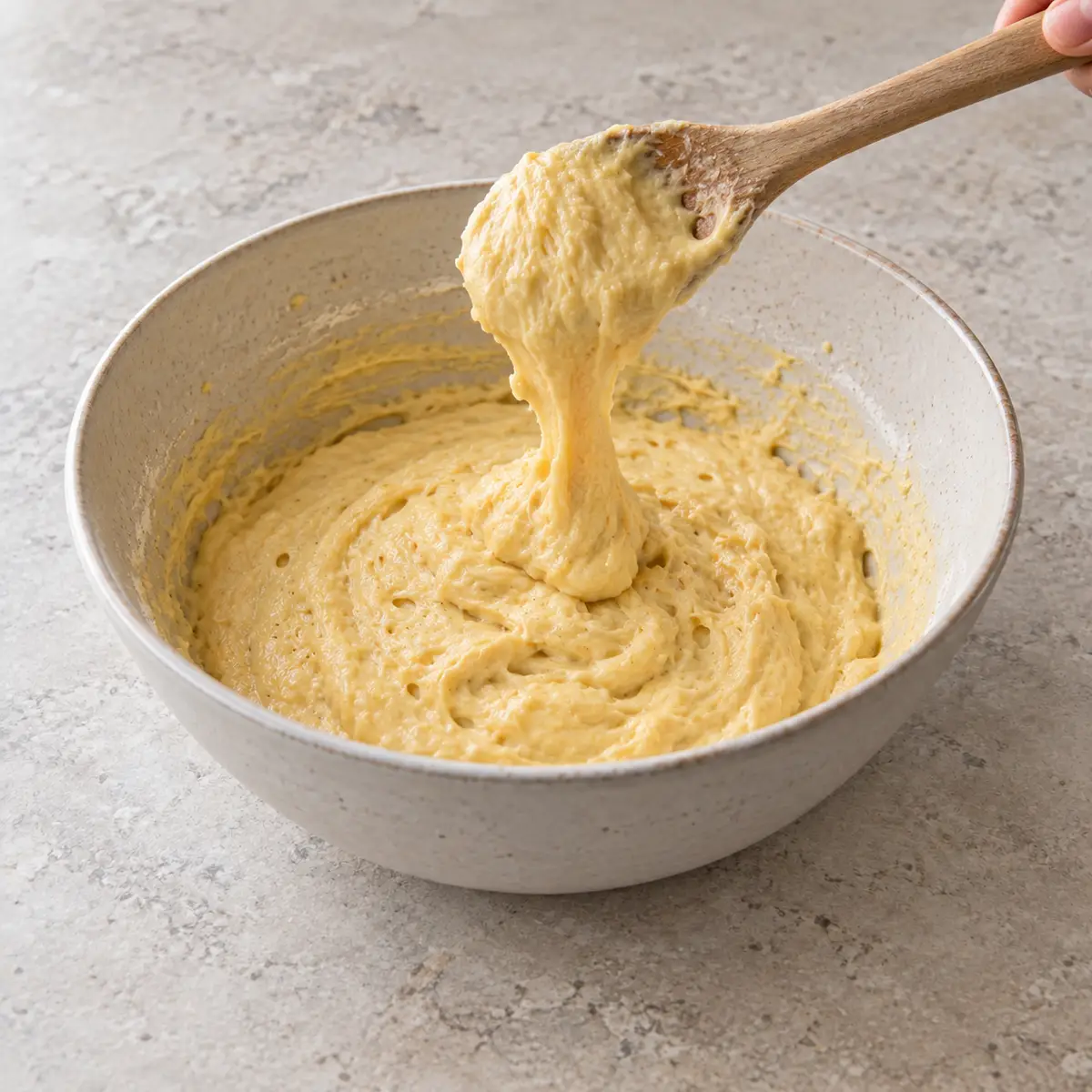
AI-generated Cover the batter and leave it for about 15 minutes; meanwhile, prepare and start frying the onions as described in the following steps. Cut the onion into half-moon slices about 1–2 mm thick and separate the layers, then finely grate both cheeses and mix them together. At the same time, start heating 4 l water with 20 g salt in a pot with a capacity of at least 6 l. Prepare a spaetzle maker with a sliding hopper, a slotted spoon and a deep skillet about 28 cm in diameter with a lid.
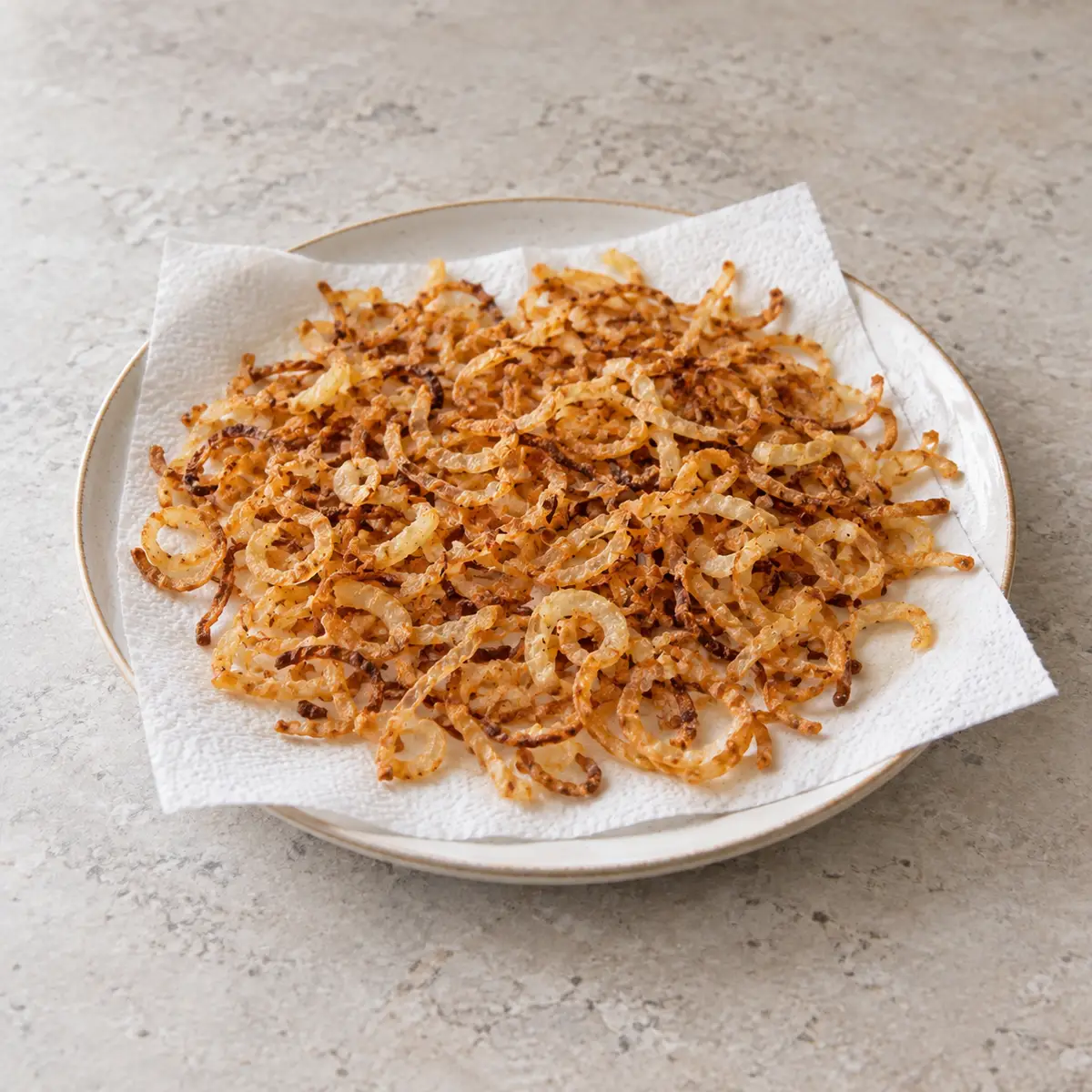
Pour all the oil into a pot about 18 cm in diameter with a capacity of at least 2 l; the oil will be about 2 cm deep. Heat over moderate heat to about 170°C: the oil should not smoke, and a strip of onion placed in it should immediately sizzle gently without darkening rapidly. Toss 100 g onion with 10 g of the flour reserved for dusting, shake off any loose excess and immediately add to the oil. Fry for about 5–7 minutes, separating and turning the strips until evenly golden with lightly browned edges; remove before they turn deep brown.
Lift the onions out with a slotted spoon onto a plate lined with paper towels and spread them in a thin layer. Fry the remaining 2 batches in the same way, dusting 100 g onion with another 10 g flour only just before frying each time and allowing the oil to heat up again. Distribute 2 g salt over all the fried onions and leave them without a cover; they will become crisper as they cool. Discard any loose excess flour and leave the frying oil to cool; do not add it to the spaetzle.
AI-generated Stir the rested batter. If it is so stiff that it is difficult to move with a spoon, add the reserved cold water a little at a time, up to 30 ml, until the batter is thick and falls slowly in heavy strands; use 150–180 ml water in total and do not add more flour. Melt all the butter in the large skillet over low heat without browning it, then remove the skillet from the heat. Bring the water in the large pot to a boil, then keep it at a gentle boil.
Set the spaetzle maker over the pot and place about 1/4 of the batter in its hopper. Move the slider gently so that short, irregular noodles drop into the water, then stir carefully so they do not stick to the bottom. Once they float to the surface, cook for about 1 minute more: they should be springy, with an even texture throughout and no raw, floury center. Lift them out with a slotted spoon, drain briefly over the pot, transfer to the skillet with the butter and toss gently; do not rinse with cold water.
Cook the remaining 3 batches in the same way, using all the batter and keeping the water at a gentle boil each time. Add each drained batch to the buttered spaetzle, toss carefully and cover the skillet between batches so the noodles do not dry out and do not stick together. Allow about 10–15 minutes to cook all 4 batches. Measure 150 ml hot cooking water from the pot into a pitcher and discard the remaining water.
Set the skillet of spaetzle over low heat, add 100 ml of the reserved hot water and stir gently. Add the grated cheeses in several additions, stirring and lifting the noodles from the bottom, then pour in the remaining 50 ml water and add all the pepper. Heat for about 3–5 minutes, until the cheese melts, becomes slightly stretchy and coats the spaetzle evenly; the mixture should be moist without a pool of liquid. Do not turn the heat up high and do not fry until crisp, because the cheese may stick and release its fat.
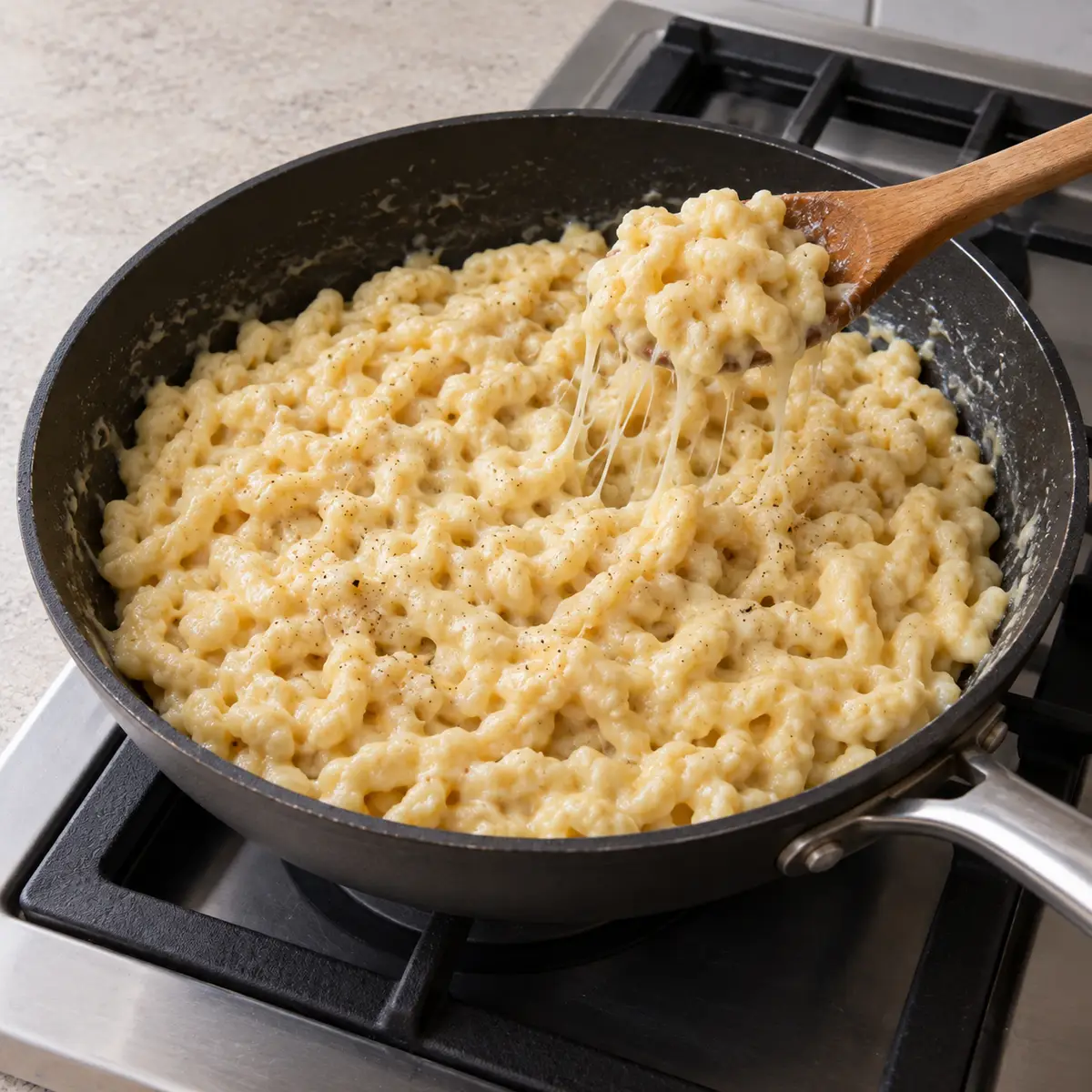
AI-generated Remove the skillet from the heat and divide the hot spaetzle into 4 servings. Put all the onions on top just before serving, instead of stirring them into the moist cheese for a long time. Serve immediately, while the noodles are soft, the cheese is stretchy and the onions are crisp.
Estimated nutrition

Rate this recipe
0 ratings
Comments