
AI-generated
Mulgikapsad – sauerkraut with pork and pearl barley
Log in or create a free account to save recipes.
Source: https://recipheon.com/en/recipes/main-dishes/mulgikapsad-sauerkraut-with-pork-and-pearl-barley
About this recipe
Mulgikapsad is an Estonian dish of sauerkraut, fresh fatty pork and pearl barley. The ingredients are layered and slowly braised under a lid until the meat is tender and the barley has absorbed some of the liquid. Natural fat from the pork belly keeps the cabbage juicy, so you do not need to sear the meat or make a roux. Stir and season only once everything is cooked, then serve with separately boiled potatoes. Allow approximately 3 hours 45 minutes for 6 servings; tougher meat or grains may need a longer braise.
Ingredients
Cabbage, pork and barley
1 kg raw uncooked, unpasteurized sauerkraut, net weight after lightly draining the brine
600 g raw fresh pork belly, uncured and unsmoked, without rind, bones or hard cartilage; net weight includes natural fat
150 g dry pearl barley, whole hulled and polished kernels, not instant barley
1 g ground black pepper
up to 5 g white sugar, only if the cabbage is excessively sour
Potatoes, water and salt
900 g raw peeled waxy potatoes, net weight
2.75 l cooking water available: 500 ml to start the braise, up to 250 ml in one shared hot reserve and 2 l for the potatoes
10 g salt available: 6 g for the potato water and up to 4 g for seasoning the cabbage at the end
Steps
Taste the sauerkraut, transfer to a sieve and drain lightly, without squeezing hard. Weigh out 1 kg; discard the drained brine. Do not rinse the sauerkraut, and cut any very long strands a few times. Rinse the dry pearl barley in a fine-mesh sieve under cold water and drain; discard the rinsing water. It does not need presoaking, because it will cook for a long time in the pot.
Cut the pork belly without rind, bones or hard cartilage into cubes approximately 3 cm across, keeping its natural fat. Spread the sauerkraut in a heavy pot with a capacity of approximately 4 l, place the meat with all its juices on it, then scatter the barley evenly over the top. Add the pepper and pour in 500 ml water. Do not sear the meat and do not stir the layers. Press the ingredients down lightly with a spoon; the liquid should almost reach the top layer. If there is too little, add some of the reserved 250 ml hot water. This is one shared reserve for the whole braise.
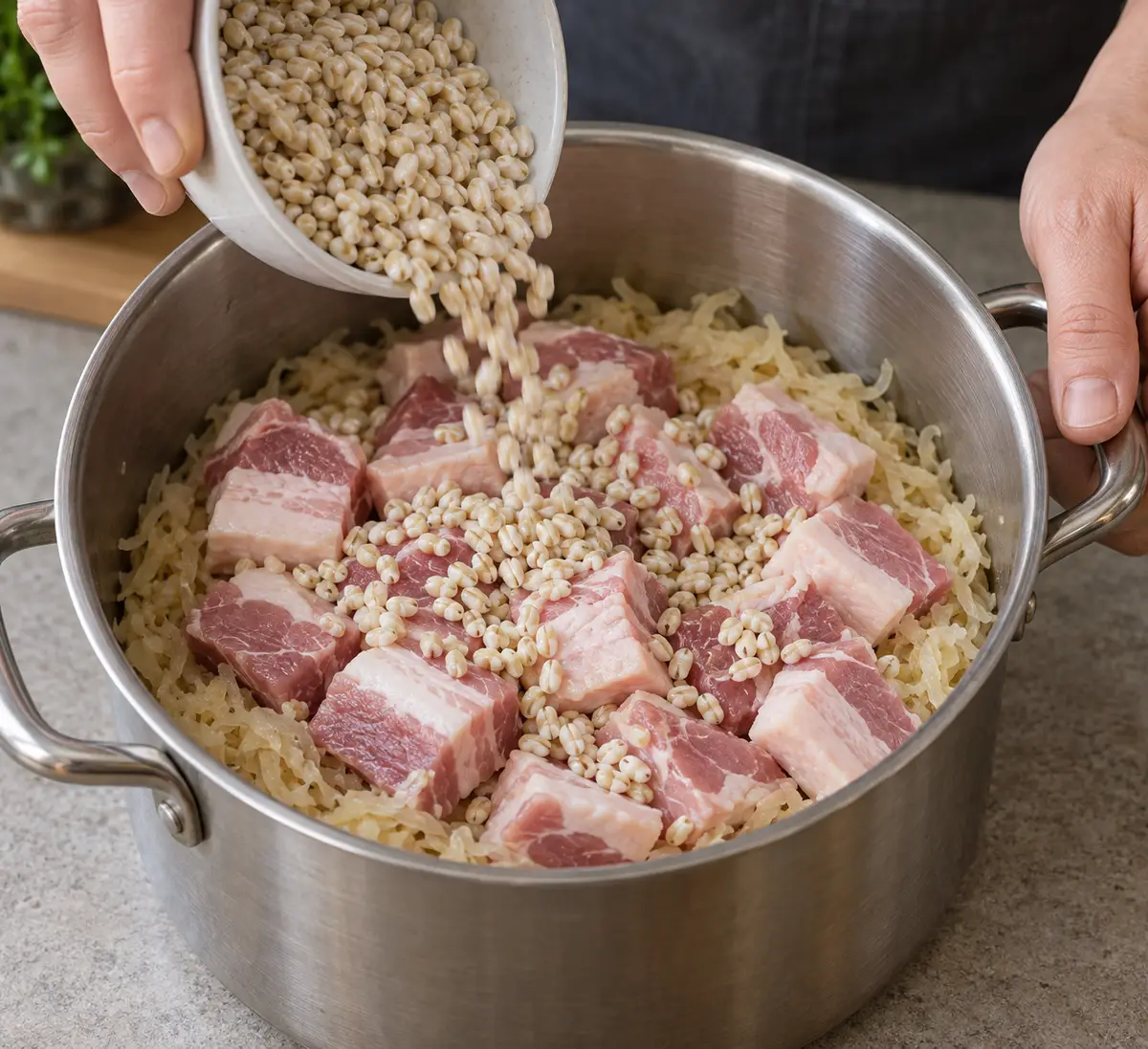
AI-generated Bring the contents of the pot to a gentle simmer, cover and reduce the heat to low. Braise for 2–3 hours from this point. Do not stir the layers during braising. Occasionally lift the lid and check that liquid is still visible at the edge of the pot. If it starts running low, add small amounts of the remaining hot water from the same reserve of up to 250 ml. The food should simmer gently, not boil hard or dry out. Toward the end, the meat should yield easily to a fork, the cabbage should be tender and the swollen barley soft in the center too. If the meat or grains are still firm, braise longer before stirring everything together.
Toward the end of braising, cut the peeled potatoes into similarly sized pieces. Put them in a separate pot with 2 l water, add 6 g salt and bring to a boil. Reduce the heat and cook for 18–25 minutes, until tender. Drain, discarding the water, and keep the potatoes covered until serving.
Once all the ingredients are tender, gently stir the cabbage, meat and barley together from the bottom of the pot. Keep all the rendered fat and remaining liquid. If there is clearly too much liquid at the bottom, cook uncovered for 5–10 minutes, stirring carefully, until the dish is thick but juicy. Taste and add some of the reserved 4 g salt only if needed. If the cabbage is excessively sour, add a small amount of the sugar, no more than 5 g in total, stir and taste again. The sugar should only round off the acidity, not make the dish sweet.
Divide all the cabbage with the barley, meat, fat and remaining sauce among 6 plates. Add all the boiled potatoes, dividing them equally among the servings. Serve hot immediately; keep the potatoes as a separate side, without mashing them into the cabbage.
Estimated nutrition

Rate this recipe
0 ratings
Comments