
AI-generated
Pasta e patate — creamy pasta with potatoes and stretchy provola
Log in or create a free account to save recipes.
Source: https://recipheon.com/en/recipes/main-dishes/pasta-e-patate-creamy-pasta-with-potatoes-and-stretchy-provola
About this recipe
Pasta e patate is a Neapolitan pasta and potato dish whose creamy sauce comes together in one pot without cream. Short pasta mista cooks directly in the vegetable base, taking on starch from the soft potatoes, while fresh smoked provola added at the end forms delicate cheese strands. Onion, carrot, celery and a little tomato paste give it depth and a warm, lightly tomato-colored finish. Add hot water in small amounts and stop cooking while the pasta still has some bite: the dish thickens quickly once the cheeses go in. Serve immediately in deep plates, with potato pieces nestled in the thick, coating sauce.
Ingredients
Pasta with potatoes
320 g dry short durum wheat pasta mista, a blend intended to cook together with a packet time of about 10–12 minutes
600 g potatoes, type B–C or C, weighed after peeling
80 g onion, weighed after peeling
60 g carrot, weighed after peeling
50 g celery, weighed after trimming
20 g tomato paste with 30% concentration
35 ml olive oil
6 g salt — 3 g each for the potatoes and pasta
0.5 g ground black pepper
1 l water — 500 ml for the potatoes, 300 ml with the pasta and up to 200 ml reserved to use as needed
Cheeses to finish
180 g fresh smoked cow's milk provola, weighed after draining and patting dry; a soft pasta filata cheese, not long-aged provolone
30 g finely grated Parmesan
Steps
Finely dice the onion, carrot and celery, and cut the peeled potatoes into pieces about 1.5 cm across; do not rinse them after cutting, to retain their starch. Pat the provola dry with paper towel and dice into pieces about 5 mm across. Bring 1 l water to a boil and keep it hot and covered so later additions do not interrupt cooking.
Heat all the olive oil over medium-low heat in a wide pot or saucepan about 24 cm across and about 4 l in capacity. Add the onion, carrot and celery and cook for 7–8 minutes, stirring often, until soft and fragrant. Do not brown them deeply, so the onion does not become bitter.
Add the tomato paste and stir for a minute, then add the potatoes and cook for 2 minutes, coating them in the vegetable base. Pour in 500 ml hot water, add 3 g salt, cover and simmer gently for 15–18 minutes, stirring occasionally. When the potatoes are almost tender, crush about a quarter of the cubes against the side of the pot with a spoon, leaving the rest in pieces.
Add the dry pasta mista without boiling it beforehand, pour in 300 ml hot water and add the remaining 3 g salt. Cook uncovered at a gentle boil, stirring frequently right down to the base, for about 12–15 minutes, until the pasta has some bite but no dry center. When it absorbs the liquid and the mixture starts sticking or becoming too thick, add hot water from the reserve in 30–50 ml portions; do not automatically add the whole 200 ml. The pasta should cook in a creamy, moist base, not fry on a dry pan bottom.
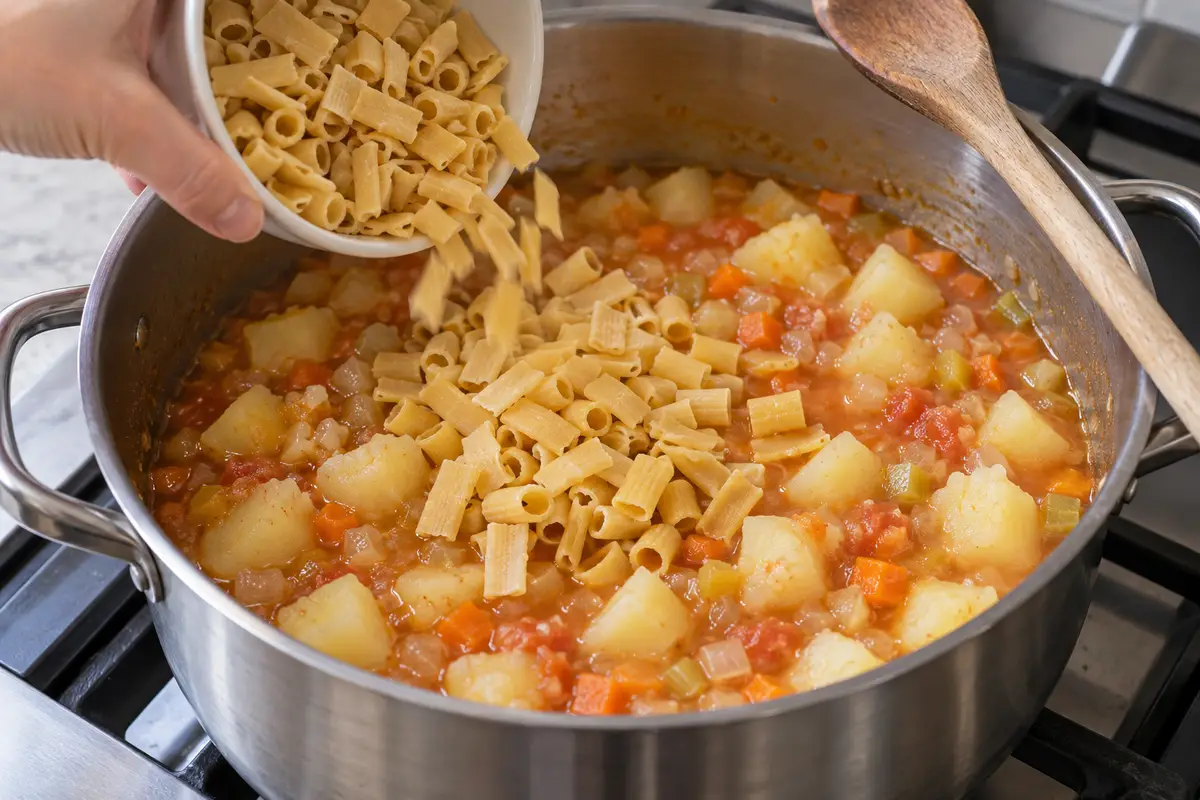
AI-generated Check the pasta and potatoes: the pasta should retain some bite and the potatoes should be tender, partly broken down into creaminess. Before adding the cheeses, leave the mixture slightly looser than a finished risotto; if needed, stir in a little more hot water from the remaining reserve without exceeding that amount. Take the pot off the heat and wait a minute for the boiling to stop; do not add any unused water.
Add the Parmesan and all the pepper and stir, then add the provola in batches, gently folding the pasta up from the bottom. Let the cheese melt in the dish's residual heat and form short strands; do not return the pot to high heat and do not boil the mixture after adding cheese. Cover for 2 minutes to let the flavors combine and the provola soften evenly.
Immediately divide between four deep plates, scraping all the sauce from the pot. The finished dish should be thick and creamy, with visible potato pieces and soft cheese strands, without becoming a watery soup or a dry lump.
Estimated nutrition

Rate this recipe
0 ratings
Comments