
AI-generated
Rabbit Braised in Cream and Mustard Sauce
Log in or create a free account to save recipes.
Source: https://recipheon.com/en/recipes/main-dishes/rabbit-braised-in-cream-and-mustard-sauce
About this recipe
Braised rabbit has tender meat and a pale, creamy sauce with a distinct mustard flavor. Brown the pieces in small batches first, then braise them gently with the lid on. Lean meat does not take well to a vigorous boil: remove the smaller body sections once they are cooked and tender, and let the legs braise longer. Onion, garlic, and the browned bits at the bottom of the pot build the sauce's flavor, without alcohol or premade stock. Warm the cream and mustard first with a few spoonfuls of hot cooking liquid, then add them off the heat to keep the sauce smooth. Return all the pieces to the gently heated sauce at the end. Serve four portions, dividing the meat and all the creamy sauce among them.
Ingredients
Rabbit and sauce
1.5 kg raw cleaned rabbit in 8 bone-in pieces: 4 legs and 4 body sections; the weight after removing the skin, head, paw tips, and offal includes inedible bones
20 ml rapeseed oil for browning three batches; all the fat remains in the served sauce
20 g cow's-milk butter (82% fat), all used in the served sauce
150 g raw peeled onion
10 g raw peeled garlic
20 g dry all-purpose flour without added raising agents, all used in the sauce
500 ml water, divided: 100 ml for deglazing, 300 ml at the start of braising, and 100 ml reserved to add during braising; all the liquid remains in the sauce
200 ml cow's-milk whipping cream (30% fat)
60 g smooth prepared Dijon mustard made from mustard seeds, water, vinegar, and salt, without added wine
8 g fine salt, divided: 6 g for the meat and 2 g for the sauce
2 g ground black pepper
Steps
Have ready a heavy lidded pot with a capacity of about 5 l and a diameter of about 26 cm, tongs, a spatula, a bowl, and two clean serving platters: the first for the browned pieces, the second for the cooked meat. Pat all eight rabbit pieces dry with paper towels, without rinsing, and season with all 6 g salt and 2 g pepper. Finely chop the 150 g onion and 10 g garlic. Measure the water in three portions: 100 ml for deglazing, 300 ml for braising, and 100 ml in reserve.
Heat the pot over medium-high heat and add some of the measured oil. Brown three pieces for about 7–8 minutes in total, turning them, until the surface is lightly browned; transfer them to the first platter. Brown the next three pieces and the last two in the same way, dividing the remaining oil between these batches. Do not overlap the pieces. Lower the heat if the bits at the bottom darken quickly; they should be brown, not black. Keep all the fat, along with the juices from the platter.
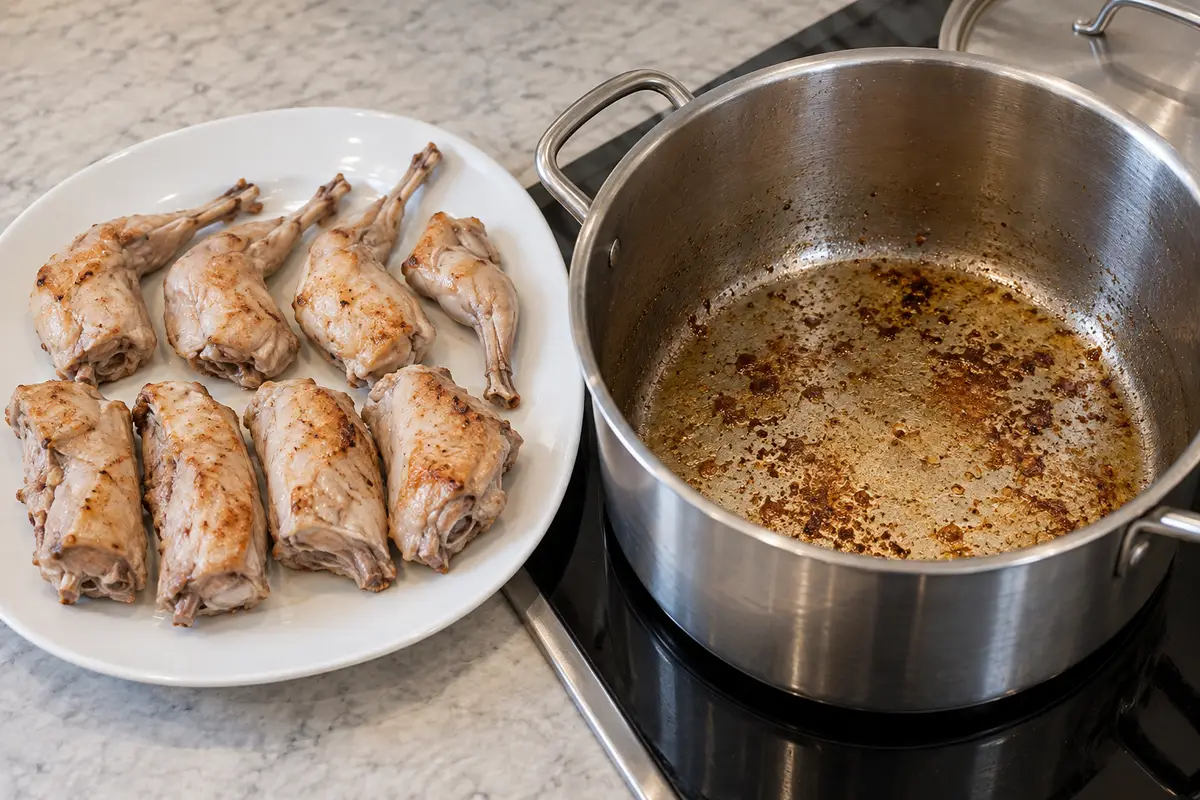
AI-generated Lower the heat to medium-low and add all 20 g butter and the onion to the remaining fat. Cook for about 5 minutes until the onion softens. Add the garlic and stir for about 30 seconds, then add the 20 g flour and stir for about a minute, without letting it brown deeply. Pour in the measured 100 ml water and scrape up the browned bits thoroughly with a spatula. Add the 300 ml water, the remaining 2 g salt, all the meat pieces, and the juices from the platter. The liquid will still be fairly thin; nestle the meat snugly together, without pressing it down, so it is partly submerged in the sauce.
Bring the liquid to a gentle boil, cover, and braise over low heat; the legs usually need about 60–90 minutes. Carefully turn the pieces halfway through this time. After about 30 minutes, add all the remaining 100 ml water; if the liquid evaporates heavily earlier, use that same measured reserve sooner and lower the heat. Do not add any water beyond this reserve. From about 30–40 minutes into braising, check the smaller body sections: once they are cooked and tender, transfer them to the second clean serving platter and cover. Leave the legs to braise until the meat next to the bone is hot, cooked all the way through, and separates easily with a fork. If they are still tough, continue braising gently with the lid on, checking about every 15 minutes.
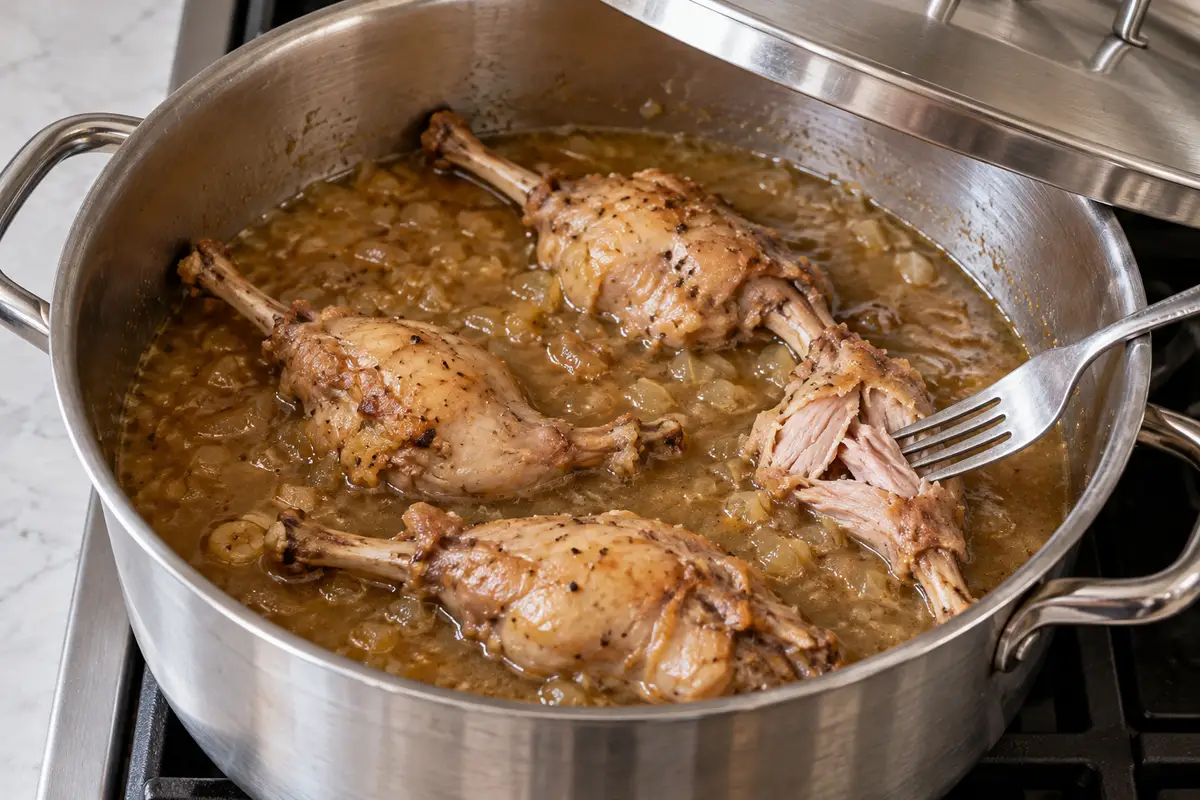
AI-generated Transfer the cooked legs to the platter with the meat removed earlier. Stir the sauce, scraping the softened onion from the bottom. It should be slightly thickened but run freely off a spoon; if it is very watery, cook uncovered over medium-low heat for about 3–5 minutes, stirring. Do not reduce it to a dry paste. Take the pot off the burner and wait for the bubbling to stop while you mix the cream and mustard.
In the bowl, mix all 200 ml cream with the 60 g Dijon mustard. Gradually add a few spoonfuls of hot liquid from the pot, stirring after each addition, until the creamy mixture is noticeably warm. Pour all of it back into the pot off the heat and stir into a smooth sauce. It should lightly coat a spoon, without separated lumps or an oily layer.
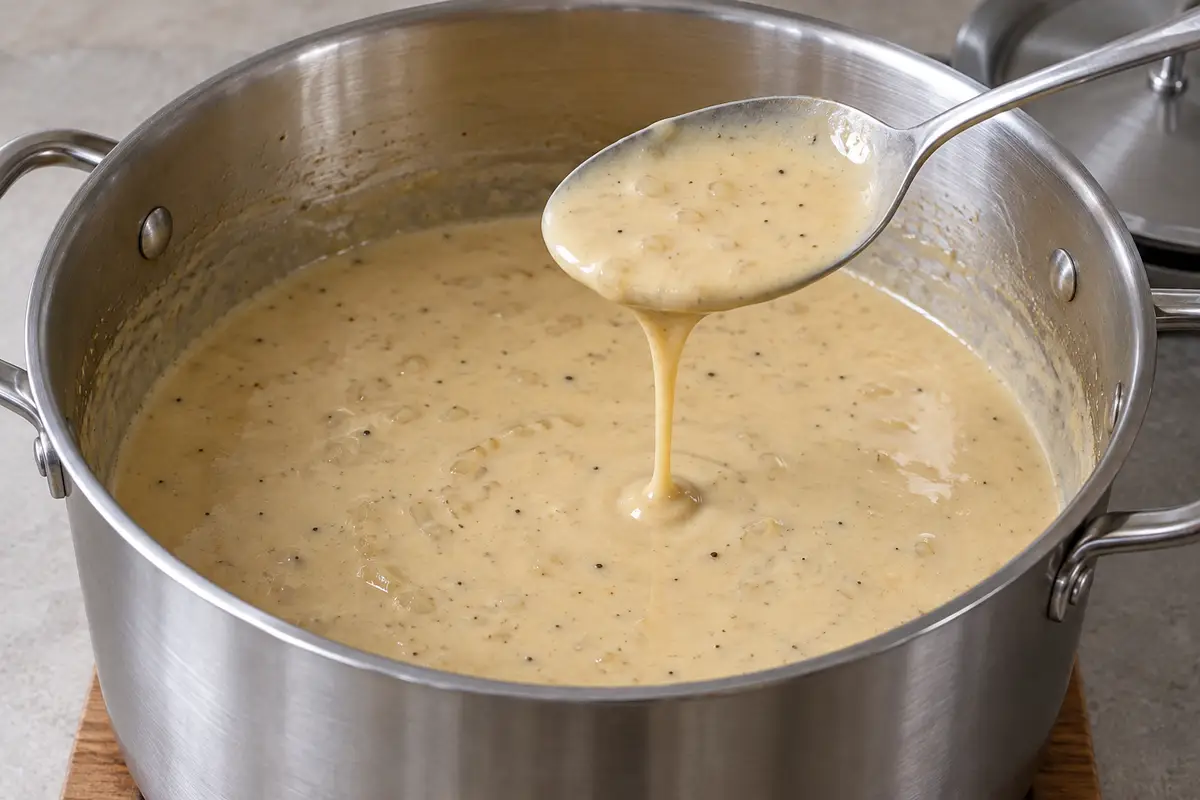
AI-generated Return all eight cooked pieces to the pot with the juices from the platter. Heat with the lid on over the lowest heat for about 5–8 minutes until the meat and sauce are hot; do not let it boil vigorously after adding the cream. Turn the pieces gently to coat them with sauce, without tearing the meat apart. The sauce should stay smooth and fluid.
Serve two rabbit pieces per person, pairing one leg with one body section. Divide the sauce with the onion among four portions.
Estimated nutrition

Rate this recipe
0 ratings
Comments