
AI-generated
Homemade Baked Pork and Poultry Pâté
Log in or create a free account to save recipes.
Source: https://recipheon.com/en/recipes/main-dishes/homemade-baked-pork-and-poultry-pate
About this recipe
Homemade baked pork and poultry pâté has a tender, firm center and a browned top, and slices easily once chilled. Pork shoulder and raw pork belly give the mixture substance, chicken thigh meat complements them, and a little liver deepens the flavor. The cooked meat, vegetables, and bread soaked in some of the cooking broth pass through a meat grinder twice, giving the pâté an even, fine texture. Eggs are added only after the mixture has cooled, and it is baked until the center is clearly set, not just until the top browns. After a brief initial cooling, the pâté goes into the refrigerator for six hours; this gives cohesive slices without drying out the inside. One large pan yields twelve servings.
Ingredients
Meat and cooking
600 g raw pork shoulder without bones, edible weight
200 g raw, unsmoked pork belly without skin, bones, or cartilage, edible weight
400 g raw chicken thigh meat without skin or bones, edible weight
200 g raw poultry liver, weighed after removing membranes and remaining blood vessels
150 g raw onion, weighed after peeling
120 g raw carrot, weighed after peeling
80 g raw celery root, weighed after peeling
1800 ml cooking water; exactly 200 ml of the resulting strained broth goes into the pâté, and the remaining broth and rendered fat are discarded
2 dried bay leaves, removed after cooking
4 whole allspice berries, removed after cooking
Mixture and pan
100 g soft white wheat bread, weighed without the crust; soaked in the reserved 200 ml broth, all of it stays in the mixture
3 eggs, size M
14 g fine salt
2 g ground black pepper
1 g ground nutmeg
20 g softened butter for greasing the pan
Steps
Cut the pork shoulder and belly into pieces about 4 cm across, and the chicken thigh meat into pieces about 3 cm across. Remove membranes and blood vessels from the liver, weigh out 200 g, and cut larger lobes so they are no more than about 2 cm thick; keep the liver and chicken refrigerated until needed. Do not rinse the meat, and do not rinse the liver; wash your hands, knife, and cutting board after contact with raw poultry. Cut the peeled 150 g onion, 120 g carrot, and 80 g celery root into large pieces.
Put the pork shoulder, belly, all the cut vegetables, 2 bay leaves, and 4 allspice berries in a pot with a capacity of about 5 l. Pour in 1800 ml water, bring to a boil, then reduce the heat so the broth simmers gently; cover with the lid slightly ajar. Cook for about 50 minutes, turning the meat once or twice, without adding extra water. Do not skim the fat from the surface: a small portion of the broth will be used in the mixture later.
Add all 400 g chicken to the pot and cook over low heat for another 30 minutes with the lid slightly ajar. Then add the liver and cook for another 10–15 minutes, keeping all the pieces submerged; gently reposition them with a spoon if they stick out of the liquid. The pork should separate easily under a fork, and the chicken and liver should be cooked all the way through, without a raw, soft center when the thickest piece is cut open. If the meat remains tough or undercooked, simmer gently for about 10 minutes longer and check again; do not set aside raw liver for grinding.
Lift out all the cooked meat, liver, onion, carrot, and celery root with a slotted spoon, draining over the pot, and spread in shallow layers on two large plates. Strain the broth through a sieve, discard the bay leaves and allspice berries, then stir the liquid to disperse the fat and immediately measure out exactly 200 ml. Pour it over the torn 100 g soft bread; discard the remaining broth and the rest of the rendered fat. Leave the meat, vegetables, and soaked bread for about 30 minutes until cooled to room temperature; do not squeeze out the bread, and do not drain any of the reserved 200 ml.
Prepare a meat grinder with a plate whose holes are about 3–4 mm across. Pass all the cooled meat, liver, all the cooked vegetables, and all the soaked bread with the reserved broth through it; scrape any soft bread and liquid left in the bowl into the ground mixture. Grind everything a second time through the same plate to make a fine, even mixture without large fibers. While grinding, start preheating the oven to 180°C on the conventional (no-fan) setting, with a rack in the middle.
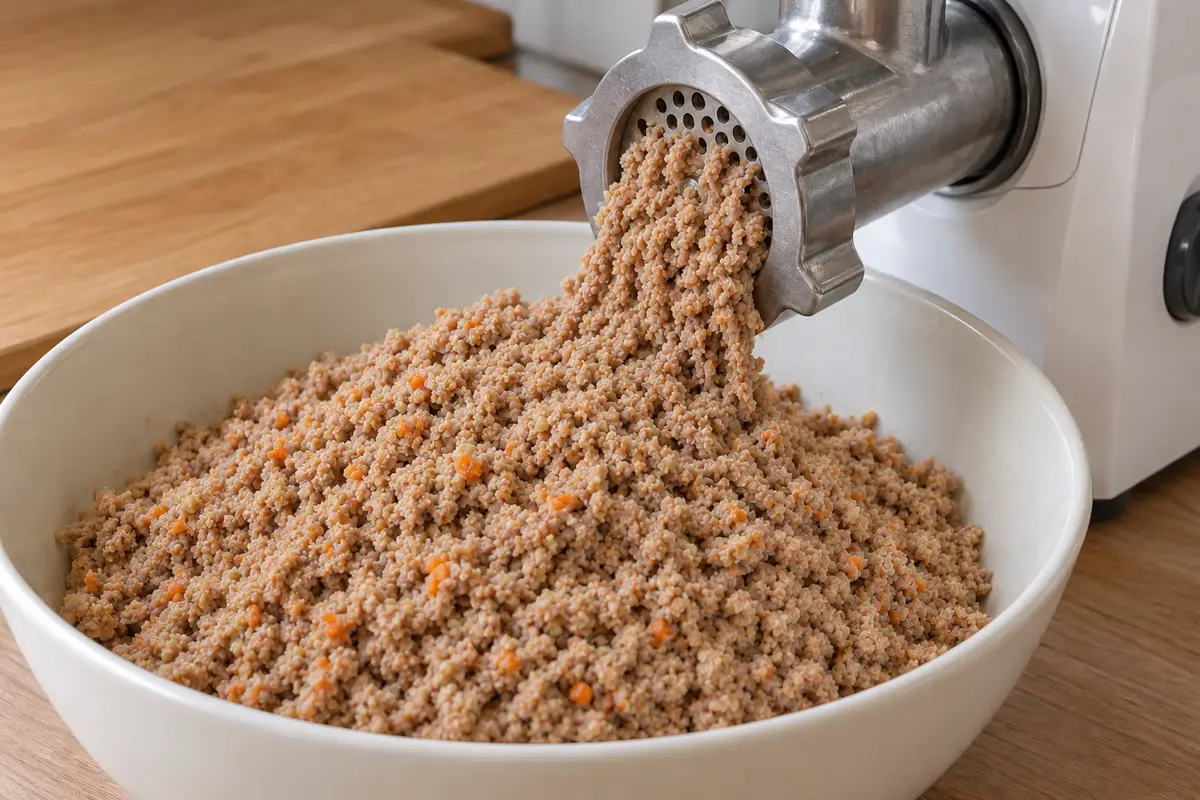
AI-generated Check that the ground mixture has cooled and is not hot. Add 3 eggs, 14 g salt, 2 g pepper, and 1 g nutmeg, then mix thoroughly with a spoon until uniform, soft, and thick enough to spread without flowing. Do not add more broth or other ingredients, and do not taste the mixture with raw eggs. Fill the pan immediately in the next step.
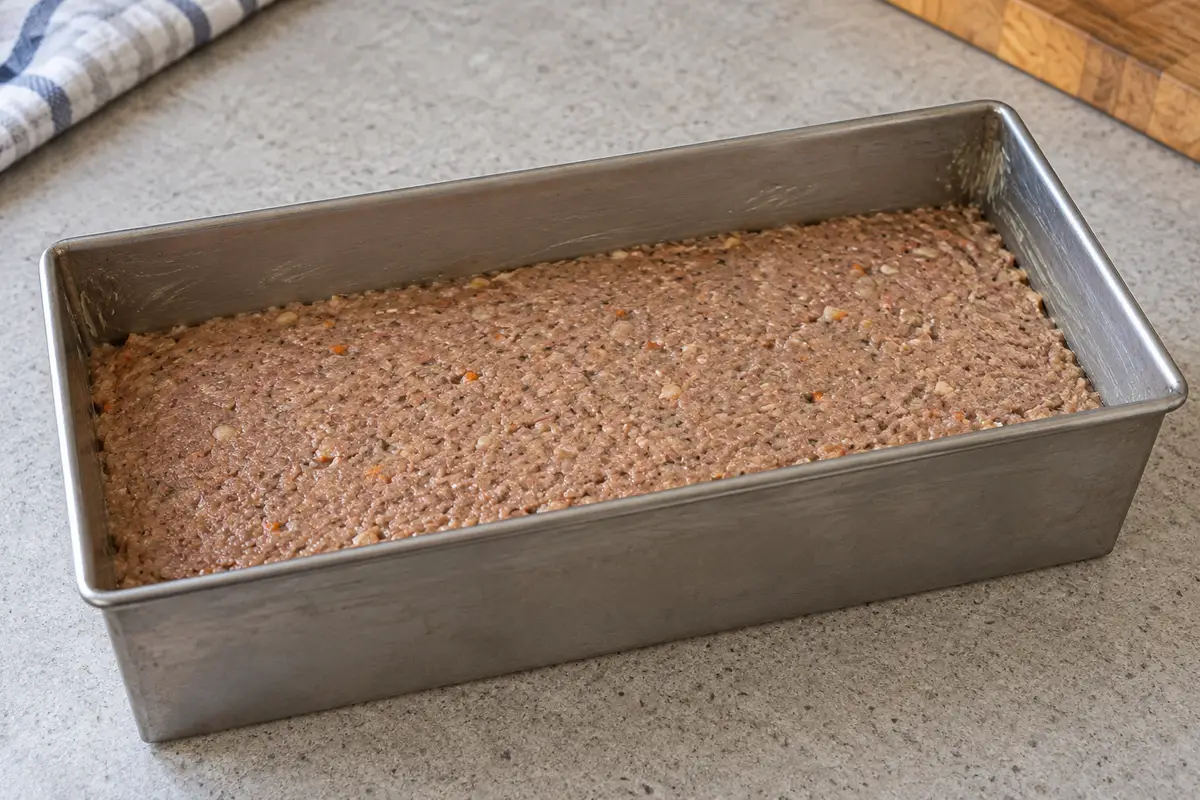
Use all 20 g butter to grease the base and sides of a metal loaf pan with internal dimensions of about 30 × 12 cm, a height of 8 cm, and a capacity of about 2.8 l. Transfer all the mixture, scraping the bowl thoroughly, and gently press with a spoon to remove larger air pockets. Level the top: the layer should be about 5–6 cm high, with at least 2 cm of space below the rim. Put it straight into the preheated oven.
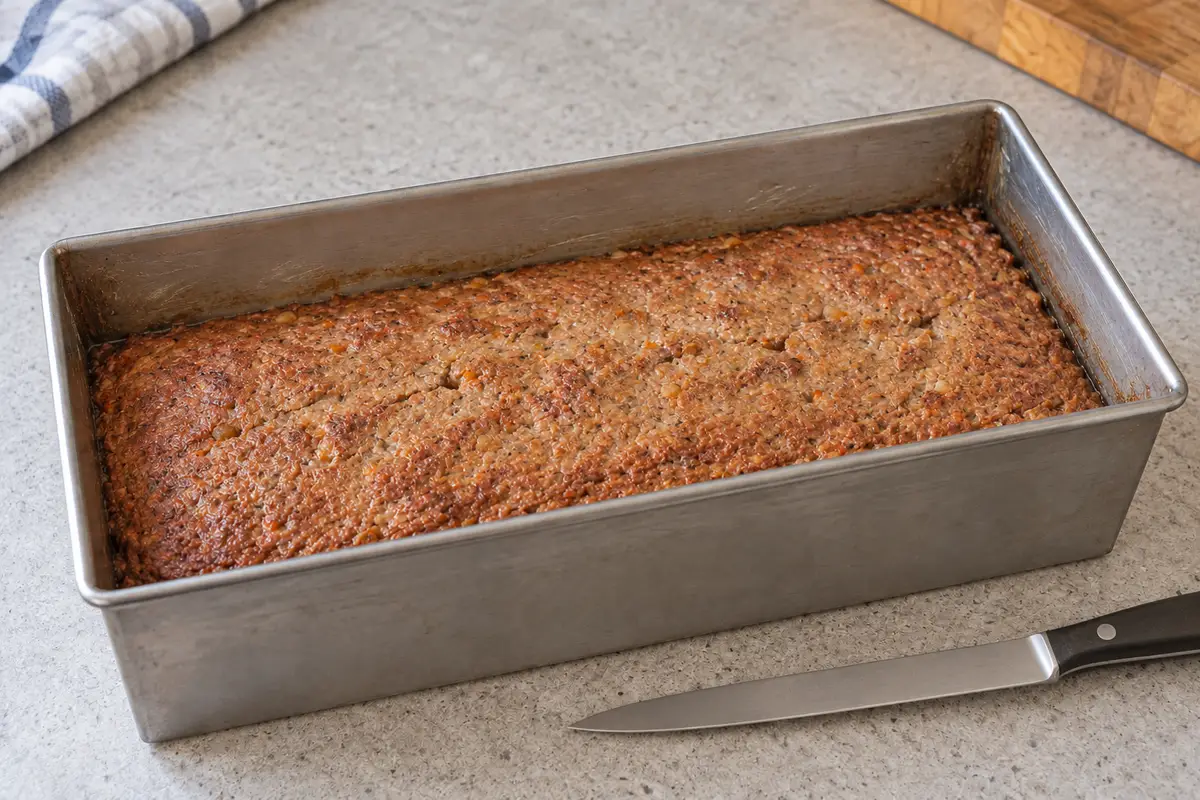
AI-generated Bake without covering for 65–75 minutes at 180°C on the middle rack. The top should brown, the edges pull slightly away from the pan, and the very center set and not wobble when the pan is moved gently. Insert a thin knife into the very center: the mixture clinging to it may be moist and finely textured, but it should not be liquid or resemble a raw egg mixture; do not expect a dry blade. If the center has not yet set, bake for about 10 more minutes and check again, loosely covering the top with foil if it is already well browned. Do not stop baking based only on the color of the crust.
AI-generated Take out the pan and set it on a wire rack for 20 minutes. Carefully loosen the edges with a thin knife, turn the pâté out onto a flat platter, and leave for about 10 more minutes until the heavy steaming stops; do not leave it on the counter for several hours. Refrigerate, loosely covered at first, no later than 2 hours after taking it out of the oven, then cover more tightly once cooled. Chill for at least 6 hours until the entire center is cold and firm; do not pour over any liquid or fat left in the pan.
Take the completely chilled pâté out of the refrigerator and use a sharp knife to cut it into 12 equal slices, about 2.5 cm thick. One slice is one serving; the pâté should retain its shape, with a fine, firm, slightly moist texture inside. Serve immediately after slicing.
Estimated nutrition

Rate this recipe
0 ratings
Comments