
AI-generated
Cheese Fondue
Log in or create a free account to save recipes.
Source: https://recipheon.com/en/recipes/main-dishes/cheese-fondue
About this recipe
Cheese fondue is a smooth, hot mixture of aged Swiss cheeses and white wine, served with pieces of bread. Gruyère brings a bold flavor, while Emmentaler adds a milder, slightly nutty note. Add the freshly grated cheeses gradually over low heat so they melt evenly and the fat does not separate. A little starch and lemon juice help create a uniform consistency that coats the bread without forming a solid lump. Keep the finished fondue on a warmer set to low heat: too much heat can scorch the bottom and split the cheese. The bread's crisp crust helps hold each cube on the fork during dipping. These quantities make a shared pot of fondue with bread for four servings.
Ingredients
Fondue and Bread
400 g aged Swiss Gruyère cheese made from cow's milk, edible weight without rind, to be freshly grated
400 g Swiss Emmentaler cheese made from cow's milk, edible weight without rind, to be freshly grated
350 ml dry white wine, divided: 320 ml for heating and 30 ml cold wine for the starch
20 g dry cornstarch
15 ml freshly squeezed lemon juice without seeds
6 g raw garlic, peeled weight; for rubbing the pot, then finely chopping and adding to the fondue
1 g ground black pepper
1 g ground nutmeg
600 g white wheat bread with a crisp crust, weight including crust, for dipping in the fondue
Steps
Remove the rinds from both cheeses, weigh out 400 g each of Gruyère and Emmentaler, then grate on the medium holes of a grater and mix in a bowl. Cut all 600 g bread into cubes about 2–3 cm across, keeping the crust to help hold each piece on the fork. Prepare a thick-walled metal fondue pot with a capacity of about 2 l, suitable for your stovetop, a fondue warmer with adjustable heat, and four forks. Do not put a serving-only vessel on the stovetop.
Cut the peeled garlic and rub the cut side over the bottom and lower sides of the pot. Then chop all the garlic used very finely and put it in the pot rather than throwing it away. In a small bowl, mix 20 g cornstarch with the reserved 30 ml cold wine to make a smooth slurry without lumps. Reserve the remaining 320 ml wine for heating in the next step.
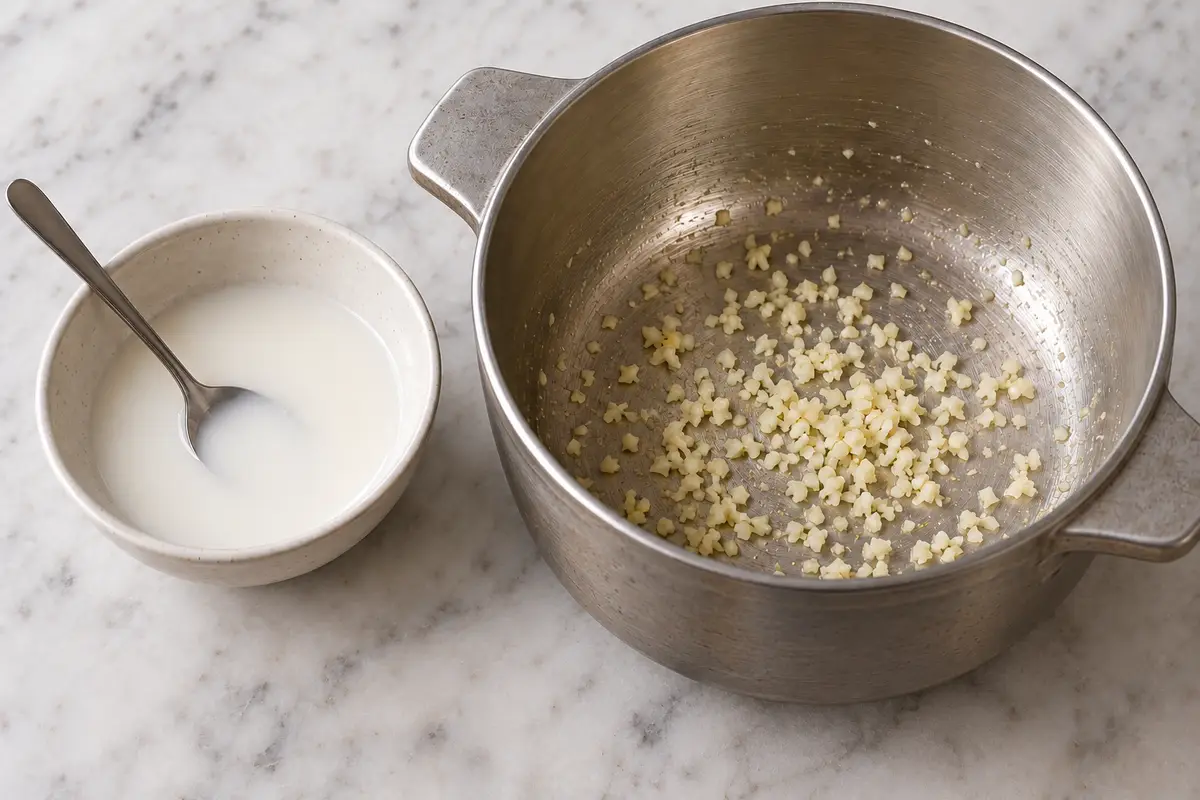
AI-generated Pour 320 ml wine and all 15 ml lemon juice into the pot with the garlic. Heat over medium-low heat for about 3–5 minutes until the liquid is hot and small bubbles begin to appear around the edges. Reduce the heat to low; do not boil the wine for long or vigorously. Start adding the cheeses immediately.
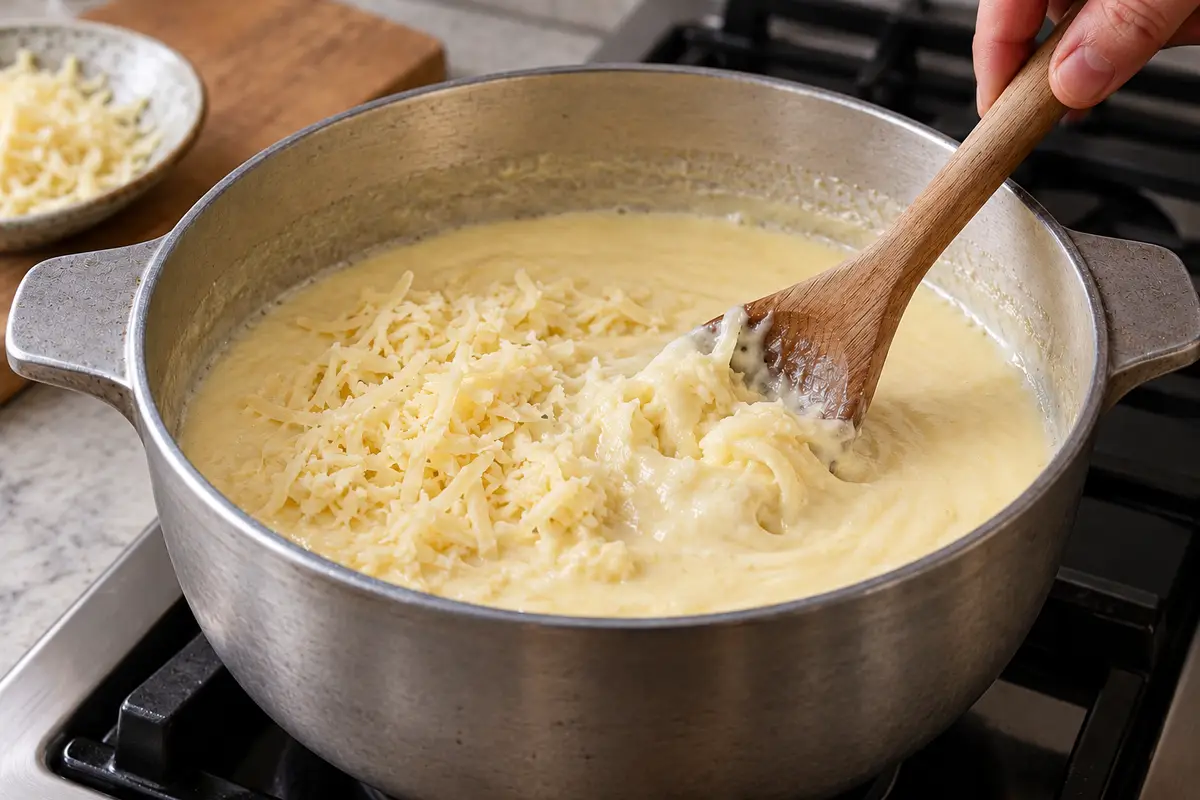
Add the mixed cheeses in 6–8 small portions, stirring across the bottom with a wooden spoon. Add each portion once the previous one has almost melted, using all 800 g cheese. Heat over low heat for about 10–15 minutes until the mixture is uniform and hot; do not let it boil vigorously. If it starts bubbling strongly or sticking, briefly remove the pot from the burner, stir, and return it to a lower heat setting rather than increasing the heat.
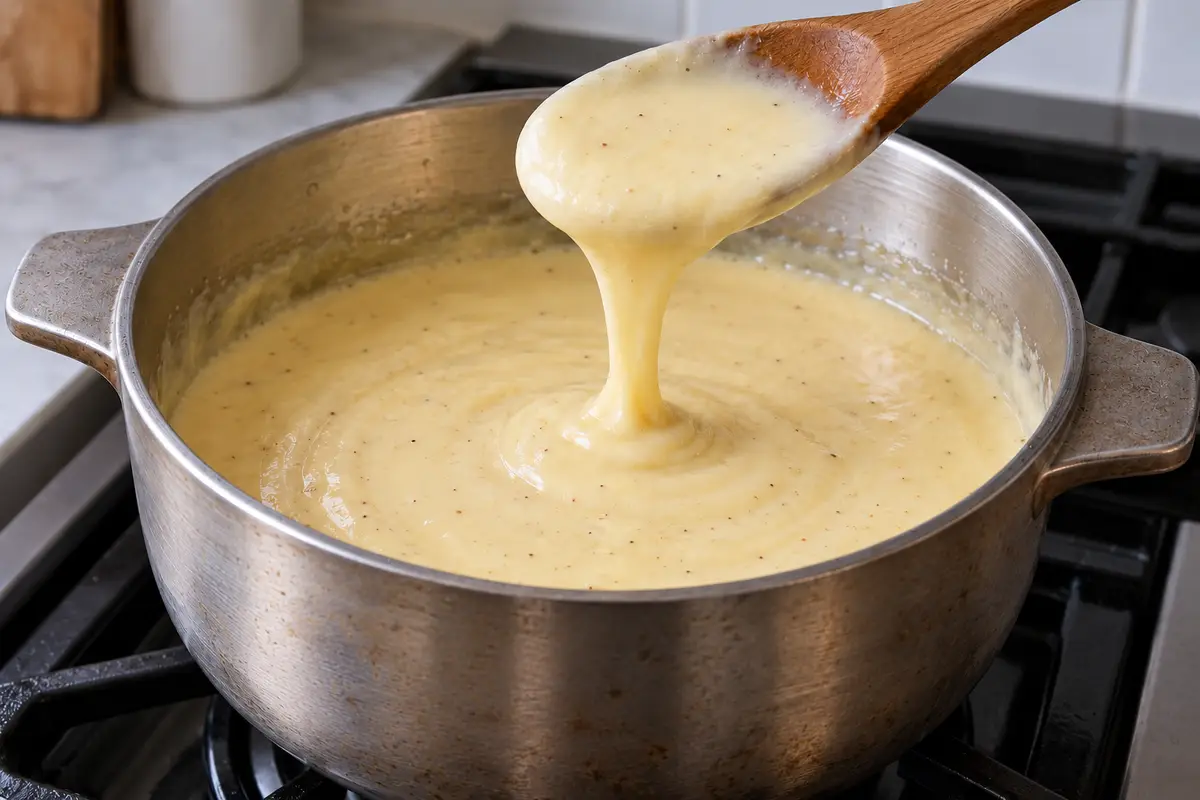
AI-generated Stir the starch slurry again, pour all of it into the melted cheeses, and mix thoroughly with the spoon. Heat gently for 2–3 minutes, stirring constantly, until the starch thickens the mixture and the fondue becomes smooth, glossy, and uniform; small bubbles at the edge are fine, but the mixture should not boil vigorously. Add 1 g pepper and 1 g nutmeg. The fondue should fall from the spoon in a thick ribbon, without a separate pool of fat and without lumps of starch.
AI-generated Spear one prepared bread cube on a fork and dip it into the fondue. When lifted, it should have an even coating of cheese, with the excess slowly dripping back into the pot; do not expect a completely motionless mixture or long strands that harden. If the fondue has cooled and become too thick, heat it briefly over low heat, stirring, until it smoothly coats the bread again. Do not add wine, water, or cheese beyond the measured amounts.
Move the pot onto a stable fondue warmer set to low heat. Divide the prepared bread among four people, about 150 g per serving, and serve with the fondue. Stir every few minutes while eating, reaching the bottom; the mixture should stay warm and fluid, without noticeable boiling, so adjust the warmer rather than adding liquid. Serve immediately.
Estimated nutrition

Rate this recipe
0 ratings
Comments