
AI-generated
Greek Pasta Casserole with Meat and Béchamel
Log in or create a free account to save recipes.
Source: https://recipheon.com/en/recipes/main-dishes/greek-pasta-casserole-with-meat-and-bechamel
About this recipe
This casserole layers tubular pasta, thick meat sauce with cinnamon, and thick, smooth béchamel with a browned top. The pasta cooks until still firm because it will bake under the sauce. The beef and tomatoes must reduce well: a watery filling softens the bottom layer and makes slicing difficult. Cinnamon gives the meat its distinctive aroma, while hard aged cheese adds flavor to the pasta and béchamel. Egg whites bind the cooled pasta; the yolks are tempered before going into the slightly cooled sauce. Keep three distinct layers and do not mix the meat into all the pasta. After baking, the casserole needs half an hour to rest so the portions hold their shape. One deep pan makes eight servings.
Ingredients
Pasta and Meat Sauce
400 g dry wheat bucatini pasta, long tubes with a hole through the center
600 g raw ground beef, about 10–15% fat, without added water or salt; rendered fat remains in the sauce
150 g raw onion, peeled weight
10 g raw garlic, peeled weight
500 g tomato passata without added salt or seasonings
30 g double-concentrated tomato paste
100 ml dry red wine
30 ml olive oil, divided: 25 ml for the meat sauce and 5 ml for the pan
3000 ml water for cooking the pasta; drained after cooking, with the portion absorbed by the pasta remaining in the dish
25 g fine salt, divided: 15 g for the pasta water, 6 g for the meat, and 4 g for the béchamel; the pasta water is drained
2 g ground cinnamon
2 g dried oregano
1 g ground black pepper
1 dried bay leaf, removed after cooking the sauce
Béchamel and Binding the Layers
100 g butter, all for the béchamel
100 g dry all-purpose flour
1000 ml whole milk
150 g finely grated hard aged cow's-milk cheese made with rennet, weight without inedible rind, divided: 50 g for the pasta, 70 g for the béchamel, and 30 g for the top
2 eggs, size M, about 100 g without shells; both whites for the pasta, both yolks for the béchamel
1 g ground nutmeg
Steps
Finely chop 150 g peeled onion and 10 g garlic. Prepare a wide saucepan or deep frying pan about 28 cm in diameter, a 5 l pot for the pasta, a saucepan with a capacity of about 3 l for the béchamel, and a metal baking pan with internal dimensions of about 30 × 22 cm and a height of 8 cm. Weigh out 150 g grated cheese and divide into portions of 50 g, 70 g, and 30 g, keeping them separate for their respective stages.
Heat 25 ml olive oil in the wide saucepan over medium heat. Add the onion and cook for 5–7 minutes until soft, then add the garlic and stir for about 1 minute. Add all 600 g beef and cook for 8–10 minutes, breaking up larger clumps with a spatula, until the meat is no longer raw and lightly browned in places. Leave all the fat and juices in the pan, without draining.
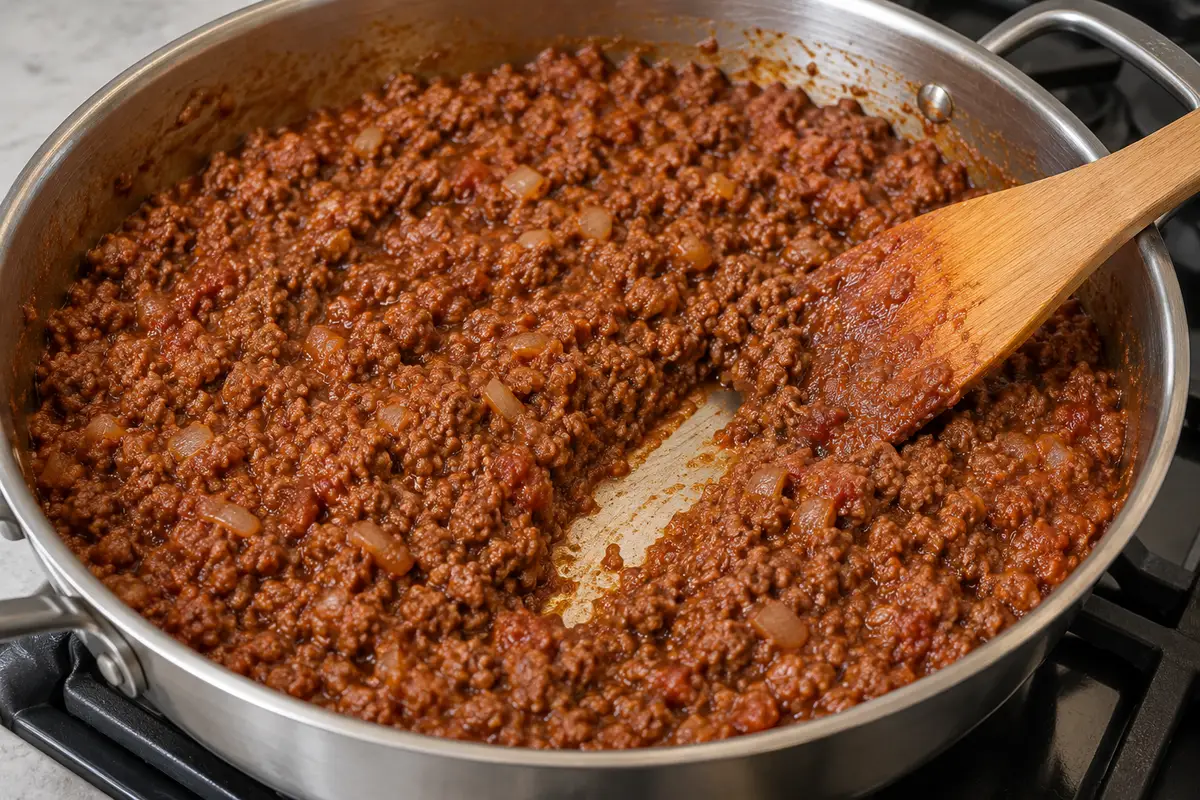
Add 30 g tomato paste and stir for about 1 minute, then pour in 100 ml wine and cook for 2–3 minutes until the strong alcohol smell fades. Add all 500 g passata, 6 g salt, 2 g cinnamon, 2 g oregano, 1 g pepper, and the bay leaf. Simmer uncovered over low heat for 25–30 minutes, stirring, until the meat is thoroughly cooked and the sauce is thick, without a separate watery puddle; a trail drawn through it with a spatula should remain visible briefly. Remove the bay leaf; if the filling is still watery, reduce it for about 5 more minutes, without adding water. Cook the pasta as described in the next step while the sauce reduces.
AI-generated Bring 3000 ml water with 15 g salt to a boil in the pot and add all 400 g bucatini. Cook at a gentle boil for about 7–9 minutes, stirring at the start, until the tubes soften on the outside but remain distinctly firm inside; do not overcook them before baking. Drain through a sieve, pour away the water, and do not rinse the pasta. Spread the tubes in a large bowl and leave for about 10 minutes, stirring once or twice, until they stop steaming heavily and are only lukewarm. Meanwhile, prepare the béchamel so cooling the pasta does not add a separate wait.
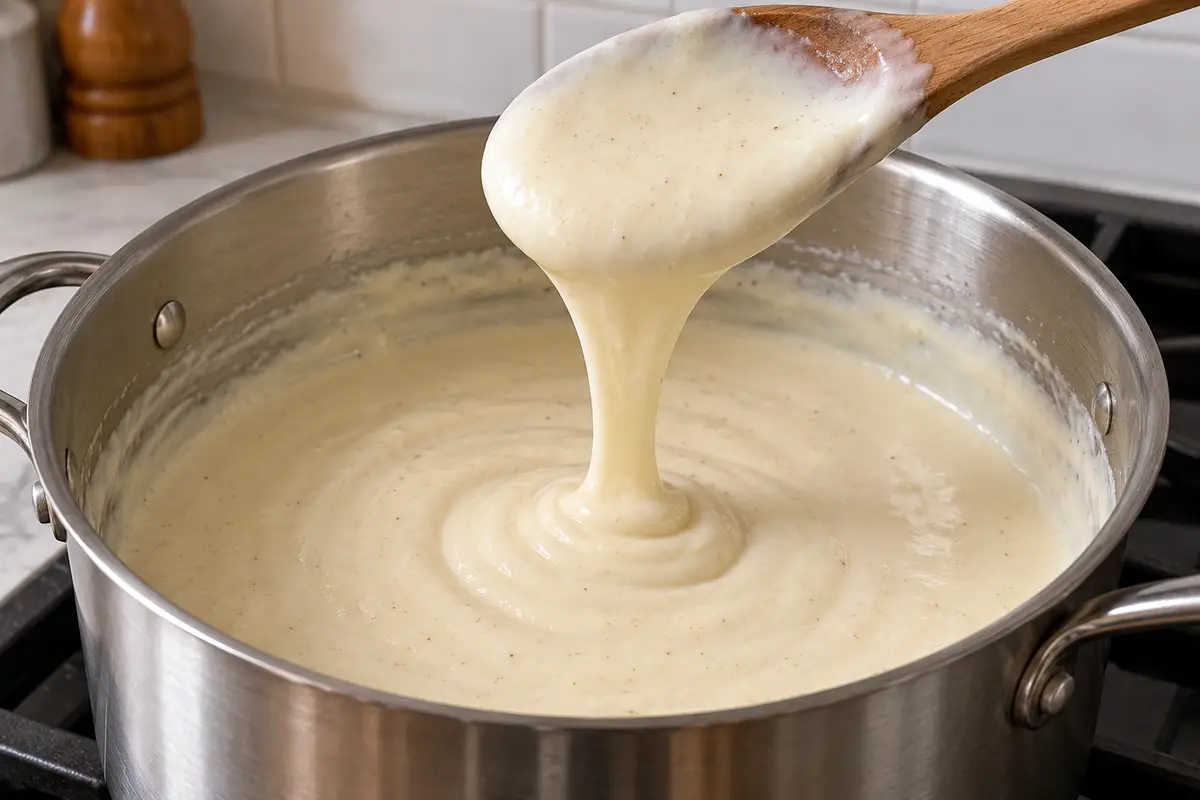
Start preheating the oven to 180°C on the conventional setting without a fan. Melt 100 g butter in the saucepan over low heat. Add all 100 g flour and whisk for 2 minutes, keeping it pale, then gradually add all 1000 ml milk, whisking out lumps after each addition. Add the remaining 4 g salt and 1 g nutmeg, and cook at a gentle boil for 8–10 minutes, stirring constantly, until the flour is cooked through and the sauce is smooth and very thick, falling from a spoon in a broad ribbon. Remove from the heat, stir in 70 g cheese, and leave for 5 minutes, stirring once, so the béchamel is no longer boiling hot. During this brief cooling time, prepare the eggs and pan as described in the next step.
AI-generated Grease the bottom and sides of the pan with the remaining 5 ml olive oil. Separate both whites from both yolks into two clean small bowls, without discarding any egg contents. Lightly beat the whites and mix with the lukewarm pasta, which is no longer hot, and 50 g cheese. Beat the yolks, gradually stir 3 tablespoons of warm béchamel into them, then pour the mixture into the rest of the sauce and combine thoroughly off the heat. Do not taste mixtures containing raw eggs, and immediately assemble the casserole for full baking.
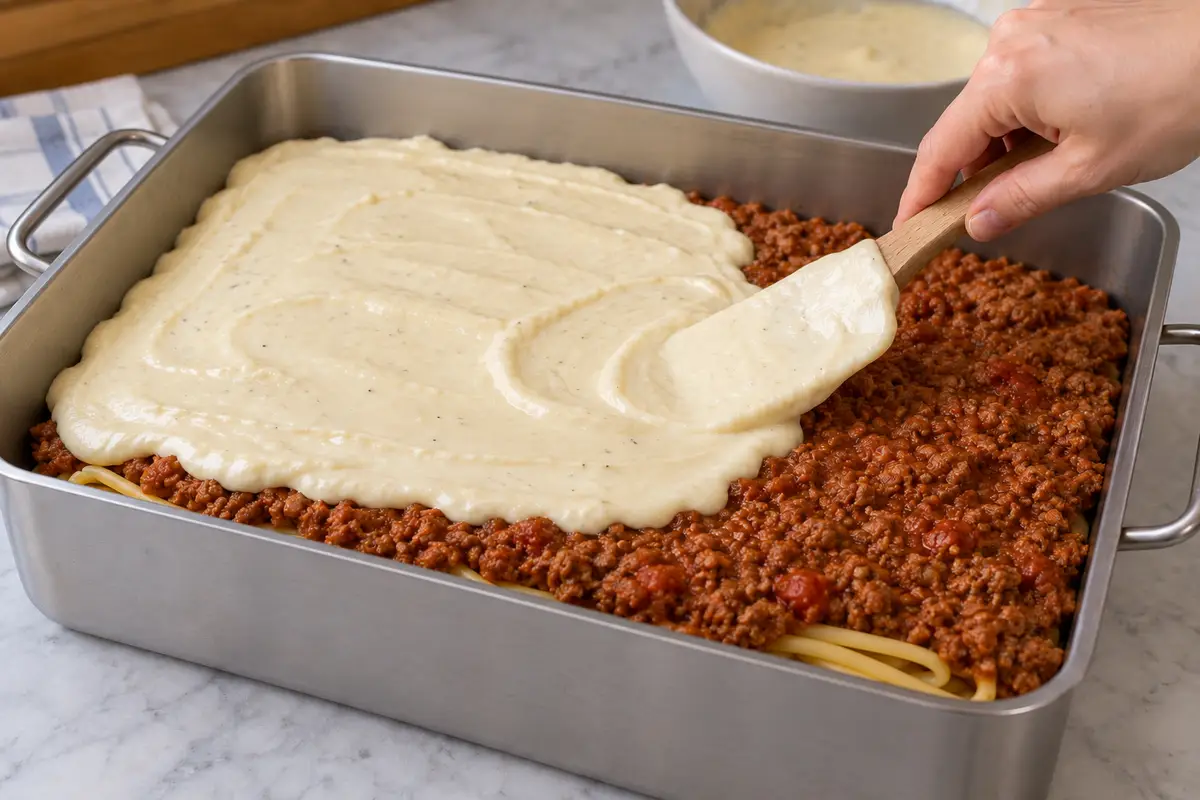
Spread all the pasta over the bottom of the pan, arranging the tubes in the same direction where possible and gently leveling without pressing down firmly. Spread all the thick meat sauce over the pasta, then all the béchamel with yolks over the meat, scraping the containers thoroughly. Smooth the top and sprinkle with the remaining 30 g cheese. The assembled layers should be about 5–6 cm high, with at least 2 cm of space below the rim; keep the layers separate rather than mixing the filling into the pasta. Place in the preheated oven.
AI-generated Bake uncovered for 40–50 minutes at 180°C on the middle rack. The top should be golden brown, the sauce at the edges should bubble gently, and the center should be clearly set and not ripple when the pan is moved gently. Near the end, insert a thin knife into the center down to the pasta layer: the mixture should be hot and set, without liquid egg sauce or a raw, sticky layer, though it may remain moist. If the center is not ready yet, bake for about 10 more minutes and check again; if the top is already deeply browned, cover it loosely with foil. Do not judge doneness solely by the color of the cheese.
Remove the pan and let the casserole rest for 30 minutes without covering, so the layers stabilize before slicing. Cut into eight equal rectangular portions, for example by dividing the longer side into four sections and the shorter side into two. Lift each portion out with a wide spatula and serve still warm, keeping the pasta, meat, and béchamel layers visible.
Estimated nutrition

Rate this recipe
0 ratings
Comments