
AI-generated
Salt-crusted gilthead sea bream
Log in or create a free account to save recipes.
Source: https://recipheon.com/en/recipes/main-dishes/salt-crusted-gilthead-sea-bream
About this recipe
Baking gilthead sea bream in a salt crust is a Spanish way to prepare delicate fish that is cleaned after cooking. Coarse salt moistened with water forms a shell around whole gutted fish with their skin and scales left on. There is no need for egg whites or extra fat for baking. Do not score the sides and do not press salt into the cavity. After a brief wait, the hot crust is broken open, the skin is removed and the flesh is lifted from both sides of the backbone. Only the cleaned flakes go onto the plates, dressed with measured olive oil and lemon juice. The crust, skin, heads and bones are discarded. These quantities make two portions of fish, without potatoes, bread or other sides. Have everything ready for serving before taking out the baking sheet, as the fish should not stay in the hot salt for long.
Ingredients
Fish and baking crust
2 whole raw gilthead sea bream (Sparus aurata), about 600 g each after gutting, with heads, skin, scales and bones
2500 g coarse sea salt for the crust, which will be discarded after baking
250 g water to moisten the salt
To serve
20 g olive oil
30 g freshly squeezed lemon juice, without seeds or peel
Steps
Ask the fishmonger to gut the sea bream, preferably through the gills, leaving the heads, scales and uncut skin along the sides intact. The fish should be similar in size. If gutted through a small belly incision, bring its edges together and do not put salt inside. Remove any visible remains of the innards and pat the fish thoroughly dry with paper towels. Preheat the oven to 200°C with conventional top and bottom heat. Have ready a rimmed baking sheet about 35 × 30 cm, large enough for both fish to lie side by side without overlapping.
Mix all the coarse salt with all the water in a large bowl. It should resemble damp sand and hold together when pressed lightly, without water pooling at the bottom. Spread some of the salt on the baking sheet in a layer about 1 cm thick, covering only the area needed beneath the fish. Lay the sea bream side by side on it, leaving a small gap between them. Position the closed belly openings so they do not fill with salt.
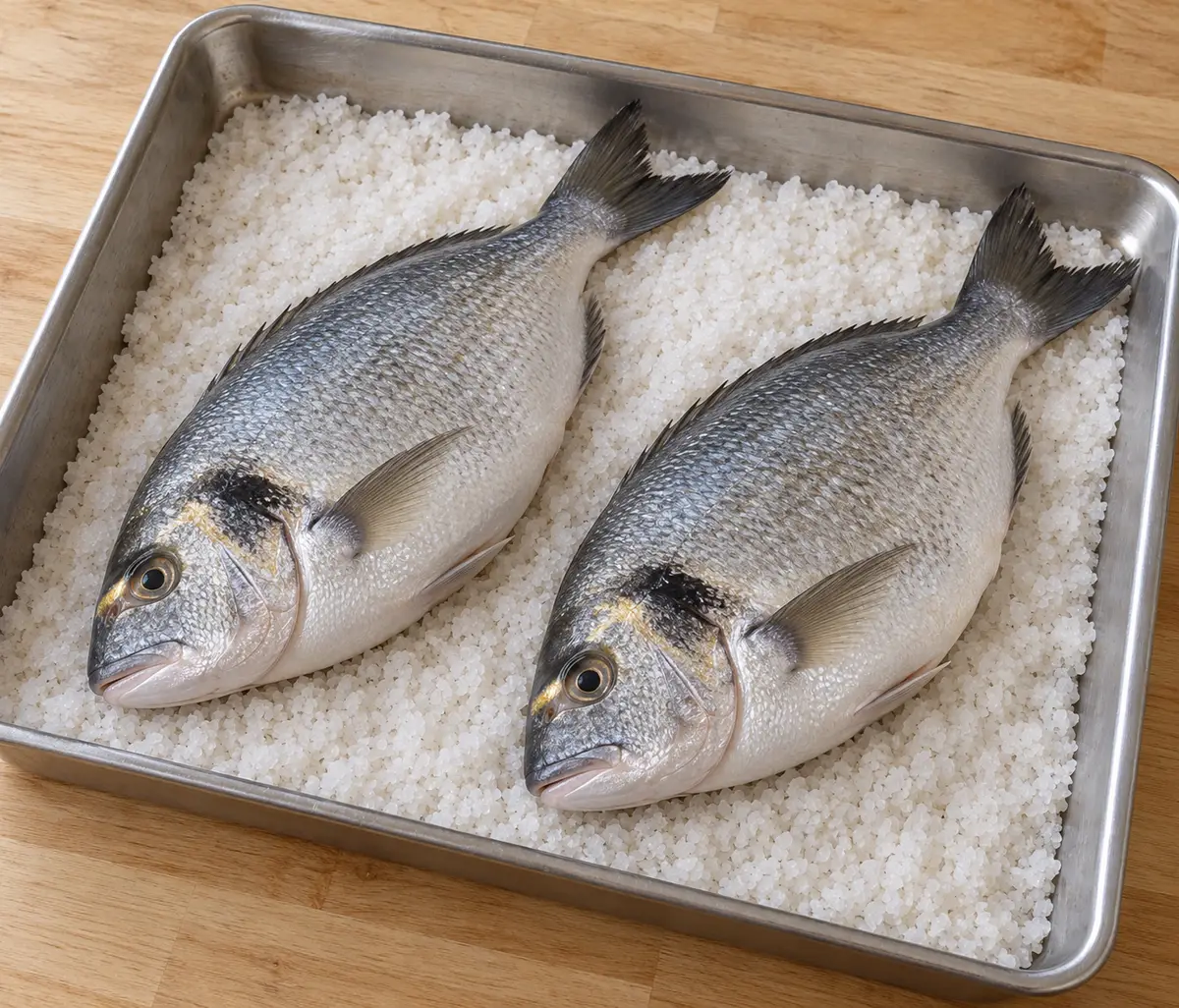
AI-generated Cover the tops and sides of both fish with the remaining moist salt, including their heads and tails. Form a firm shell about 1 cm thick around each fish and press it gently, without opening the belly. Use all the prepared salt, filling in any thinner areas. The crust should cover the fish evenly, without large gaps and without pressing salt under the skin.
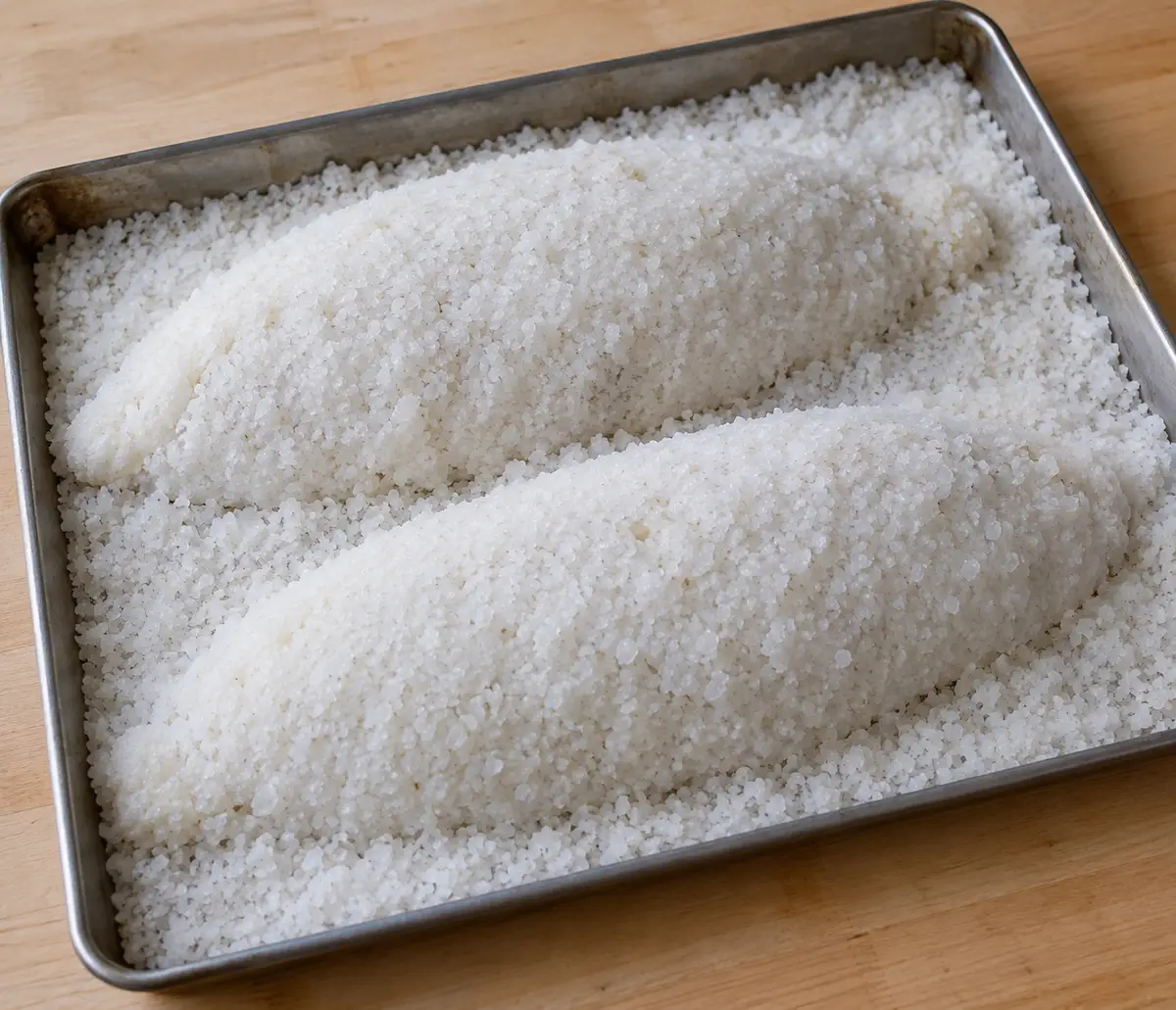
AI-generated Place the baking sheet on the middle rack of the fully preheated oven. Bake for about 25–30 minutes for sea bream weighing about 600 g each. The time relates to the size of one fish; baking two side by side does not mean doubling it. The salt should harden into a firm crust but does not need to brown deeply. Do not open the oven every few minutes. Toward the end, prepare two warm plates and all the measured olive oil and lemon juice.
After taking out the baking sheet, wait about 2 minutes. Carefully tap the crust with the back of a large spoon and lift it off in large pieces, watching out for hot steam. Do not leave the fish in the salt for a long rest. Brush loose crystals off the skin, remove the upper skin and lift out the flesh from the first side. The fish should be cooked through its full thickness, and the flakes should come away from the backbone easily. If raw flesh remains next to the backbone when uncovered, remove its salt and skin, transfer it to a clean ovenproof dish and bake for about another 3–5 minutes, longer if needed. Lift out the backbone with the head, remove the flesh from the second side and pick out any small bones. Discard all the crust, skin, heads and bones; do not collect the salty liquid from the bottom of the baking sheet.
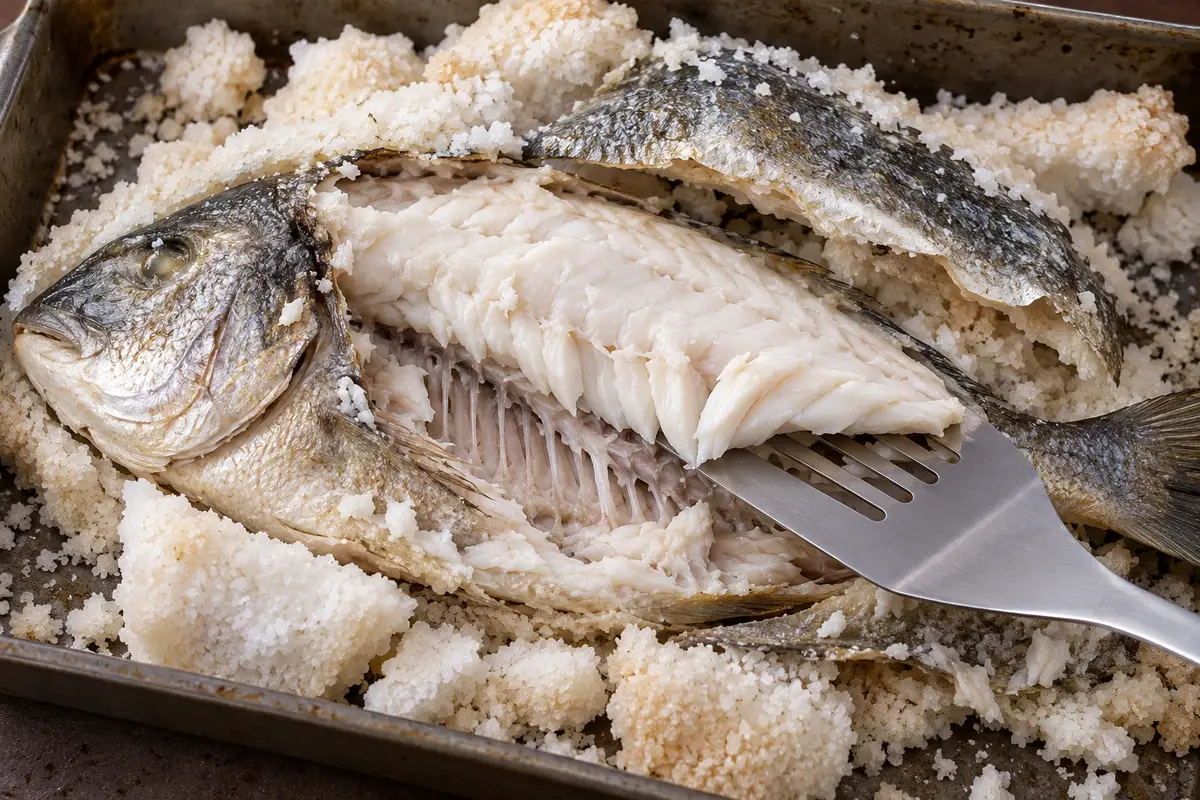
AI-generated Place the cleaned flesh of one sea bream on each plate. Divide all the olive oil and all the lemon juice equally between the two portions and gently drizzle over the fish. Do not automatically add salt after baking in the crust. Serve immediately, without leaving the flesh on the hot salt. Cool any leftover cleaned fish quickly, seal in a container and refrigerate until the next day at the latest; reheat gently until hot throughout.
Estimated nutrition

Rate this recipe
0 ratings
Comments