
AI-generated
Spinach and Ricotta Gnudi with Sage Butter
Log in or create a free account to save recipes.
Source: https://recipheon.com/en/recipes/main-dishes/spinach-and-ricotta-gnudi-with-sage-butter
About this recipe
Gnudi are tender Tuscan spinach and ricotta dumplings served with lightly browned butter and sage. They resemble ravioli filling without the pasta wrapper: soft, slightly irregular and full of finely chopped leaves. Thoroughly draining the ricotta and firmly squeezing the cooled spinach determine their texture. A little flour binds the mixture but should not turn the dumplings into hard balls. Cook one test dumpling first, then lower the rest into gently simmering water in batches. Including draining the cheese and chilling the mixture, preparation takes about 3 hours 30 minutes; very wet ricotta may need longer to drain.
Ingredients
Dumplings, butter and cooking water
350 g full-fat cow’s-milk ricotta, weighed after draining; start with about 450 g before draining
500 g raw fresh spinach leaves, washed and drained
50 g finely grated Parmigiano Reggiano without the hard rind; 40 g for the mixture and 10 g for serving
1 whole egg, size M
110 g all-purpose flour: 60 g for the mixture, 20 g reserved for thickening if needed and 30 g for coating and dusting the tray; do not serve unused flour
60 g unsalted butter (82% fat)
4 g fresh sage leaves without stems
0.3 g ground nutmeg
0.5 g ground black pepper
16 g fine salt: 4 g for the mixture and 12 g for the water
3000 ml water for cooking the dumplings; discard the water after cooking
Steps
Put the ricotta in a fine-mesh sieve set over a bowl and refrigerate for about 2 hours. It should be firm, without freely draining whey; if still wet, drain longer. Weigh out 350 g drained ricotta for the dumplings. Save the drained liquid and any extra cheese for another use outside this recipe.
While the ricotta drains, put the washed, drained spinach in a pot, cover and heat over low heat for about 7–8 minutes, stirring once, until the leaves wilt completely in their own moisture. Transfer to a sieve and cool, then squeeze very firmly by hand until no juice comes out when pressed. Finely chop the leaves and refrigerate until needed for the mixture. Use all the squeezed spinach; its weight will usually fall to about 150–200 g. Do not add the drained liquid to the dumplings.
In a bowl, combine the cold chopped spinach, drained ricotta, egg, 40 g Parmesan, 60 g flour, 4 g salt, nutmeg and pepper. Mix with a fork just until evenly combined, without prolonged kneading. The mixture should be soft but hold together in a ball. Cover and refrigerate for about 30 minutes.
Bring the water and remaining 12 g salt to a boil in a wide pot, then reduce the heat to a very gentle simmer. Use some of the 30 g coating flour to dust a tray and your hands. Shape one dumpling the size of a small walnut, coat lightly in flour and lower into the water. Once it floats, cook for about 2 more minutes, usually about 4–5 minutes in total, then lift out with a slotted spoon. If it holds its shape, set it aside for serving; if it falls apart, mix 10 g of the reserved flour into the mixture, chill for about 15 minutes and test again. Use the remaining 10 g reserve if needed, without adding flour beyond the stated 110 g.
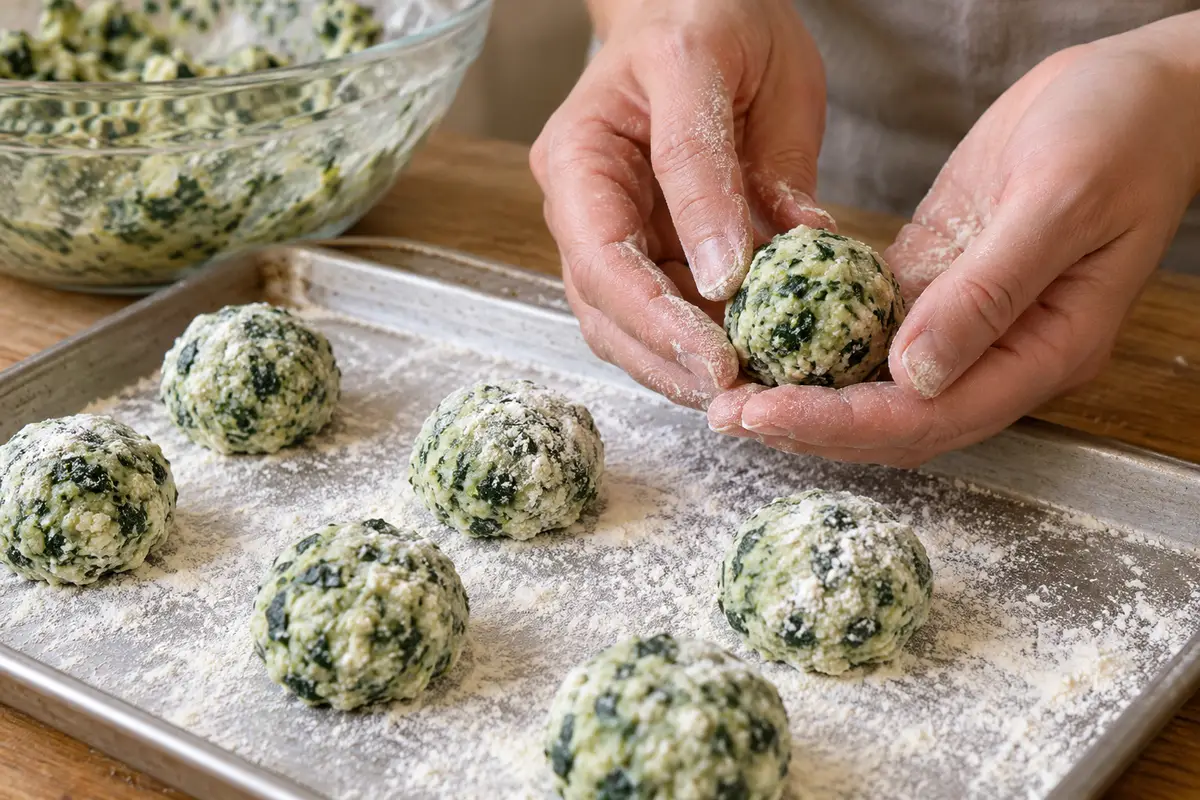
Shape the remaining mixture into slightly irregular balls the same size as the test dumpling, without pressing firmly. Gently roll them in the remaining coating flour and place on the dusted tray, leaving gaps. You should have about 28 gnudi including the successful test dumpling, or about 7 per serving. Discard any unused flour from the tray and reserve.
AI-generated Melt the butter in a large skillet over medium-low heat and add the dried-off sage leaves. Heat for about 3–5 minutes, until the leaves are slightly crisp and the milk solids on the bottom are light golden and smell nutty. Remove the skillet from the burner immediately so the butter does not darken and does not turn bitter.
Cook the remaining gnudi in the same water in three batches of about 9, keeping it at a very gentle simmer. Once they float, leave them for about 2 more minutes, usually about 4–5 minutes in total, then lift out and drain briefly. Transfer to the skillet of butter; add the saved test dumpling too. Over low heat, gently spoon butter over the dumplings briefly, without tossing or frying. Divide among four servings with the sage and butter from the skillet and the remaining 10 g Parmesan. Serve immediately.
Estimated nutrition

Rate this recipe
0 ratings
Comments