
AI-generated
Stegt flæsk — crisp pork belly with parsley sauce
Log in or create a free account to save recipes.
Source: https://recipheon.com/en/recipes/main-dishes/stegt-flaesk-crisp-pork-belly-with-parsley-sauce
About this recipe
Stegt flæsk is a Danish dish of fresh pork belly served with parsley sauce and boiled potatoes. Thick slices of meat roast on a rack, allowing fat to drip into the pan while the edges turn golden and crisp. Use raw, skin-on pork belly that has not been cured or smoked. Make the sauce with a pale roux, milk and plenty of chopped parsley; it should coat the potatoes while remaining fluid enough to spoon over them. Cook the potatoes while the meat roasts and add the parsley toward the end of cooking the sauce to keep its fresh flavor. The recipe makes four portions of all three components. Set aside the fat rendered into the roasting pan; it does not go into the sauce or onto the plates.
Ingredients
Crisp pork belly
1 kg fresh, raw pork belly without bones, with skin, uncured and unsmoked, sliced about 7–8 mm thick
4 g fine salt
Boiled potatoes
800 g peeled waxy potatoes
1.5 l water for boiling, to be drained away
6 g salt for the water
Parsley sauce
25 g unsalted butter
25 g all-purpose flour
500 ml milk with 2% fat
30 g fresh parsley, leaves and tender upper stems
3 g fine salt
Steps
Preheat the oven to 220°C with conventional top and bottom heat, without the fan. Pat the pork belly slices dry with paper towels. Arrange in a single layer on a large metal rack set over a deep roasting pan to catch the fat; the slices should not overlap. You can cut long pieces in half. The meat must not touch the bottom of the pan or the dripping fat. Do not add oil.
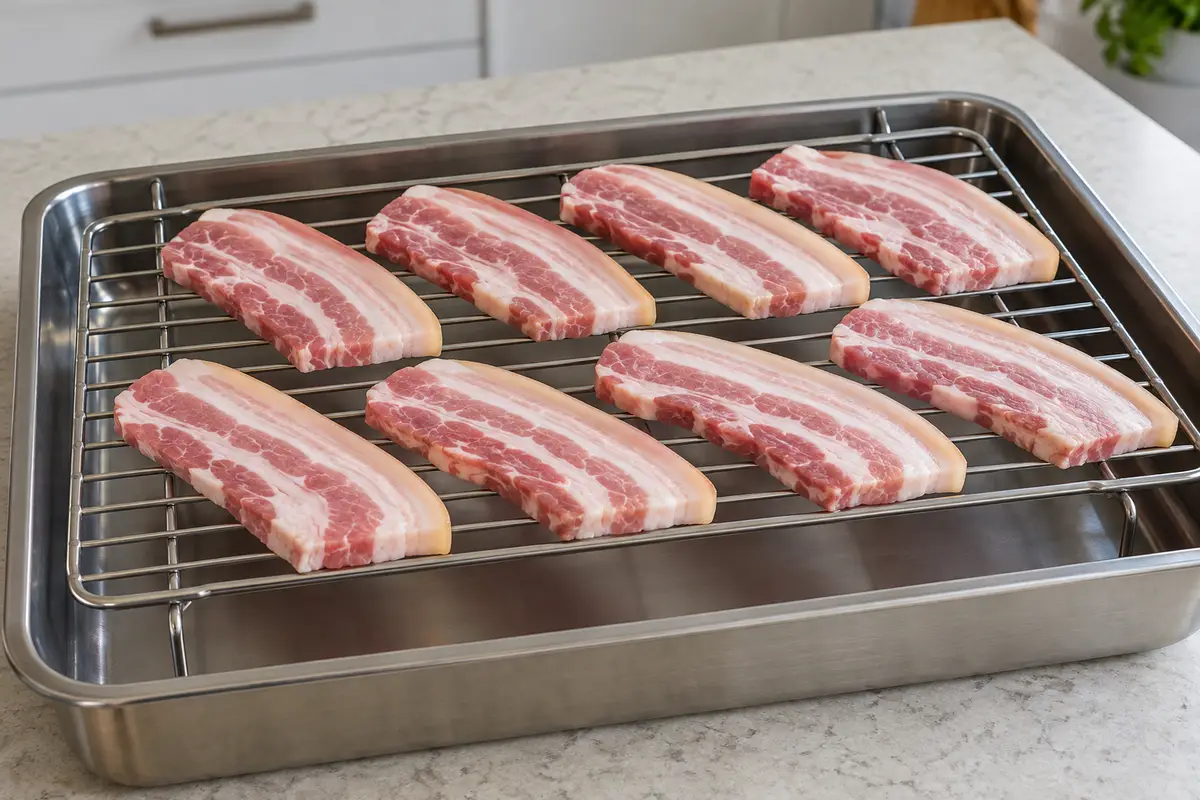
AI-generated Place the pan and rack on the middle oven shelf and roast for about 35–50 minutes. After roughly 20 minutes, turn the slices with tongs. Watch more closely toward the end: they should shrink considerably, turn brown and have crisp edges and skin. If some pieces brown sooner, move them to a cooler part of the rack or remove them individually. Thicker, meatier slices may need a few extra minutes.
About 15 minutes after the pork goes into the oven, put the potatoes in a pot; cut larger ones into similar-sized pieces about 3–4 cm across. Add 1.5 l water and 6 g salt, then bring to a boil. Simmer gently for about 18–22 minutes from when the water boils, until the potatoes are tender but do not start falling apart. Drain away all the water and leave the pot without its lid for about a minute to let the potatoes steam dry.
Wash the parsley, drain thoroughly and finely chop all the prepared leaves and tender stems. Measure out the milk, flour and butter so they are ready to hand. Start making the sauce once the potatoes are cooking; it needs about 10 minutes.
Melt all the butter in a small saucepan over medium-low heat. Add the flour and whisk for about a minute, without browning the roux. Gradually pour in all the milk, starting with small additions and whisking out any lumps thoroughly. Bring to a gentle simmer and cook over low heat for about 5 minutes, stirring often, until the sauce has a smooth, slightly thick consistency and no longer tastes of raw flour.
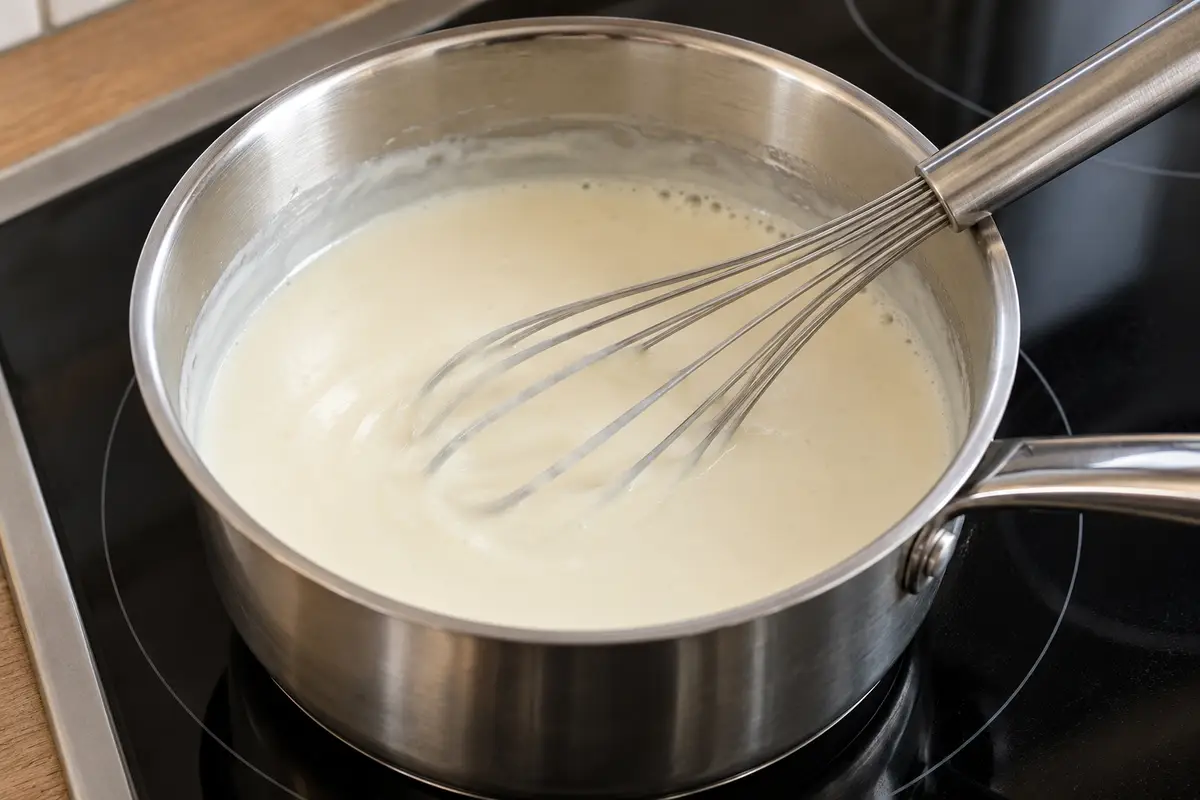
AI-generated Add all the chopped parsley and 3 g salt to the hot sauce. Stir and heat over low heat for about another 1–2 minutes. The sauce should coat a spoon but still flow off it freely. Do not reduce it to a thick paste; keep it briefly covered over the lowest heat until serving, stirring so it does not catch on the bottom.
Remove the browned slices and place on fresh paper towels for about a minute to absorb the surface fat. Sprinkle with all 4 g salt and immediately transfer to a plate without covering, so they do not soften in the steam. Leave the fat that dripped into the pan to cool; do not add it to the sauce or potatoes.
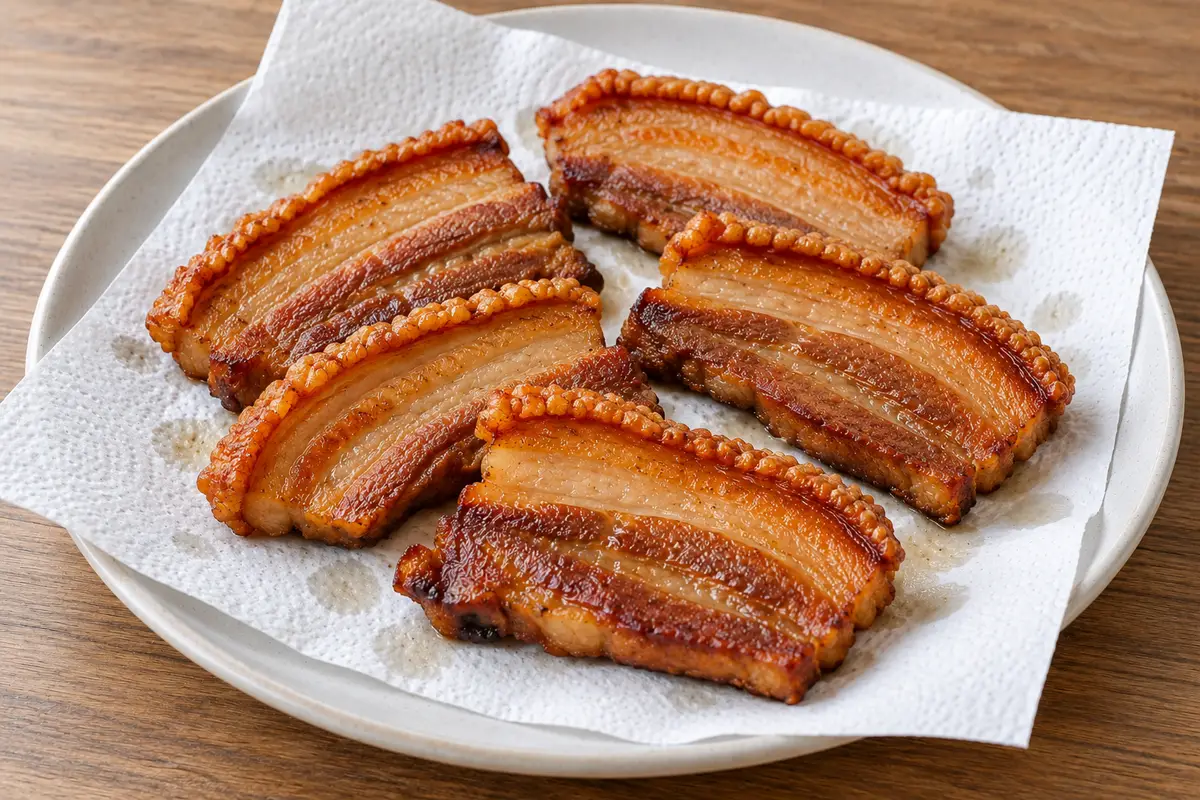
AI-generated Divide all the pork belly and all the cooked potatoes into four portions. Share out all the parsley sauce as well, spooning it over the potatoes and keeping most of the crisp pork above the sauce. Serve immediately. The portions include the meat with its skin, the potatoes and all the sauce; the pan fat, fat absorbed by the paper and drained potato cooking water are excluded from the dish.
Estimated nutrition

Rate this recipe
0 ratings
Comments