
AI-generated
Crescia di Pasqua al formaggio – Italian Easter cheese bread
Log in or create a free account to save recipes.
Source: https://recipheon.com/en/recipes/snacks/crescia-di-pasqua-al-formaggio-italian-easter-cheese-bread
About this recipe
Crescia di Pasqua al formaggio is a tall, yeasted Easter bread from the Italian region of Marche. Parmigiano Reggiano and aged pecorino give the springy crumb a bold flavor, while pieces of young pecorino create soft pockets of cheese. Eggs give it a warm color, olive oil adds tenderness, and pepper brings out its savory, salty character. Two gradual rises help lift the rich dough in a tall tin. Wait until it has cooled before slicing and serve it as twelve portions of bread; prepare your chosen Easter breakfast accompaniments separately.
Ingredients
For 1 tall loaf, 12 portions
500 g wheat bread flour, type 650
200 g whole eggs without shells, about 4 medium eggs
150 g milk, 3.2% fat
40 g extra virgin olive oil
100 g Parmigiano Reggiano, weighed without the rind, for finely grating
100 g aged Pecorino Romano, weighed without the rind, for finely grating
100 g young pecorino fresco, such as Sardo Dolce, weighed without the rind
25 g fresh baker's yeast
5 g white sugar
5 g salt
2 g ground black pepper
0.2 g ground nutmeg, a small pinch
Steps
Prepare a rigid, round tin 18 cm in diameter and about 12 cm high. Line the base and sides with baking paper, leaving a collar about 3 cm above the rim. Grate the Parmigiano Reggiano and aged Pecorino Romano. Cut the young pecorino into cubes about 1 cm across and set them aside separately. Weigh all the cheeses without their hard rinds and the eggs without their shells. Warm the milk only until it feels pleasantly lukewarm to the touch.
Crumble the yeast into a large bowl, add the sugar and pour in all the lukewarm milk. Stir until the yeast is dispersed. Add the beaten eggs and all the olive oil, then mix again. The milk should be lukewarm, not hot, so that the yeast can work.
Add the flour, salt, pepper and nutmeg. Mix, then gradually add both grated cheeses, keeping the young pecorino for later. Knead by hand for about 12–15 minutes, or with a dough hook on a low mixer speed for about 8–10 minutes. The dough should be soft, elastic and slightly sticky, but come together as one mass. Use a dough scraper or spatula to help; do not add any extra flour. Gather all the dough together in the bowl.
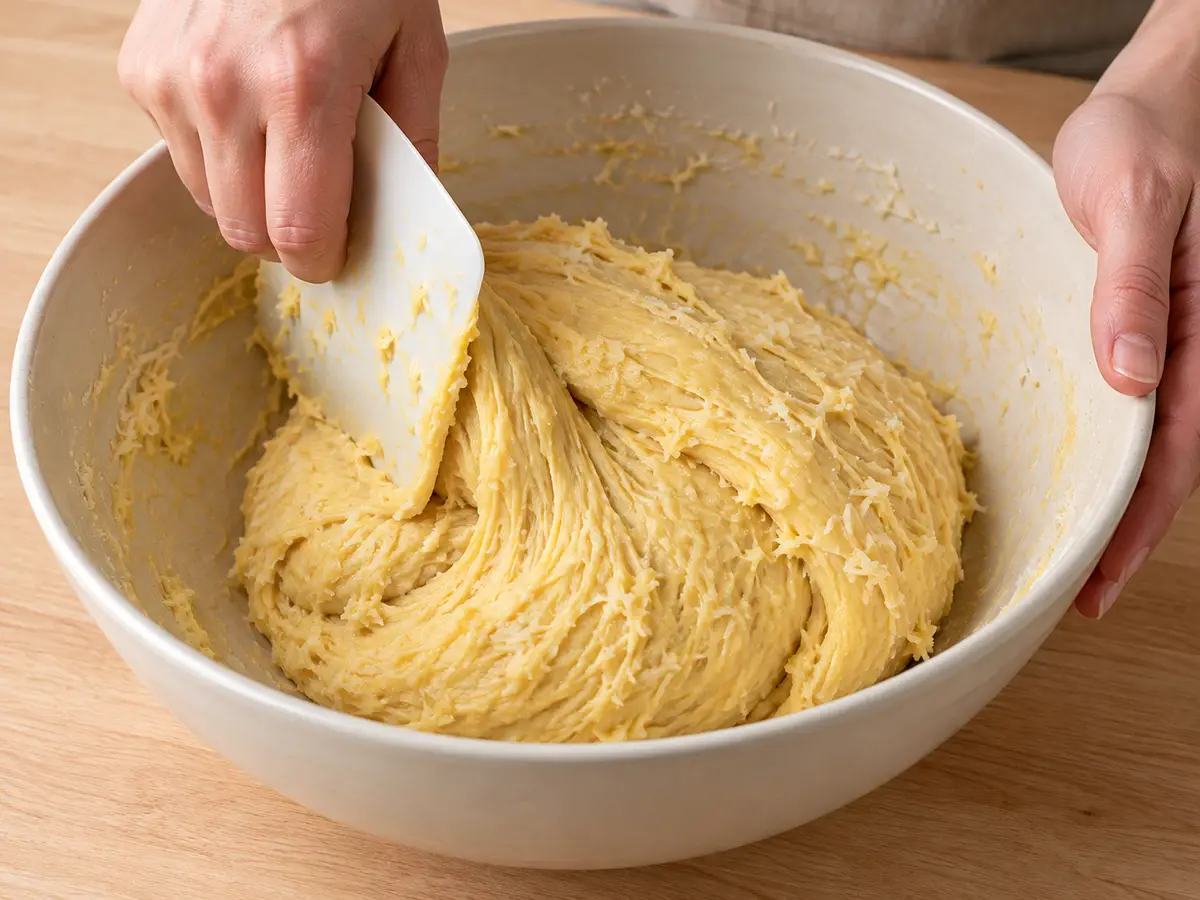
AI-generated Cover the bowl and put it in a warm place without drafts. Leave for about 90–120 minutes until the dough has clearly doubled in volume. Rich cheese dough rises more slowly than ordinary bread dough; it may need longer in a cool kitchen. Judge by the increase in volume, not just the clock.
Gather the dough with a scraper, gently press out the gas and tuck the edges underneath to form a ball. Put it in the prepared tin; initially, the dough should occupy less than half the tin's height. Press in all the cubes of young pecorino at several points, distributing them throughout the loaf and at different depths. Gently close the dough over any pieces of cheese sticking out.
Cover the tin loosely and leave it in a warm place again for about 90–120 minutes. The dough should become visibly puffy and reach roughly 2–3 cm below the rim of the rigid tin. Give it more time if it is rising slowly. Towards the end of the rise, take the tin out of the oven if it has been standing there, and preheat the oven to 180°C using top and bottom heat. Set the rack slightly below the center, leaving room above the tall loaf. Preheat the oven during the final part of this rise.
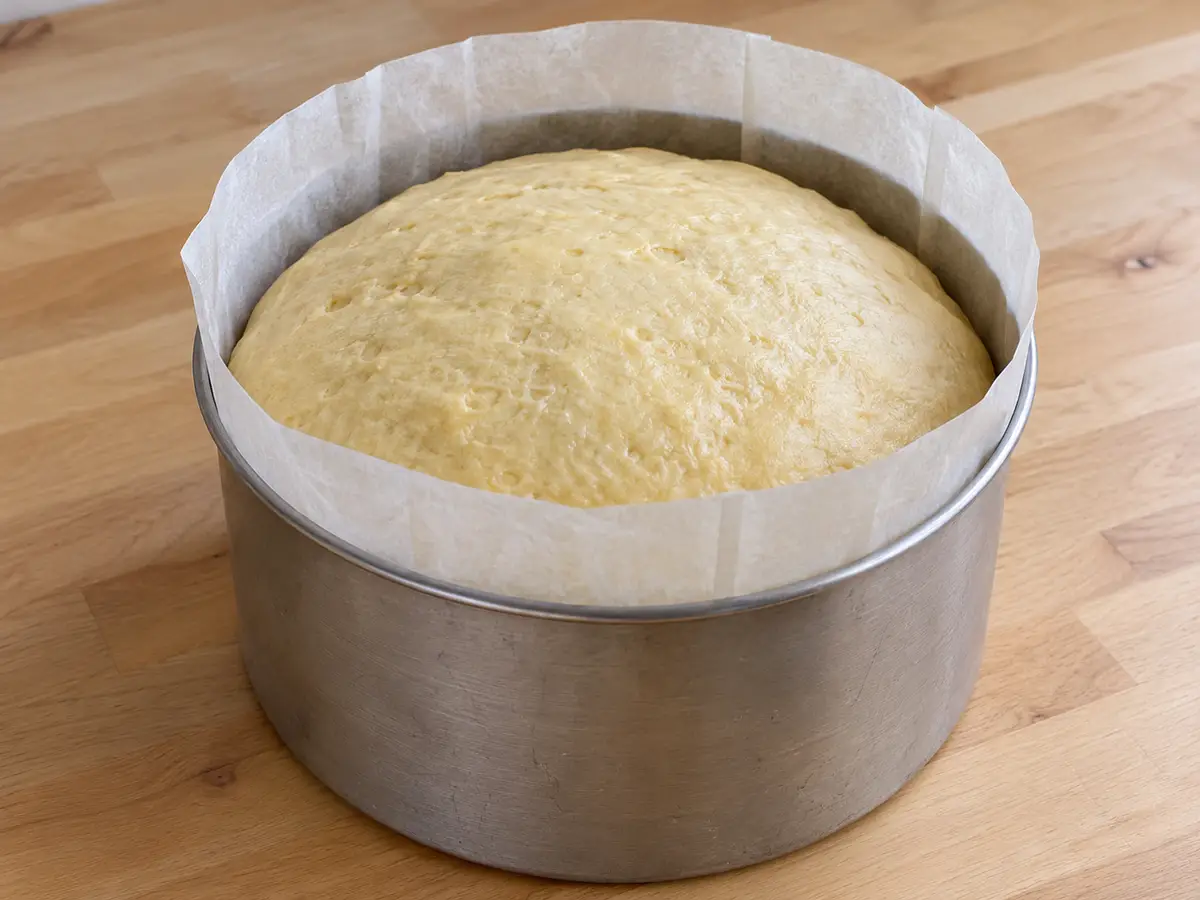
AI-generated Remove the cover and put the tin in the preheated oven. Bake for about 60–70 minutes at 180°C without the fan. If the top is darkening too quickly, loosely cover it with aluminum foil after about 35–40 minutes and continue baking. The finished loaf should have a deeply golden crust. A skewer inserted into the crumb near the center should not bring out wet, raw dough; melted cheese may leave a greasy mark on it. Bake for a few minutes longer if needed.
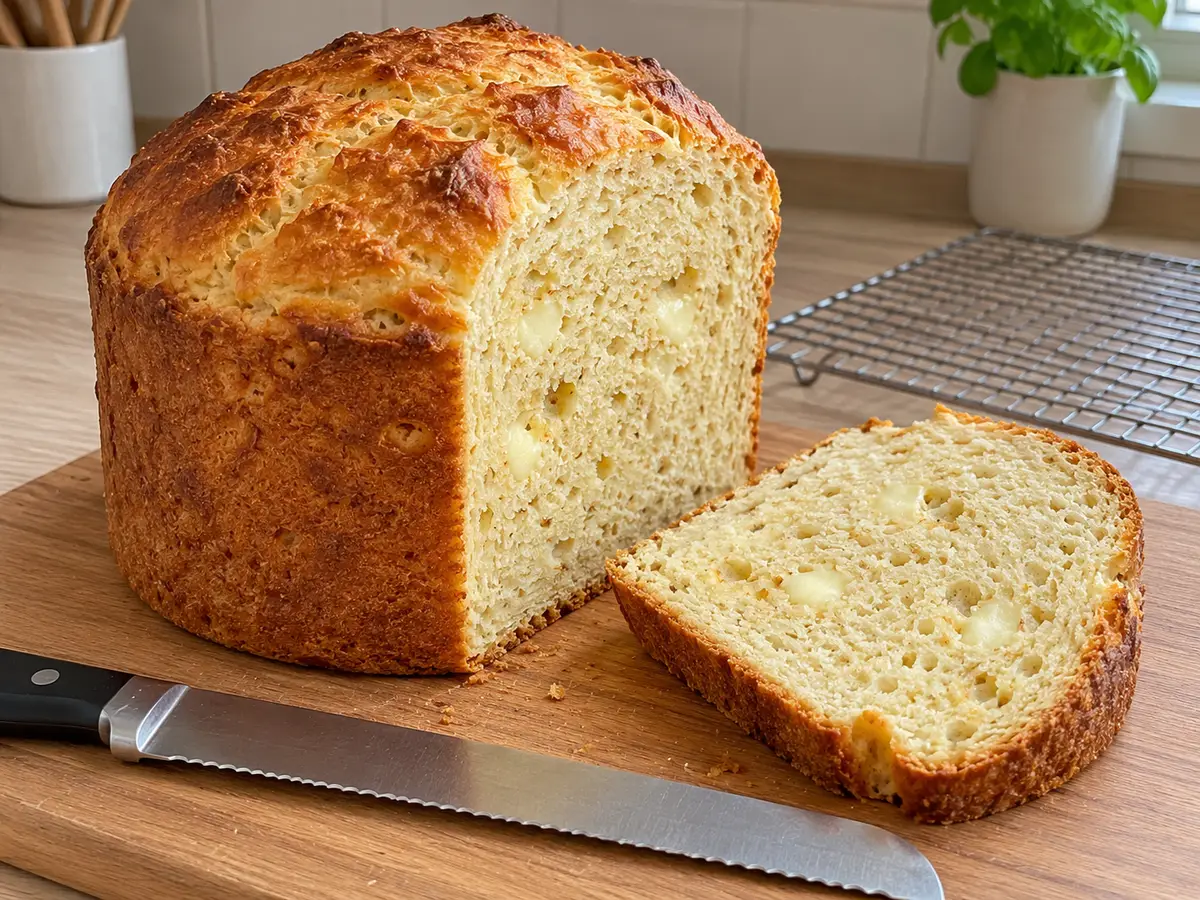
After taking it out of the oven, leave the loaf in the tin for about 15 minutes. Then carefully remove it, take off the paper and cool on a rack for at least another 45 minutes so the crumb can set. Wait until it has cooled before cutting it into 12 portions. The inside should be springy and airy, with pockets of cheese. Serve as bread for an Easter breakfast; prepare cold meats, eggs or other accompaniments separately. Allow about 6 hours and 45 minutes in total, and longer in a cool room.
AI-generated
Estimated nutrition

Rate this recipe
0 ratings
Comments