
AI-generated
Lanttulaatikko — Finnish rutabaga casserole with a crisp topping
Log in or create a free account to save recipes.
Source: https://recipheon.com/en/recipes/snacks/lanttulaatikko-finnish-rutabaga-casserole-with-a-crisp-topping
About this recipe
Lanttulaatikko is a Finnish casserole of soft mashed rutabaga, cream and egg, gently sweetened with dark sugar syrup. A browned breadcrumb-and-butter topping covers a creamy, lightly spiced center. Rutabaga has yellowish flesh and a distinctive flavor; do not substitute turnip or radish in this recipe. Cook the vegetable until completely soft, drain thoroughly and only then weigh the required amount. This way, the mixture is not accidentally diluted with cooking water. Breadcrumbs soaked in weighed cream and milk bind the puree, while a little ginger and nutmeg bring out the rutabaga flavor. Let the puree cool slightly before adding raw egg. Bake in a wide dish so the topping can brown, then give the casserole a short rest. It makes six warm side servings for dinner or a festive table. All the prepared mixture, buttery topping and casserole edges belong to these servings.
Ingredients
All the creamy rutabaga mixture
900 g rutabaga, already cooked, peeled and thoroughly drained, net weight, about 1.3 kg raw and unpeeled before preparation
150 g liquid heavy whipping cream with 36% fat, weighed
50 g milk with 3.2% fat, weighed
40 g fine dry wheat breadcrumbs for soaking
50 g raw whole egg without shell, about 1 medium (M) egg
40 g dark Nordic sugar syrup of the tumma siirappi type, not molasses or maple syrup
4 g fine salt for the mixture
0.5 g dried ground ginger, about ¼ tsp
0.2 g ground nutmeg, a small pinch
All topping and butter for greasing
20 g fine dry wheat breadcrumbs for the topping
25 g unsalted butter with 82% fat: 5 g for the dish and 20 g for the topping
Water for cooking only
1500 g water for boiling the rutabaga, drained and not served
Steps
If starting with raw rutabaga, prepare about 1.3 kg. Remove the thick skin and hard parts, then cut the flesh into 2–3 cm cubes. In a saucepan holding about 3 liters, cover the cubes with 1500 g water. Do not salt the water. Simmer gently with the lid slightly open for about 25–35 minutes from boiling, until easily mashed with a fork. Do not use turnip or radish. Skip this step if you already have cooked rutabaga.
Drain the rutabaga in a sieve for about 5 minutes, without pressing. Discard the cooking water and do not add it to the casserole. Weigh 900 g of the already cooked, peeled and drained vegetable; peels and any extra stay outside the recipe. Transfer to a wide bowl. This net weight defines the servings, not 900 g raw rutabaga before cooking.
Mash all 900 g rutabaga as smoothly as possible with a potato masher, without adding water. Fine fibers are natural; do not press the mixture through a sieve and do not discard any flesh. Spread in the bowl and leave for about 15–20 minutes, until no longer hot. Do not mix raw egg into steaming puree. Meanwhile, prepare the soaked breadcrumbs.
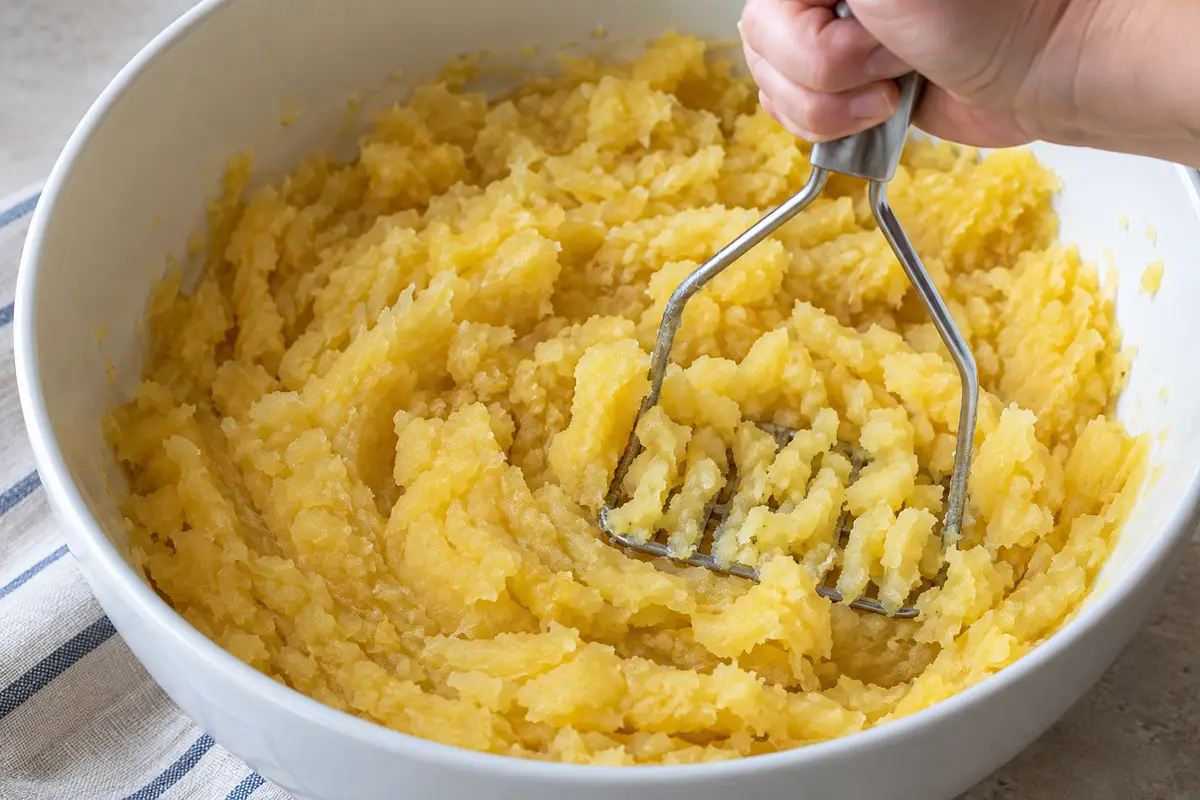
AI-generated Combine 150 g cream and 50 g milk with 40 g breadcrumbs. Leave for about 10 minutes for the crumbs to swell; do not squeeze and do not drain the liquid. Preheat the oven to 175°C, conventional top and bottom heat, without the fan. Prepare an ovenproof dish with internal dimensions about 24 × 18 cm, at least 5 cm deep and holding about 2 liters. Grease its base and sides with the weighed 5 g butter.
Add all the soaked breadcrumbs and their liquid, 50 g beaten egg, 40 g dark syrup, 4 g salt, ginger and nutmeg to the slightly cooled puree. Mix thoroughly with a spatula, without beating. The mixture should be thick and creamy, falling slowly from a spoon with no separate puddle of liquid. Do not add stock or water and do not add extra breadcrumbs or spices. Weigh the syrup in grams; do not measure according to bottle size.
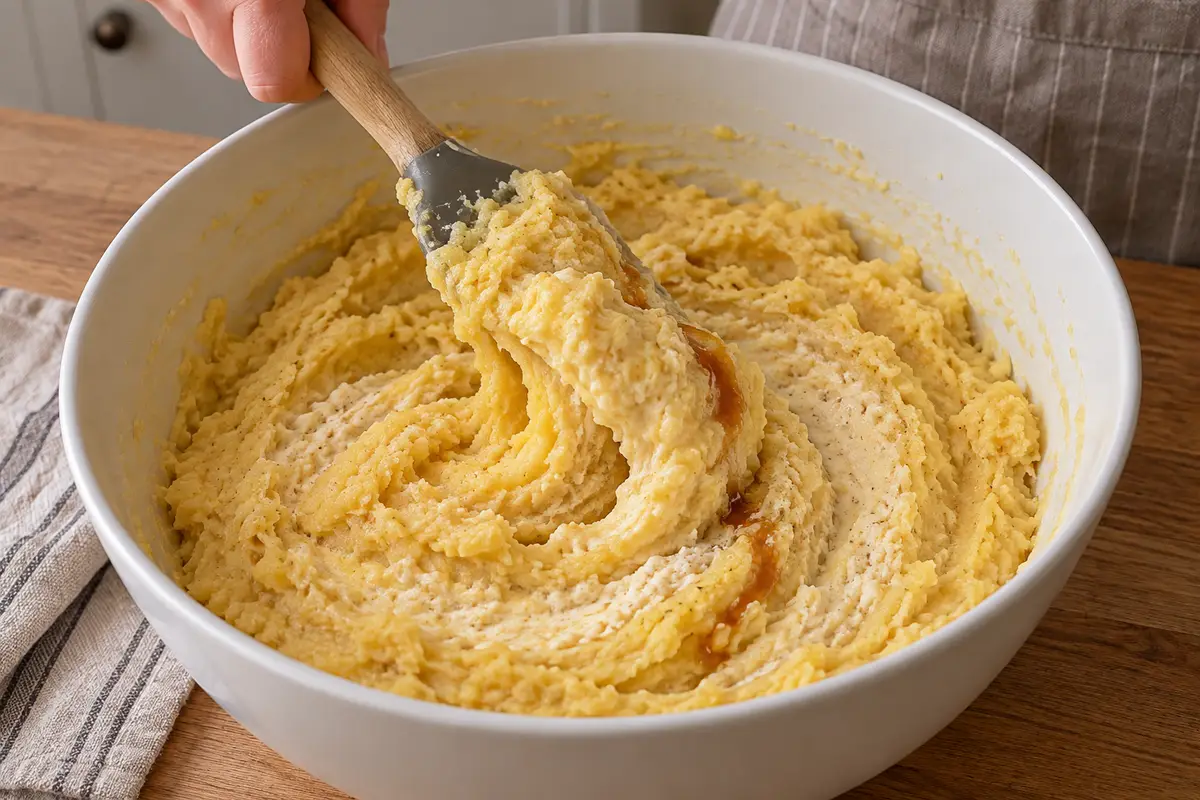
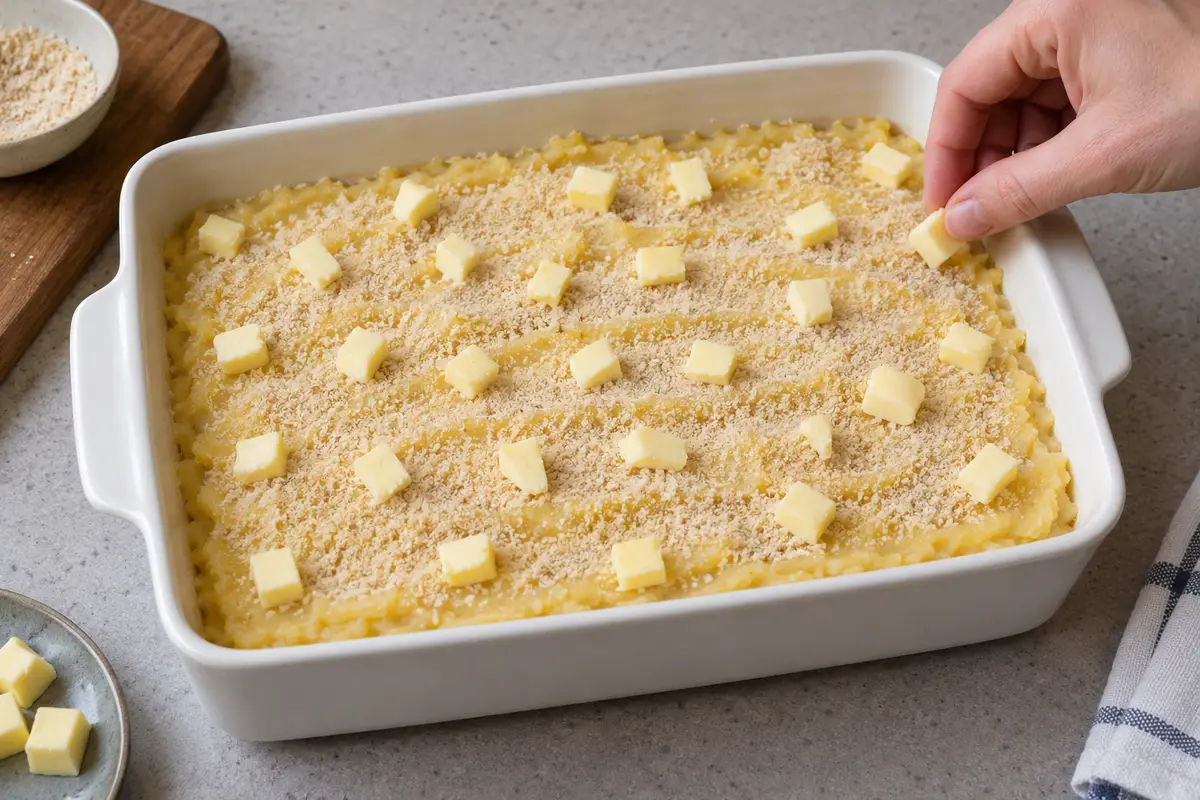
AI-generated Transfer all the mixture to the prepared dish, scraping out the bowl. Level into a layer about 3 cm deep, leaving room below the rim. Make shallow parallel waves with the back of a spoon, without digging deep grooves. Do not reserve any puree for decoration. Use the specified wide dish so the layer is not too deep.
Sprinkle the entire surface with the remaining 20 g dry breadcrumbs. Evenly distribute the remaining 20 g butter in small pieces over them, including around the edges. All this topping is intended to be eaten. Do not add cheese, oil or extra butter and do not press crumbs deep into the puree.
AI-generated Bake on the middle rack for about 75–90 minutes. The casserole should be hot, lightly browned at the edges, with a set creamy center and a golden, slightly crisp topping. Do not expect a dry center like a cake. If the topping darkens too quickly, shield loosely with foil and remove it for about the final 10 minutes. Do not sharply raise the temperature to speed browning.
Rest for about 10–15 minutes, then divide everything into 6 side servings, including all topping and edges. Serve warm without extra decoration. Transfer leftovers to a shallow container and refrigerate within 2 hours; keep covered for up to 3 days. Reheat covered in an oven preheated to 160°C until hot throughout, uncovering toward the end to brown. Do not leave the casserole on the counter overnight.
Estimated nutrition

Rate this recipe
0 ratings
Comments