
AI-generated
Dakos — Cretan rusks with tomatoes and feta
Log in or create a free account to save recipes.
Source: https://recipheon.com/en/recipes/snacks/dakos-cretan-rusks-with-tomatoes-and-feta
About this recipe
Dakos is a Cretan snack served on a barley rusk with juicy tomatoes, crumbled feta, olive oil, and oregano. Ready-made dakos rusks have a firm, porous texture and need to be briefly softened before serving. All the juice from the grated tomatoes supplements the small amount of water, softening the bread's center while the base still supports its topping. The toppings are layered onto the whole bases, retaining the tomato pulp and its juice. Salty feta balances the tomatoes' fresh flavor, olive oil brings the layers together, and oregano lends its characteristic aroma. The recipe makes four generous snacks; they're best eaten right after a brief rest, before the bread becomes too saturated.
Ingredients
Rusks, tomatoes, and finishing touches
200 g ready-made dry barley dakos rusks (paximadi), 4 large round halves of about 50 g each
600 g pulp and juice from ripe raw tomatoes, grated without the skins or tough stem cores
200 g ready-to-use feta, weighed after draining the brine
40 ml extra-virgin olive oil, divided
40 ml cool water to moisten the rusks, all absorbed by the bread
1 g dried oregano
1 g fine salt
0.5 g ground black pepper
Steps
Have a large bowl, a coarse grater, and a wide platter that can hold four rusks side by side ready. Wash the tomatoes, remove the tough stem cores, and cut them in half. Rub the cut sides over the grater above the bowl, leaving the skins in your hand. Prepare 600 g of pulp with all the collected juice; do not strain anything. Stir in the salt, pepper, and 20 ml olive oil. The tomato mixture should be juicy, with small pieces you can still feel.
Arrange the rusks on the platter with their porous cut surfaces facing up. Spread 10 ml cool water, about 2 teaspoons, over that surface of each rusk, adding it slowly so it soaks into the bread. Use all 40 ml water this way. Do not submerge the rusks in a bowl, and do not leave them sitting in a puddle: they only need initial moistening, and the tomatoes will provide more moisture. Keep the bases whole without breaking them into pieces.
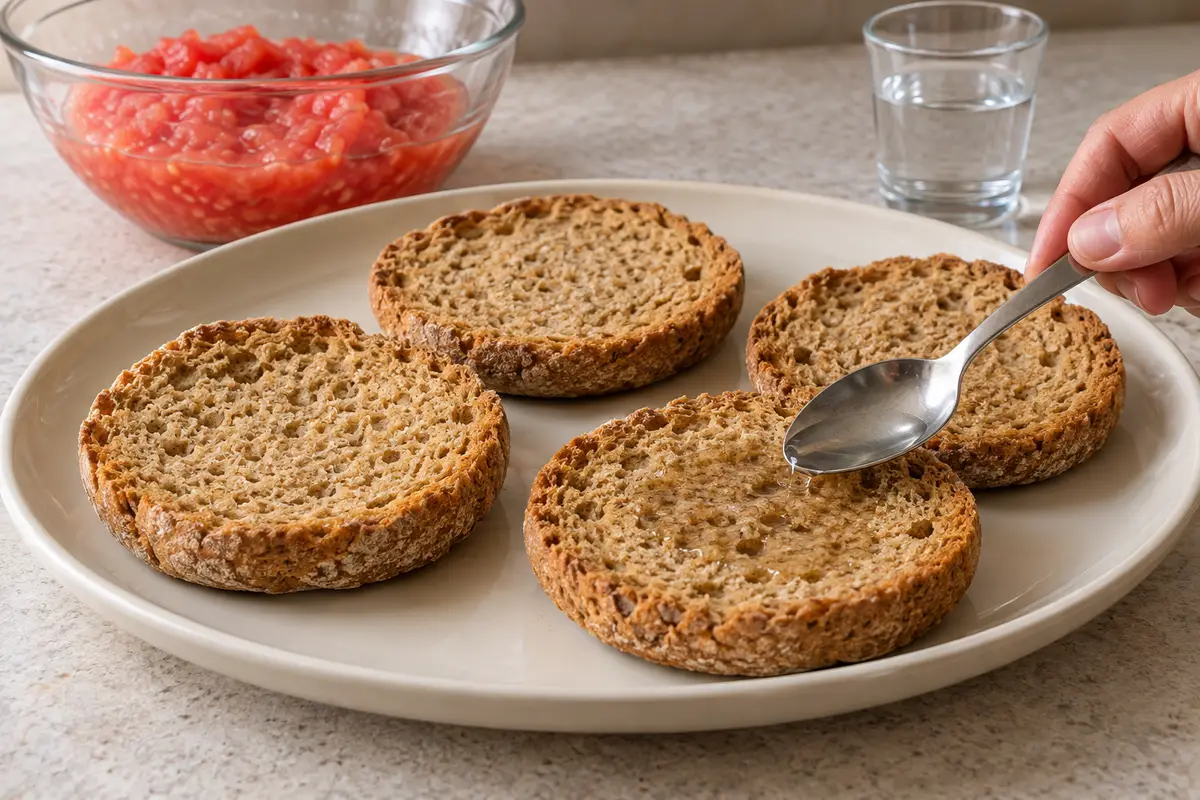
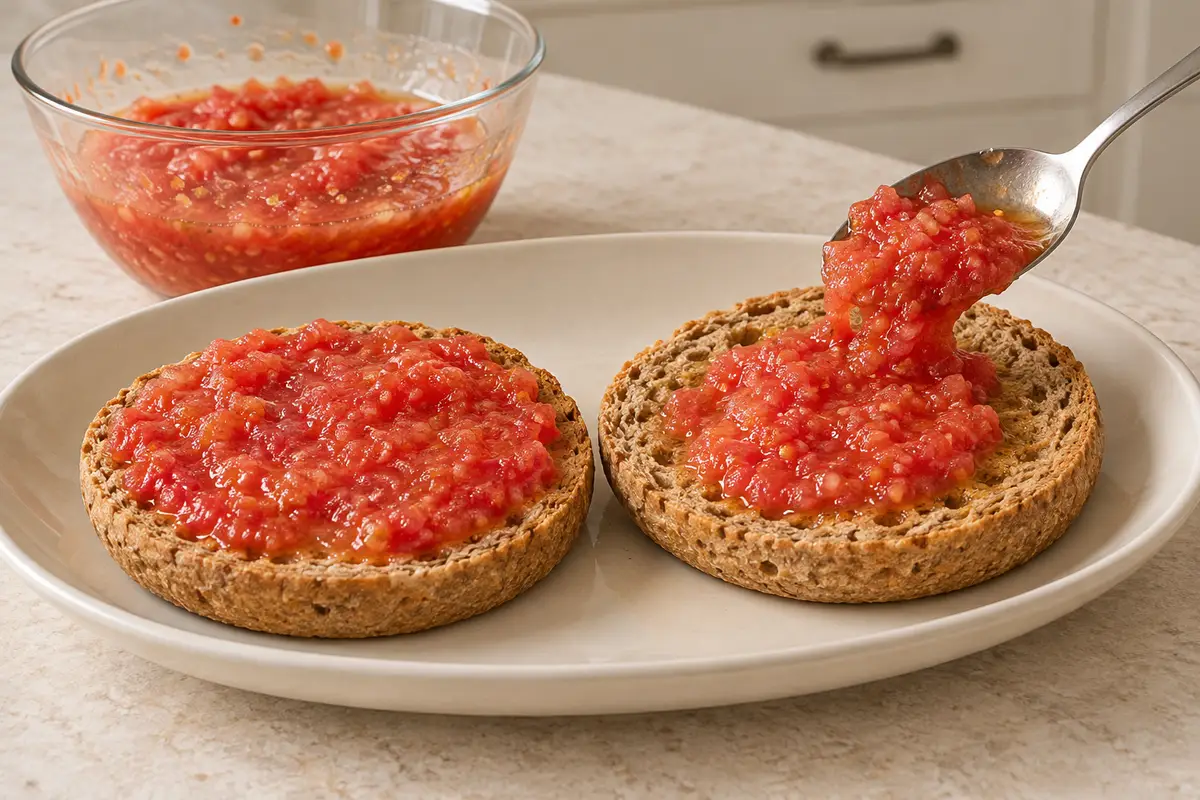
AI-generated Stir the tomatoes again to combine the juice and olive oil evenly with the pulp. Divide the entire mixture among the four rusks, adding a similar portion to each. Spoon up the liquid from the bottom of the bowl as well and pour it over the tomato layers, directing it onto the bread. Spread the pulp almost to the edges without pressing hard on the bases.
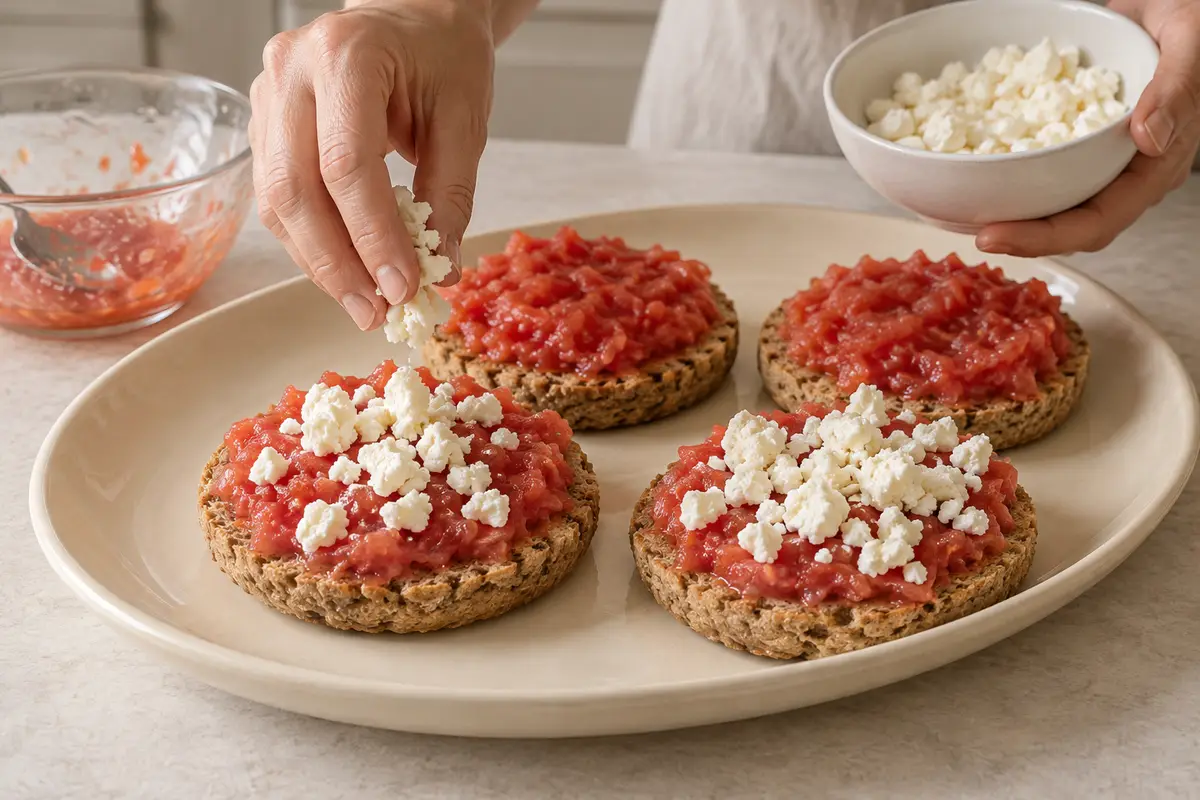
AI-generated Pour off the brine and let the feta drain, then crumble 200 g of the drained cheese with your fingers into small, irregular pieces. Divide it among the four portions. Let the dakos sit on the platter for about 5–10 minutes so the tomato juice can soak into the rusks. The bread should be soft enough to break apart with a fork while still supporting the tomato and cheese layer. If the center is still very hard, wait a few more minutes; do not add more water, and do not soak the bases again.
AI-generated Drizzle the remaining 20 ml olive oil evenly over the portions and sprinkle with all the oregano, rubbing it lightly between your fingers. Serve right away once the bases have softened, one dakos per person. A knife and fork are useful for eating: the center should be softened by the juice, while the edges may remain lightly crisp. Leaving the topped rusks sitting for too long causes the bread to lose its texture.
Estimated nutrition

Rate this recipe
0 ratings
Comments