
AI-generated
Dolmadakia — Grape Leaves Stuffed with Rice and Herbs
Log in or create a free account to save recipes.
Source: https://recipheon.com/en/recipes/snacks/dolmadakia-grape-leaves-stuffed-with-rice-and-herbs
About this recipe
Dolmadakia are Greek grape leaf rolls filled with herbed rice and gently simmered with olive oil and lemon juice. In this plant-based version, dill, mint and parsley give the filling a distinct aroma, while onion adds a mild sweetness. Jarred leaves make preparation easier, but the salty brine needs to be rinsed off. The rice is only briefly precooked before rolling, so do not pack the filling tightly: the grains need room to expand. Arranged close together, the rolls simmer gently beneath a small plate that helps them keep their shape. Serve them slightly warm, with the lemony olive oil from the pot, as a snack to share at the table. The recipe makes about 40 rolls, or 8 servings of 5 rolls each.
Ingredients
Leaves and filling
46 jarred grape leaves in brine, about 230 g drained: 40 whole leaves about 12–15 cm wide for stuffing and 6 spare leaves for lining the pot, removed after cooking
200 g uncooked medium-grain white rice, not parboiled
120 g peeled raw onion
60 g trimmed raw green onions, including the green tops
20 g fresh dill, tender stems and fronds
15 g fresh parsley without thick stems
10 g fresh mint leaves
80 ml olive oil, used in two stages; the oil remains in the filling and the liquid served with the rolls
60 ml freshly squeezed lemon juice
2 g fine salt
0.5 g ground black pepper
1000 ml water for cooking, including 150 ml for the rice, about 650 ml for the rolls and up to 200 ml held in reserve to use if needed
2000 ml cold water for desalting the leaves if needed, discarded after soaking
Steps
Drain the leaves, gently separate them and rinse thoroughly under running water. If a piece of a rinsed spare leaf still tastes very salty, soak the leaves in 2000 ml cold water for 10–15 minutes, then discard the water and drain. Cut off any protruding stems, choose 40 whole leaves for stuffing and set the remaining 6 aside to line the pot. While the leaves soak, finely chop the onion, green onions and all the herbs; rinse the rice in a sieve and drain.
Heat 30 ml olive oil in a wide skillet over medium-low heat. Add the onion and green onions and cook, stirring, for about 5–7 minutes, until soft and translucent, without browning. Add the drained rice and stir for 1 minute to coat it with oil.
Pour 150 ml water into the rice and add the salt and pepper. Bring to a gentle boil and cook over low heat for about 5 minutes, stirring occasionally, until almost no free liquid remains; the grains should still be hard in the center. Take the skillet off the heat, stir in the dill, parsley and mint, then set the filling aside for about 10 minutes to cool enough to spoon comfortably onto the leaves.
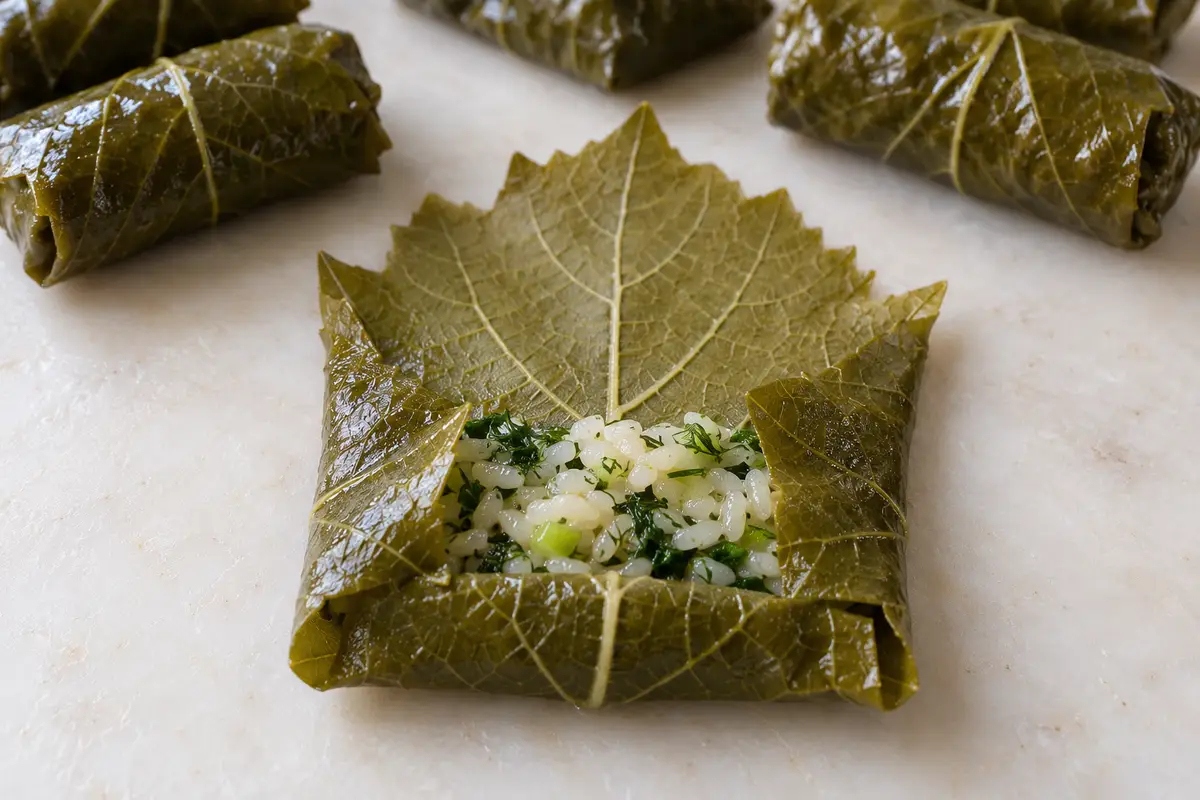
Lay a leaf shiny side down, with the stem end facing you. Place about 2 slightly heaped teaspoons of filling near the bottom edge, leaving the sides clear; adjust the amount to the size of the leaf and divide the filling among 40 leaves. Fold the bottom edge over the filling, fold in the sides and roll into a short cylinder, without squeezing tightly, since the rice will expand further. Roll the remaining leaves in the same way; allow about 30–40 minutes for this task.
AI-generated Line the bottom of a pot about 20–22 cm in diameter with the 6 spare leaves, overlapping them. Arrange the rolls seam side down, close together in two layers, but do not force them into place. Pour over the remaining 50 ml olive oil and all the lemon juice, then add about 650 ml water, enough to come just above the rolls; use some of the 200 ml reserve if needed. Place an inverted, heatproof small plate on top that fits easily inside the pot, so it lightly weighs down the rolls and keeps them submerged.
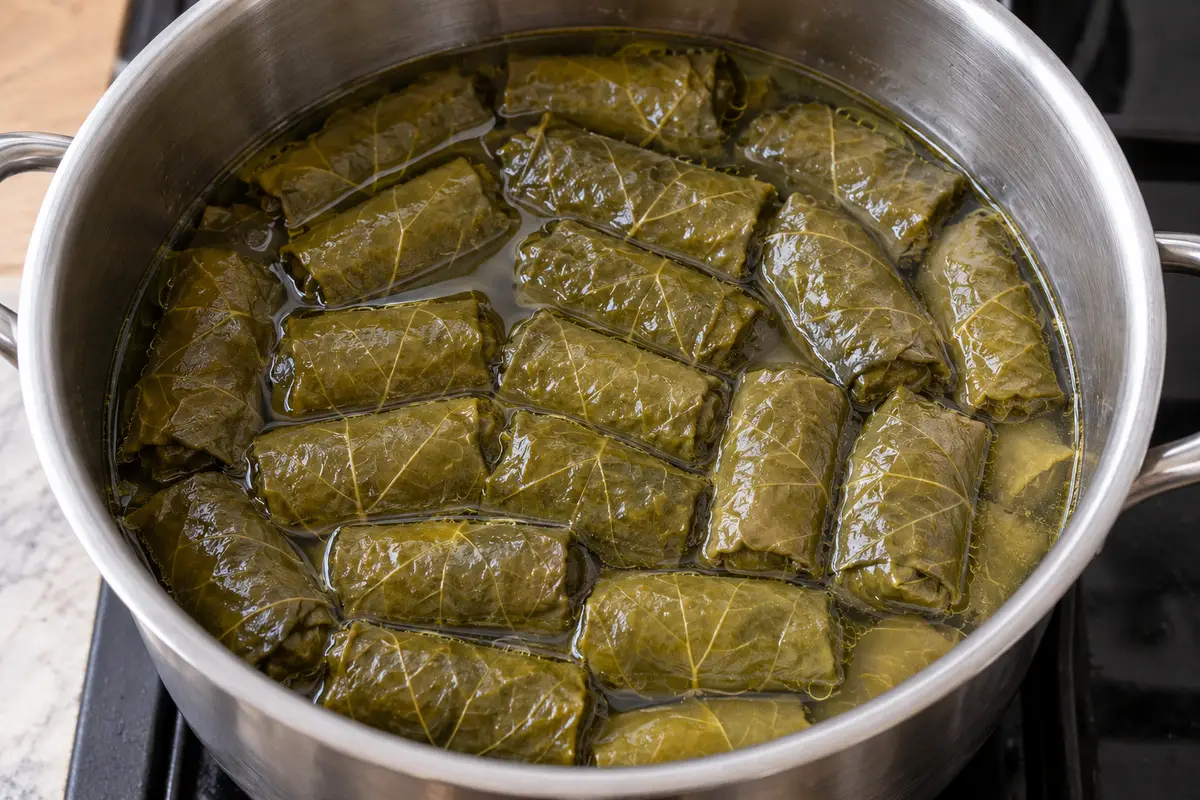
AI-generated Cover the pot with a lid and bring the liquid to a gentle boil over medium heat; this will take about 5–10 minutes. Reduce the heat to low and cook for about 45–55 minutes, keeping only a gentle simmer; do not stir the rolls with a spoon. After about 30 minutes, check at the edge of the pot that some liquid remains; if it has almost disappeared and the rice is still hard, add hot water from the remaining reserve in amounts of about 50 ml at a time. Toward the end, carefully lift off the hot plate with tongs and check one roll: the leaf should cut easily and the rice should be tender, without a hard center; if needed, cook for a few minutes longer with the plate back on top.
Take the pot off the heat, remove the plate and leave the rolls with the lid slightly ajar for about 20 minutes, so they absorb some of the liquid and firm up. Carefully transfer them to a platter, leaving the leaves used to line the bottom in the pot. Spoon the remaining lemony liquid and olive oil over the rolls and serve slightly warm, allowing about 5 rolls per serving.
Estimated nutrition

Rate this recipe
0 ratings
Comments