
AI-generated
Semmelknödel — Bavarian Dumplings Made with Stale Rolls
Log in or create a free account to save recipes.
Source: https://recipheon.com/en/recipes/snacks/semmelknodel-bavarian-dumplings-made-with-stale-rolls
About this recipe
Semmelknödel are Bavarian dumplings made from stale rolls, with a soft center and the aroma of onion and parsley. Their appeal lies in the delicately textured bread pieces: there is no need to mash the mixture smooth or add flour. Warm milk added in two stages moistens the rolls, and eggs bind them after a short rest. Plain wheat rolls from one or two days ago work best, with their crusts, but not dried into hard rusks. One test dumpling helps you adjust the water to a gentle simmer before the rest go into the pot. This quantity makes eight dumplings, or four side-dish portions; the cooked test dumpling is served as well.
Ingredients
Dumplings and cooking
250 g plain wheat rolls, stale for 1–2 days, with crusts, not dried into hard rusks
150 ml milk (3.2% fat)
2 raw medium (M) eggs, approximately 100 g without shells
80 g raw onion, weighed after peeling
20 g unsalted butter (82% fat)
10 g fresh parsley leaves
3 g fine salt for the mixture
0.5 g ground black pepper
0.2 g ground nutmeg
2600 ml water: 2500 ml for cooking and 100 ml for dampening your hands; discard after use
Steps
Cut the rolls, including their crusts, into approximately 1 cm cubes and put them in a large bowl. Finely chop the onion, then chop the parsley leaves separately. The rolls should be stale but still easy to cut with an ordinary knife; do not use hard rusks.
Melt all the butter in a small skillet. Add the onion and cook over medium-low heat for about 8–10 minutes, stirring, until soft and translucent without browning. Meanwhile, warm the milk in a small saucepan for about 2–3 minutes: it should be noticeably warm but not boiling. Add the onion and all the butter to the rolls.
First pour 100 ml of the warm milk over the rolls, stir gently and let stand for about 10 minutes. Add the remaining 50 ml in small amounts, gently pressing the bread with your hand or a spoon; pause briefly after each addition to let it absorb. Use all the milk and let stand for another 5 minutes. The rolls should be soft and moist, with visible pieces and no liquid pooling on the bottom. If the milk has not yet been absorbed, wait a few minutes longer. The mixture must be no warmer than lukewarm before you add the eggs.
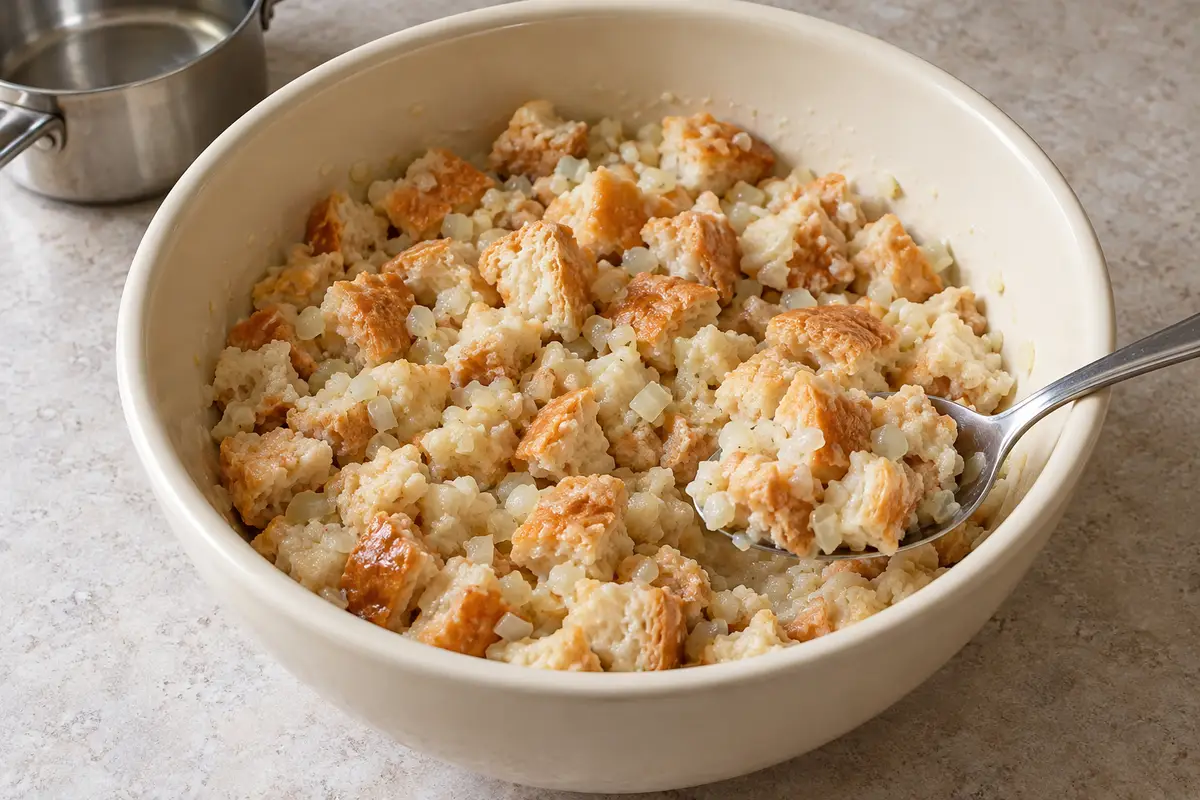
AI-generated Beat the eggs with a fork and add them to the lukewarm rolls along with all the parsley, salt, pepper and nutmeg. Briefly mix by hand until the mixture comes together, keeping the bread pieces intact; do not mash it into a paste. Cover and let rest for about 15 minutes. Meanwhile, bring 2500 ml water to a boil in a wide pot without adding any salt, then reduce the heat: the surface should only gently quiver, with occasional small bubbles.
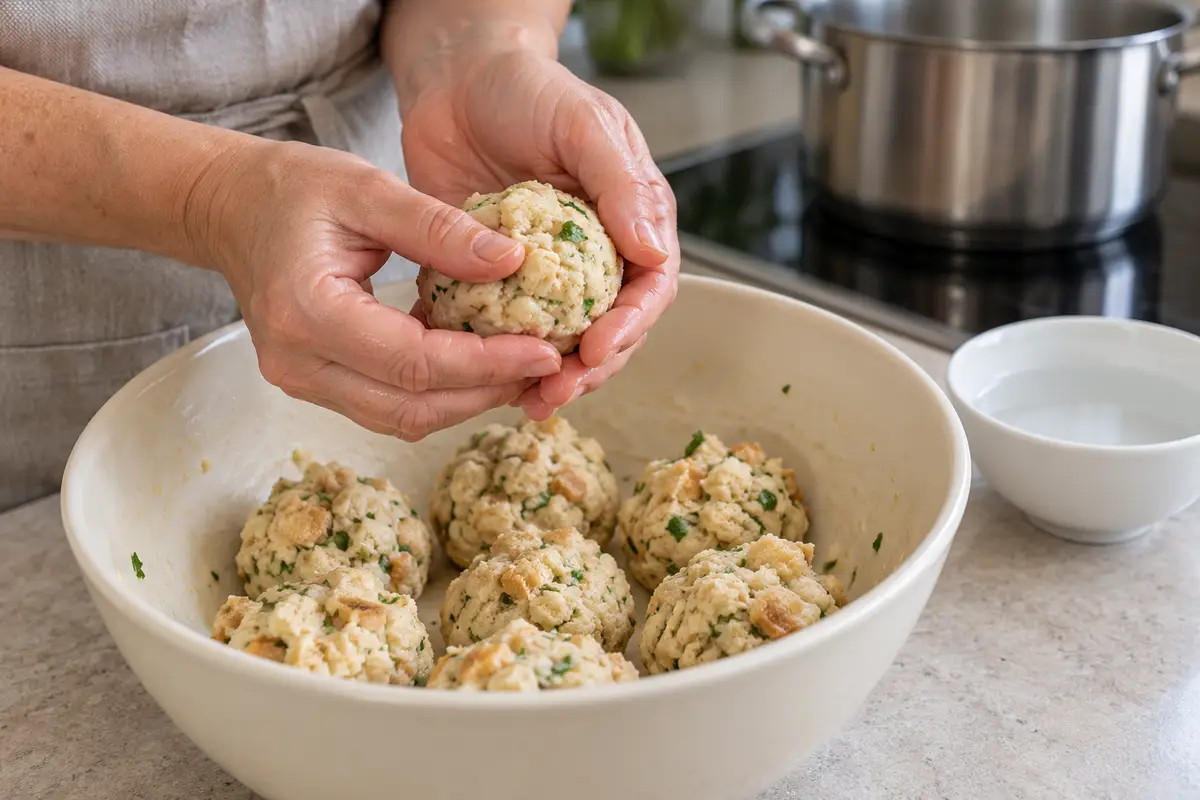
Pour the remaining 100 ml water into a small bowl for dampening your hands. Divide the mixture into eight equal portions and shape them into eight balls approximately 5–6 cm in diameter with lightly dampened hands. Gently bring each ball together, smoothing any cracks, but do not squeeze it firmly. Do not add this water to the mixture. Set one dumpling aside for the test and cover the remaining seven while it cooks.
AI-generated Using a slotted spoon, carefully lower one dumpling into the prepared water and cook uncovered for about 20 minutes at a very gentle simmer. Do not shorten the cooking time just because it floats to the surface. Lift it out, let the water drain off and cut it in half: the dumpling should remain intact, with a soft, moist, cohesive center and no dry pieces of bread. If the movement of the water frays the surface, reduce the heat and smooth any cracks in the remaining balls again. Put the test dumpling halves on a plate and cover; they will be reheated with the rest.
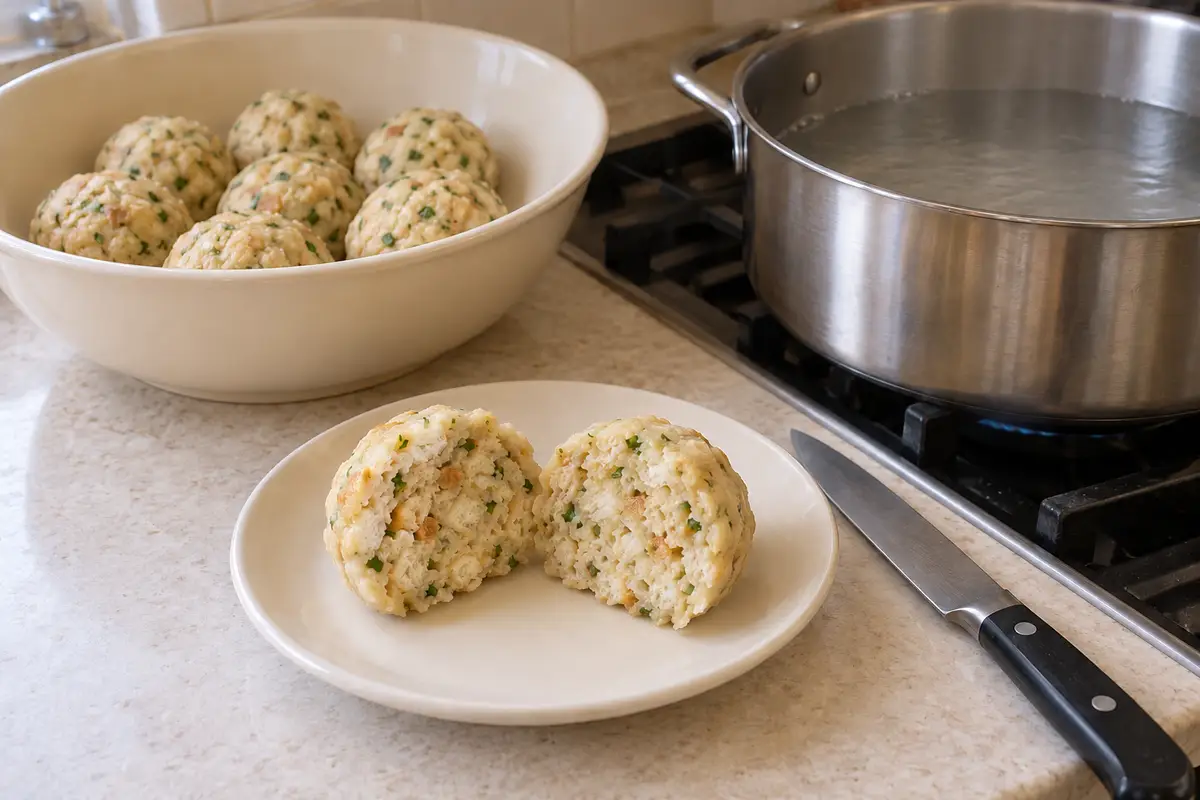
AI-generated Gently lower the remaining seven dumplings into the same water, leaving room for them side by side. Cook uncovered for about 20 minutes from when you add them, keeping the water at a very gentle simmer; do not stir them with a spoon. Add both halves of the test dumpling for the last 2 minutes to warm through. Lift everything out with a slotted spoon, drain briefly and serve warm as a side dish. Divide the eight dumplings into four portions of two; the two test halves count as one dumpling. Discard the water from the pot and the hand-dampening bowl after use.
Estimated nutrition

Rate this recipe
0 ratings
Comments