
AI-generated
Buttery Fruit and Nut Loaf with Orange Zest
Log in or create a free account to save recipes.
Source: https://recipheon.com/en/recipes/desserts/buttery-fruit-and-nut-loaf-with-orange-zest
About this recipe
This butter loaf with raisins, apricots, and walnuts has a moist crumb and the fresh aroma of orange zest. It starts with softened butter creamed with sugar, followed by eggs added gradually in small amounts. Chop the soft dried fruit and lightly coat it with some of the measured flour to help keep it from sinking in the thick batter. A little orange juice rounds out the flavor, without soaking the fruit and without alcohol. Bake the cake in a long metal loaf pan, and once the top has browned, pay particular attention to the center so it does not dry out. Letting it cool completely makes it easier to cut even slices. The recipe makes fourteen servings and takes about four hours from the start of preparation to serving.
Ingredients
Batter, Dried Fruit, and Nuts
200 g unsalted cow's milk butter (82% fat), softened, at room temperature
170 g superfine white sugar
4 raw size M eggs, about 200 g edible weight without shells, at room temperature
250 g dry wheat cake flour, type 450, without raising agents, divided: 20 g for coating the fruit and nuts and 230 g for the batter
8 g baking powder
60 ml freshly squeezed orange juice without seeds, at room temperature
6 g finely grated fresh orange zest from a washed orange, without the white pith
100 g soft dried raisins, without added sugar, edible weight
100 g soft dried apricots without added sugar and without pits, edible weight
70 g shelled raw walnuts
Steps
Preheat a conventional oven (no fan) to 165°C. Line a metal loaf pan measuring 30 × 11 cm inside and about 8 cm high with parchment paper, leaving the paper overhanging the long sides to help lift out the cake later. Do not grease the pan with extra fat; the butter should be soft, and the eggs and juice should be at room temperature.
Chop the apricots and walnuts into pieces about 0.5–1 cm, and halve any very large raisins. If the fruit feels damp on the surface, pat it dry with a kitchen towel; do not soak the fruit. Toss the raisins, apricots, and walnuts with 20 g flour reserved from the total amount until lightly coated; this helps reduce sinking but does not replace the need for a sufficiently thick batter.
Beat the softened butter with the superfine sugar using a mixer for about 5–7 minutes, until pale and noticeably fluffy. Stop the mixer during this time and scrape down the sides of the bowl with a spatula so the mixture creams evenly. Add the finely grated orange zest and mix briefly.
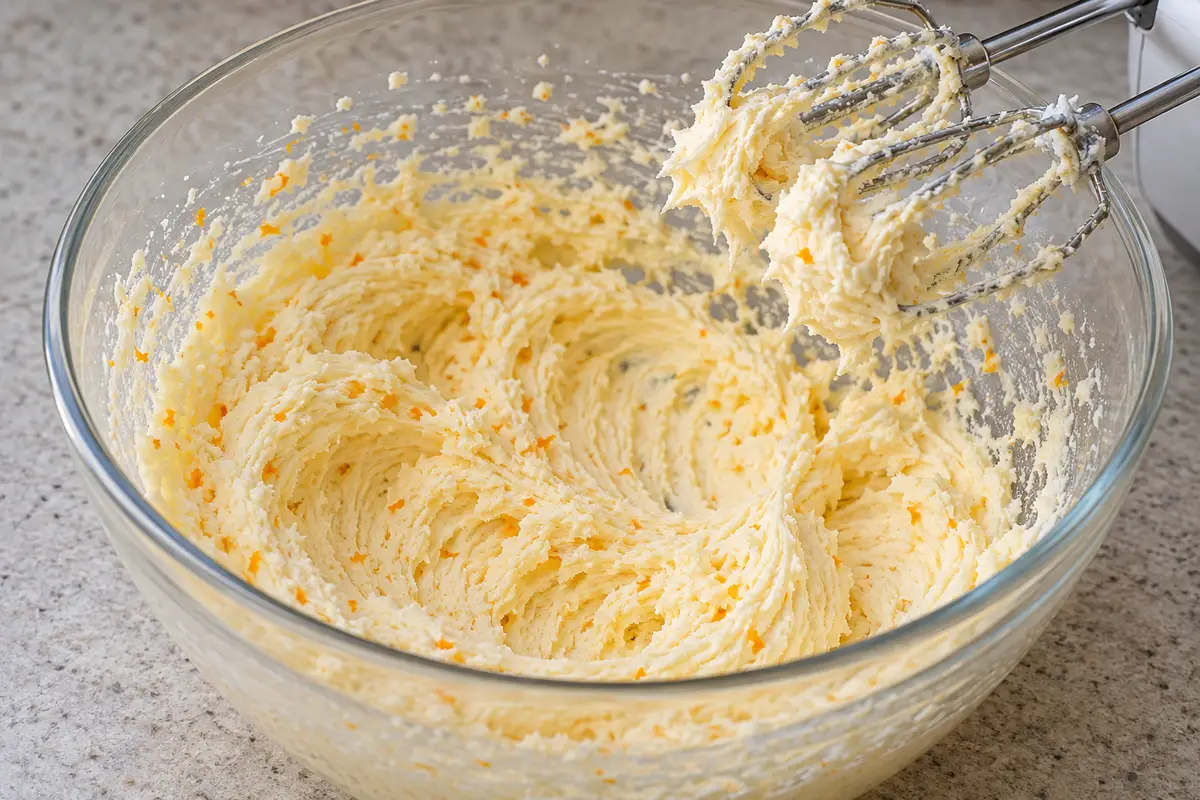
AI-generated Beat the eggs with a fork in a separate bowl, then add them to the butter 2–3 tablespoons at a time, mixing on medium speed until combined before adding more. If the mixture curdles slightly, reduce the speed and add 1 tablespoon flour from the 230 g reserved for the batter, then add the remaining eggs even more slowly. Slight curdling does not mean you need to discard the mixture; do not try to fix it by beating for a long time.
Mix the remaining flour for the batter with the baking powder. Add half to the butter mixture and fold in briefly with a spatula, then fold in the orange juice, followed by the rest of the flour. Mix only until no dry flour remains; the batter should be thick and soft and slide slowly from the spatula, without prolonged beating.
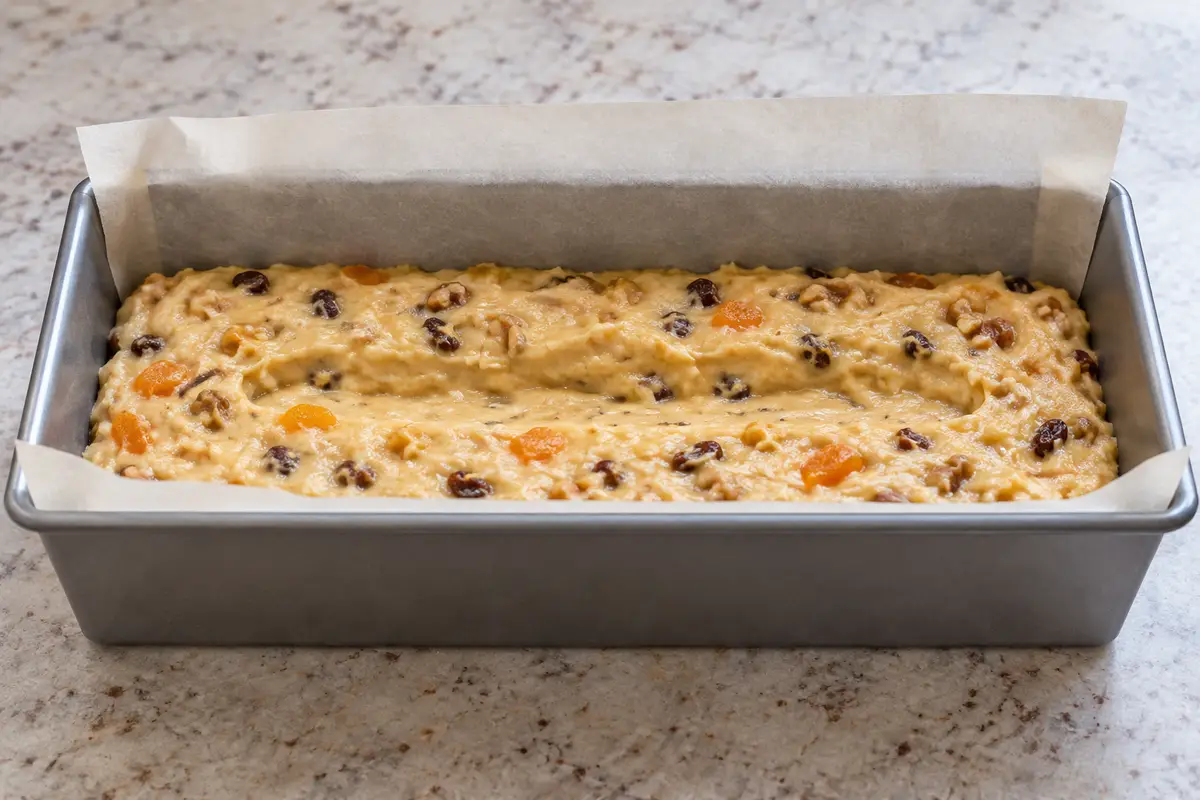
Add the flour-coated fruit and nuts and gently distribute them throughout the batter with a spatula. Transfer to the prepared loaf pan, filling it no more than about two thirds of the way up, and level the surface. Use the spatula to make a shallow groove lengthwise down the center to help the cake rise more evenly, then put it straight into the preheated oven.
AI-generated Bake on a rack just below the middle of the oven for about 65–75 minutes at 165°C on the conventional (no-fan) setting. Do not open the door for the first 45 minutes; if the top browns too quickly after that, cover it loosely with aluminum foil. Toward the end, check the center with a skewer: it should come out without raw batter, although a few moist crumbs are fine; if it hits a piece of fruit, check again nearby. Once the center is baked through and the top is golden brown and springy, stop baking rather than waiting for the crumb to become completely dry.
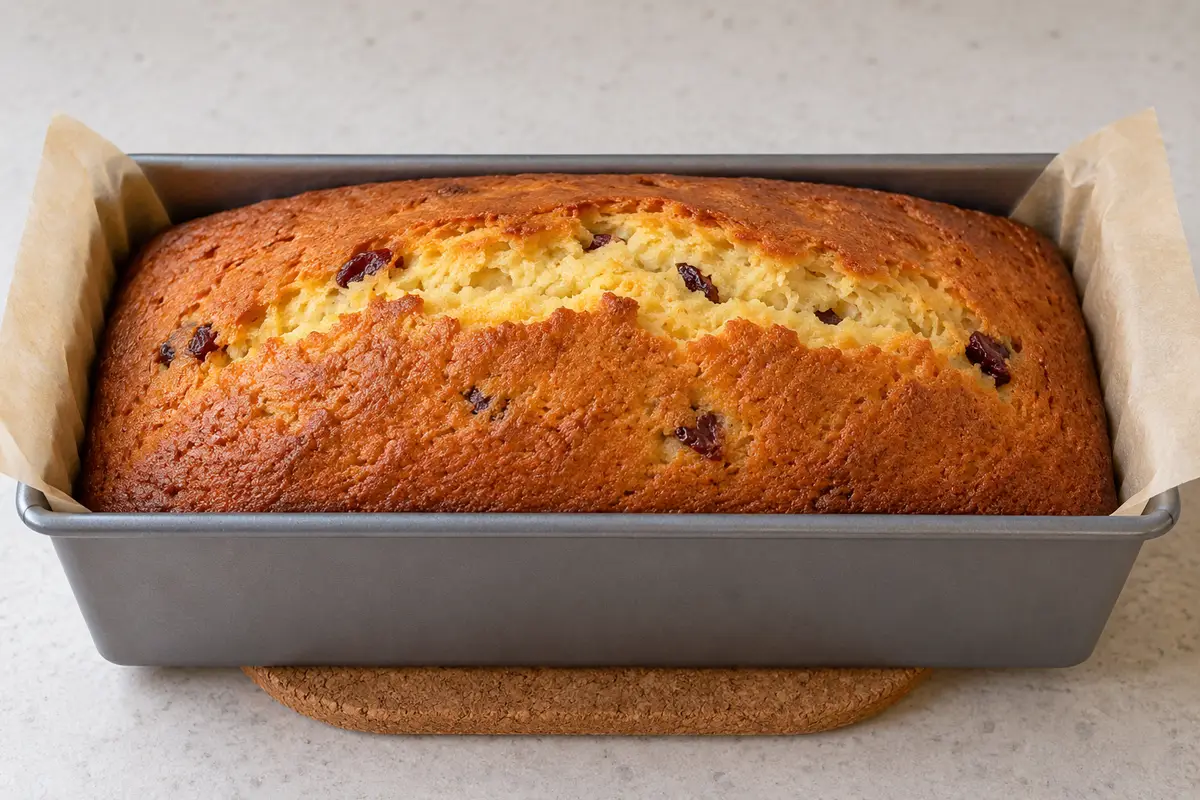
AI-generated After removing the cake from the oven, leave it in the pan for about 15 minutes. Then carefully lift it onto a wire rack using the overhanging paper and remove the paper so the underside can cool too. Allow about 2 hours for all the cooling, counted from when the cake comes out of the oven, and slice only when completely cool. Cut into fourteen slices about 2 cm thick with a sharp knife and serve without any additional topping.
Estimated nutrition

Rate this recipe
0 ratings
Comments