
AI-generated
Cartellate — fried pastry rosettes with cooked grape must
Log in or create a free account to save recipes.
Source: https://recipheon.com/en/recipes/desserts/cartellate-fried-pastry-rosettes-with-cooked-grape-must
About this recipe
Cartellate are pastries from Puglia made from thin dough whose edges are pinched together and coiled into open rosettes. Once fried, they have golden blisters, crisp walls and small pockets that hold the sweet glaze. In this home version, dough made with type 450 cake flour, white wine and olive oil is coated with ready-made cooked grape must syrup, known as vincotto d’uva or saba. No special mold is needed: a rolling pin, parchment paper and a pastry wheel or knife are enough. Shaping 24 rosettes and letting them dry before frying takes the most patience. This rest helps the pockets hold their shape, so plan ahead. Finish by distributing all the measured glaze over the pastries. Serve two per portion; the thin edges stay crisp while the syrup-coated areas gradually soften.
Ingredients
Dough for 24 rosettes
300 g wheat cake flour, type 450
120 g dry white wine, weighed
30 g extra virgin olive oil
2 g salt
Frying and glaze
800 g high-oleic sunflower oil for frying (most will remain outside the served food)
160 g ready-made thick cooked grape must syrup (vincotto d’uva or saba)
Steps
In a bowl, mix 300 g type 450 cake flour with 2 g salt. Pour in 120 g white wine and 30 g olive oil. Stir together with a spoon, then knead by hand for about 8–10 minutes, until the dough is firm, smooth and elastic. Do not add any water, olive oil or flour beyond the measured amounts.
Shape into a ball, cover the bowl and leave the dough at room temperature for 30 minutes. It should be easier to roll after resting. If it springs back as you work, set it aside, covered, for a few minutes while working on another piece.
Divide the dough into 24 equal pieces, about 19 g each, and keep the unused pieces covered. Roll each piece between sheets of parchment paper into a strip about 35 × 3 cm and 1–1.5 mm thick. Straighten the edges with a pastry wheel or knife. Add all trimmings to the next pieces and roll them out again; do not dust with flour.
Bring the long edges of a strip toward each other and pinch them firmly together at points every 3–4 cm, leaving open pockets between the joins. Coil the strip loosely into a spiral, joining neighboring walls in several places and pressing the end into place. Do not close the openings. Shape all 24 rosettes this way.
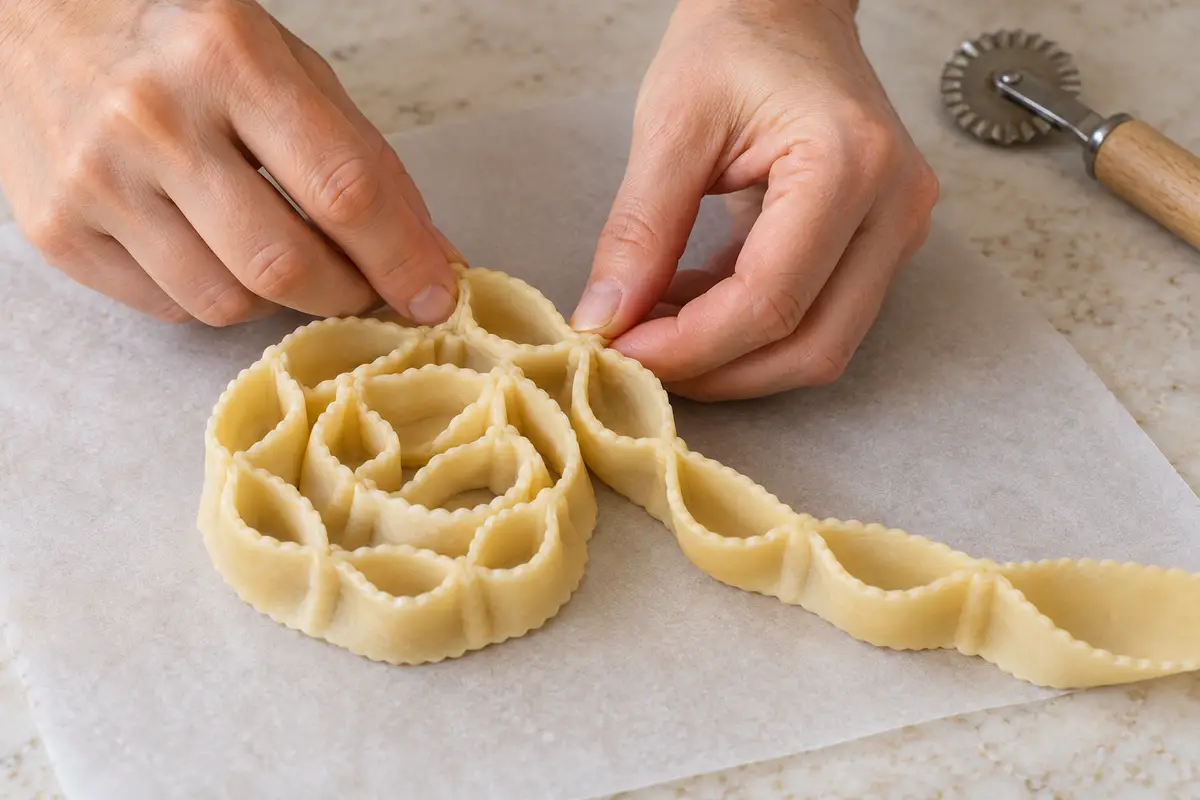
AI-generated Place the rosettes separately on parchment paper, openings facing up. Leave uncovered in a dry place for about 4 hours. The surface should dry out and the joins should hold their shape when carefully lifted. In a humid kitchen, allow more drying time rather than frying dough that is still sticky.
Pour 800 g high-oleic oil into a stable pot about 20 cm in diameter with a capacity of at least 3 l; the oil will be about 3 cm deep. Heat over medium heat to approximately 170–175°C. The oil should not smoke. Have a slotted spoon and a plate lined with paper towels ready.
Carefully lower in 3 rosettes at a time; small, lively bubbles should appear around the dough immediately. Fry for about 2–3 minutes, turning gently, until light golden and blistered. If they darken within a few seconds, lower the heat. Allow the oil to heat up again before the next batch. Fry all 24 pastries this way.
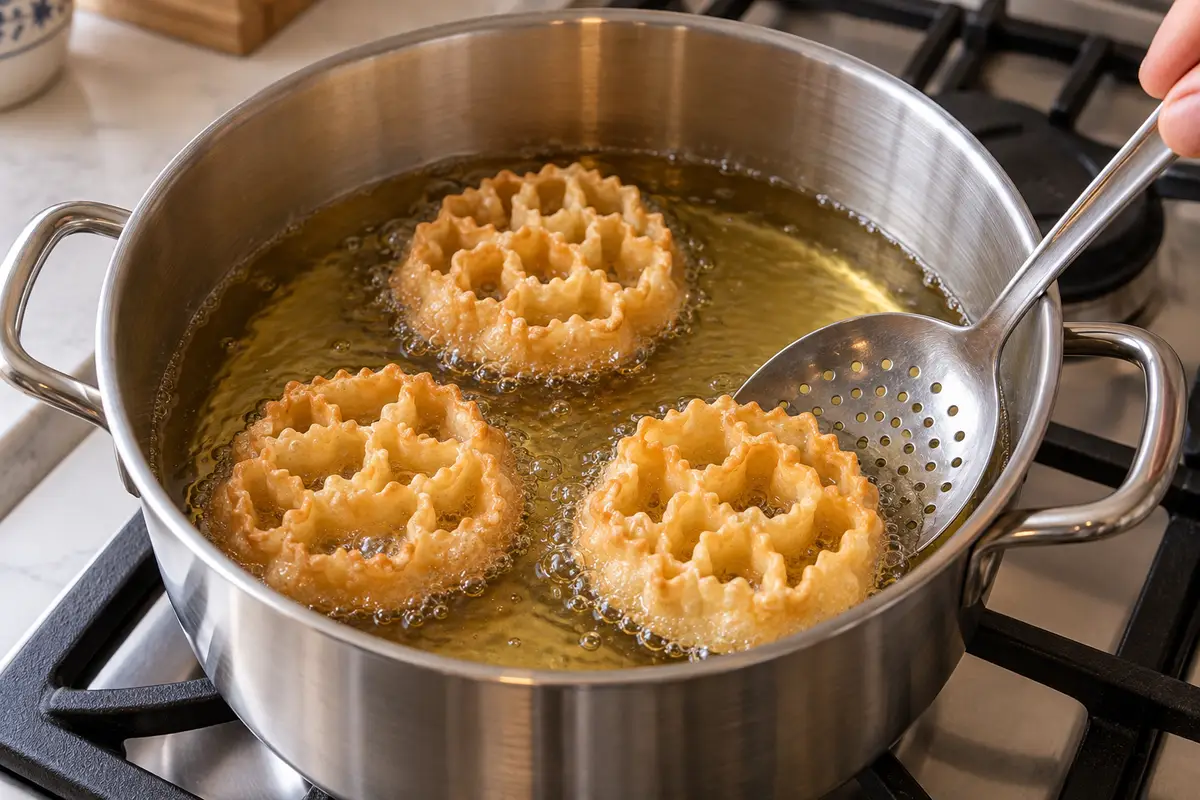
AI-generated Lift out the rosettes with a slotted spoon, let the oil drip back into the pot, then place them on paper towels with the pockets facing down. Leave for about 15 minutes, until no longer hot. Do not pour oil from the pot over them; the remaining frying oil and the oil on the paper are outside the served food.
In a small saucepan, warm 160 g cooked grape must over low heat for about 1–2 minutes, just until more fluid. Turn off the heat. Turn the rosettes with their openings facing up and spoon all the syrup into their pockets, turning the pastries to coat evenly. Transfer any glaze left in the saucepan and on the plate onto the rosettes being served; do not add water.
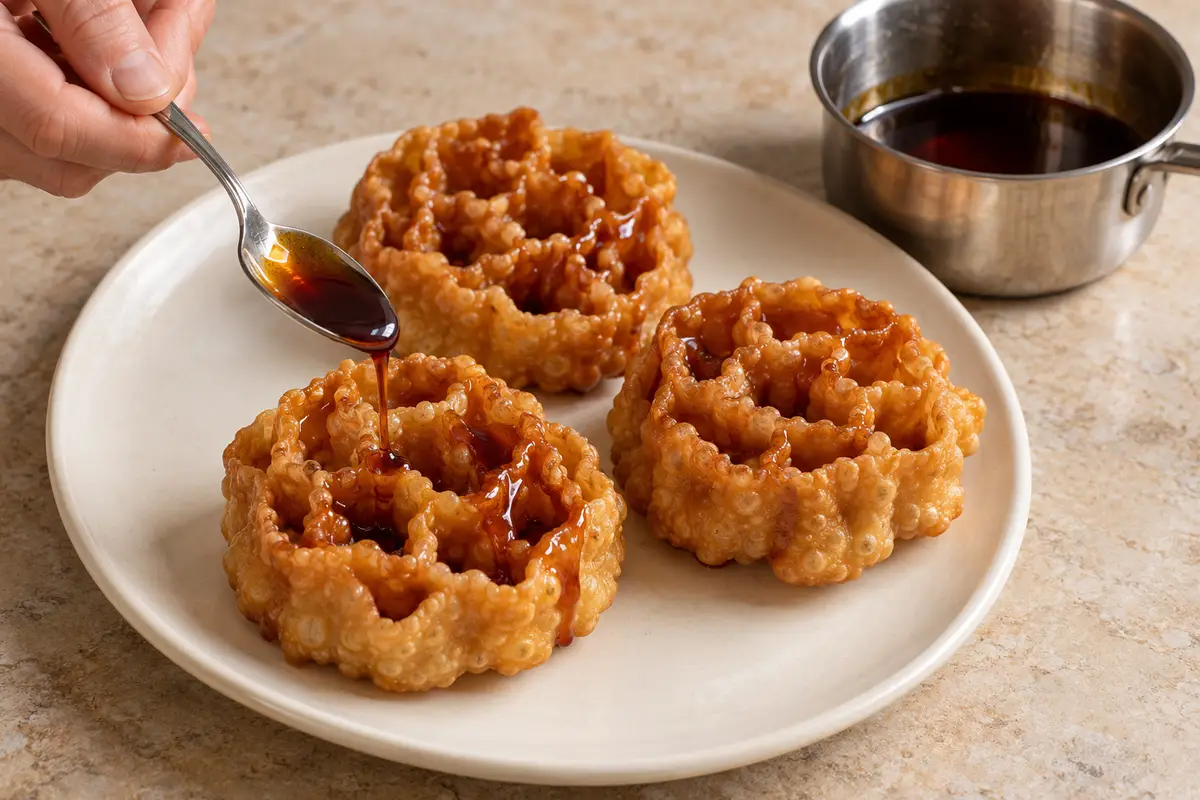
AI-generated Leave the glazed rosettes for about 15 minutes so the syrup settles into the pockets. Serve two pastries per portion with all their allocated glaze. They are best on the day they are made. Store in a closed container in a cool, dry place and use within 1–2 days; the syrup gradually softens them.
Estimated nutrition

Rate this recipe
0 ratings
Comments