
AI-generated
Eccles cakes – English pastries with currants
Log in or create a free account to save recipes.
Source: https://recipheon.com/en/recipes/desserts/eccles-cakes-english-pastries-with-currants
About this recipe
Eccles cakes are round English pastries with a flaky, buttery shell and a filling of small dried grapes called currants. This homemade version uses rough puff pastry made with pieces of cold butter, folded and chilled in the refrigerator. The currants are mixed with brown sugar, candied orange peel, cinnamon and nutmeg. Egg white and white sugar give the tops a crisp finish, while slits let steam escape. The eight cakes bake in two successive batches of four, giving them room to rise. The stated time includes all the pastry chilling periods and cooling the second batch before serving.
Ingredients
For 8 cakes
250 g type 550 wheat flour (225 g for the dough and 25 g for rolling)
200 g unsalted butter (175 g cold for the dough and 25 g for the filling)
125 g water (120 g cold for the dough and 5 g for sealing the edges)
200 g currants, small dried grapes
75 g brown sugar
40 g candied orange peel
25 g white sugar for sprinkling
30 g raw egg white for brushing
2 g salt
2 g ground cinnamon
0.2 g ground nutmeg (a small pinch)
Steps
Finely chop the candied orange peel. Gently melt 25 g butter in a small saucepan and remove from the heat. Add all the brown sugar, currants, orange peel, cinnamon and nutmeg. Mix and leave to cool completely while you prepare and initially chill the dough. Do not soak the fruit and do not add any liquid.
Weigh 225 g flour into a bowl and set aside the remaining 25 g for rolling. Add the salt and 175 g cold butter, cut into small cubes. Mix briefly to coat the butter with flour. Pour in 120 g cold water and quickly bring together with a spatula or your hand into a rough, firm mass. Leave visible pieces of butter; do not rub them into fine crumbs and do not knead for long. Flatten the dough, wrap and refrigerate for 30 minutes.
Lightly dust the work surface with a little of the reserved flour. Roll the cold dough into a rectangle about 30 × 20 cm. Fold the bottom third toward the center, then fold the top third over it, like a letter. Give the folded dough a quarter turn, wrap and refrigerate for 20 minutes. Repeat the rolling, folding and chilling twice more: make three folds and three chilling periods of 20 minutes in total. The butter should stay cold and the layers distinct.
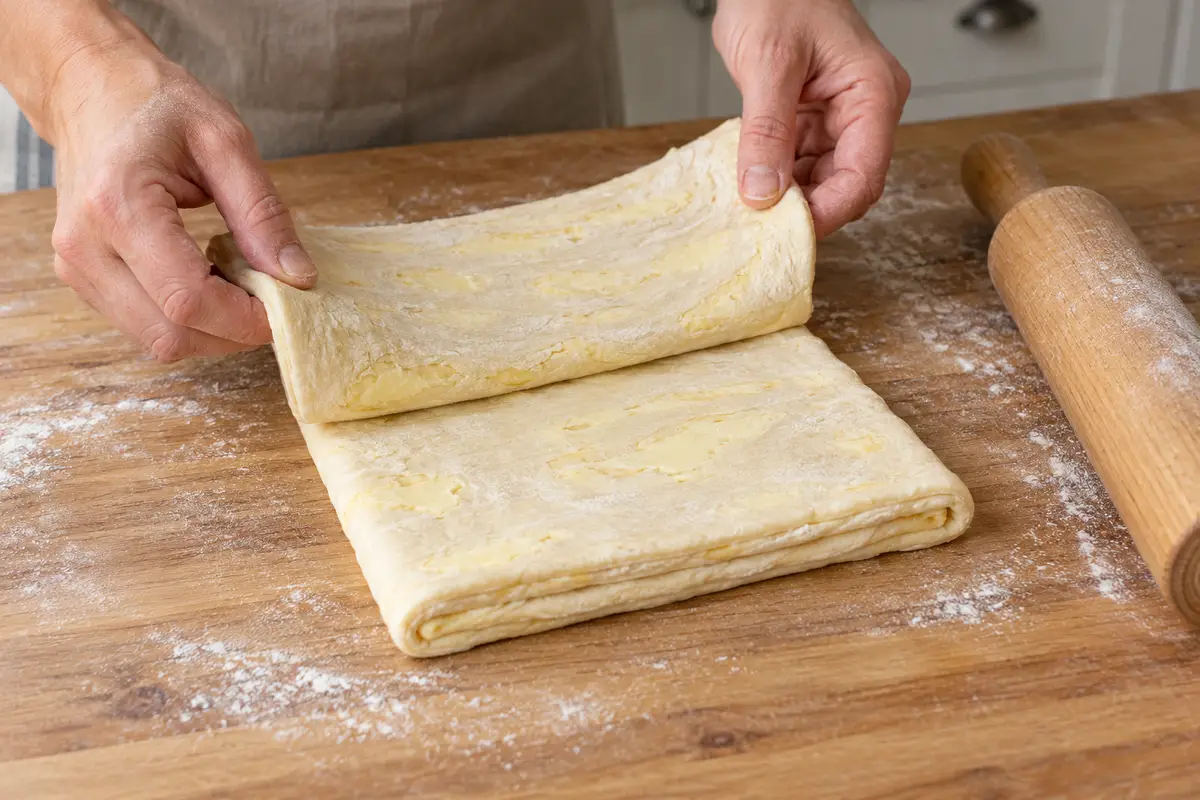
AI-generated After the final chilling period, divide the dough into eight equal pieces. Roll each into a circle about 14 cm across and 3–4 mm thick, using the rest of the reserved 25 g flour. Do not add any extra flour. The circles need not be perfectly cut; stack any trimmings and roll them back into the portion instead of discarding them or kneading them together again. Keep portions waiting to be rolled in the refrigerator.
Check that the filling is cold and stir it again. Divide everything in the saucepan among the eight circles, about 43 g on each. Place the filling in the center, leaving a clear border all around. Scrape up the butter and sugar settled on the bottom as well, so they are distributed evenly among the cakes.
Weigh the remaining 5 g water into a small dish. Use a brush or your finger to spread it thinly around the clear edges of all eight circles. Use this portion for sealing without adding any extra water. The surface of the filling in the center should stay dry so the edges join more easily.
Lift the edges of each circle over the filling, gathering them like a pouch. Pinch the seam firmly together with your fingers so the fruit is completely enclosed. Turn the cake seam side down. Repeat with the remaining portions. Do not add flour and do not add filling beyond the prepared amount.
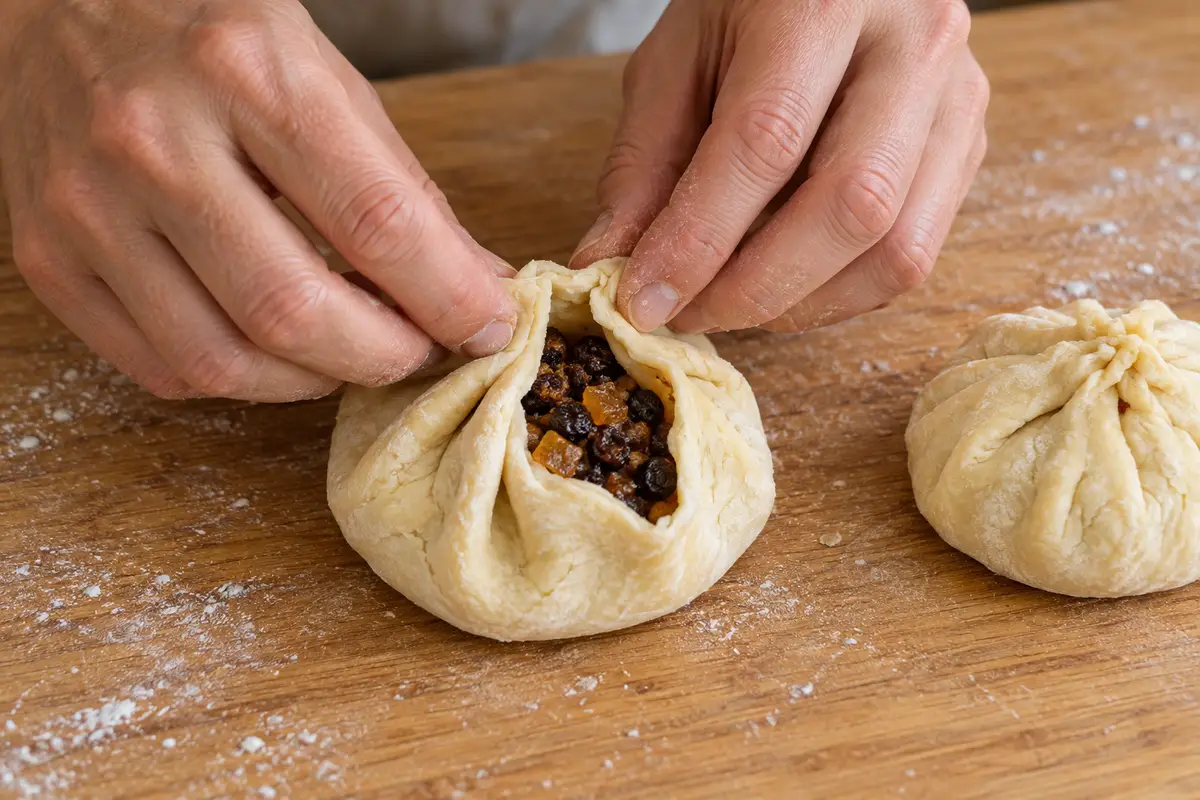
AI-generated Line two baking sheets, roughly 40 × 30 cm, with parchment paper. Place four cakes on each, seam side down and spaced apart. Gently flatten them with your hand or a rolling pin into rounds about 10 cm across and about 1 cm thick; do not tear the pastry shell. Refrigerate both sheets for 20 minutes. Meanwhile, preheat the oven to 210°C with conventional top and bottom heat.
Weigh 30 g egg white and beat lightly with a fork, just until frothy. Brush this entire portion thinly over all eight cakes, then sprinkle evenly with all 25 g white sugar. Use a sharp knife to make three short slits through the top of each cake, allowing steam to escape during baking. Leave the second prepared baking sheet in the refrigerator until it is time to bake it.
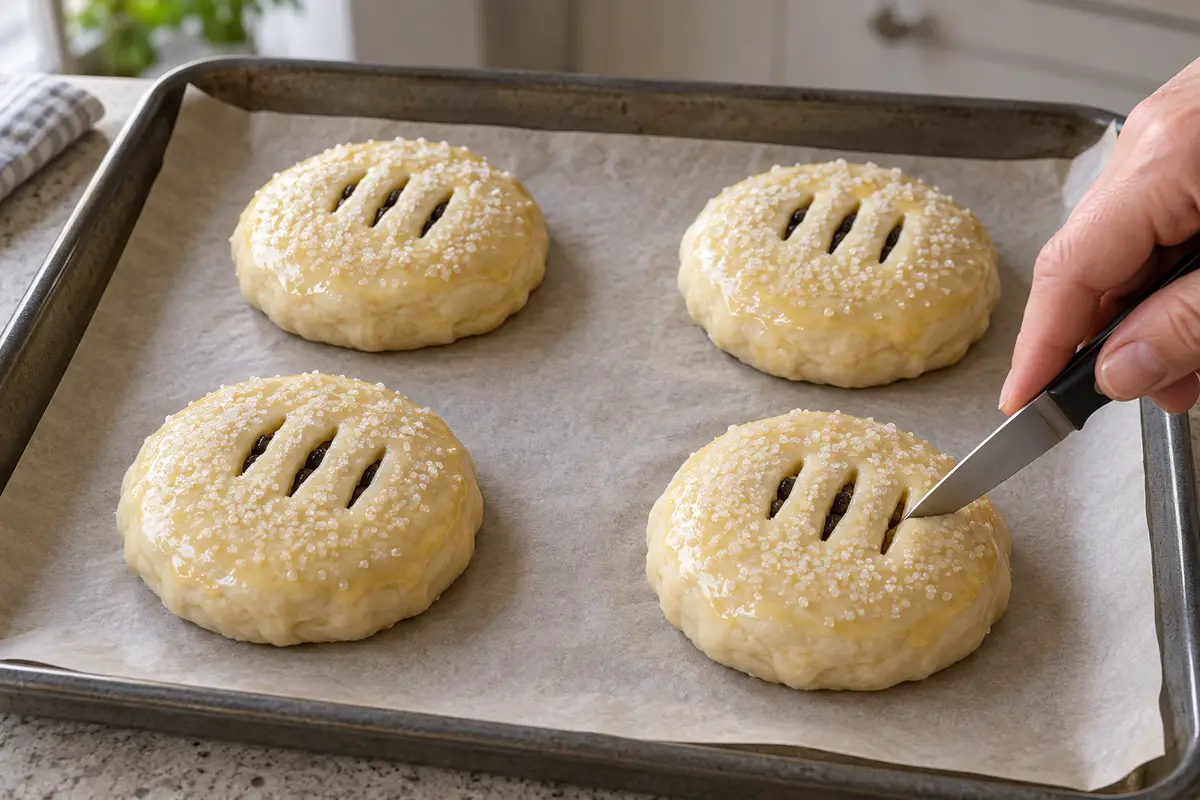
AI-generated Bake the first sheet on the middle rack for 25–30 minutes, until the cakes have risen, turned a clear golden brown and become crisp. Remove them and bake the second sheet in the same way, still at 210°C. Transfer the first batch to a wire rack to cool while the second bakes. Once the last batch is out, transfer it to a rack too and wait at least 30 minutes before serving all the cakes: the fruit filling stays hot for a long time. Do not cover the cooling cakes, so they stay crisp.
Estimated nutrition

Rate this recipe
0 ratings
Comments